
The Navy’s Revolutionary Supergun Returns: Is It the Future Replacement for Missiles?
Weapon Technology

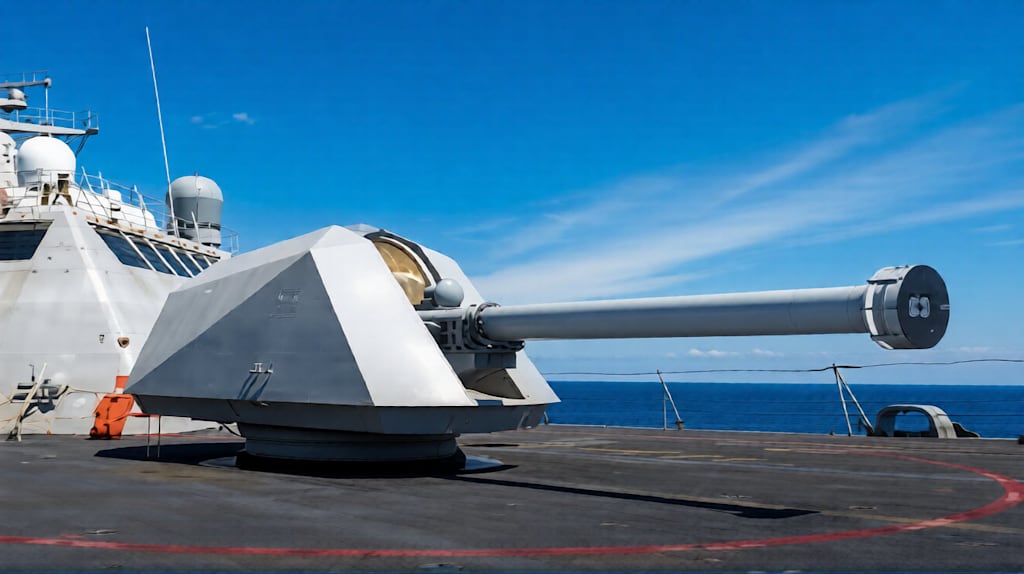
For centuries military leaders, engineers, and governments have been fascinated by the idea of giant artillery weapons capable of launching enormous projectiles across vast distances. Massive cannons symbolized military strength, technological power, and national dominance. From medieval siege cannons to the gigantic artillery systems of the twentieth century, larger guns were often viewed as the ultimate battlefield weapon. This fascination reached its height during the Second World War when enormous battleship cannons and railway guns became some of the most powerful weapons ever built. American battleships armed with giant sixteen-inch guns fired shells weighing more than a ton across distances exceeding ten miles while Japanese warships answered with equally devastating artillery in some of the largest naval battles in history. Across Europe German railway guns such as the infamous “Anzio Annie” launched massive shells over distances approaching forty miles. The sound of incoming rounds terrified soldiers who described them as sounding like freight trains screaming through the sky. These giant weapons could flatten buildings, destroy military installations, sink ships, and create enormous psychological fear among enemy troops. Despite their incredible destructive power giant artillery systems slowly disappeared after World War II as missile technology advanced rapidly and transformed modern warfare forever.

Why Superguns Disappeared
The decline of giant guns occurred because guided missiles proved far more practical and flexible than enormous artillery systems. Missiles could travel farther, strike more accurately, and launch from smaller and more mobile platforms. Unlike giant cannons missiles did not require huge barrels, massive crews, railway systems, or battleships to operate effectively. As missile technology improved during the Cold War giant artillery systems gradually became outdated. Battleships equipped with huge naval guns disappeared from major fleets while railway guns vanished almost entirely from military use. By the late twentieth century modern armies and navies relied heavily on missiles, rockets, aircraft, and smaller artillery systems instead of massive cannons. However the dream of building giant long-range guns never completely vanished because military planners continued searching for cheaper ways to deliver long-range firepower.
The Search for Cheaper Long-Range Weapons
Modern warfarae created a major financial challenge for militaries around the world because precision-guided missiles became extremely expensive. A single advanced cruise missile can cost over one million dollars while hypersonic missiles may cost several times more. Military planners realized that in a large war involving major powers missile stockpiles could disappear rapidly. This concern sparked renewed interest in advanced artillery systems capable of striking distant targets at lower cost than missiles. Defense strategists began imagining giant modern cannons that could launch projectiles at incredible speeds over enormous distances while using cheaper ammunition. The goal was to combine the range and precision of missiles with the lower operating cost of traditional artillery. This dream led to several major American supergun projects designed to revolutionize modern warfare.
The M1299 Extended Range Cannon Artillery
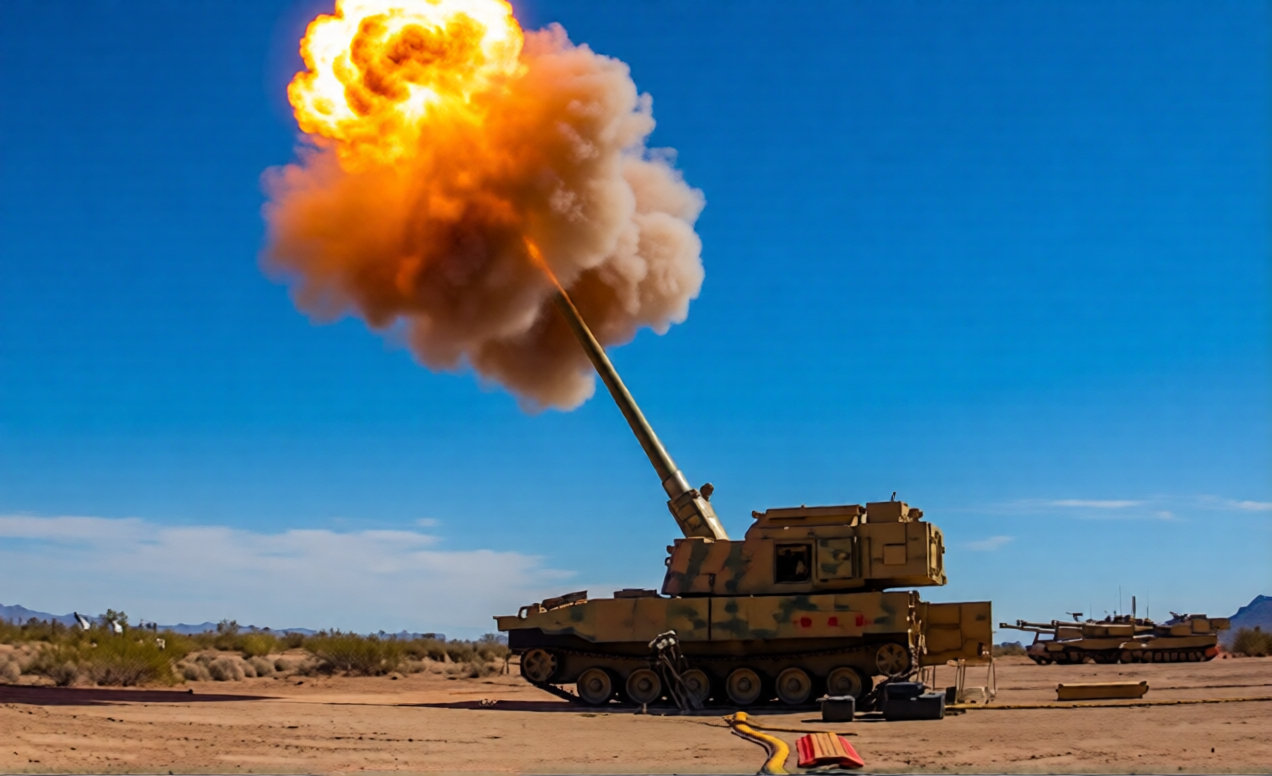
One of the most ambitious projects was the M1299 Extended Range Cannon Artillery program known as ERCA. The United States Army launched the project after concerns that Russian and Chinese artillery systems had surpassed American howitzers in firing range. The M1299 retained the standard 155-millimeter shell used by NATO forces but introduced a dramatically longer barrel called the XM907. Longer barrels allow expanding gases from propellant charges to push shells for a greater period of time before leaving the weapon, increasing projectile speed and range significantly. The Army also experimented with advanced ammunition technologies including rocket-assisted shells, precision-guided rounds, and aerodynamic projectiles designed to reduce drag during flight. Initial testing appeared extremely successful with the M1299 striking targets over forty miles away, nearly doubling the range of standard artillery systems.
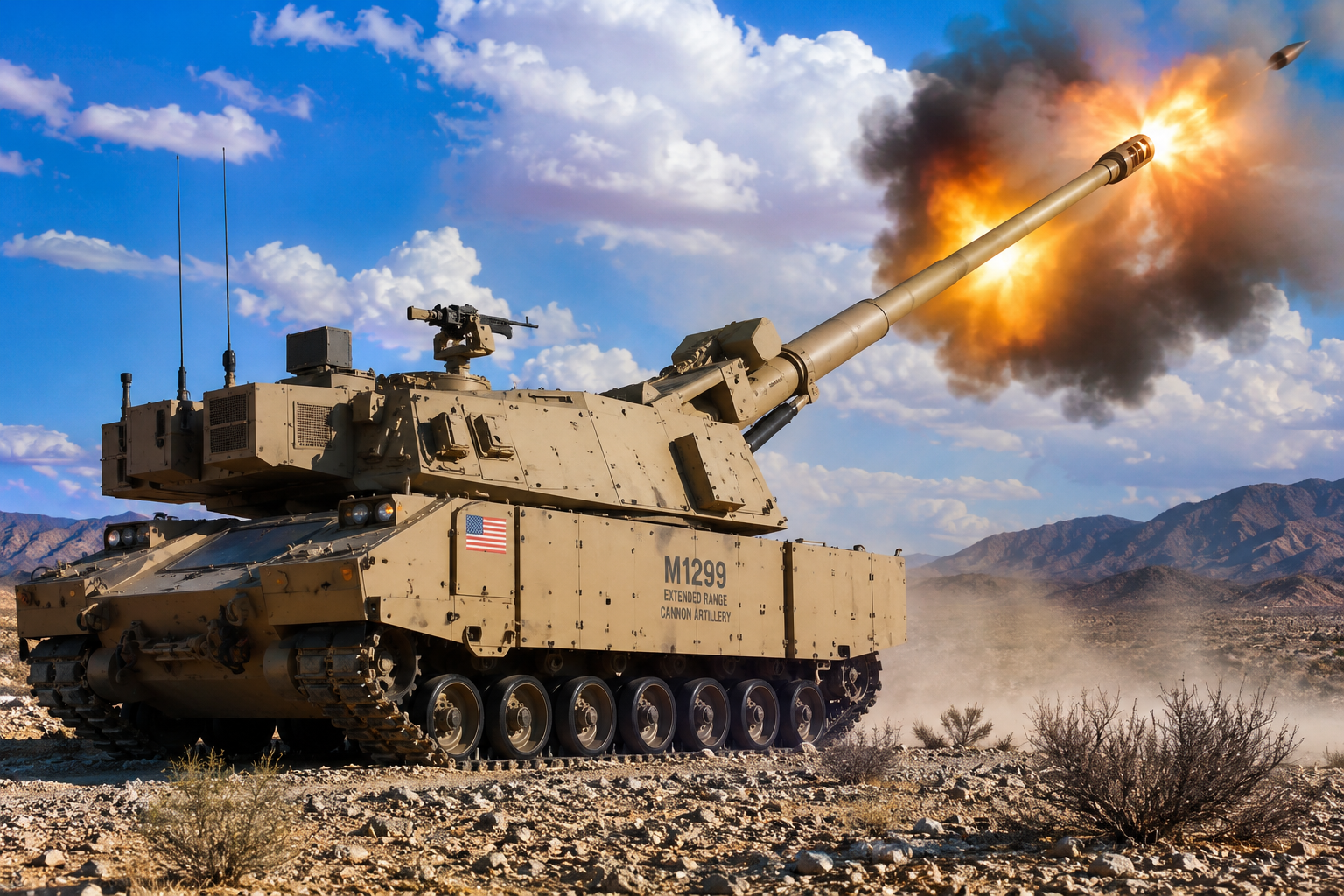
Military planners believed this technology could transform battlefield operations by allowing artillery crews to attack enemy targets from much safer distances. However the project soon encountered a severe engineering problem that has affected giant artillery systems throughout history.
The Problem of Barrel Wear
Every artillery weapon experiences barrel wear over time but the enormous pressures generated by the M1299 caused unusually rapid damage to the inside of the gun barrel. Each long-range shot produced tremendous heat and stress which gradually eroded the barrel lining. Over repeated firings the barrel lost accuracy and faced increasing risk of catastrophic failure. In major combat operations artillery systems must fire continuously for long periods, meaning frequent barrel replacement would create major logistical problems. Military engineers realized that the M1299’s extreme range came at the cost of reliability and sustainability. This challenge revealed one of the central problems facing all modern supergun projects because achieving greater range requires greater velocity while greater velocity creates greater stress, heat, and wear. Eventually despite impressive testing results the Army canceled the M1299 program in 2023 because the system proved too difficult to maintain under realistic combat conditions.
The Strategic Long Range Cannon
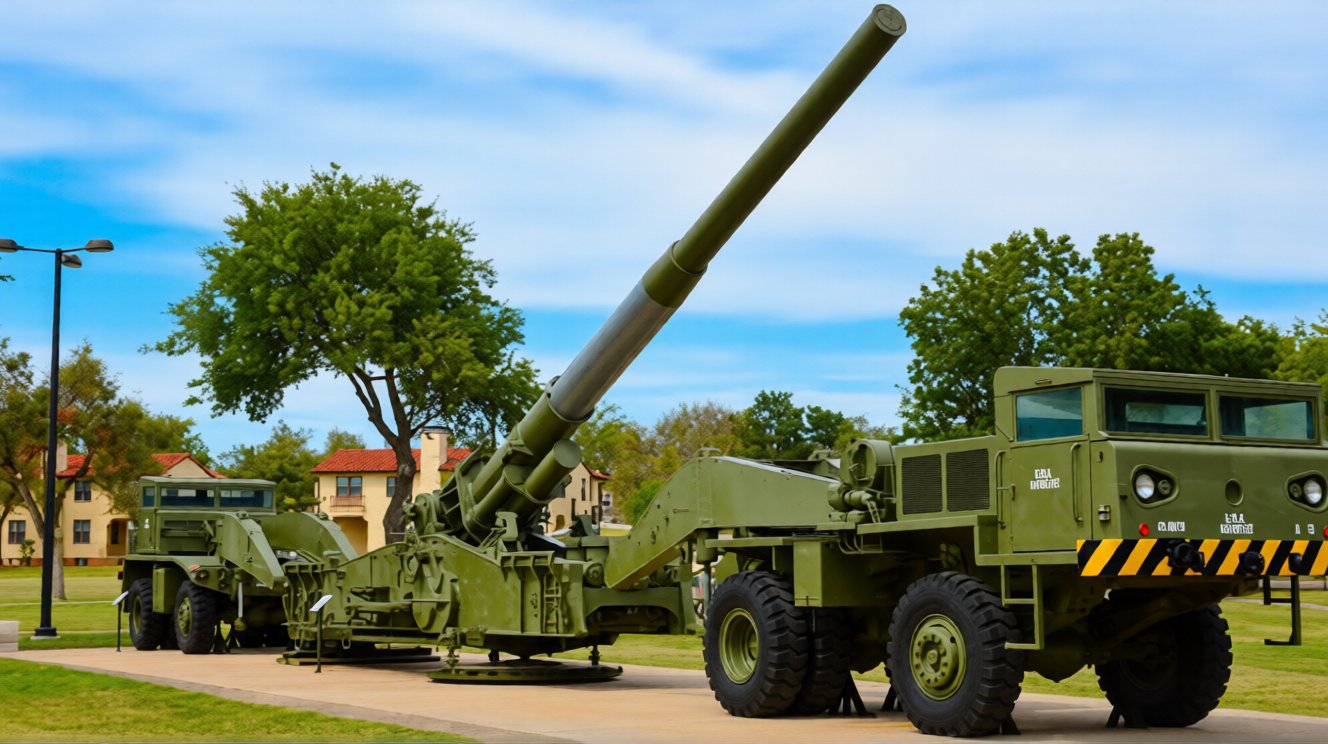
Another Pentagon project pushed the supergun concept even further. The Strategic Long Range Cannon aimed to strike targets more than one thousand miles away using an enormous artillery system unlike anything seen before. Instead of firing ordinary shells the weapon was designed to launch missile-like projectiles from a gigantic gun barrel mounted on a mobile platform. The concept attempted to combine artillery and missile technology into a single system. By launching projectiles from a cannon the weapon could provide enormous initial acceleration without requiring large rocket boosters, reducing overall costs compared to cruise missiles. Military planners hoped the system could destroy enemy air defenses, missile launchers, command centers, and naval targets at far lower cost than traditional missiles. Leaked images revealed a massive cannon with a barrel stretching roughly thirty feet long mounted on a huge trailer platform. Despite the excitement surrounding the project serious practical problems emerged almost immediately. Transporting such an enormous weapon would be extremely difficult while protecting it from enemy attacks would require significant resources. Questions also arose regarding targeting systems, deployment logistics, and operational survivability. Congress ultimately concluded that existing missile systems offered better value and practicality and canceled the project before it could become operational.
The Navy’s Advanced Gun System
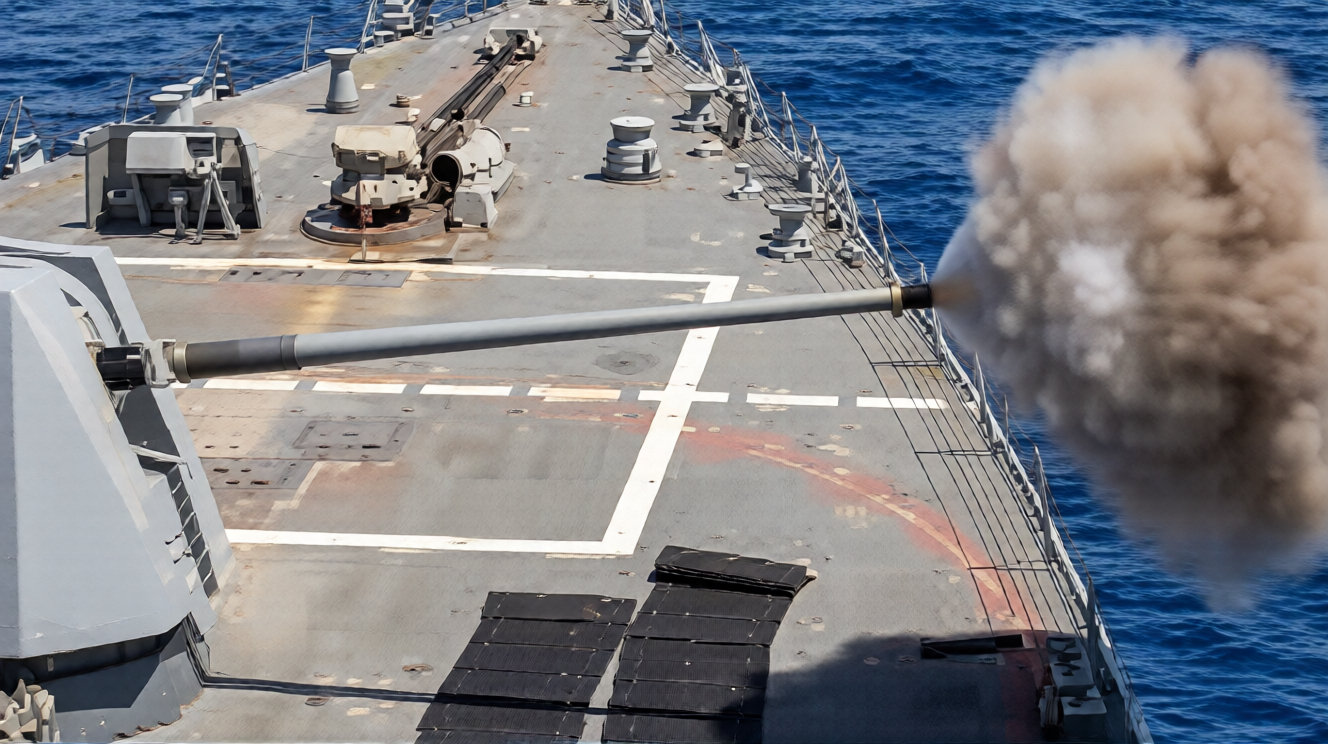
While the Army explored giant artillery concepts the United States Navy pursued its own futuristic gun system through the Zumwalt-class destroyer program. During the 1990s naval planners believed future wars would involve coastal operations against weaker nations rather than direct naval battles against major powers. This idea inspired the creation of the stealthy Zumwalt-class destroyers equipped with two enormous 155-millimeter Advanced Gun Systems designed for long-range bombardment of coastal targets. Unlike ordinary naval guns the Advanced Gun System relied on specialized ammunition known as Long Range Land Attack Projectiles or LRLAP rounds. These advanced projectiles featured rocket assistance, GPS guidance systems, and aerodynamic designs allowing them to travel nearly one hundred miles while maintaining impressive accuracy. Initially defense officials believed the system could provide highly effective naval fire support at relatively low cost. However the ammunition quickly became extremely expensive because the projectiles were unique to the Zumwalt-class ships and incompatible with standard artillery systems. Since only a few ships would use the ammunition production remained limited and costs skyrocketed. Eventually each shell approached nearly one million dollars per shot, eliminating the entire financial advantage of using artillery instead of missiles. The Navy ultimately canceled the ammunition program leaving the giant guns without practical munitions. The Zumwalt fleet itself was also dramatically reduced from dozens of planned ships to only three completed vessels.
The Rise of the Railgun
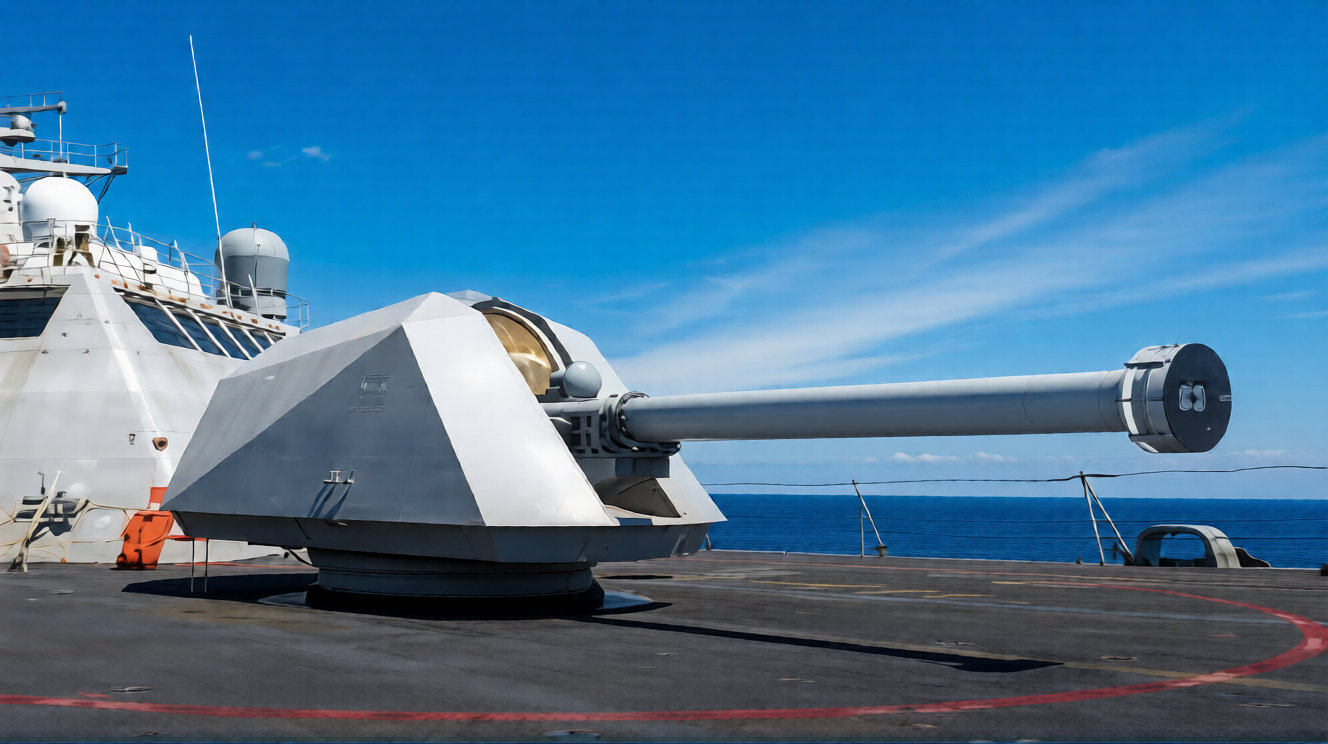
Perhaps the most futuristic supergun concept ever pursued by the United States military was the electromagnetic railgun. Unlike traditional artillery railguns do not use explosive propellant. Instead they rely on electromagnetic force to accelerate projectiles to extraordinary speeds. Railguns operate using two conductive rails carrying enormous electrical currents that generate powerful magnetic fields capable of launching metal projectiles at hypersonic velocity. Some American railgun tests achieved speeds approaching Mach 8, more than eight times the speed of sound. At such incredible speeds projectiles carry enough kinetic energy to destroy targets through impact alone without requiring explosive warheads. Railguns offered several theoretical advantages including cheaper ammunition, reduced explosive storage aboard ships, extreme projectile speed, and the ability to intercept incoming missiles. Because railgun projectiles contain little or no explosive material they could theoretically cost far less than guided missiles while still delivering devastating destructive power. Videos of glowing projectiles blasting down test ranges captured worldwide attention and fueled excitement about the future of warfare.
Why Railguns Failed
Despite impressive demonstrations railguns faced enormous engineering difficulties. The most obvious problem involved energy consumption because railguns require huge amounts of electricity to generate enough electromagnetic force for hypersonic launches. Most military vehicles cannot produce sufficient power to operate such systems effectively, making large warships the most practical platform because they already generate massive amounts of electricity for radar systems, communications equipment, and defensive technologies. However railguns would still compete with other ship systems for electrical power. Another major issue involved the rails themselves. Every railgun shot generated tremendous heat and stress causing severe wear and degradation after only a limited number of firings. Early American railguns required rail replacement after only a few dozen shots while military planners had hoped for thousands of shots before maintenance became necessary. This enormous gap between expectations and reality proved extremely difficult to overcome. After investing hundreds of millions of dollars over more than fifteen years the United States Navy officially canceled its railgun program in 2021.
Railgun Development Around the World
Although the United States suspended its primary railgun effort other countries continue researching the technology. China reportedly tested railguns aboard naval vessels while Japan has made notable progress with smaller railgun systems focused mainly on missile defense. Japanese engineers successfully tested naval railguns capable of launching projectiles at speeds exceeding Mach 6 while also improving rail durability through advanced metal alloys designed to resist heat and stress. These developments suggest railgun technology may still evolve considerably in future decades. Meanwhile the United States has quietly resumed limited railgun testing indicating that military interest in the concept has not disappeared completely.

The Return of Battleship Thinking
Recent discussions about heavily armed future warships have revived interest in superguns once again. Modern naval warfare increasingly involves defending against swarms of drones, cruise missiles, and hypersonic weapons. Missile interceptors are effective but extremely expensive while railgun projectiles could theoretically intercept incoming threats at far lower cost. This economic advantage continues attracting military planners who imagine future warships combining missiles, lasers, railguns, and traditional artillery into highly integrated combat systems capable of handling multiple battlefield threats simultaneously. Some strategists believe giant warships equipped with enormous power generation systems may eventually make electromagnetic weapons practical for real combat operations.
The Harsh Reality of Physics
Every supergun project eventually collides with the same unavoidable problem: physics. Longer range requires greater velocity while greater velocity creates higher pressure, greater heat, and more mechanical stress. These forces rapidly wear down barrels, rails, and other critical components. Even when experimental systems perform impressively during controlled testing sustaining those capabilities under real combat conditions becomes extraordinarily difficult. The history of supergun development is filled with ambitious projects promising revolutionary capabilities only to fail because of cost, maintenance problems, engineering limitations, or logistical challenges. Giant guns disappeared from warfare for practical reasons and modern militaries continue struggling with the same fundamental obstacles that caused their decline decades ago.

Why the Supergun Dream Continues
Despite repeated failures militaries around the world continue pursuing superguns because the potential rewards remain enormous. A practical supergun could dramatically reduce the cost of long-range warfare while providing sustained firepower without relying entirely on expensive missile stockpiles. In large-scale conflicts involving major powers the ability to launch cheaper hypersonic projectiles could offer enormous strategic advantages. Advances in materials science, electronics, artificial intelligence, power systems, and manufacturing technologies may eventually solve some of today’s engineering problems. Stronger alloys could improve barrel and rail durability while advanced targeting systems could increase accuracy dramatically. For now missiles remain the dominant long-range strike weapon of modern warfare, but the dream of giant hypersonic cannons continues to fascinate military engineers just as giant artillery fascinated earlier generations of generals and inventors. Whether the supergun will finally succeed in the future remains uncertain, but the vision of launching projectiles across vast distances at incredible speed continues refusing to disappear.
About the Creator
History Seeker
I like the metal music I like the good food and the history...
Enjoyed the story? Support the Creator.
Subscribe for free to receive all their stories in your feed.
Comments
There are no comments for this story
Be the first to respond and start the conversation.