gear
Sometimes, the clothes do make the man; a look at the various military uniforms and tactical gear that provide necessary protection, safety and camouflage to the troops.
Can the Newest M1 Abrams Tank Outmatch China’s and Russia’s Top Battle Tanks?
U.S.: M1A2 Abrams SEPv3 The M1A2 Abrams SEPv3 remains the centerpiece of American armored warfare and is still considered one of the deadliest tanks ever built. Originally introduced during the Cold War as the M1 Abrams in 1980, the platform has survived for more than four decades because of constant modernization. The newest SEPv3 version transforms the old Abrams into a digital battlefield machine capable of fighting in drone-heavy, missile-saturated modern warfare environments. Unlike older tanks that relied mainly on thick armor and firepower, the newest Abrams combines electronics, sensors, networking, active defense systems, and upgraded ammunition into a single battlefield ecosystem.
By History Seeker5 months ago in Serve
The Navy’s Revolutionary Supergun Returns: Is It the Future Replacement for Missiles?
For centuries military leaders, engineers, and governments have been fascinated by the idea of giant artillery weapons capable of launching enormous projectiles across vast distances. Massive cannons symbolized military strength, technological power, and national dominance. From medieval siege cannons to the gigantic artillery systems of the twentieth century, larger guns were often viewed as the ultimate battlefield weapon. This fascination reached its height during the Second World War when enormous battleship cannons and railway guns became some of the most powerful weapons ever built. American battleships armed with giant sixteen-inch guns fired shells weighing more than a ton across distances exceeding ten miles while Japanese warships answered with equally devastating artillery in some of the largest naval battles in history. Across Europe German railway guns such as the infamous “Anzio Annie” launched massive shells over distances approaching forty miles. The sound of incoming rounds terrified soldiers who described them as sounding like freight trains screaming through the sky. These giant weapons could flatten buildings, destroy military installations, sink ships, and create enormous psychological fear among enemy troops. Despite their incredible destructive power giant artillery systems slowly disappeared after World War II as missile technology advanced rapidly and transformed modern warfare forever.
By History Seeker5 months ago in Serve
Greg Bovino and the Border Patrol Storm That Shook U.S. Immigration Debates
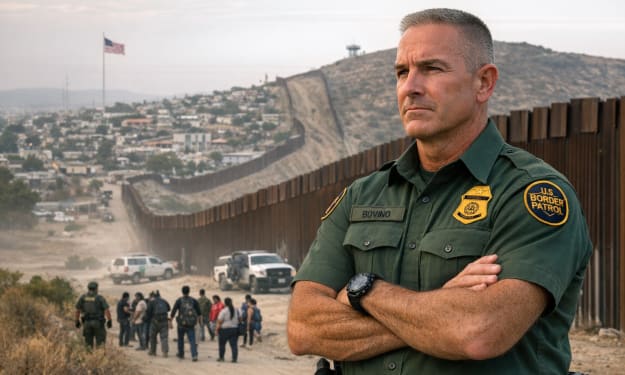
Greg Bovino and the Border Patrol Storm That Shook U.S. Immigration Debates Greg Bovino is a former United States Border Patrol agent whose name has become closely linked to intense national debates over border security, immigration enforcement, and the role of federal law enforcement in a politically divided climate. His rise to public attention did not come from routine service alone, but from outspoken positions that challenged federal leadership and ignited controversy across political and social lines. Bovino’s story reflects a deeper conflict within American society over how borders should be secured and how much freedom law enforcement officials should have to criticize government policy. During his career, Greg Bovino served as a Border Patrol agent with operational experience along the southern border. His work placed him at the center of one of the most complex law enforcement missions in the country. Over time, he became increasingly vocal about what he described as systemic failures in immigration enforcement. These views eventually moved beyond internal discussions and entered the public arena, transforming him into a polarizing figure. Supporters saw Bovino as a frontline professional willing to speak uncomfortable truths, while critics viewed his actions as politicizing a federal agency and undermining public trust. This divide made his name widely searchable and frequently discussed in relation to Border Patrol controversies. **Who Is Greg Bovino?** Greg Bovino is a former U.S. Border Patrol agent known for his strong opinions on immigration enforcement and border security. After leaving active service, he became publicly recognized for criticizing federal immigration policies and leadership, positioning himself as a vocal advocate for stricter enforcement of existing laws. **Why Is Greg Bovino Connected to Border Patrol Controversy?** Greg Bovino became controversial due to public statements that accused federal authorities of failing to properly secure the border. He argued that political decisions weakened enforcement efforts and placed agents in difficult positions. These claims sparked debate about whether such criticism represented accountability or insubordination. **Did Greg Bovino Hold a Leadership Role in Border Patrol?** During his time in the Border Patrol, Greg Bovino held supervisory and operational responsibilities typical of experienced agents. However, much of the public attention surrounding him emerged after his departure from active duty, when his statements were no longer tied to an official agency role. **Why Did Greg Bovino Speak Out Against Immigration Policies?** Bovino stated that immigration laws were not being enforced as written and that policy directives limited agents’ ability to perform their duties. He believed these restrictions contributed to increased illegal crossings and strained resources, a view shared by many who advocate tougher border control. **Was Greg Bovino Involved in Political Activism?** Following his service, Greg Bovino became increasingly active in political commentary. He participated in public discussions and media appearances focused on border security and government accountability. This involvement blurred the line between former law enforcement officer and political activist. **How Did Social Media Affect Greg Bovino’s Influence?** Social media significantly amplified Greg Bovino’s reach. Online platforms allowed him to communicate directly with large audiences concerned about immigration issues. While this expanded his support, it also intensified criticism from those who felt his messaging oversimplified complex legal and humanitarian challenges. **Did Greg Bovino Face Backlash for His Views?** Greg Bovino faced strong backlash from critics who argued that his rhetoric could damage the credibility of the Border Patrol. Supporters countered that any consequences he encountered were the result of political pressure rather than misconduct, reinforcing his image as a controversial figure. **Why Is Greg Bovino Still Relevant Today?** Greg Bovino remains relevant because border security and immigration enforcement continue to dominate national debate. His name is often referenced in discussions about dissent within federal agencies and the balance between loyalty, free expression, and public accountability. **What Does Greg Bovino Represent in the Immigration Debate?** Greg Bovino represents a larger struggle over the direction of U.S. immigration policy. To some, he symbolizes resistance against political interference in law enforcement. To others, he illustrates the risks of turning federal service into a platform for ideological conflict. In the end, Greg Bovino’s story is not just about one former Border Patrol agent. It is about a nation grappling with how to secure its borders, how to manage internal disagreement within federal institutions, and how individual voices can shape, intensify, or divide public opinion on one of America’s most enduring challenges.
By America today 9 months ago in Serve
Protect and Control with Advanced Rioter Gear
In high pressure situations like riots or civil disturbances, safety and control are crucial. Law enforcement officers and security personnel are often on the front lines, facing unpredictable threats. To manage such environments effectively, they rely on specially designed equipment known as advanced rioter gear. This gear is built for maximum protection, durability, and mobility ensuring officers can defend themselves while maintaining control over escalating situations.
By World Wide Tacticalabout a year ago in Serve
Where the Dust Never Settles: A Waziristani’s Reflection on a Century of Foreign Wars
I was born in Waziristan, a rugged, beautiful region tucked between the jagged folds of the mountains on Pakistan’s northwest frontier. It’s a place where poetry lives in the same breath as war, and the sound of drone engines is as familiar as the call to prayer. To outsiders, Waziristan is often seen only in headlines—tribal, lawless, extremist. But those words barely scratch the surface of a place shaped not by its people’s will alone, but by a legacy of foreign wars that have passed through like storms, leaving behind scars and silence.
By Inzamam Ul Haqabout a year ago in Serve
How Much Power Does America Have?
When you hear the term “global superpower,” chances are one country comes to mind—the United States of America. From military dominance to technological breakthroughs and cultural influence, America's global footprint is massive. But how much real power does the U.S. wield today? Let’s break it down across six key pillars.
By Engr. Mansoor Ahmadabout a year ago in Serve
Trump’s Citizenship Threats: Fear and Uncertainty for Millions of Naturalised Americans
In a move stirring controversy across political and legal circles, United States President Donald Trump has once again ignited a fierce debate over the security of American citizenship. His recent threats to revoke the citizenship of some high-profile naturalised Americans—including billionaire tech entrepreneur Elon Musk and New York mayoral candidate Zohran Mamdani—have triggered anxiety among millions of immigrants who have made the U.S. their permanent home. The issue strikes at the heart of American identity. More than 25 million people in the United States are naturalised citizens, according to the Department of Homeland Security. These individuals come from all walks of life: engineers, doctors, artists, public servants, and small business owners. Many fled persecution, war, or poverty in search of safety and opportunity. Now, for some, the very idea of secure citizenship seems fragile. Who Is at Risk? President Trump’s threats have raised concerns about the scope of his plans. Could any naturalised citizen be targeted—or only those who have publicly clashed with his administration? While Elon Musk, the South African-born founder of Tesla and SpaceX, has largely enjoyed support from some conservative circles, his unpredictable stance on social media and recent criticism of Trump’s trade policies may have drawn ire. Zohran Mamdani, a Ugandan-born American politician known for his progressive views and advocacy for immigrant rights, represents the kind of left-leaning opposition Trump has frequently demonised. If individuals like Musk—one of the world’s wealthiest and most influential figures—and Mamdani, a democratically elected politician, can be singled out, what does that mean for everyday Americans who gained citizenship through naturalisation? Civil liberties advocates warn that this could be the start of a dangerous precedent, one where citizenship becomes conditional on political loyalty rather than constitutional rights. Legal Grounds and Challenges Under the U.S. Constitution, once citizenship is granted, it is considered a fundamental right. However, the government has long held narrow legal pathways to revoke it, mostly in cases involving fraud during the naturalisation process or actions such as joining a hostile military against the U.S. Legal scholars like Heba Gowayed, a professor of sociology at CUNY Hunter College, argue that Trump's latest threats stretch the limits of these provisions. "Denaturalisation has historically been rare and reserved for cases of fraud, not political disagreements," Gowayed explained in a recent podcast interview. The Trump administration previously attempted to expand denaturalisation efforts during his first term, creating a task force to review old immigration files for inconsistencies. Though the initiative yielded few cases, it sent a chilling message across immigrant communities. If Trump moves forward with revoking citizenship for political reasons, it would almost certainly spark constitutional lawsuits. Civil rights groups like the American Civil Liberties Union (ACLU) and the National Immigration Law Center are already preparing legal challenges, calling the threats "an assault on the integrity of American citizenship." A Political Strategy or Legal Reality? Analysts differ on whether Trump genuinely intends to carry out such revocations or if this is part of his broader political rhetoric aimed at energising his base. During his 2024 re-election campaign, Trump repeatedly vowed to crack down on immigration and "protect American values." Some see these latest threats as another plank in his nationalist platform, designed to appeal to voters who fear demographic change and multiculturalism. Yet critics argue that politicising citizenship endangers the entire framework of American democracy. "Citizenship is not a partisan privilege," said Manuel Rapalo, host of Al Jazeera's podcast The Take. "It’s a constitutional guarantee." Historical Echoes The United States has a complicated history with denaturalisation. During the Red Scare of the 1950s, some immigrants accused of Communist ties were stripped of their citizenship. In the post-9/11 era, there were renewed efforts to scrutinise Muslim immigrants under the guise of national security. However, never before has an American president so publicly and directly threatened prominent individuals with citizenship revocation. Legal experts also draw parallels with authoritarian regimes, where dissenters are silenced by revoking their citizenship or forcing them into exile. Trump's threats have raised alarms internationally, with some leaders and human rights organizations warning that such tactics undermine America’s image as a democratic beacon. The Human Impact For millions of naturalised citizens, the impact goes beyond politics. Families who believed they had secured their future in the United States now face renewed uncertainty. Immigrants from conflict zones like Syria, Afghanistan, and Venezuela, who risked everything for safety in the U.S., now question whether their adopted home truly guarantees them the protection of citizenship. Community organizations report rising anxiety in immigrant neighborhoods. "People are calling our hotline every day asking if they could lose their citizenship for protesting or for having family abroad," said an immigration advocate in New York. The psychological toll is profound. Citizenship, once considered permanent and secure, now feels fragile for many naturalised Americans. What Happens Next? Legally, revoking citizenship is a long and complicated process that must pass through the courts. The Department of Justice would have to file cases proving fraud or illegal conduct during the naturalisation process. Stripping citizenship based solely on political beliefs or criticism of the government is almost certainly unconstitutional. Yet, the fear stirred by such threats can have chilling effects. Legal uncertainty may discourage some naturalised citizens from political participation, activism, or even public speech. So far, Trump’s team has not provided details on the legal mechanism they plan to use. Without specifics, many believe these threats are more symbolic than actionable. But in the climate of heightened political division, even symbolic threats carry real-world consequences. Broader Implications for America’s Future The United States has long prided itself on being a nation of immigrants. Naturalised citizens have contributed to the country’s scientific innovations, military strength, and cultural richness. Figures like Albert Einstein, Madeleine Albright, and Sergey Brin (co-founder of Google) were immigrants who became American citizens. If citizenship becomes a political weapon, critics argue, America risks eroding the very values that have made it a global leader. Elon Musk, with his global influence, and Zohran Mamdani, with his local political presence, are symbolic figures in this controversy. But the real story is the countless teachers, healthcare workers, engineers, and small business owners whose status feels newly vulnerable. Calls for Clarity and Protection Lawmakers from both parties have called on the Trump administration to clarify its stance. Some moderate Republicans expressed unease at the threats, while Democrats pledged to introduce new legislation protecting naturalised citizens from politically motivated denaturalisation. So far, no official revocation actions against Musk, Mamdani, or others have been initiated. But the debate itself reflects a broader struggle over the meaning of American citizenship in today’s polarised political climate. As the legal and political battles unfold, one thing remains clear: the security of citizenship, once thought unassailable, is now part of America’s most contentious debates.
By Ikram Ullahabout a year ago in Serve
Fury in Peru as Amnesty Law for Human Rights Abuses Sparks Legal, Social Uproar
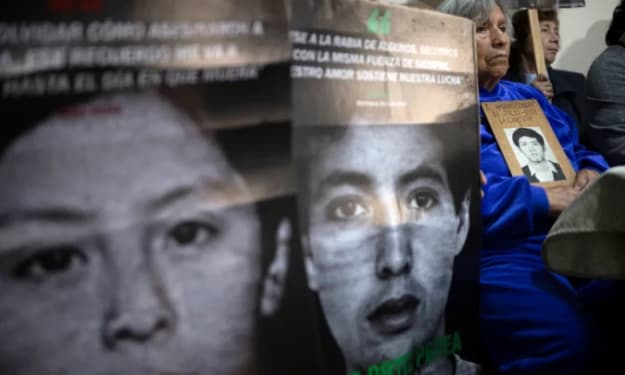
In a controversial move that has drawn sharp condemnation from human rights advocates, Peru's Congress has passed a law granting amnesty to military and police personnel accused of grave human rights violations committed during the country’s brutal armed conflict from 1980 to 2000. The bill, approved by a congressional commission, extends to those already convicted, under investigation, or awaiting trial, and now awaits the signature of President Dina Boluarte. A Nation Confronts Its Past The Peruvian conflict, fought between state forces and left-wing insurgent groups like the Shining Path and Tupac Amaru Revolutionary Movement, left an estimated 70,000 people dead—many of them Indigenous Peruvians trapped between government forces and rebel fighters. Peru's Truth and Reconciliation Commission documented widespread abuses, including massacres, forced disappearances, torture, and sexual violence, and identified over 4,000 clandestine graves across the country. Despite these findings, the new amnesty bill, championed by Congressman Fernando Rospigliosi from the right-wing Popular Force party, appears to reverse years of hard-won justice efforts. Popular Force is led by Keiko Fujimori, daughter of the former authoritarian president Alberto Fujimori, whose decade-long rule was marked by widespread human rights abuses. Although Fujimori was convicted and jailed for his crimes—including civilian massacres—he was controversially released in 2023 on humanitarian grounds. Voices of the Victims: Seeking International Justice For families of the conflict’s victims, the amnesty law reopens painful wounds. Raida Condor, whose son Amaro Condor was killed in a 1992 military raid at a university campus, stood alongside other victims' families and human rights defenders in Lima on July 10, 2025, voicing fierce opposition to the law. "We’re not only fighting this domestically; we've already begun seeking intervention from international bodies," said Gloria Cano, director of the Pro Human Rights Association. Cano confirmed that her organization has alerted the Inter-American Commission on Human Rights and the Inter-American Court of Human Rights and plans to bring the issue before the United Nations. International Condemnation and Legal Concerns UN human rights chief Volker Turk criticized the legislation, posting on X (formerly Twitter), "Impunity does not hide the crime, it magnifies it." Amnesty International also denounced the bill, warning that the right to justice for thousands of victims would be permanently violated. Human rights organizations estimate that the law could nullify 156 convictions and halt proceedings in more than 600 ongoing cases. It provides a special humanitarian amnesty for individuals over 70 who have been convicted or imprisoned, potentially shielding many senior military and police officials from accountability. Congressman Alex Flores of the Socialist Party spoke out during legislative debates, declaring, "Granting amnesty to military and police officers cannot be a reason for impunity." A Repeated Struggle Against Amnesty Peru’s judiciary and international human rights courts have fought similar amnesty attempts before. In the 1990s, laws were passed to protect security forces from prosecution, but the Inter-American Court of Human Rights struck them down, ruling they violated the right to justice and international human rights standards. Despite these precedents, Peru’s Congress has repeatedly attempted to shield military and police from legal scrutiny. In August 2024, Peru introduced a statute of limitations for crimes against humanity committed before 2002, effectively closing hundreds of investigations. That statute directly benefited figures like Fujimori and numerous military officials implicated in past atrocities. Human rights advocates argue that the new law not only violates Peru's Constitution but also its obligations as a member of the Inter-American Human Rights System. Legal experts expect fierce legal challenges ahead, both domestically and in international courts. Awaiting Presidential Action The bill now awaits President Dina Boluarte’s decision. Boluarte, who has remained publicly silent on the matter, holds the power to either sign the bill into law or veto it. Her response is likely to shape the country’s human rights trajectory and legacy in the years to come. Peru’s Painful Reckoning Peru’s armed conflict left deep scars on the nation, especially among its Indigenous populations. The Truth and Reconciliation Commission’s final report highlighted that the vast majority of victims were Indigenous peasants—people marginalized even in peace, who bore the brunt of the violence between government forces and insurgent groups. As the country debates the future of justice for these victims, human rights defenders warn that forgetting the crimes of the past risks repeating them. For families like the Condors, the amnesty is not a humanitarian act—it is an erasure of truth and justice. Next Steps Lawyers for victims and human rights defenders vow to continue their struggle, both in Peru and on the global stage, to ensure that justice is not buried alongside the victims of the conflict.
By Ikram Ullahabout a year ago in Serve
Stay Safe with Advanced Riot Gear Solutions
In today’s uncertain world, safety is a top priority for law enforcement, security teams, and first responders. Whether facing large crowds, protests, or high-risk operations, having the right protective equipment makes all the difference. Advanced riot gear solutions offer the protection, comfort, and confidence needed in dangerous situations.
By World Wide Tacticalabout a year ago in Serve
Iran conflict: What is the impact on British citizens travelling abroad?
**The Iran Conflict and Its Ripples: Impacts on British Travellers** Tensions in the Middle East—particularly intensified activity in and around Iran—are sending shockwaves through international travel. For British citizens abroad or planning to travel, the evolving situation brings a variety of logistical, safety, and financial challenges.
By GLOBAL NEWSabout a year ago in Serve
Tactical K9 Body Armor Built for Real-World Missions
K9 units are more than just animals they’re trained officers, partners, and protectors. In high-risk situations, they face the same dangers as their human handlers. That’s why tactical K9 body armor is essential. It provides life-saving protection and gives these brave dogs the confidence to perform in intense environments.
By World Wide Tacticalabout a year ago in Serve