history
The history of warfare; stories of combat and conflict across land, seas and skies, from ancient times to the present.
Iran conflict: What is the impact on British citizens travelling abroad?
**The Iran Conflict and Its Ripples: Impacts on British Travellers** Tensions in the Middle East—particularly intensified activity in and around Iran—are sending shockwaves through international travel. For British citizens abroad or planning to travel, the evolving situation brings a variety of logistical, safety, and financial challenges.
By GLOBAL NEWSabout a year ago in Serve
Imran Khan: The Heart of Pakistan
The Lion of Lahore In a land rich with history and resilience, Pakistan has witnessed many leaders come and go — but few have stirred the soul of the nation like Imran Khan. Born in Lahore on October 5, 1952, Imran Ahmad Khan Niazi was not just another privileged boy with a Western education. Even in his youth, there was a fire in his eyes — a drive that whispered of greatness.
By Saboor Brohi about a year ago in Serve
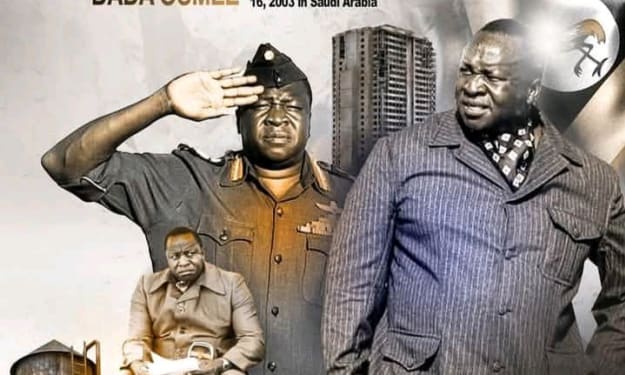
Idi Amin Dada of Uganda The President and the Cannibal: The Story of a Military Coup
On January 25, 1971, Idi Amin orchestrated a military coup and took control of Uganda. He established one of the most oppressive totalitarian regimes in Africa. A dictator and cannibal, he called himself "King of Scotland" and considered Adolf Hitler his teacher and idol.
By Uchenna Cosmas Nwokafor about a year ago in Serve
Top Features to Look for in Heavy Riot Gear
When safety is the top priority, heavy riot gear becomes an essential shield. It helps protect police officers, military personnel, and private security teams during protests, riots, and other high-risk situations. With the right gear, individuals can focus on maintaining order without risking injury. But not all Heavy riot gear is made the same. It must offer protection, comfort, and mobility. Choosing the right set depends on knowing what features matter the most.
By World Wide Tacticalabout a year ago in Serve
Top Digital Marketing Companies in the World 2025
By Zarmeena Chandio – SEO Specialist Published: May 12, 2025 Introduction In an increasingly competitive digital landscape, selecting the right digital marketing company is no longer optional it’s essential. The right agency can transform your brand’s online visibility, generate high-converting leads, and deliver measurable growth.
By SEO Strategistabout a year ago in Serve
India and Pakistan: Bridging the Divide Towards Lasting Peace
Introduction India and Pakistan, two neighboring nations born out of the same history, have been entangled in a complex and often hostile relationship since their partition in 1947. With three full-scale wars, numerous skirmishes, and constant diplomatic standoffs, the subcontinent remains one of the most volatile regions in the world. As of 2025, the situation between India and Pakistan continues to be marked by military tension, political mistrust, and socio-cultural disconnection. Yet, despite decades of conflict, there remains a strong desire among the people of both countries for peace, understanding, and cooperation. This article explores the current tensions between India and Pakistan, the underlying causes, and offers a framework for peaceful engagement. It also examines how civil society, media, youth, and cross-border platforms can be effective tools in breaking the cycle of animosity. --- Current Tensions: 2025 Overview India and Pakistan's recent tensions stem from a mix of territorial disputes, particularly over Kashmir, cross-border militancy, political rhetoric, and lack of sustained diplomatic engagement. Kashmir Conflict: The heart of the India-Pakistan conflict remains the disputed region of Jammu and Kashmir. Since the abrogation of Article 370 by India in 2019, which revoked the special status of Jammu and Kashmir, Pakistan has maintained a strong diplomatic opposition. Cross-border shelling and ceasefire violations continue sporadically, despite agreements. Diplomatic Standstill: Diplomatic relations remain strained, with high commissioners often being recalled and talks frequently stalled due to political developments or incidents of violence. Cross-Border Militancy: Incidents of alleged militant infiltration, particularly in Kashmir, continue to escalate mistrust. India accuses Pakistan of harboring and supporting terrorist networks, while Pakistan denies these allegations and counters with accusations of human rights violations by Indian forces in Kashmir. Social Media and Nationalism: Digital platforms often amplify hate, misinformation, and jingoistic content, making public discourse increasingly polarized. Hyper-nationalism in both countries fuels the fire, leaving little room for dialogue. --- The Path to Peace: Diplomatic and Political Steps 1. Resumption of Bilateral Dialogue: Both countries need to move beyond preconditions and initiate unconditional diplomatic dialogue. A structured, multi-level dialogue framework addressing all bilateral issues—especially Kashmir, trade, water sharing, and cross-border terrorism—is essential. 2. Third-Party Mediation: While India has traditionally rejected international mediation, a neutral facilitator like the United Nations or countries like Norway, Switzerland, or even regional players like UAE can help break diplomatic deadlocks. 3. Military Confidence-Building Measures (CBMs): Regular meetings between Directors-General of Military Operations (DGMO), hotline usage, and people-to-people border exchanges such as cross-border trade and pilgrimage initiatives can build trust at the operational level. 4. Joint Anti-Terror Task Forces: Collaborative intelligence-sharing and a joint task force to combat terrorism could help address India's concerns and prove Pakistan’s intent to curb militancy. --- The Role of Media: From Propaganda to Peacebuilding Media has an enormous influence on shaping public opinion and national narratives. In both countries, mainstream television and digital platforms are often guilty of sensationalism, nationalism, and demonizing the other side. 1. Responsible Journalism: Media houses should avoid inflammatory headlines, unverified claims, and war-mongering. Cross-border collaboration between journalists, media training programs, and fact-checking alliances can counter misinformation and build balanced narratives. 2. Peace Journalism Initiatives: Newspapers and news channels should allocate space for peace stories—shared histories, cultural similarities, and stories of friendship across borders. Organizations like Aman ki Asha (Hope for Peace) by Jang Group (Pakistan) and The Times of India previously demonstrated how such efforts can foster goodwill. 3. Regulation of Social Media: Tech companies must be pressured to take down hate speech, fake news, and propaganda quickly. Governments should collaborate with social media platforms to promote verified content and curb toxic nationalism. --- Public Engagement: The People's Peace Movement People of India and Pakistan share common languages, cuisines, music, and traditions. Public support for peace is growing, particularly among youth. 1. Student and Youth Exchanges: Scholarship programs, academic partnerships, and youth forums should be established to allow students from both nations to study and interact with each other. Firsthand experiences foster empathy and break stereotypes. 2. Cultural Diplomacy: Art, cinema, literature, and sports can play a pivotal role. Joint film festivals, book fairs, concerts, and cricket matches—especially with neutral venues—can humanize the "enemy." 3. Cross-Border Marriages and Humanitarian Exchanges: Families separated during partition or due to visa policies should be given opportunities to reconnect. Humanitarian visas for medical treatment, religious pilgrimage, and family visits must be simplified. 4. Grassroots Peace Organizations: NGOs working on peacebuilding should receive recognition and support. Initiatives like the Pakistan-India People's Forum for Peace and Democracy (PIPFPD) have long advocated for mutual understanding and deserve institutional backing. --- Educational Reforms: Shaping Minds for Peace Much of the animosity between India and Pakistan is rooted in historical narratives passed down through generations. 1. Curriculum Revision: History textbooks should be revised to present an unbiased account of the subcontinent’s partition and post-independence developments. Emphasizing shared history and mutual struggles under colonial rule can foster a sense of connected identity. 2. Peace Education Programs: Schools and universities should include modules on peace, conflict resolution, tolerance, and empathy. Exchange of educational content and online peace classrooms can be effective. 3. Language Learning: Promoting Hindi/Urdu learning across the border can reduce the linguistic barrier and enhance communication. --- Role of Religious and Community Leaders Religion has often been manipulated to serve political ends, yet faith leaders also have the power to guide societies towards peace. 1. Interfaith Dialogues: Religious scholars from both sides should initiate public discussions promoting love, tolerance, and coexistence, highlighting shared spiritual traditions. 2. Condemnation of Extremism: Clerics must unequivocally denounce terrorism and hate ideologies in sermons, social media, and public addresses. --- Technology and Track-II Diplomacy 1. Online Collaboration Platforms: Virtual platforms like Zoom, Clubhouse, or even Facebook groups allow for dialogue among citizens. Writers, poets, artists, and thinkers from both countries can participate in online forums for discussion and creativity. 2. Track-II Diplomacy: This involves unofficial dialogues between retired diplomats, military officials, scholars, and journalists. These backchannel communications can ease tensions and offer practical suggestions to official authorities. --- Challenges Ahead While all of the above strategies are promising, there are undeniable challenges: Political Will: Both governments often prioritize short-term political gains over long-term peace. Terrorism and Proxy Warfare: Rogue elements may try to derail peace efforts through provocations. Public Polarization: Populism thrives on creating an "enemy" to unite domestic voters. Media Censorship and Surveillance: Free media and civil society activism face constraints in both nations. --- Conclusion: A Shared Destiny India and Pakistan may be divided by borders and ideologies, but they are united by history, geography, and destiny. Peace is not just a moral imperative but a necessity for the future prosperity of South Asia. Only through mutual understanding, open dialogue, and sustained engagement can the region move toward lasting harmony. The people of India and Pakistan—armed with hope, culture, and shared humanity—must lead this transformation. Peace is possible, and its seeds lie not only in grand political gestures but also in the small acts of kindness, conversations, and connections across the divide.
By Ikram Ullahabout a year ago in Serve
Chinese J-10C vs. Russian MiG-29M: Which is the Best Choice For Egypt’s Air Force?. AI-Generated.
Chinese J-10C vs. Russian MiG-29M: Which is the Best Choice For Egypt’s Air Force? As Egypt continues to modernize its military and diversify its defense partnerships, one of the key considerations is the selection of advanced multirole fighter jets. The country already operates a mixed fleet of American F-16s, French Rafales, and Russian MiG-29Ms. However, emerging regional threats and the need for technological parity with rivals have sparked interest in new acquisitions—most notably between the Chinese J-10C and the Russian MiG-29M. But which of these two aircraft better suits Egypt's strategic needs?
By Adnan Rasheedabout a year ago in Serve
What It Feels Like to Be in the Battlefield
They say nothing can prepare you for the battlefield. You can train for months. You can study strategy, sharpen your reflexes, and drill until your body knows what to do before your mind catches up. But when the first shot echoes through the air — everything changes. War doesn’t knock. It doesn’t ask for permission. It arrives like a storm — fast, loud, and merciless. And once it starts, there’s no turning back. --- The Silence Before the Storm There’s a moment before combat — quiet, still — when everything feels unnaturally calm. You hear the wind rustling through dry grass. You feel the sweat gathering under your armor, trailing down your spine. Your heartbeat thuds in your ears like a war drum, louder than anything outside. You check your gear again, even though you’ve already done it five times. You glance at your comrades, reading the unspoken thoughts in their eyes — fear, focus, fire. No one says it out loud, but everyone knows: This might be the last time you breathe in peace. --- When the Fire Starts Then — everything explodes. Gunfire cracks through the air like thunder. Dirt kicks up. The ground trembles under your feet. Smoke swallows the sky. There’s no time to think — only react. You dive. You roll. You fire. You yell. You move like it’s life or death — because it is. Time becomes strange. A second can feel like an hour. An hour, like a blink. You lose track of everything — except the mission, and each other. It’s not like what you see in video games or movies. There’s no background score. No heroic speech. Just shouting, blood, confusion, and your breath, ragged and urgent in your helmet. --- Fear Becomes a Shadow People always ask: “Were you scared?” Of course you were. Fear is always there. But it doesn’t freeze you — it sharpens you. It tunes your senses, makes you hyper-aware. You’re not afraid of dying as much as you are of failing the person next to you. You fear being the reason someone doesn’t go home. And in that firestorm of fear… something rare happens: clarity. --- A Strange Kind of Clarity War is messy, but it strips away the noise. You’re not thinking about bills, arguments, or social media likes. You’re thinking about keeping your brothers alive. About surviving the next five minutes. For once, life is crystal clear. In a twisted way, there’s peace in that focus. It’s the kind of simplicity most people never experience — the kind that redefines everything you thought mattered. --- The Weight You Carry Home Eventually, the noise fades. The dust settles. And if you’re lucky, you walk away. But you don’t leave it behind — not really. You carry it home in your shoulders, your spine, your silence. It shows up in your sleep. In the way loud noises startle you. In the way you pause at the sound of helicopters. It’s the name of a friend you can’t say without your voice breaking. It’s the guilt of surviving when someone else didn’t. Coming home is a different kind of battlefield — quieter, but no less real. --- What War Teaches You The battlefield teaches brutal lessons peace never could: How to stay calm when everything is falling apart How to make life-or-death decisions in seconds How to value the people around you like your own family And most of all, how fragile — and sacred — life truly is You learn that courage isn’t being fearless. It’s doing what needs to be done despite the fear. --- Final Thoughts: A Soldier’s Truth To be on the battlefield is to stand at the edge of life itself. You see humanity at its worst — and at its most heroic. You lose parts of yourself. But you also find strength, brotherhood, and a purpose you never imagined. War changes you. Not always for the worse. But always forever. So the next time you see a soldier, know this: They don’t just carry weapons — they carry memories. Behind every salute is a story only a few will ever truly understand.
By SHADOW-WRITESabout a year ago in Serve
DOGE’s mass federal workforce cuts may cost taxpayers $135 billion this fiscal year alone. AI-Generated.
Although DOGE asserts that it has saved the government $150 million from waste, fraud, and abuse, some federal workforce and policy experts believe that Elon Musk's efforts to cut costs have cost taxpayers money. The chaos of personnel changes have tanked productivity, one expert claims, costing the government billions in wasted payroll. Another person argued that fired IRS employees are no longer able to conduct audits that generate significant revenue. As Elon Musk prepares to step back from the Department of Government Efficiency (DOGE), his goal to rout out government waste, fraud, and abuse may have fallen short. DOGE initially promised to identify and eliminate $2 trillion in the first months of President Donald Trump's second term, but Musk drastically cut that figure down to $150 billion—only 7.5% of his original estimated savings. Some experts warn that his efforts may actually be costing the government billions in lost labor and revenue. According to calculations made by Reuters, these spending cuts have affected 260,000 federal employees who have been fired, given buyouts, or retired early since Trump's return to the White House. The Internal Revenue Service may lose up to a third of its 100,000 employees through resignations and layoffs, according to a report in The New York Times earlier this month. About 22,000 of these employees may accept Trump's most recent offer to resign. According to Max Stier, chief executive of the government efficiency and workforce nonprofit Partnership for Public Service, "We do need to have our government work better, but the approaches that have been adopted so far are taking us in the exact wrong direction." The mass exodus of federal employees may result in the government paying out fewer salaries, but it also may severely limit the amount of work that it is able to carry out, including collecting revenue from tax audits. “The end result will be that the American public will be holding the bag as Elon Musk goes back to his private enterprises.”
By md tawbar aliabout a year ago in Serve