history
The history of warfare; stories of combat and conflict across land, seas and skies, from ancient times to the present.
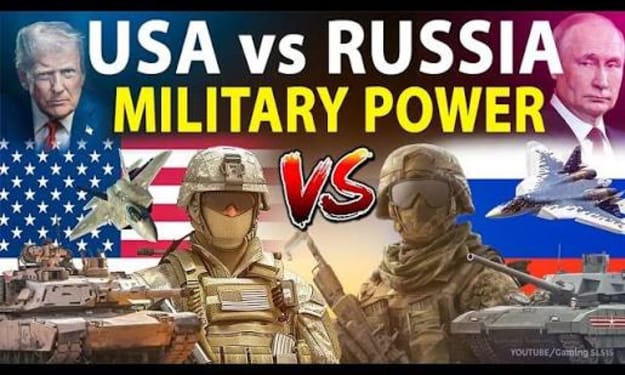
Which Country Is More Powerful Today—America or Russia?
The question of whether the United States or Russia is more powerful today depends on how “power” is defined. Military strength is not measured only by weapons or troop numbers; it also includes technology, global reach, economic capacity, alliances, and strategic influence. When these factors are examined together, a clearer comparison emerges.
By shaoor afridi7 months ago in Serve
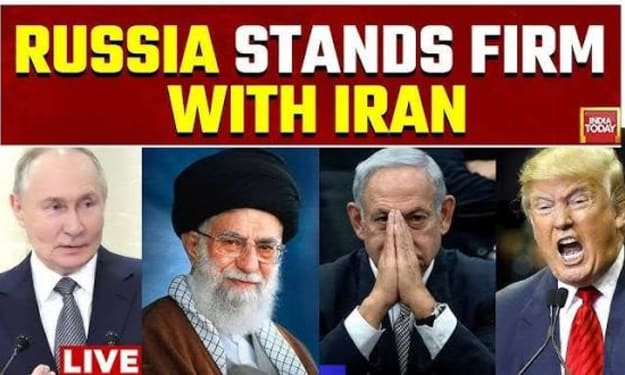
Rising Tensions: U.S.-Iran Conflict Escalates After Leader's Death"
In a dramatic escalation of tensions in the Middle East, Iran’s Supreme Leader Ayatollah Ali Khamenei has been confirmed dead following a large-scale military operation conducted by the United States and Israel. This development marks one of the most serious confrontations between the U.S. and Iran in decades, with region-wide impacts and uncertain global consequences.�
By shaoor afridi7 months ago in Serve
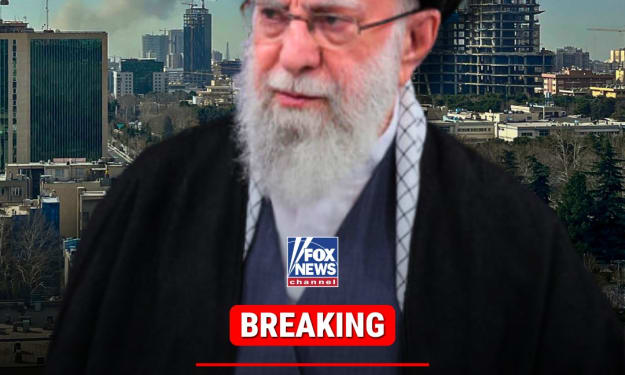
Ayatollah Ali Khamenei Is Dead Or Live?
Israeli and U.S. Officials’ Claims Israeli Prime Minister Benjamin Netanyahu has publicly stated there are “many signs” that Iran’s Supreme Leader Ayatollah Ali Khamenei is dead after a joint U.S.–Israel military offensive targeted Iranian leadership compounds, including sites linked to him in Tehran. �
By shaoor afridi8 months ago in Serve
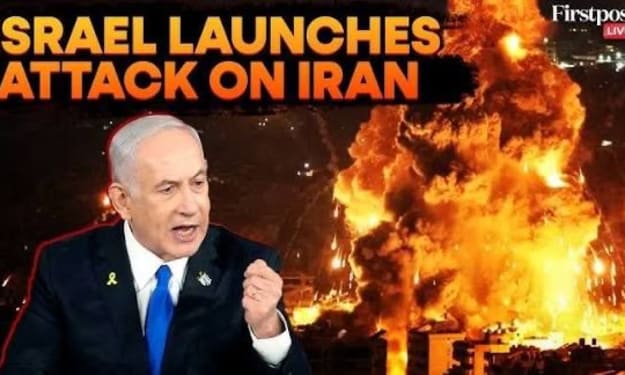
Israel Attacking On Iran
Israel has carried out major air and missile strikes on Iranian targets. Explosions were reported in Tehran and other areas. Israeli leaders say they attacked to stop Iran’s military and missile capabilities before Iran could launch its own large attack.
By shaoor afridi8 months ago in Serve
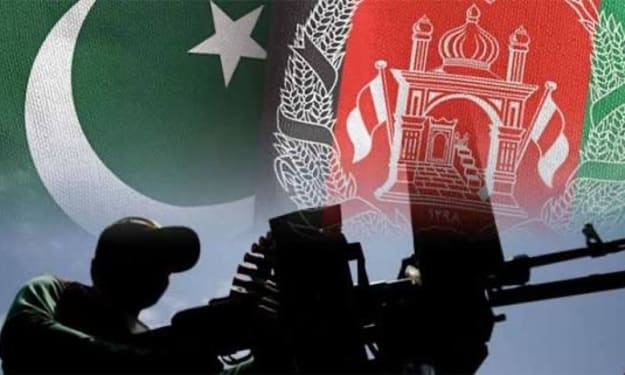
War Between Pakistan And Afghanistan
Tension Escalates Sharply at the Pakistan-Afghanistan Border What’s happening now? Tensions between Pakistan and Afghanistan have suddenly escalated into heavy fighting along their shared border, known as the Durand Line. Both sides are accusing each other of attacks, and military clashes have intensified in recent days. 
By shaoor afridi8 months ago in Serve
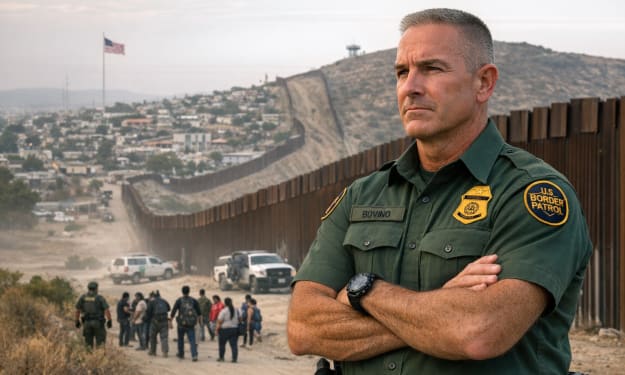
Greg Bovino and the Border Patrol Storm That Shook U.S. Immigration Debates
Greg Bovino and the Border Patrol Storm That Shook U.S. Immigration Debates Greg Bovino is a former United States Border Patrol agent whose name has become closely linked to intense national debates over border security, immigration enforcement, and the role of federal law enforcement in a politically divided climate. His rise to public attention did not come from routine service alone, but from outspoken positions that challenged federal leadership and ignited controversy across political and social lines. Bovino’s story reflects a deeper conflict within American society over how borders should be secured and how much freedom law enforcement officials should have to criticize government policy. During his career, Greg Bovino served as a Border Patrol agent with operational experience along the southern border. His work placed him at the center of one of the most complex law enforcement missions in the country. Over time, he became increasingly vocal about what he described as systemic failures in immigration enforcement. These views eventually moved beyond internal discussions and entered the public arena, transforming him into a polarizing figure. Supporters saw Bovino as a frontline professional willing to speak uncomfortable truths, while critics viewed his actions as politicizing a federal agency and undermining public trust. This divide made his name widely searchable and frequently discussed in relation to Border Patrol controversies. **Who Is Greg Bovino?** Greg Bovino is a former U.S. Border Patrol agent known for his strong opinions on immigration enforcement and border security. After leaving active service, he became publicly recognized for criticizing federal immigration policies and leadership, positioning himself as a vocal advocate for stricter enforcement of existing laws. **Why Is Greg Bovino Connected to Border Patrol Controversy?** Greg Bovino became controversial due to public statements that accused federal authorities of failing to properly secure the border. He argued that political decisions weakened enforcement efforts and placed agents in difficult positions. These claims sparked debate about whether such criticism represented accountability or insubordination. **Did Greg Bovino Hold a Leadership Role in Border Patrol?** During his time in the Border Patrol, Greg Bovino held supervisory and operational responsibilities typical of experienced agents. However, much of the public attention surrounding him emerged after his departure from active duty, when his statements were no longer tied to an official agency role. **Why Did Greg Bovino Speak Out Against Immigration Policies?** Bovino stated that immigration laws were not being enforced as written and that policy directives limited agents’ ability to perform their duties. He believed these restrictions contributed to increased illegal crossings and strained resources, a view shared by many who advocate tougher border control. **Was Greg Bovino Involved in Political Activism?** Following his service, Greg Bovino became increasingly active in political commentary. He participated in public discussions and media appearances focused on border security and government accountability. This involvement blurred the line between former law enforcement officer and political activist. **How Did Social Media Affect Greg Bovino’s Influence?** Social media significantly amplified Greg Bovino’s reach. Online platforms allowed him to communicate directly with large audiences concerned about immigration issues. While this expanded his support, it also intensified criticism from those who felt his messaging oversimplified complex legal and humanitarian challenges. **Did Greg Bovino Face Backlash for His Views?** Greg Bovino faced strong backlash from critics who argued that his rhetoric could damage the credibility of the Border Patrol. Supporters countered that any consequences he encountered were the result of political pressure rather than misconduct, reinforcing his image as a controversial figure. **Why Is Greg Bovino Still Relevant Today?** Greg Bovino remains relevant because border security and immigration enforcement continue to dominate national debate. His name is often referenced in discussions about dissent within federal agencies and the balance between loyalty, free expression, and public accountability. **What Does Greg Bovino Represent in the Immigration Debate?** Greg Bovino represents a larger struggle over the direction of U.S. immigration policy. To some, he symbolizes resistance against political interference in law enforcement. To others, he illustrates the risks of turning federal service into a platform for ideological conflict. In the end, Greg Bovino’s story is not just about one former Border Patrol agent. It is about a nation grappling with how to secure its borders, how to manage internal disagreement within federal institutions, and how individual voices can shape, intensify, or divide public opinion on one of America’s most enduring challenges.
By America today 9 months ago in Serve
Why America Failed in Afghanistan
The withdrawal of the United States from Afghanistan in August 2021 marked the end of a 20-year war and raised a difficult but necessary question: why did America fail in Afghanistan despite unmatched military power, resources, and global influence? The answer is not simple. The failure was not the result of a single mistake but rather a combination of strategic miscalculations, political contradictions, cultural misunderstandings, and unrealistic goals that accumulated over two decades.
By shaoor afridi9 months ago in Serve
The War Doesn’t End When the Sirens Stop
The first time the air raid siren woke me, I didn’t recognize the sound. It wasn’t the sharp, electronic wail I’d heard in movies or news clips. It was deeper, rougher, like a voice screaming through a rusted megaphone. My body knew before my mind did. I was on the floor, hands over my head, before I even remembered I was supposed to be afraid. That was two years ago. Now, I sleep through them. Or I try to. My brain has learned to file the sound under *background noise*, like traffic or a neighbor’s dog. But my heart hasn’t. It still clenches, still counts the seconds between the alert and the thud of impact, still calculates how far away it is this time. *Close enough to shake the windows? Close enough to run?* The war doesn’t end when the sirens stop. It just changes shape. --- We don’t talk about the way time works here anymore. There’s the time on the clock, and then there’s *war time*—the way minutes stretch into hours when you’re huddled in a basement, the way weeks disappear when you’re standing in line for bread or medicine or the chance to charge your phone. The world outside Ukraine measures the conflict in headlines: *"Counteroffensive Stalls," "Aid Package Delayed," "Global Attention Shifts."* But here, time is measured in smaller things. The number of days since the last blackout. The number of nights your child sleeps without waking up screaming. The number of birthdays celebrated in a shelter, the cake just a slice of dry bread with a single candle stuck in the middle. My neighbor, Olena, turned 70 last month. She spent the evening in the corridor of her apartment building—the safest place, she’d decided—with a thermos of tea and a photo album. "At least the memories don’t need electricity," she joked. Her hands shook as she turned the pages. I didn’t tell her I noticed. --- The world has a short memory for wars that don’t end quickly. I understand, in a way. People can’t live in a state of constant outrage. They can’t keep their hearts broken forever. But that’s the thing about broken hearts: they don’t just heal. They scar. And the scar tissue is sensitive. It aches when the weather changes. It twinges when someone overseas asks, *"Is it still bad there?"* as if "bad" is a binary state, as if we’re not still learning to live in the in-between. I used to get angry when the news cycles moved on. Now, I just feel invisible. The grocery store near my apartment has a new section now: *"Essentials for Survival."* Canned food, batteries, tourniquets. The cashier, a woman in her 50s with a son on the front lines, calls it "the apocalypse aisle." We laugh, but it’s not funny. It’s just easier than crying. --- The hardest part isn’t the explosions. It’s the silence that follows. The way the city holds its breath after an attack, waiting to see what’s still standing. The way your phone buzzes with messages from friends abroad—*"Are you okay?"*—and you don’t know how to answer. *Am I okay?* I’m alive. My apartment still has walls. The water runs, most days. But "okay" feels like a word from another life. I teach English online now. My students are scattered across Europe, America, Australia. They ask me about Kyiv, about the "situation." I tell them the city is beautiful in the spring, the chestnut trees in bloom. I don’t tell them about the sandbags stacked outside the post office, or the way the subway stations still double as bomb shelters, or how I’ve memorized the quickest route to the nearest one from my door. They don’t ask about those things. Maybe they don’t want to know. --- The war has taught me that resilience isn’t what I thought it was. It’s not some grand, heroic thing. It’s small. It’s making coffee in the morning even when you’re not sure there will be power to heat it. It’s planting flowers in the courtyard where a missile landed last winter. It’s laughing at a joke in a café, then flinching when a car backfires outside. It’s also exhaustion. It’s the way my friend Ira, a doctor, cries in her car between shifts because she can’t remember the last time she slept more than four hours. It’s the way my father, who used to be so proud, now flinches at loud noises. It’s the way we’ve all become experts in pretending, in performing normalcy for each other, for the world, for ourselves. --- The international news crews still come, sometimes. They film the damaged buildings, the lines for humanitarian aid, the faces of the newly displaced. They ask us to tell our stories. We do. We tell them about the night the maternity hospital was hit, about the friend who didn’t make it to the shelter in time, about the way the sky turns orange when the drones come at night. They nod. They take notes. They leave. And we’re still here. --- I walked past a playground yesterday. A little girl, no older than six, was swinging alone. Her mother sat on a bench nearby, scrolling through her phone. The swings creaked, a slow, steady rhythm. *Back and forth. Back and forth.* Like the ticking of a clock. Like the turning of a page. I wanted to tell her mother to put the phone away. To hold her daughter. To whisper, *"I’ve got you."* But what do I know? Maybe she was reading the news. Maybe she was waiting for word from her husband at the front. Maybe she was just stealing a moment of distraction, the way we all do. The girl looked up at me and smiled. "Do you want to push me?" she asked. I did. Because what else is there to do but keep moving? Back and forth. Back and forth. Even when the world isn’t watching. Even when it feels like no one cares. The war doesn’t end when the sirens stop. It just becomes part of the air we breathe. Part of the way we live. Part of the way we love. And the world moves on. But we don’t. We can’t. We’re still here.
By Megan Stroup9 months ago in Serve
Against All Odds.. AI-Generated.
On December 24, 1971, 17-year-old Juliane Koepcke boarded LANSA Flight 508 with her mother in Lima, Peru. The two were traveling to Pucallpa, where Juliane’s father, a biologist, was working at a research station deep in the Amazon. For Juliane, who had grown up between Germany and Peru, flying felt routine. She was looking forward to Christmas with both of her parents.
By shop a oraabout a year ago in Serve