A More Human Vocal
Trust, accountability, and a better writing experience.

When we launched Vocal nearly a decade ago, the world was a very different place. LLMs did not exist, and stories were created one at a time by people sitting down to write, revise, and share something personal. Many of our assumptions about publishing, trust, and participation were built for a world where effort and output were inseparable.
Fast forward to today, and the creator landscape has changed. Tools that can generate content in seconds now shape much of how the Internet works. That has shifted the economics of publishing and the incentives behind it. Producing AI slop at scale is easier than ever, and trust and quality are under constant pressure.
Since the first LLMs became mainstream, our community has felt those changes firsthand. Many of you stepped up to protect the integrity of this platform. You flagged spam, challenged low-effort work, and pushed for higher standards. You made it clear that Vocal is not meant to become a place to dump AI content and chase quick payouts.
Vocal was never built to be a content factory. It was built to be a community, a place where real people support each other, give thoughtful feedback, challenge one another to improve, and build real connections over time. As the world changes, Vocal has to evolve in ways that protect that idea rather than dilute it.
The updates below are how we are building the next version of Vocal while staying true to what made this platform worth building in the first place.
These changes are coming soon, and we will share a clear rollout timeline and specific dates as we get closer. Some updates will land together, and others will follow shortly after, but the direction is singular: a platform designed for humans.
Trust Built Into Publishing
Vocal works best when trust is built in. When you read something here, you should feel confident there is a real person behind it. When you engage, it should feel worth your time.
That is why we are tying publishing to verification.
Stripe has been part of Vocal since day one. Reads, tips, subscriptions, and payouts already run through it, and it also provides secure identity verification and compliance checks. Instead of treating verification as something that only matters when money changes hands, we are building it into the publishing flow itself.
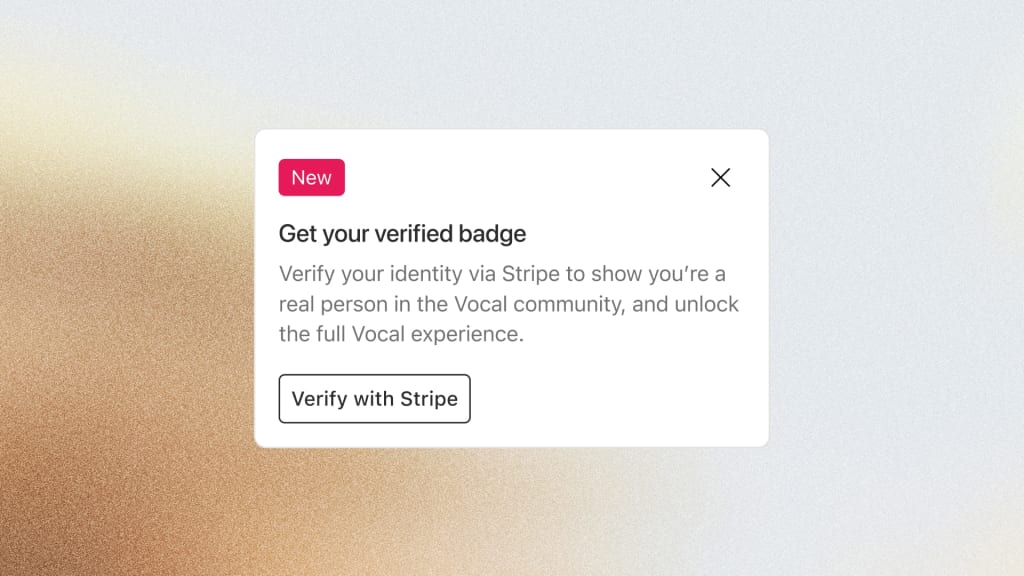
Going forward, creators will need to connect Stripe and complete identity verification in order to publish on Vocal. This becomes our KYC (Know Your Customer) layer for creators, handled securely through Stripe, and it gives us a consistent way to enforce accountability across publishing, challenges, tipping, subscriptions, and payouts. If you are already connected to Stripe, you are all set. If you are not, you will need to connect Stripe to continue publishing.
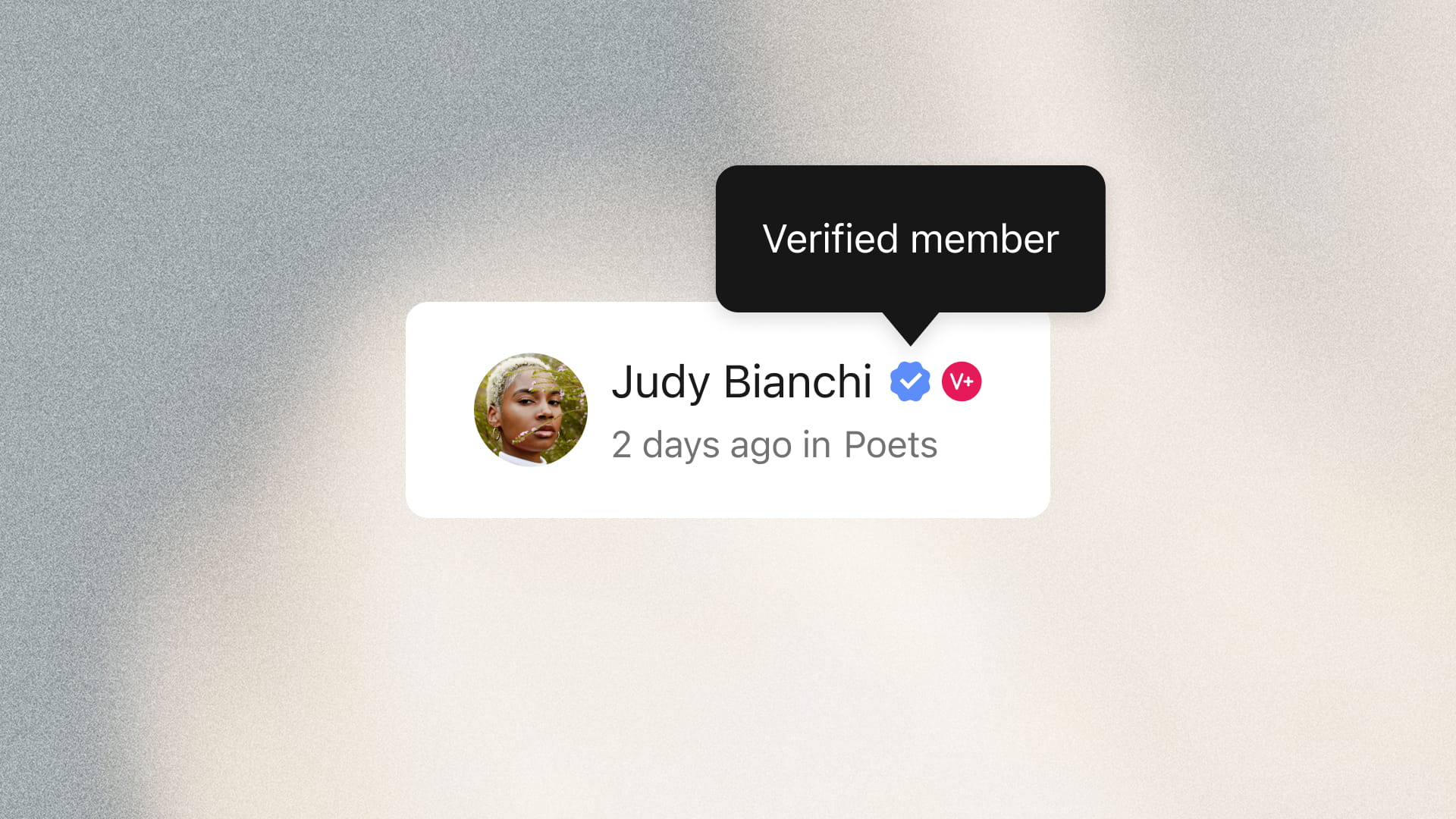
Verified accounts will display a blue checkmark next to the profile avatar across the platform. It is a simple, visible signal that a creator has completed identity verification.
If you write under a pen name, nothing changes publicly. You still control your username and how your work is credited. Verification is simply how we confirm, behind the scenes, that an account maps to a real person.
Unverified users can still participate through reading, likes, comments, and creator subscriptions. The difference is that publishing will be reserved for verified accounts.
If Stripe is not available in your country, you will not be able to publish at this time. The goal is not friction for friction’s sake, but community trust, safety, and a more accountable creator ecosystem. When everyone participates under the same rules, trust improves, feedback becomes more meaningful, and quality has room to rise.
Vocal+ and the Economics of a Real Community
As part of this evolution, we are also changing how Read earnings work on Vocal.
Going forward, Read earnings will be available to Vocal+ creators only. We will announce the exact effective date as part of the rollout timeline.
This shift is not about limiting opportunity. It is about fixing an incentive problem that has grown impossible to ignore. When anyone can publish low-effort, AI-generated content and still chase read revenue, the platform attracts the wrong behavior. It invites people who are not here to create, but to exploit, flooding the feed with spam and trying to game the system.
And it is not just the content. Today, anyone with a pot of coffee and an afternoon can spin up bots to generate fake traffic. That kind of manipulation is cheap, scalable, and getting more common. We cannot sustainably fund read-based earnings on a free tier in a world where automation makes both publishing and traffic trivial to manufacture.
Vocal+ has always been more than a subscription. It is how creators support the shared infrastructure of the platform itself. Vocal+ memberships help fund challenges, Top Story bonuses, and the systems that reward thoughtful, high-quality work. Think of it as dues to a membership club, not a paywall. It is a way for creators to invest in the community they want to be part of.
If you want to earn from reads, you should be participating in the system that makes those earnings possible. If we are building a human-centric creative community in a world increasingly surrounded by automation, our community has to be supported by the people who believe in it. Vocal+ is how we do that together.
The New Vocal Editor
The editor is the most important component of Vocal. It is where ideas turn into stories, and where voices take shape.
The new Vocal Editor we are working on is a ground-up rebuild designed to give creators more flexibility, more control, and a more reliable writing experience. It is built on modern document architecture that supports richer formatting, improved typography, and clearer structure, while keeping the focus on the writing itself.
We have heard you, especially our poetry writers. Line breaks, spacing, and structure are not nice-to-haves. They are the rhythm of your work. Poetry, essays, serialized writing, and mixed-media storytelling should all feel natural in the same space, without hacks or workarounds.
The new editor will still supports everything the current editor does, and more. It also gives us room to introduce creator-first components over time, including CTA buttons, profile cards, and formatting built specifically for verse that respects rhythm, indentation, and spacing. And yes, autosave.
Additionally, the new editor is being built to work more reliably across devices, with significantly improved compatibility on Android, so creating on Vocal is not dependent on where or how you write.
As we become more intentional about trust and accountability, creating should feel smoother, not heavier.
The Point of All of This
We are living in a time when trust is increasingly scarce. Information moves quickly, content is often designed to provoke or divide, and it can be difficult to know what is real or where to invest attention. Platforms shape how people experience that world, whether they intend to or not. The systems they build determine what is rewarded, what spreads, and what lasts.
When those systems prioritize speed and scale above all else, communities weaken. Vocal has always been strongest when it moves in the opposite direction, when publishing feels intentional, engagement feels human, and creators build something over time rather than extracting value quickly.
We aim to create an environment where creators can build and refine their work, and where readers can engage without constant skepticism. At its core, Vocal remains what it has always been: a community of people who want to write, read, and support each other in a way that feels human.
In a world that keeps pulling people apart, we hope these updates help bring our community, and our corner of the internet, back together.
About the Creator
Justin @ Vocal
Founder/CEO of Vocal. COO/President of Creatd ($CRTD), the parent company of the Vocal platform.
Enjoyed the story? Support the Creator.
Subscribe for free to receive all their stories in your feed. You could also become a paid subscriber, letting them know you appreciate their work.
Comments
There are no comments for this story
Be the first to respond and start the conversation.