
The Brain’s Overfitting Problem: What AI Hallucinations Teach Us About Déjà Vu
Why your neural network sometimes generates a "ghost" of a past pattern in a brand-new scene.
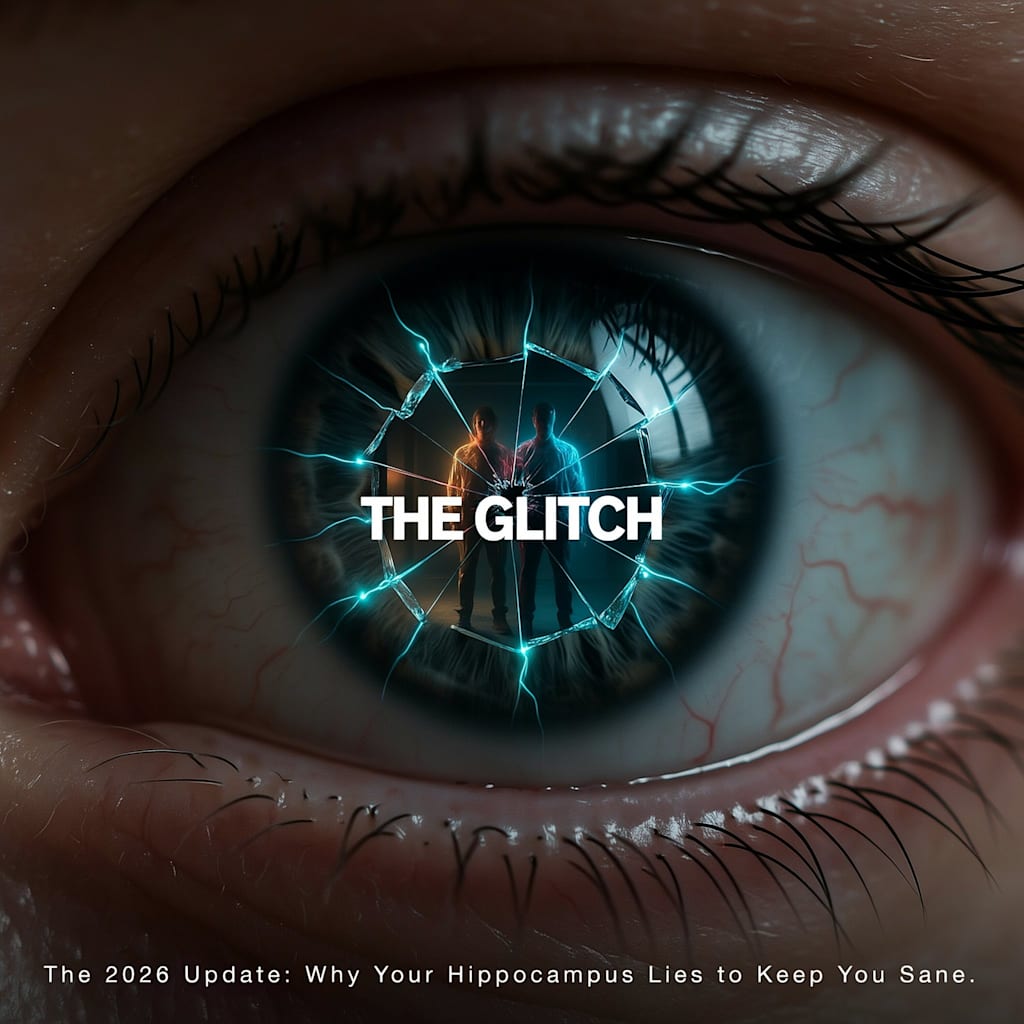
For decades, déjà vu was relegated to the realm of mystery—a curious "glitch in the matrix" that scientists couldn't quite replicate or explain. But 2025 and 2026 have brought a seismic shift. Researchers are finally moving beyond mere description and are uncovering the cognitive and neural machinery behind this haunting sensation. The emerging picture is far more profound than a simple memory error; it's a window into how our brains construct reality, manage time, and even protect our sanity. The Illusion of Prediction: Déjà Vu's Deceptive Partner Have you ever felt not just that you've been somewhere before, but that you know exactly what will happen next? This accompanying sensation is called a "feeling of prediction" (FOP). For years, it was unclear whether this FOP was a cause of déjà vu or just a side effect. Now, groundbreaking research from 2025 has provided a definitive answer: familiarity itself drives this illusion. In a clever series of experiments, researchers used virtual tours to manipulate how familiar a new scene felt without letting participants consciously recall why. They found that as the feeling of familiarity increased—even when participants couldn't remember the source—their illusory sense of prediction grew stronger. This demonstrates a causal link: the brain detects a pattern it finds familiar, and as a result, it tricks you into believing you can foresee the future. This finding has been extended to the auditory realm as well, with a 2025 study showing a similar "illusion of prediction" occurs during déjà entendu—the sensation of having heard something before. A Memory Out of Time: The "Hyper-Recency" Bias Perhaps the most startling discovery of 2025 concerns how déjà vu relates to our perception of time. A landmark study published in the Journal of Experimental Psychology: General identified a shared cognitive mechanism between déjà vu and psychoticism: a "hyper-recency" bias. In this bias, individuals remember events as having occurred more recently than they actually did. The study found that people who experience frequent déjà vu, as well as those with higher levels of psychoticism (such as paranoia), both exhibit this temporal distortion. Their memory systems are biased toward the "recent," blurring the lines between past and present. This can create a profound conflict between reality and experience, leading to the uncanny feeling that a current moment is a replay of the very recent past. This doesn't mean déjà vu is a sign of psychosis; rather, it suggests both phenomena may stem from a breakdown in the brain's ability to accurately timestamp memories. It's a powerful reminder that our sense of time is a construction, and déjà vu may be the moment that construction briefly wavers. How Common Is It, Really? To understand any phenomenon, we must first know its scope. A massive 2026 study involving over 11,600 participants provided crucial prevalence data. It found that over 70% of people have experienced déjà vu at least once in their lives, making it one of the most common "nonordinary" experiences. This confirms that far from being a rare oddity, déjà vu is a near-universal part of the human experience, making its scientific investigation all the more important. The Brain's Built-In Fact-Checker? So why do we have this strange sensation? One leading theory is that déjà vu is a metacognitive signal—a warning from your brain that its familiarity detection system might be misfiring. When your brain registers a strong feeling of familiarity for a situation it knows is new, the resulting "error" is the feeling of déjà vu. This mechanism may serve as a reality check, prompting you to pause and question your perceptions. In this light, déjà vu isn't a bug, but a feature—a sign of a healthy, vigilant memory system that double-checks its own work. What's Next? Scientists are now using fMRI to observe the brain in action during these induced states. By combining these advanced imaging techniques with the clever experimental designs of 2025, they are on the cusp of mapping the precise neural pathways that create the sensation of false familiarity. The mystery of déjà vu is finally being unlocked, and what we're finding is changing our fundamental understanding of memory, time, and consciousness itself.
About the Creator
Touseef Gul
If you want interesting information about psychology, astronomy and modern technology change.Then this page will provide suitable encyclopedia for curious minds.
Enjoyed the story? Support the Creator.
Subscribe for free to receive all their stories in your feed.
Comments
There are no comments for this story
Be the first to respond and start the conversation.