fact or fiction
Is it a fact or is it merely fiction? Exploring the myths surrounding the effects of alcohol beyond the classic 'beer before liquor, never been sicker'.
The Proof
When words are not enough, life leaves its own evidence The Question That HauntsFor years, Junaid carried a question in his heart that no one could answer. After his father passed away suddenly, many people spoke of him in different ways — some called him generous, others said he was too strict, and a few even whispered that he had hidden his true nature behind a quiet face. “How do we know who someone really was?” Junaid often wondered. “Is it what they say? Or what people remember? And what if the truth gets lost with time?”
By The Curious Writer4 months ago in Proof
The Brain’s Overfitting Problem: What AI Hallucinations Teach Us About Déjà Vu. AI-Generated.
For decades, déjà vu was relegated to the realm of mystery—a curious "glitch in the matrix" that scientists couldn't quite replicate or explain. But 2025 and 2026 have brought a seismic shift. Researchers are finally moving beyond mere description and are uncovering the cognitive and neural machinery behind this haunting sensation. The emerging picture is far more profound than a simple memory error; it's a window into how our brains construct reality, manage time, and even protect our sanity. The Illusion of Prediction: Déjà Vu's Deceptive Partner Have you ever felt not just that you've been somewhere before, but that you know exactly what will happen next? This accompanying sensation is called a "feeling of prediction" (FOP). For years, it was unclear whether this FOP was a cause of déjà vu or just a side effect. Now, groundbreaking research from 2025 has provided a definitive answer: familiarity itself drives this illusion. In a clever series of experiments, researchers used virtual tours to manipulate how familiar a new scene felt without letting participants consciously recall why. They found that as the feeling of familiarity increased—even when participants couldn't remember the source—their illusory sense of prediction grew stronger. This demonstrates a causal link: the brain detects a pattern it finds familiar, and as a result, it tricks you into believing you can foresee the future. This finding has been extended to the auditory realm as well, with a 2025 study showing a similar "illusion of prediction" occurs during déjà entendu—the sensation of having heard something before. A Memory Out of Time: The "Hyper-Recency" Bias Perhaps the most startling discovery of 2025 concerns how déjà vu relates to our perception of time. A landmark study published in the Journal of Experimental Psychology: General identified a shared cognitive mechanism between déjà vu and psychoticism: a "hyper-recency" bias. In this bias, individuals remember events as having occurred more recently than they actually did. The study found that people who experience frequent déjà vu, as well as those with higher levels of psychoticism (such as paranoia), both exhibit this temporal distortion. Their memory systems are biased toward the "recent," blurring the lines between past and present. This can create a profound conflict between reality and experience, leading to the uncanny feeling that a current moment is a replay of the very recent past. This doesn't mean déjà vu is a sign of psychosis; rather, it suggests both phenomena may stem from a breakdown in the brain's ability to accurately timestamp memories. It's a powerful reminder that our sense of time is a construction, and déjà vu may be the moment that construction briefly wavers. How Common Is It, Really? To understand any phenomenon, we must first know its scope. A massive 2026 study involving over 11,600 participants provided crucial prevalence data. It found that over 70% of people have experienced déjà vu at least once in their lives, making it one of the most common "nonordinary" experiences. This confirms that far from being a rare oddity, déjà vu is a near-universal part of the human experience, making its scientific investigation all the more important. The Brain's Built-In Fact-Checker? So why do we have this strange sensation? One leading theory is that déjà vu is a metacognitive signal—a warning from your brain that its familiarity detection system might be misfiring. When your brain registers a strong feeling of familiarity for a situation it knows is new, the resulting "error" is the feeling of déjà vu. This mechanism may serve as a reality check, prompting you to pause and question your perceptions. In this light, déjà vu isn't a bug, but a feature—a sign of a healthy, vigilant memory system that double-checks its own work. What's Next? Scientists are now using fMRI to observe the brain in action during these induced states. By combining these advanced imaging techniques with the clever experimental designs of 2025, they are on the cusp of mapping the precise neural pathways that create the sensation of false familiarity. The mystery of déjà vu is finally being unlocked, and what we're finding is changing our fundamental understanding of memory, time, and consciousness itself.
By Touseef Gul4 months ago in Proof
Comau Saw Mary
It was December 25th, 1039, in a small commune in France, Soulzon, Southern France, near the Pyrenees. The doctor's family, with three kids, Francois, Gilbert, and Loisinnes, were preparing all week for the Christmas festivities in town. They were celebrating the coming birth of the child Jesus by decorating the town hall and singing in a choir. That morning, they were all stressed out because of the recurrent dreams of all three kids. That morning, the parents found them in their beds crying because the dream had been particularly vivid and strange. All three kids were adamant about seeing the Virgin Mary in their dreams, near a well-known cave outside town.
By Petra Van Geenen5 months ago in Proof
Why the U.S. Can’t Fully Open the Strait of Hormuz: Inside Iran’s Growing Maritime Dominance
1. The Chokepoint That Controls the World The Strait of Hormuz is not just a narrow waterway—it is the beating heart of the global energy system. Nearly one-fifth of the world’s oil supply passes through this tight corridor every day, making it one of the most strategically important locations on Earth. When this route is disrupted, the entire world feels the shock—from rising fuel prices to economic instability. Today, that chokepoint has become a battlefield of power, where control matters more than sheer military strength.
By Muhammad Zeeshan5 months ago in Proof
Why Gas Prices are So Expensive Right Now
If you’ve pulled up to a gas pump lately and winced at the total, you’re not alone. Rising gas prices have become a regular frustration for drivers, commuters, and families trying to manage their budgets. While it’s easy to blame “the economy” or assume companies are simply charging more, the reality is more complicated. Gas prices are shaped by a mix of global events, supply chains, government policy, and basic economics.
By AnthonyBTV7 months ago in Proof
Cosmic Cocktails: Galaxy-Inspired Drinks to Dazzle Your Night
When it comes to cocktails, sometimes you want to shoot for the stars—literally. Galaxy cocktails have taken the bar scene by storm, dazzling drinkers with shimmering colors, swirling patterns, and out-of-this-world flavors. These cosmic cocktails look like they were plucked from a nebula, glowing softly with iridescent hues that shift from deep purples to electric blues and shimmering silvers. They’re the perfect drinks for anyone who wants to add a little magic and mystery to their night.
By Vivian Chen8 months ago in Proof
Matcha Cocktails: Green Tea Drinks with a Kick
Matcha isn’t just for your morning latte anymore. This vibrant green powder, made from finely ground Japanese green tea leaves, has stormed the cocktail world with its earthy flavor, bright color, and health perks. If you’re looking for a refreshing drink that packs antioxidants and a gentle caffeine boost, matcha cocktails are your new best friend.
By Andrea Martinez8 months ago in Proof
Herbal Tea Cocktails: Sip Your Way to Calm and Wellness
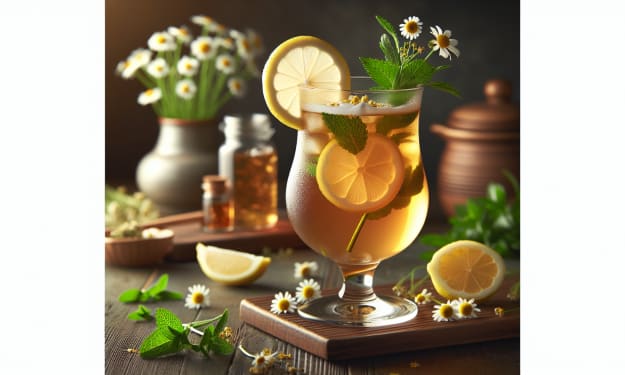
Herbal tea cocktails are the unsung heroes of the cocktail world—infusions that soothe, refresh, and elevate your drinking experience without the usual buzz. They blend the ancient wisdom of tea with the art of mixology, crafting drinks that calm the nerves and tantalize the taste buds. Whether you’re winding down after a long day or looking for a wellness boost with a twist, herbal tea cocktails bring nature’s best flavors to your glass.
By Stella Rossi8 months ago in Proof
Spiced Cocktails to Warm Your Winter Nights
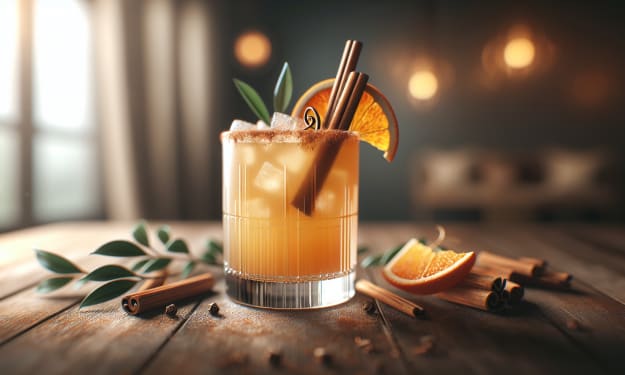
Winter calls for drinks that wrap you up like a cozy blanket. Spiced cocktails, with their rich aromas and warm flavors, are the perfect remedy for chilly evenings. Imagine the scent of cinnamon, clove, nutmeg, and allspice swirling in your glass, teasing your senses before the first sip. These spices don’t just add flavor — they bring a comforting warmth that feels like a hug from the inside out.
By Marcus Petrov8 months ago in Proof
Maple Cocktails: Embrace Natural Sweetness in Fall Drinks
When the leaves turn golden and the air grows crisp, nothing captures the cozy spirit of fall quite like maple syrup. This natural sweetener brings a rich, woody depth to cocktails that’s both comforting and sophisticated. Maple cocktails are perfect for those who want to add a touch of autumn magic to their glass without relying on artificial flavors or heavy syrups.
By Andrea Martinez8 months ago in Proof
Honey Cocktails: Sweet, Natural, and Healthy Sips
Honey has been cherished for centuries not just as a natural sweetener but as a flavor enhancer that brings depth and warmth to cocktails. Unlike refined sugar or artificial syrups, honey offers complex floral notes and a silky texture that can elevate even the simplest drinks. Plus, it’s packed with antioxidants and has soothing qualities, making it a favorite among those who want a healthier twist in their glass.
By Stella Rossi8 months ago in Proof