history
Since discovering alcohol a millennium ago, humans have been gung-ho about this liquid drug; Voyage back in time to map out the history of alcohol and drinking.
10 Mythical animals they actually existed in real life
Mythical creatures are creatures that are found in legends, myths, and folklore, but do not exist in the natural world. These creatures are often imbued with supernatural powers and abilities, and are often used to explain natural phenomena or to serve as symbols for human traits and emotions.
By Mohammed thanvir4 years ago in Proof
Danushkodi - the southern tip of India
Danushkodi is a small coastal village in the Ramanathapuram district of the Indian state of Tamil Nadu. It is located at the southernmost tip of the Indian peninsula, at the confluence of the Bay of Bengal, the Indian Ocean, and the Arabian Sea. Danushkodi is known for its scenic beauty, serene beaches, and historical significance. It was devastated by a cyclone in 1964, which killed thousands of people and destroyed most of the village. Today, Danushkodi is a popular tourist destination and attracts visitors from around the world who come to enjoy its natural beauty and learn about its history.
By Sri Poorna Kodi4 years ago in Proof
The Science of Memory: Exploring How Our Brain Creates and Stores Memories
In the summer of 1994, a few hours after the news of O.J. Simpson's arrest hit the airwaves, a young woman named Rebecca was sitting in her living room in Los Angeles, flipping through the channels to find more information. Suddenly, she saw a news clip of Simpson's white Bronco barreling down a Los Angeles freeway. She was captivated, and even though she had no personal connection to the case, she watched the news for hours that day and many more in the weeks that followed. Over time, the events of that summer became etched in her memory: the endless news coverage, the trial, the verdict. More than two decades later, she still remembers every detail vividly. But why? Why does Rebecca remember the events of the O.J. Simpson trial so clearly, while other events from that same time period have faded from her memory? The answer lies in the way our brains create and store memories. The process of memory formation has three stages: encoding, consolidation, and retrieval. Encoding is the process by which we perceive and process information from our environment. For Rebecca, the news of Simpson's arrest and the subsequent events of the trial were encoded in her brain as visual and auditory stimuli. Consolidation is the process by which these encoded memories are stabilized and strengthened in the brain. This happens during sleep, when the brain replays the events of the day and strengthens the neural connections associated with those memories. In the case of Rebecca's memories of the O.J. Simpson trial, the intense emotions she experienced while watching the news likely contributed to the consolidation of those memories. Finally, retrieval is the process by which we access and bring back memories into conscious awareness. For Rebecca, the constant news coverage of the trial likely triggered the retrieval of her memories, causing her to remember the events of that summer so vividly. But not all memories are created equal. Some memories, like Rebecca's memories of the O.J. Simpson trial, are more vivid and long-lasting than others. This is due in part to the role of emotion in memory formation and retention. Flashbulb memories, like Rebecca's memories of the O.J. Simpson trial, are highly emotional and vivid memories of significant events. These memories are often tied to strong emotions, such as fear, surprise, or joy. The intense emotional arousal associated with these events helps to consolidate and strengthen the neural connections that form those memories, making them more vivid and long-lasting. However, not all memories are accurate. Memories can be distorted or changed over time, and false memories can even be implanted. This is due to the fact that memory is not like a video recording that can be replayed perfectly. Instead, memory is reconstructive, meaning that we often fill in gaps in our memories with information that we believe to be true, but may not actually be accurate. As we age, our memory function declines. This can lead to difficulty remembering new information, as well as a decline in our ability to retrieve older memories. However, there are strategies that can help to maintain memory function as we age, such as regular exercise, a healthy diet, and engaging in mentally stimulating activities. In conclusion, the way our brains create and store memories is a fascinating and complex process. Our memories are shaped by the events we experience, the emotions we feel, and the passage of time. Understanding how memory works can help us to better understand ourselves, and even improve our memory function as we age.
By Mystery Writer4 years ago in Proof
THE ALEXANDRIAN EMPIRE
The conquest of Persia and the formation of the Alexandrian Empire :- Alexander the Great was a able aggressive baton and King of Macedonia who baffled abundant of the accepted apple in the 4th aeon BCE. He is best accepted for his acquisition of Persia and the conception of the Alexandrian Empire.
By korjrb hdjdjh4 years ago in Proof
Louis XIV ( Great King Of Histroy )
Louis XIV Full Story :- Louis XIV (1638-1715) was the King of France from 1643 to 1715. He was built-in in Saint-Germain-en-Laye, France and was the son of King Louis XIII and his wife, Anne of Austria. Louis XIV was accepted as the Sun King and was one of the longest ascendant monarchs in European history, cardinal for 72 years.
By korjrb hdjdjh4 years ago in Proof
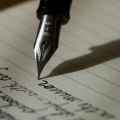
History of pen
I. Introduction A. Definition of a pen: A pen is a writing instrument used to apply ink to a surface, typically paper, for the purpose of writing or drawing. B. History of the pen: The earliest forms of pens can be traced back to ancient Egypt, where reed brushes and reed pens were used for writing on papyrus scrolls. The modern pen as we know it today, with a metal nib and ink reservoir, was invented in the 19th century. The first fountain pen was patented by John Jacob Parker in 1827, and the first commercially successful fountain pen was invented by Lewis Waterman in 1884. The ballpoint pen, which uses a tiny ball bearing in the tip to roll ink onto paper, was patented by Laszlo Biro in 1938. Gel pens and rollerball pens were later developments in the 20th century. II. Types of pens A. Ballpoint pens: These pens have a tiny ball bearing in the tip that rolls as the pen is moved across the page, dispensing ink. They are known for their durability and ability to write on glossy surfaces. B. Fountain pens: These pens have a nib that is dipped into an ink reservoir and then used to write. They are known for their smooth writing experience and ability to create fine lines. C. Rollerball pens: These pens are similar to ballpoint pens, but use a liquid ink that flows more freely, resulting in a smoother writing experience. D. Gel pens: These pens use a gel-based ink that is thicker than regular ink, resulting in bolder and more vibrant lines. E. Digital pens: These pens are specifically designed to work with digital devices such as tablets and smartphones, allowing users to write or draw directly onto the screen. III. Components of a pen A. Barrel: The body of the pen. B. Nib or tip: The part of the pen that comes into contact with the paper and applies the ink. C. Ink or refill: The substance that is used to write or draw. D. Cap or clip: The removable or retractable cover that protects the nib when the pen is not in use. E. Button or mechanism (if applicable): Some pens have a button or mechanism that controls the flow of ink, such as the clicker on a ballpoint pen. IV. Uses of pens A. Writing: The most common use of a pen is to write words or letters on paper. B. Drawing: Pens can also be used to create art, such as sketches or illustrations. C. Signing documents: Pens are often used to sign important documents such as contracts or checks. D. Calligraphy: Some pens, such as fountain pens, are specifically designed for calligraphy, the art of creating beautiful handwriting. E. Sketching: Pens can be used to create quick sketches or detailed drawings. V. Advantages and Disadvantages A. Advantages: Convenient, portable, easy to use, long lasting, B. Disadvantages: Can run out of ink, can leak or smear, can be easily lost, can be costly. VI. Conclusion A. Summary of key points: A pen is a writing instrument that applies ink to a surface for the purpose of writing or drawing. There are various types of pens, each with their own unique characteristics and uses. B. Importance of pens in daily life: Pens are an essential tool in daily life, used for writing, drawing, signing documents, and more.
By Giridharan4 years ago in Proof