art
Those with the pallete for fine wine will surely appreciate our fine wine art, music and other creative depictions starring the devil's brew.
Above 125 Rooftop Series: Indulge Shapes a New Rooftop Social in Harlem by NWO Sparrow
Rooftop energy done the right way, good music, better company, no wasted moments at Above 125 . By Nwo Sparrow Jack Daniel’s holding its place where music meets conversation and the night moves at its own pace.
By NWO SPARROW3 months ago in Proof
Summertime’s Calling Me
I love a refreshing summer cocktail with a citrus-forward flavor profile, and while I was tending bar a few years ago at The Dunhill Hotel in uptown Charlotte, I came up with this recipe that includes some of my favorite flavors: orange, lavender, and lemon.
By Harper Lewis 5 months ago in Proof
Two Worlds, One Night: PanamaDaPrince Bridged Play and Nightlife at Swings ‘N’ Swigs With Ja Rule and Amber & Opal
Over 300 guests moved through a night that blended flavor, sound, and culture in real time by NWO Sparrow PanamaDaPrince Elevated Swings ‘N’ Swigs With Amber & Opal and Presence From Ja Rule PHOTO BY NICK SNIPES
By NWO SPARROW6 months ago in Proof
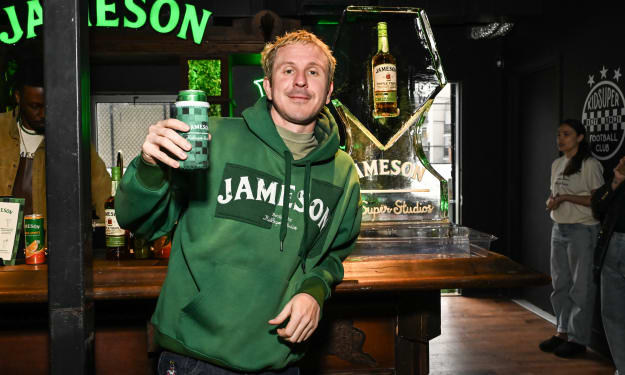
Actor Lukas Gage joined Jameson Irish Whiskey and KidSuper designer Colm Dillane to Celebrate St. Patrick’s Season for a pre-holiday kick off party in Brooklyn
The collaboration between KidSuper and Jameson Irish Whiskey shows how the holiday is moving beyond bars and into fashion driven culture spaces. by NWO Sparrow
By NWO SPARROW7 months ago in Proof
🌍 Global Power Rankings 2026: Who Really Controls the World?
🌍 Global Power Rankings 2026: Who Really Controls the World? 📊 Global Power Rankings Chart In today’s world, power is no longer measured only by the size of an army or the number of tanks a country owns. Global power has become complex, multi-layered, and deeply connected to technology, money, information, and influence. The global power rankings shown above help us understand who really controls the world in 2026 and why the balance of power is becoming more unstable than ever before.
By Wings of Time 8 months ago in Proof
The Day a Stranger Taught Me How to Stop Apologizing For Everything
I didn’t expect a stranger to change the way I spoke to myself. But sometimes, one sentence from someone you’ll never see again stays with you longer than anything you've heard from people you’ve known for years.
By Aman Saxena11 months ago in Proof
Kakheti Wine Tour. Top Story - October 2025.
Any Georgian will proudly tell you that Georgia is the birthplace of wine. Our tour guide told us about the archeological evidence that the ancient way of making wine in a large clay pot capable of holding hundreds and even thousands of liters of wine called qvevri [pronounced kwevri] goes back at least 8,000 years. However, the recently found earliest qvevri are now estimated to be around 11,000 years.
By Lana V Lynxabout a year ago in Proof
Bartender as Archivist: Preserving Memory One Recipe at a Time
A cocktail is never just a drink. It is a container of memory, a snapshot of place, and a record of emotion—shaken, stirred, and poured into a glass. To see the bartender as simply a craftsman of spirits is to miss the deeper truth: bartenders are archivists. They catalog experience not with pen and paper but with bitters, syrups, and garnishes. Every recipe written down, every drink repeated or reinvented, is a piece of history captured and handed forward.
By Sofia Mertinezzabout a year ago in Proof
Symphony in Syrup: Music, Rhythm, and the Flow of Mixology
Watch a bartender work, and you’ll see choreography. The clink of ice, the hiss of a soda gun, the soft metallic ring of a spoon against the glass — it’s not just functional. It’s musical. There’s a cadence to cocktail creation, a symphony made from repetition, memory, and motion. And much like music, the process of mixology is as emotional as it is technical.
By Sofia Mertinezzabout a year ago in Proof
The Five Senses of a Perfect Drink: Beyond Flavor Alone
When we think about cocktails, flavor often takes center stage. But a truly perfect drink is a symphony played across all five senses — not just taste. Every sip is an immersive experience shaped by sight, smell, sound, and touch just as much as by the ingredients themselves. Understanding how these senses interplay can elevate your enjoyment and deepen your appreciation of mixology.
By Aisha Patelabout a year ago in Proof
What Your Ice Says About You: Personality Through Preparation
We often overlook the simplest element in our cocktails — the ice. But ice isn’t just functional; it’s expressive. The way you freeze, crack, or cube your ice can quietly tell the story of your personality. Crystal-clear blocks suggest intention and care. Crushed ice evokes a playful, go-with-the-flow vibe. Hand-chipped spheres? A flair for the dramatic. Like the clothes we wear or the music we play, our ice habits reflect how we move through the world.
By Sofia Mertinezzabout a year ago in Proof
"I Made a Copy of a Labubu Doll — It Was Easier Than You Think"
I’ve always loved the charm and quirkiness of designer toys, but one figure in particular had captured my heart: the Labubu doll. With its mischievous grin, oversized ears, and wild hair, Labubu looked like something straight out of a dream—or a nightmare, depending on your perspective. The problem? The real ones were either sold out or insanely expensive on resale sites. We're talking $200 and up for a six-inch toy. At first, I just stared longingly at photos online. Then I had a wild thought: Could I make one myself? I’m not an artist. I’ve never sculpted anything beyond a sad little clay bowl in grade school. But I figured, why not try? Worst case, I waste a weekend. Best case, I end up with my very own DIY Labubu. So, I gathered supplies. I went to a local art store and picked up: Polymer clay (the kind you bake in the oven), A set of small sculpting tools (nothing fancy, just some plastic ones), Acrylic paints and tiny brushes, A wire frame for structure, Some fluffy yarn for hair. It all cost me around $30—way less than the real thing. I set up at my kitchen table with a YouTube tutorial playing on repeat. The artist wasn’t even making Labubu specifically, but their method of building a figure from wire and clay gave me the foundation I needed. I started with a basic skeleton made from aluminum wire. Think of it like a tiny stick figure with thicker limbs. This would hold the shape of the doll while I sculpted around it. Covering it with clay felt like putting muscle on a bone—it began to look like a creature. The hardest part was the face. Labubu’s expression is iconic. It’s sly and weirdly cute at the same time. Mine… looked like he’d just smelled something awful. But I kept going. I realized something quickly: perfection wasn’t the goal. I wasn’t recreating Labubu down to the last detail. I was making my own version of him, and that gave me freedom. By the time I finished the sculpt and baked it in the oven, I was exhausted. The doll stood about six inches tall and looked like a haunted squirrel. But I loved him. Painting was the fun part. I mixed different shades of gray and brown to give him some texture, painted the eyes glossy black, and gave the teeth a cartoonish shine. For the hair, I glued on tufts of yarn and fluffed them out with a comb. It looked surprisingly close to the original. When I stepped back and looked at the finished doll, I laughed. Not because it was bad, but because I’d actually done it. My little DIY Labubu sat proudly on my shelf, slightly crooked ears and all, looking every bit as mischievous as the real ones. I didn’t expect what happened next. I posted a photo on Instagram with the caption: “Made my own Labubu because I couldn’t afford the real deal 😂”. Within an hour, I had comments like: “Wait… you MADE this???” “Can you make me one??” “This is actually better than the original!” That gave me an idea. I started documenting the process more seriously. I took step-by-step photos, shared tips, and even recorded a timelapse of my next attempt. My second DIY Labubu was smoother, more refined. I started giving them personalities—one had a tiny backpack, another wore little goggles. What started as a personal weekend project turned into a full-blown hobby. People began requesting custom versions. I never sold any (out of respect for the original artist, Kasing Lung), but I made a few as gifts for friends who were also fans of Labubu. The best part? I learned something unexpected along the way: creativity doesn’t require permission. You don’t need to be a professional sculptor or have an art degree to make something meaningful. You just need to try. Sure, my first doll was a little lopsided. But it was mine. It had personality, quirks, and most importantly, a story. I also realized how accessible creativity has become. The internet is full of tutorials, communities, and affordable materials. You can learn almost anything with a bit of curiosity and patience. Today, my handmade Labubu army sits on a shelf next to my computer. Every time I glance at them, I’m reminded of that first moment—of choosing to create instead of consume, of making something with my hands instead of just scrolling and wishing. So if there’s a designer toy you love but can’t afford, or a piece of art you admire from afar, I have one piece of advice: try making your own. It doesn’t have to be perfect. In fact, the imperfections might be the best part. Because sometimes, the copy has more heart than the original.
By Nizam khanabout a year ago in Proof