
What Good Can a Medical Wig Be?
A Review from a Real Experience

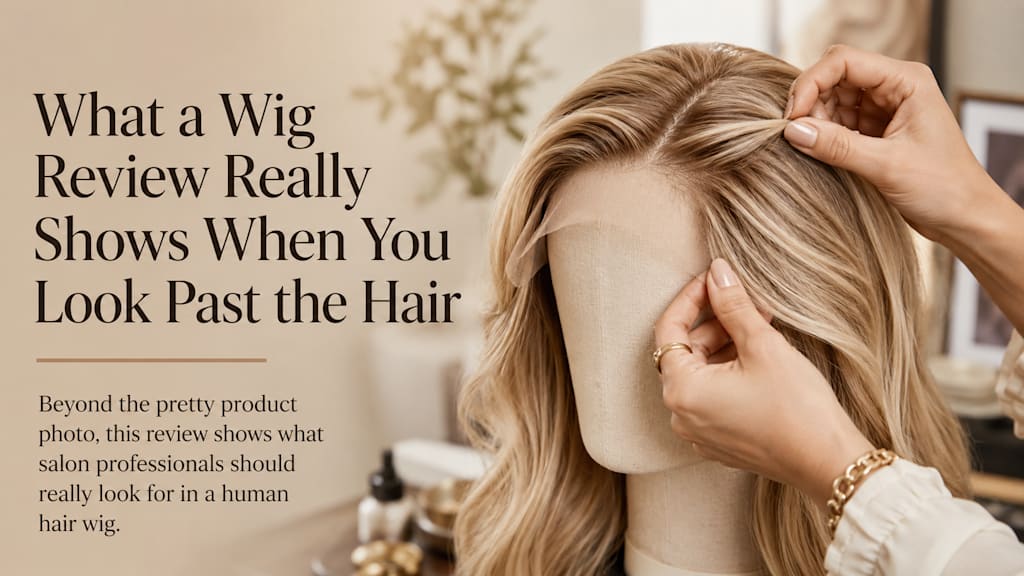
There is a strange little ritual that happens in the wig world.
Someone opens a box, shakes out a new wig, runs their fingers through the hair, and says, “This is beautiful.”
And maybe it is.
But “beautiful” is not the same thing as useful. It is not the same thing as comfortable. After a client has moved around in it, styled it, sweated a little, looked at it under daylight, and wondered whether people can tell.
That is the part most wig reviews skip.
A wig can photograph well and still fail the moment it has to behave like real hair on a real person. A product photo can hide density problems. A soft curl can distract from a stiff cap. And a flattering angle can make almost any lace front look better than it actually is.
That is why Teresa from Ted’s Wig Emporium’s hands-on review of the Newtimes Hair HW1 human hair wig is worth slowing down for.
Not because it is loud. Not because it is dramatic. Not because it promises some magical transformation.
Because it looks at the boring things.
And with wigs, the boring things are usually the things that matter most.
The inside tells you more than the outside
Most people look at a wig from the outside first.
That makes sense. Hair is visual. Clients care about the color, the length, the movement, and the way it frames the face. But professionals know that a wig’s real personality often starts on the inside.
The cap decides whether the wig feels like something a client can actually live in.
In Teresa’s review, the HW1 wig was shown from the inside out. That matters because this is where you can see the construction instead of guessing from a styled photo. The wig features a double monofilament top, a Swiss lace front, ear tabs, an extended nape, and adjustable hooks.
On paper, that sounds technical.
In real life, it means the wig is designed to do two basic jobs: look natural and stay comfortable.
The double monofilament top is one of the more important details. It helps create a smoother feel against the scalp because the knots are protected between layers. For someone with sensitive skin, medical hair loss, or a need to wear the wig all day, that can make a real difference.
This is the kind of feature that does not always get attention in a casual review. But for salons, wig specialists, and hair replacement professionals, it is often the difference between a client saying, “This feels good,” and a client quietly deciding they will not wear it again.
The lace front still needs a professional eye
The wig arrived with an uncut Swiss lace front.
That might worry someone new to wigs, but it should not. In professional wig work, uncut lace is normal. It gives the stylist room to trim the front to match the wearer’s hairline instead of forcing every client into the same factory shape.
This is one of those small details that separates a ready-to-wear mindset from a professional customization mindset.
A wig is not always supposed to be perfectly straight out of the box. Sometimes, the better question is whether it gives the stylist enough quality to work with.
After the lace was trimmed, Teresa showed how the front looked against the hairline. She also pointed out something useful: because the wig had a rooted color, the knots appeared darker. That is the kind of honest observation buyers need. It does not ruin the wig, but it is something a stylist should know before presenting the final look to a client.
The final realism of a wig often comes from small adjustments — lace trimming, parting, face-framing, baby hair control, and styling. No factory can fully replace that last professional step.
And honestly, that is not a weakness.
That is just how good wig work happens.
Hair quality is where the review becomes interesting
The HW1 wig reviewed by Teresa was made with 100% Chinese virgin human hair.
That phrase gets used so often in the hair industry that it can start to sound like wallpaper. Everyone says “premium.” Everyone says “high quality.” Everyone says the hair is soft.
But there is a simple test that cuts through most of that.
How does the hair feel when someone actually handles it?
In the review, the hair looked smooth, soft, and easy to move through with the fingers. It did not have that rough, dry, overly processed “box hair” feeling that can make a wig look tired before it has even been worn.
For a client, that means the wig has a better chance of feeling natural. For a stylist, it means more room to cut, shape, layer, and personalize the piece.
That is where value begins to show.
A wholesale wig is not only about the price on the invoice. It is about whether a salon can confidently put it in front of a client and know there is enough quality to finish the job properly.
Clients do not come back because the product description sounded good.
They come back because the hair did.
The color had dimension, which matters more than people think
Blonde wigs are tricky.
A blonde wig can look beautiful online and still arrive too yellow, too flat, too stripey, or too artificial. Rooted blonde is especially risky because the transition from root to lighter lengths needs to look intentional, not like two separate wigs had an argument.
The Newtimes Hair wig Teresa reviewed came in a rooted, highlighted blonde shade. She described it as having a chestnut brown base with creamy blonde and light golden blonde highlights.
The most important part was not simply that the color looked pretty.
It had a dimension.
There were darker pieces running through the blend, an even root, and a softer transition into the lighter lengths. That kind of color usually looks more believable in real life because natural hair is rarely one flat block of color.
For salon professionals, dimensional color is not just a design choice. It can make the wig easier to place on more clients, easier to soften around the face, and easier to make believable under different lighting.
A wig should not scream “wig” before the client even speaks.
It should move quietly into the person’s life.
Density can make or break the whole thing
Density is one of those details that sounds simple until you get it wrong.
Too little hair, and the client feels exposed.
Too much hair, and the wig starts looking like a costume.
The HW1 wig leaned medium-to-heavy in density, which gave it plenty of hair to work with. Teresa also noted that the front hairline did not feel bulky, which is important. A full wig can still look natural if the front is handled well.
This is especially helpful for stylists because higher density gives more room for customization. Face-framing layers, bangs, thinning, and shaping are all easier when there is enough hair to work with from the start.
But this also means expectations matter.
This is not necessarily a wig that arrives as a finished haircut for every client. It is more like a strong base unit: good cap, good hair, good color, and enough density for a professional to personalize.
That is probably the right way to understand it.
Fit is not glamorous, but it decides everything
A wig that looks good but does not stay put is useless.
Security is not a small thing. It affects how a client walks, talks, turns their head, hugs people, sits in the wind, and lives their ordinary life without constantly checking a mirror.
In the review, the cap appeared secure and did not require tape or adhesive during wear. Teresa pointed to the ear tabs, adjusters, and extended nape as part of the fit.
That may not sound exciting, but it is one of the most important parts of the whole review.
A client who trusts the fit is more likely to actually wear the wig. A client who wears it comfortably is more likely to return to the salon. And a salon that can deliver that feeling earns something more valuable than a one-time sale.
It earns trust.
Who this wig makes sense for
The medical wig seems best suited for professional buyers who want a customizable human hair wig that's comfortable to wear, rather than a fully finished fashion piece.
It makes sense for wig salons, hair replacement professionals, and stylists working with clients who need comfort, coverage, and a natural-looking front. It also makes sense for buyers who understand that lace trimming and final styling are part of the process.
It may not be the best fit for someone who wants a completely finished, ready-to-wear wig with no professional adjustment.
And that is fine.
Not every wig needs to be for everyone.
A good product knows what job it is trying to do.
The real takeaway
The most useful wig reviews are not the ones that say everything is perfect.
They are the ones that show enough detail for professionals to make a better decision.
Teresa’s review of the medical human hair wig does that. It gives a close look at the construction, lace front, cap comfort, hair quality, color blend, density, and fit. More importantly, it shows the wig before deeper salon customization, which is exactly the stage professional buyers need to understand.
A good wig does not need to be magical.
It needs to be honest.
It needs to have hair that feels good, a cap that can be worn comfortably, lace that can be finished properly, enough density to customize, and a color that still makes sense outside perfect lighting.
Not because it is flawless.
Because it gives them something they can actually work with.
Frequently Asked Questions
Is the HW1 wig made with human hair?
Yes. The reviewed unit was described as being made with 100% Chinese virgin human hair.
Is the wig ready to wear straight out of the box?
Not completely. The Swiss lace front arrives uncut, so it should be trimmed and customized before final wear.
Who is this wig best for?
It is best suited for wig salons, hair replacement professionals, stylists, and buyers who are comfortable with lace trimming, styling, and final customization.
About the Creator
Natalee Chand
With 10+ years in hair, I specialize in extensions, wigs & systems, crafting trend-savvy content. My blog educates & inspires stylists and salon owners with expertise in techniques, styling & innovations in the evolving hair landscape.
Enjoyed the story? Support the Creator.
Subscribe for free to receive all their stories in your feed. You could also become a paid subscriber, letting them know you appreciate their work.
Comments
There are no comments for this story
Be the first to respond and start the conversation.