
Dangers of Jimson Weed
Don’t let this pretty flowering plant fool you. Jimson Weed can be dangerous, especially if used as a recreational drug.

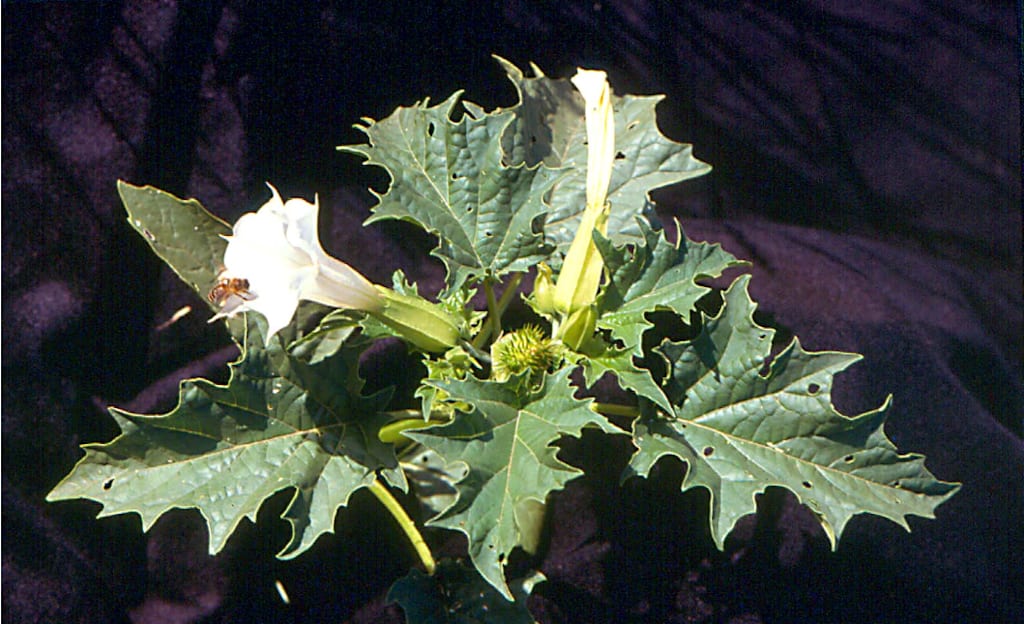
Looks are Deceiving
Don’t let the Jimson weed’s appearance fool you; this pretty, flowering plant can be dangerous if used incorrectly. While this weed can have medicinal purposes, it can easily be abused by recreational drug-users looking to get a high or by those that misuse it in several ways. Basically, its potent chemicals can cause great harm if ingested. And it has the potential of killing its users.
For years, this particular plant has been known for its medicinal benefits. Originally, its powdered form was used to treat asthma. However, an increasing number of young people are discovering that the plant can offer a high through smoking or ingesting it. However, with its main ingredients of belladonna alkaloids atropine and scopolamine, this plant can be poisonous in large doses.
Its Many Names
Jimson weed goes by many names by its users:
- Thorn Apple,
- stinkweed,
- locoweed,
- Tolache, Estramonio, and
- Devil Weed.
Its actual botanical name, however, is Datura stramonium. Despite its name, however, Jimson’s appearance is recognizable such as:
- It can reach a height of five feet;
- has broad dark green leaves;
- has numerous rubbery and branching stems; and
- contains large, purplish trumpet-shaped flower petals.
Also, the plant has a rank smell (hence, where its nickname, stinkweed, is derived from).
Its History
It is a native plant of the U.S. – mostly located on the west coast (but not entirely devoid in the East). It can be found in dry flat areas of foothills or mountains from 2,500 to 7,000 feet. Also, they are often found along dry washes, road sides or irrigation ditches.
Originally, the “asthma powders” used to treat the condition was a mixture of Jimson weed and potassium nitrate (saltpeter).
The plant's use has been known for years. In the 1600s, the weed was known as Jamestown weed for it was grown and used in the Jamestown colony.
The plant works as a muscle relaxer and a numbing agent in the bronchial tubes. It is often effective the first time; however, its effect wears off after several uses. It is best used as a medicinal drug after being converted to a powder form.
Originally, the “asthma powders” used to treat the condition was a mixture of Jimson weed and potassium nitrate (saltpeter). Often, the powder was ignited by flame at the first onset of spasm caused by asthma. The smoke was inhaled creating temporary relief.
It wasn’t the only thing the plant could do. Soon, adolescents and young adults discovered that the plant’s use had hallucinogenic or intoxicating properties. Many have either ingested the flowers or rolled up the leaves like cigarettes and smoked them.
A Dangerous Trend is Born
The consequences of these actions are alarming. In a case recorded by Kit Chan, MD of Permanente Journal, a 15-year-old boy brought to an emergency room exhibited bizarre behavior, including hallucinations. The mother of the child reported that he was shaking, mumbling, and trying to “pick at nonexistent items.” Also, she reported finding the plant in his room.
Symptoms of its toxicity usually occur within 30 to 60 minutes after ingestion.
Later, the boy admitted that he and his friend had deliberately ingested the weed. The other boys – his friends - were also taken to the hospital. The boys were lucky.
In 1988, 152 cases of Jimson weed poisoning were reported nationally to the American Association of Poison Control Centers.
In 2005 it was more than 900. Some of those cases resulted in hospitalization or death. It is believed that the number of cases may be larger than what was actually reported.
Why So Dangerous?
Jimson weed poisoning has several effects on the user. Symptoms of its toxicity usually occur within 30 to 60 minutes after ingestion. They include:
- hallucination,
- dry mucous membranes,
- thirst,
- dilated pupils,
- blurred vision, and
- difficulty speaking and swallowing.
Subsequent effects may include tachycardia (rapid heart rate), urinary retention, and ileus (disruption of the normal propulsive gastrointestinal motor activity).
Other symptoms have been reported, albeit rarely, which include:
- Hyperthermia,
- respiratory arrest, and
- seizures.
The effects of the weed can last up to 24 to 48 hours.
Overdosing – which can easily happen - can exasperate the situation. Patients who have overdosed on Jimson weed have been admitted to the hospital suffering from episodes of seizures, cardiac arrest, and coma. Also, the toxins found in this plant have been lethal to some users, especially in large quantities.
The One Bright Spot of Jimson Weed Use
One good thing about Jimson weed is its lack of addiction potential. Due to its effect on the user – and the fact many users found it very unpleasant – addiction is not a factor. The bad news, however, is that all it takes is one use or overdose to cause major harm to the user.
Jimson weed is not considered a controlled substance. Therefore, it is legal. In fact, extracts from this plant are being used to treat asthma, intestinal cramps, diarrhea and bed-wetting.
Still, this plant is very dangerous if used incorrectly. If anyone is suffering from the toxicity of this plant, they’ll need immediate medical help.

WORK CITED
- Chan, Kit M.D. “Jimson Weed Poisoning – a Case Report”: The Permanente Journal (Dec. 2002)
- “Jimson Weed: Fast Facts” National Drug Intelligence Center of the U.S. Department of Justice (2010)
- Christopher D. Allison, Jason L. Turner, John C. Wenzel: “Poisonous Plants of New Mexico Rangelands”: New Mexico State University
About the Creator
Dean Traylor
* Masters in special education and degree in journalism.
*Seasoned writer for the last 30+ years (Newspapers, Magazines, Internet sites)
* Former writer at Hubpages, Helium, and Wikinut.
* Current: Medium (https://medium.com/@ds_traylor)
Enjoyed the story? Support the Creator.
Subscribe for free to receive all their stories in your feed.
Comments
There are no comments for this story
Be the first to respond and start the conversation.