
Where Grief Becomes Eternal
A powerful reflection on love, death, and the mysteries that survive us.

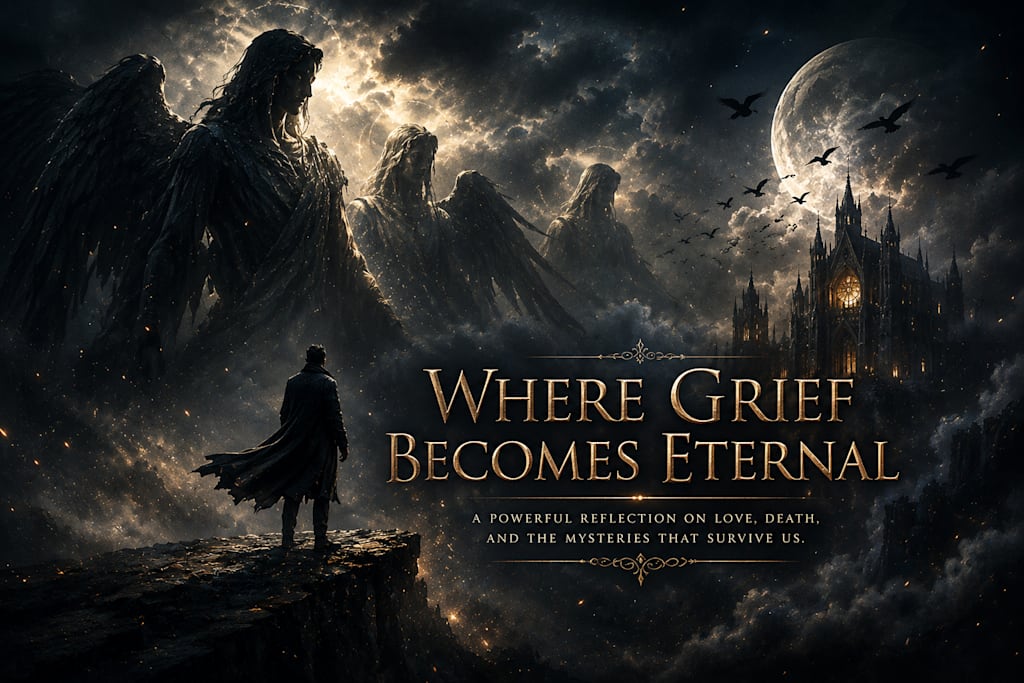
Who, if I cried out, would hear me among the Angels’
Orders? and even if one of them pressed me
suddenly to his heart: I’d be consumed
in his more potent being. For beauty is nothing
but the beginning of terror, which we can still barely endure,
and while we stand in wonder it coolly disdains
to destroy us. Every Angel is terrifying.
And so I grip myself and choke down that call note
of dark sobbing. Ah, whom can we turn to
in our need? Not Angels, not humans,
and the sly animals see at once
how little at home we are
in the interpreted world. That leaves us
some tree on a slope, to which our eyes returned
day after day; leaves us yesterday’s street
and the coddled loyalty of an old habit
that liked it here, lingered, and never left.
O and the night, the night, when the wind full of worldspace
gnaws at our faces—, for whom won’t the night be there,
desired, softly disappointing, setting hard tasks
for the single heart. It is easier on lovers?
Ah, they only use each other to mask their fates.
You still don’t see? Fling the emptiness in your arms
out into the spaces we breathe; perhaps the birds
will feel the increase of air with more passionate flight.
Yes, the Springs needed you. Many a star was waiting
for your eyes only. A wave swelled toward you
out of the past, or as you walked by the open window
a violin inside surrendered itself
to pure passion. All that was your charge.
But were you strong enough? Weren’t you always distracted
by expectation, as though each such moment
presaged a beloved’s coming? (But where would you keep her,
with all those big strange thoughts in you
going and coming and sometimes staying all night?)
No, in the grip of longing sing women who loved;
their prodigious feeling still lacks an undying fame.
The abandoned ones you almost envy, since you found them
so much deeper in love than those whom love allayed.
Begin ever anew their impossible praise.
Remember: the hero lives on, even his downfall
was only a pretext for attained existence: his ultimate birth.
But nature, exhausted, takes women in love
back into herself, as though she lacked strength
to create them a second time. Have you praised Gaspara Stampa
intently enough that any girl left by her lover
will be moved by this heightened instance
of a woman’s heart to cry out: Let me be as she was!
Isn’t it time these most ancient sorrows
at last bore fruit? Time we tenderly detached ourselves
from the loved one, and trembling, stood free:
the way the arrow, suddenly all vector, survives the string
to be more than itself. For abiding is nowhere.
Voices, voices. Listen, my heart, the way
only saints have listened till now, as that vast call
lifted them from the ground; while they kept on kneeling
and noticed nothing, those impossible ones:
listeners fully absorbed. Not that you could bear
God’s voice—not at all. But listen to the wind’s breathing,
the unbroken news that takes shape out of silence.
It’s rustling toward you now from all the youthful dead.
When you entered a church in Rome or Naples,
didn’t their fate speak quietly to you?
Or an inscription echoed deep within you,
as, not long ago, that tablet in Santa Maria Formosa.
Their charge to me?—that I gently dispel
the air of injustice that sometimes
hinders a little their spirits’ pure movement.
Granted, it’s strange to dwell on earth no more,
to cease observing customs barely learned,
not to give roses and other things of such promise
a meaning in some human future:
to stop being what one was in endlessly anxious hands,
and ignore even one’s own name like a broken toy.
Strange, not to go on wishing one’s wishes. Strange,
to see all that was once so interconnected
drifting in space. And death exacts a labor,
a long finishing of things half-done, before
one has that feeling of eternity.—But the living
all make the same mistake: they distinguish too sharply.
Angels (it’s said) often don’t know whether they’re moving among
the living or the dead. The eternal current
sweeps all the ages with it through both kingdoms
forever and drowns their voices in both.
In the end, those torn from us early no longer need us:
slowly one becomes unaccustomed to earthly things,
in the gentle way one leaves a mother’s breast. But we, who need
such great mysteries, for whom so often blessed progress
springs from grief—: could we exist without them?
Is it a tale told in vain, that myth of lament for Linos,
in which a daring first music pierced the shell of numbness:
stunned Space, which an almost divine youth
had suddenly left forever; then, in that void, vibrations—
which for us now are rapture and solace and help.
About the Creator
Kamran khan
- ✨ "Writer of ideas and emotions. Sharing motivational journeys, creative reflections, and inspiring stories to spark thought and connect hearts — one story at a time." ✨
Enjoyed the story? Support the Creator.
Subscribe for free to receive all their stories in your feed.
Comments
There are no comments for this story
Be the first to respond and start the conversation.