
The Smell of His Hands After Rain
On the archaeology of absence, and what the body remembers when the mind has sworn to forget

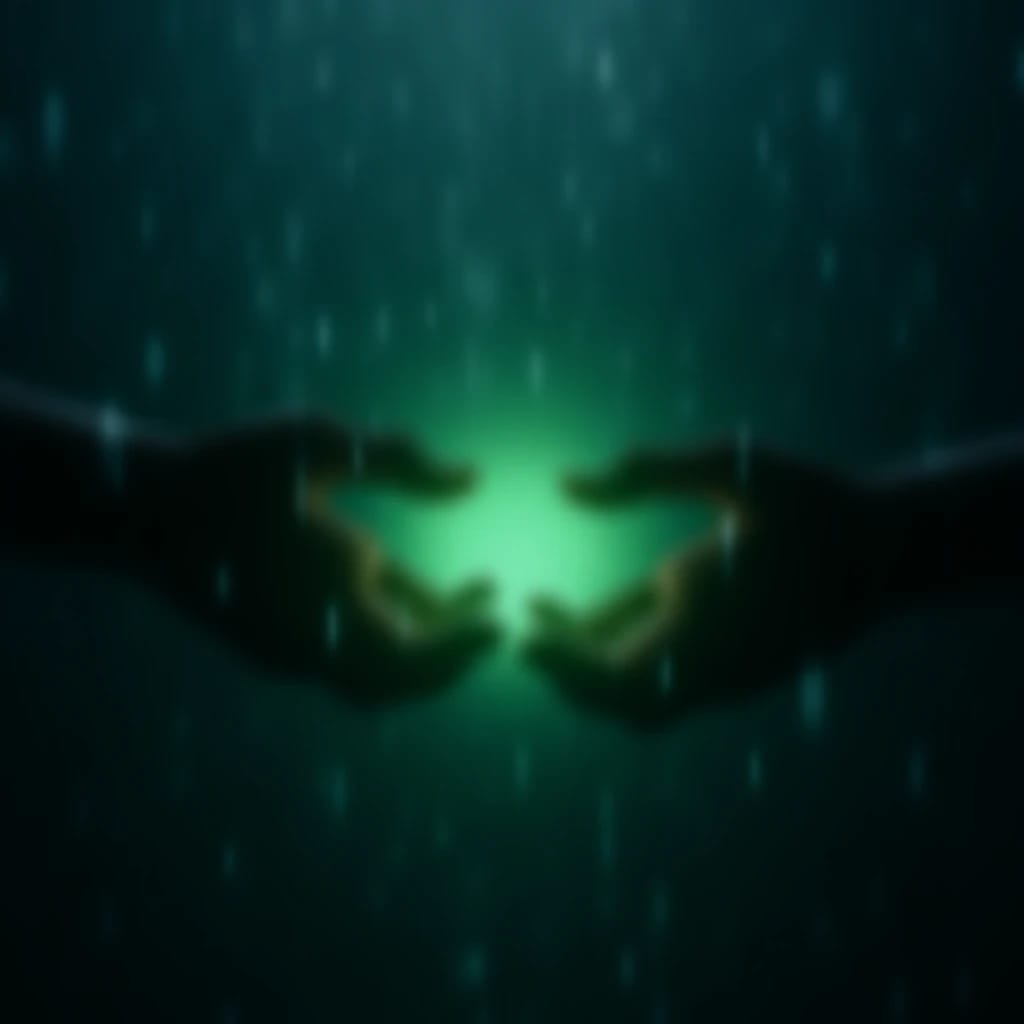
It starts with the hands. Always the hands.
Not the face—I tried to forget the face, and mostly succeeded. The eyes were the second thing to go, then the voice, then the particular way he laughed at his own jokes, waiting for you to join in. I let them dissolve in the ordinary way of things, the way sugar forgets it was once a cane, the way water forgets the cloud.
But the hands. The hands are different.
The hands are archaeology. They are the bones that survive the fire.
It is not the shape of them. I have forgotten the shape—the length of the fingers, the scar on the left knuckle from the window that broke in the storm, the way they moved when he talked, carving the air into shapes he could not name. Those details are gone, buried under the sediment of other hands, other windows, other storms.
It is the smell.
The smell of his hands after rain.
Not before. Before, they smelled of the things all hands smell of: soap, coffee, the metal of the keys he fumbled with, the paper of the books he never finished. Ordinary smells. Forgettable smells. The smells of a person in the world, moving through it, picking up its residue.
But after rain. After rain, they smelled of something I have never found a name for.
We were walking. This is the only scene I have left, the only one the body will not release. A street in a city that no longer exists for me—I have not been back, will not go back, the street is a museum I burned the map to. It was raining. Not hard. The kind of rain that is not weather but atmosphere, the sky's version of a held breath, a hesitation before speaking.
He took my hand. This is the gesture. This is the moment the body has decided to keep.
And his hand—his hand was warm, but the warmth was not the point. The warmth was ordinary. The warmth was the before-rain hand, the hand of coffee and keys and unfinished books.
The point was the transition.
The rain was on his skin. The rain was on mine. Where our palms met, the rain mixed with the heat of us, with the salt, with the chemistry of two bodies that had not yet learned to distrust each other. And in that mixing, something happened. A reaction. A transformation.
The rain became not rain. The hand became not hand. The moment became a smell that my body recorded before my mind could intervene, a smell that bypassed language and lodged directly in the limbic system, in the old brain, in the part of me that knows things before I know I know them.
It was green. That is the closest I can come. It was green, but not the green of grass or leaf or moss. It was the green of water moving over stone in a place where no light reaches. It was the green of a memory that is not mine, that I am somehow remembering anyway. It was the green of the moment before a word is spoken, when the word still contains all its possible meanings and has not yet narrowed itself into the one that will wound or the one that will save.
It was the green of almost.
I have spent years trying to find this smell again.
I have stood in rain in twelve cities. I have held hands with people who loved me and people who did not and people who could not decide. I have walked streets that were wet and streets that were dry and streets that were in the process of becoming one or the other. I have mixed my heat with the rain of strangers and the rain of friends and the rain that fell on no one but me.
None of it works.
The smell is not reproducible. It is not chemistry. It is not meteorology. It is not the rain, not the hand, not the heat, not the salt. It is the coincidence of these things, the unrepeatable alignment of molecules and intentions and the particular angle at which two bodies decided, for a moment, to trust each other with their weight.
You cannot manufacture coincidence. You cannot stalk it. You can only recognize it when it arrives, and mourn it when it leaves, and understand that the mourning is not for the person but for the version of yourself who was capable of being surprised by green.
The body does not forget. This is the tragedy and the mercy.
The body keeps the smell in its archive, filed under hands, rain, green, almost. The body brings it forward without warning, in the middle of ordinary moments, in the middle of days that have no rain and no hands and no reason to remember. The body is a library with no catalog, a museum with no map, and the archivist is drunk or sleeping or dead.
I will be in a grocery store, choosing between two brands of coffee, and suddenly I am on the street that no longer exists, holding the hand that no longer exists, smelling the green that never existed except in the space between his skin and mine. I will freeze. The cashier will ask if I am okay. I will say yes, because the alternative is too long to explain, because the explanation would require me to tell the story of the rain and the hand and the almost, and the story is not interesting, and the story has no ending, and the story is, in the final analysis, not about him at all.
It is about the smell.
It is about the body's refusal to let me become the person who does not remember.
I have tried to write this before. I have tried to find the word that is greener than green, the word that contains the water and the stone and the lightless place and the moment before the word narrows into its wound or its salvation. I have failed every time. I will fail this time too.
The failure is the point.
The failure is the only honest response to a smell that exists in the space between language and experience, in the space where the body knows and the mind can only approximate. Every word I use is a lie. Green is a lie. Rain is a lie. Hand is a lie. They are approximations, shadows on the cave wall, the best I can do with a language that was built for trade and navigation and the efficient transfer of information between people who do not need to know each other's green.
But I keep writing the failure. I keep approximating the shadow. Because the alternative is silence, and silence is the graveyard of smells, and I am not ready to bury this one.
Not yet. Not while the body still brings it forward in grocery stores, in coffee shops, in the middle of conversations where I am supposed to be listening and instead I am on a street that no longer exists, holding a hand that no longer exists, breathing in a color that has no name.
The last time I saw him, it was not raining.
This is important. This is the detail that makes the story bearable, that keeps it from becoming the kind of story people tell at parties, the kind with a moral, the kind that ends in learning or growth or the comfortable closure of time.
It was not raining. The sky was clear. The street was dry. His hands smelled of soap, coffee, the metal of keys. Ordinary smells. Forgettable smells. The smells of a person in the world, moving through it, picking up its residue.
We said the things people say. We made the promises people make, knowing we would not keep them. We performed the ritual of separation, the choreography of goodbye, the careful dance of not looking back because looking back would mean acknowledging that the green was gone, that the almost had narrowed into the wound, that the coincidence had spent itself and would not, could not, come again.
I walked away. I did not look back. I have not been back.
But the body. The body does not perform. The body does not choreograph. The body keeps the green in its archive, filed under hands, rain, almost, gone, and it brings it forward when I least expect it, when I most need it, when I have almost convinced myself that I am the person who does not remember, who has moved on, who has learned and grown and found the comfortable closure of time.
The body knows better. The body is the honest one. The body says: you were green once. You were almost. You were the space between the rain and the heat, between the word and its meaning, between the person you were and the person you would become. You were not comfortable. You were not closed. You were alive in the exact way that hurts, and that hurting is the only proof you have that any of it was real.
I am in a grocery store. I am choosing between two brands of coffee. The fluorescent lights hum their ordinary hymn. The cashier waits with ordinary patience. The world moves in its ordinary way, picking up residue, becoming the thing it will be remembered as.
And I am green.
For a moment, I am green. I am water moving over stone in a place where no light reaches. I am the moment before the word, when it still contains all its possible meanings. I am the almost, the unrepeatable coincidence, the archaeology of a body that refuses to forget what the mind has sworn to release.
The cashier asks if I am okay.
I say yes. I always say yes. The alternative is too long, and the story is not interesting, and the story has no ending.
But I am not okay. I am green. I am the smell of his hands after rain, and I am still here, and the body is still bringing me forward, and the word has not yet narrowed into its wound or its salvation, and I am, in this moment, in this green, in this almost—
alive.
About the Creator
Muhammad Sabeel
I write not for silence, but for the echo—where mystery lingers, hearts awaken, and every story dares to leave a mark
Enjoyed the story? Support the Creator.
Subscribe for free to receive all their stories in your feed.
Comments
There are no comments for this story
Be the first to respond and start the conversation.