book reviews
Reviews of the best poetry books, collections and anthologies; discover poems and up-and-coming poets across all cultures, genres and themes.
The Silk Road: The Ancient Highway That Connected the World
A Road Beyond Roads Long before the roar of jet engines or the hum of fiber-optic cables, the world was already connected by a web of dusty trails, rugged mountains, and endless deserts. This network of paths, stretching thousands of miles across Asia, the Middle East, and Europe, became known as **the Silk Road**. More than just a trade route, it was a living, breathing corridor of exchange—a place where merchants, monks, soldiers, and storytellers carried not only goods but also knowledge, beliefs, and dreams.
By Shohel Ranaabout a year ago in Poets
William Shakespeare: A Poet for All Ages
When people talk about great writers, one name always comes first—William Shakespeare. He is often called the greatest playwright in history, and even after more than 400 years, his works are still read, studied, and performed worldwide. Shakespeare’s plays and poems are filled with deep emotions, universal themes, and beautiful language that connect with people of every age. His writings are not just old books in libraries; they are living works that continue to inspire modern literature, films, and even everyday speech.
By aadam khanabout a year ago in Poets
Baby Play Gym Mat UK | Safe & Fun Mat for 1-Year-Olds
Play is more than just fun — it’s the foundation for early learning and development. A Baby Play Gym Mat, also known as a Mat for 1-year-olds, is the perfect way to encourage your child’s growth, movement, and curiosity in a safe and engaging environment.
By Baby Shopperabout a year ago in Poets
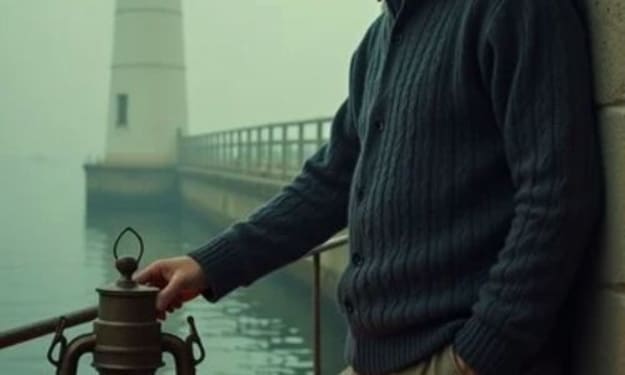
The Poet’s Lighthouse
M Mehran On the edge of a jagged coastline, where waves clashed endlessly against weathered rocks, stood a lighthouse unlike any other. It wasn’t just a beacon for ships; it was a sanctuary for poets, a place where words were as vital as the wind, and silence was never empty. Evelyn, a poet with a heart that carried both joy and sorrow in equal measure, had arrived one stormy evening. She had left the city behind, the noise, the chaos, the constant rush of life that drowned out the delicate rhythms of thought. The lighthouse, with its peeling white paint and glass lantern glowing faintly against the dark sky, promised solace—and inspiration. Inside, the walls were lined with notebooks, some stacked in piles, others hung carefully on hooks like ornaments. Each notebook represented a poet who had passed through, leaving behind fragments of their soul. The caretaker, an elderly man named Simon, welcomed Evelyn with a nod. “Words find their way here,” he said simply. “Sometimes they arrive before the poet does.” Evelyn unpacked her things and sat by a window, watching the storm rage. She had been writing for years, but lately, her words felt heavy, trapped in shadow. She opened her notebook and began to write, letting the wind guide her thoughts. Her pen moved almost on its own, tracing lines about the sea, about loneliness, about longing, and hope that refused to die. That night, the lighthouse filled with other poets—some seasoned, some tentative, all seeking the same thing: a place where their words could breathe. There was Marcus, whose metaphors were sharp like the rocks below, cutting to the heart; Leila, who wrote with the gentleness of a lullaby, soothing pain with every verse; and Noah, who wielded language like a sword, confronting truths others preferred to ignore. Evelyn listened to them all, her own insecurities slowly melting in the warmth of their voices. When it was her turn, she read aloud. Her words spoke of storms, of finding light amidst darkness, of the ocean’s endless patience. As she read, the lighthouse seemed to respond—the lantern above pulsed softly, the waves softened, and a hush fell over the room. For a moment, it felt as if the world itself was listening. Simon smiled. “The lighthouse remembers,” he said quietly. “And it shares its memory with those who speak honestly.” Over the following weeks, Evelyn discovered a rhythm she had never known. Each morning she wrote, letting the sea inspire her, and each evening she shared her work with the circle. The poets became her companions, her critics, and her cheerleaders. Together, they discovered the truth that poetry was never solitary—it was a conversation, a bridge between hearts. One evening, during a particularly fierce storm, the lighthouse’s light faltered. Ships could not see its guiding beam, and fear rippled through the poets. Simon asked for volunteers to help keep the light steady. Without hesitation, Evelyn and the others climbed to the top, their poems tucked in their pockets, their hands steady against the wind and rain. As they worked, Evelyn recited a poem about resilience, about courage in the face of fear. The others joined in, each voice layering over the next, a chorus that defied the storm. The light shone again, strong and unwavering, a beacon not just for ships, but for every poet who had struggled to be heard. When the storm passed, the poets looked out at the calm sea, and Evelyn realized something profound: poetry was not merely about words on a page. It was about action, about connection, about standing firm in the face of chaos and letting your voice matter. Years later, Evelyn returned to the city, carrying the lessons of the lighthouse in her heart. She wrote with newfound confidence, sharing her words widely, yet always remembering the sanctuary by the sea. And sometimes, when the night was quiet, she would close her eyes and hear the echoes of that storm, the chorus of voices, and the gentle hum of the lighthouse that had shown her the way. The Poet’s Lighthouse, she knew, was more than a place. It was a reminder that poets are guardians of light, keepers of memory, and creators of hope. And as long as someone dared to speak, there would always be a beacon shining through the darkness. Because poetry, like the lighthouse, does not vanish. It endures, guiding hearts through storms, illuminating truths, and reminding the world that even in the darkest night, words can lead the way.
By Muhammad Mehranabout a year ago in Poets
The Whisper of Words
M Mehran The town of Eldridge had a secret. Not the kind hidden in dark corners or whispered in hushed tones, but a quiet magic that lingered in coffee-stained pages, fluttered between the lines of letters, and hummed softly in the hearts of its people. Eldridge was home to poets—real, unapologetic dreamers who believed in the power of words, even when the world outside scoffed at them. Among them was Clara, a young poet with hair the color of autumn leaves and eyes that saw beyond the obvious. She lived in a small apartment above a bookstore, where the smell of ink and paper was as comforting as sunlight. Her mornings began with the ritual of writing, though the words often refused her, hiding behind the veil of fear and doubt. Some days, her notebook remained stubbornly blank, and she would stare out the window, watching the town awaken, wondering if she was the only one who felt both too much and not enough. Then there was Elias, the older poet, whose reputation had spread far beyond Eldridge. His verses had a way of slicing through the pretense of life, leaving raw truth in their wake. He wore a coat that smelled faintly of cedar and had a habit of tapping his pen against his chin while he thought. Many admired him, but fewer understood the loneliness that accompanied genius. Poets, after all, were wanderers in their own minds. One rainy evening, Clara wandered into the little café at the edge of town, where poets often gathered to read aloud. The café smelled of coffee and rain, a combination that felt like home. She clutched her notebook tightly, unsure if she wanted to read her work or hide it forever. Elias was there, as usual, scribbling something on a napkin, his eyes reflecting the storm outside. “Your first time?” he asked, without looking up. Clara nodded, her throat tight. “I—yes, I think.” He gestured to an empty seat. “Then sit. Listen. Or speak. Or do nothing. It doesn’t matter. Here, words are free.” And so, she listened. One by one, the poets shared their hearts. There was Marla, whose poems were like gentle rain, soft and comforting. There was Jonah, whose words hit like lightning, leaving the room electrified. Each poet offered a piece of themselves, a sliver of truth that made the ordinary seem extraordinary. When it was Clara’s turn, she hesitated. Her pen trembled as she opened her notebook. The café seemed to hold its breath. And then she read. Her words were hesitant at first, fragile as glass, but soon they grew, winding around the listeners, capturing the storm outside and the quiet fear inside her. She spoke of love lost and found, of dreams deferred but not forgotten, of the invisible threads that connected strangers and friends alike. By the time she finished, the room was silent, not out of judgment, but awe. Elias leaned back, smiling faintly. “Not bad,” he said simply. It was the highest praise she could have received. After that night, Clara became a fixture in Eldridge’s poetic undercurrent. She discovered that poetry wasn’t just about rhymes or clever metaphors; it was about courage—the courage to feel, to expose, to speak even when the world seemed deaf. And Eldridge thrived because of it. But not all days were easy. Poets wrestled with shadows more often than others. Clara sometimes doubted if her words mattered, if her voice could ever be heard beyond the quiet walls of her apartment. And Elias, despite all the accolades, struggled with the fear that one day, he would run out of words entirely. It was during one particularly cold winter that Eldridge faced its greatest challenge. The town library, a sanctuary for poets and dreamers, announced it was closing due to funding cuts. The poets were heartbroken. Without the library, where would they gather? Where would the words live? Clara had an idea. “We’ll save it,” she said, her eyes blazing. “We’ll show them that words matter.” Together, the poets of Eldridge organized readings, workshops, and open mic nights. They filled the streets with words, letting poems drift from windows, hang from lamp posts, and echo in the town square. People who had never read a poem before found themselves captivated, moved, inspired. The library doors stayed open, not because of money, but because the town realized the magic it had almost lost. Years later, Clara would remember those nights as the ones that defined her, the moments when poetry was more than just ink on paper—it was rebellion, comfort, and connection all at once. Elias would pass his notebooks to her, trusting that she, too, would carry the torch. Poets, she learned, are not just writers. They are listeners, dreamers, and fighters. They are the quiet rebellion in a world obsessed with noise. And Eldridge, with all its rain, coffee, and scribbled pages, remained proof that words, when spoken with courage, could change everything. Because in the end, poetry is not about perfection. It’s about honesty. And the poets of Eldridge, ordinary yet extraordinary, had that in abundance. The town slept peacefully each night, cradled in the whispers of words, knowing that as long as there were poets, hope, truth, and beauty would never vanish.
By Muhammad Mehranabout a year ago in Poets