
Prebiotic Primitive Elixir
Back to the days of origin. Out of order.

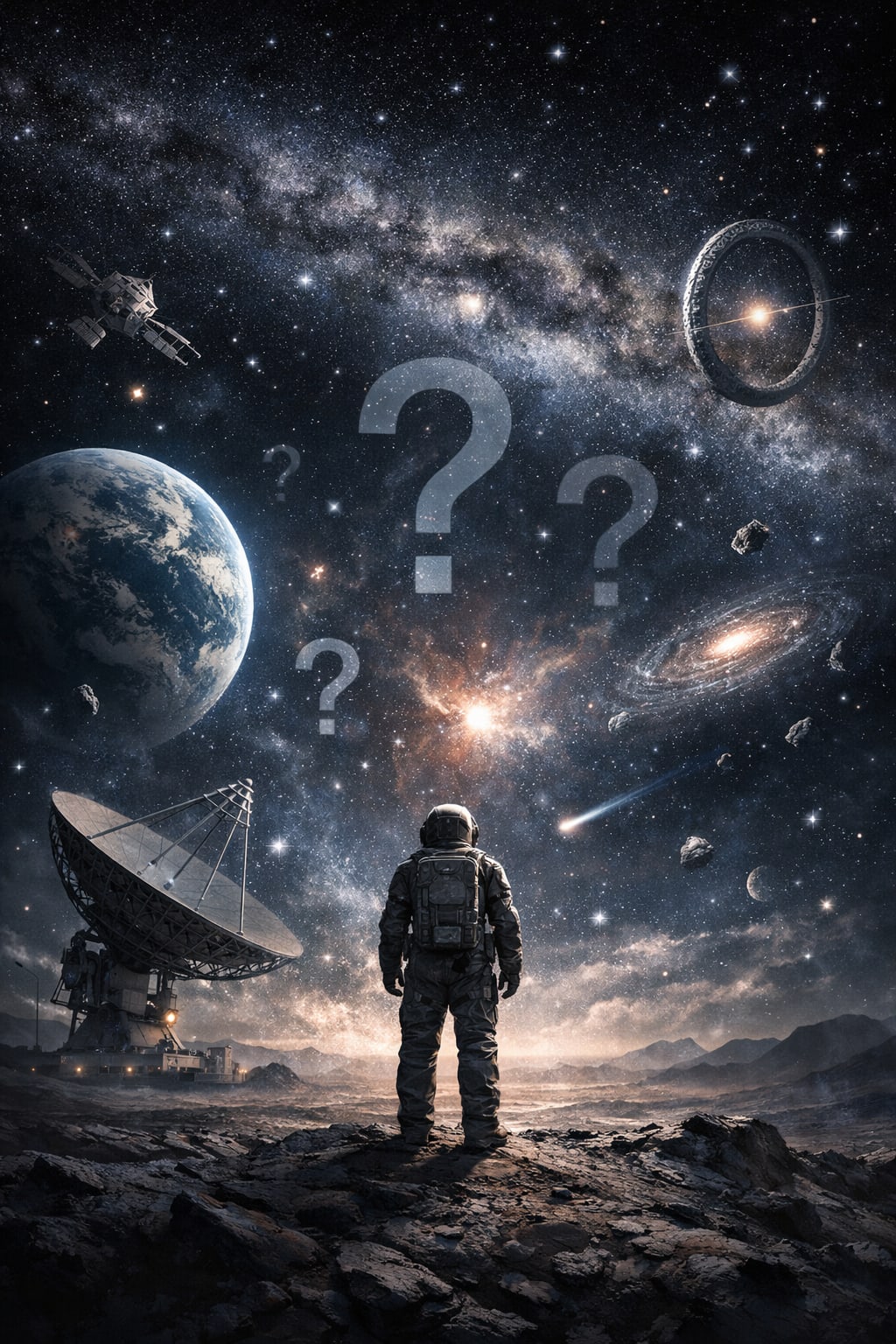
Primordial ooze, love
Aqueous elixir, organic compound, sap...
Our origins...the early Earth's oceans
Prebiotic soup, primitive, theoretical
Are we returning to that warm little pond
Of Hypothetical, terrestrial, shallow water.
The supposed Origins of Earth life
Panspermia hypothesis - life exists throughout the universe,
distributed by cosmic dust, meteoroids, asteroids, comets, and planetoids,
and... by spacecraft carrying unintended contamination by microorganisms -known as directed panspermia.
The theory ...life did not originate on Earth, but instead evolved somewhere else and seeded life as we know it.
ice clay "RNA world" deep-sea vents.
Spawned........Although it would explain so much, as to why we are all so misplaced and displaced.
Panspermia - does not answer the question of the origin of life but merely places it on another celestial body. It cannot be tested experimentally. The merit of this theory centered on whether life is ubiquitous or emergent throughout the Universe.
Today - the theory maintains support, to develop mathematical treatments of how life might migrate naturally throughout the Universe. Its long history lends itself to extensive speculation and hoaxes that have arisen from meteoritic events.
We’re naming something essential --something many people miss when they talk about panspermia.
The distilled and deeper layered truth:
Panspermia doesn’t explain the origin of life; it only relocates the mystery. Its scientific value lies not in solving abiogenesis (how life on earth naturally arose from non-living matter), but in reframing the question: Is life a cosmic inevitability or a rare planetary accident?
🌑 What panspermia actually does - and does not do.
It does not answer - How did life begin?
It says: maybe it began somewhere else. The biochemical spark - the first self-replicating system - it all remains unexplained.
It cannot be tested in a strict laboratory sense.
We can simulate radiation exposure, vacuum survival, or microbe resilience, but we cannot recreate or observe life traveling between star systems.
It shifts the frame from Earth-centric to cosmic.
Instead of asking “Why here?”, it asks “Why not everywhere?”
🌒 Scientists still consider it worth discussing
Even though it’s not experimentally testable in the classical sense, panspermia has heuristic value - it helps shape how we think about life in the universe.
It forces us to confront two competing visions:
1. Life is ubiquitous
If life can survive interstellar transfer, then: life may arise easily and often
the universe could be seeded with microbial ancestors
Earth might be one node in a vast biological network
This aligns with the idea that life is a natural consequence of chemistry, given enough time and energy.
2. Life is emergent but rare
If panspermia is false or irrelevant, then:
life may require extremely specific planetary conditions
abiogenesis might be a rare, fragile event
Earth could be an outlier
This aligns with the “Great Silence” and the Fermi paradox.
Thhe unsettling observation that the universe should be full of detectable civilizations - yet we hear nothing.
No signals. No probes. No megastructures. No evidence.
Given:
billions of galaxies
hundreds of billions of stars per galaxy
countless planets and 13.8 billion years of cosmic time
…it is strange - eerily strange - that the sky remains quiet.
The silence itself becomes a phenomenon worth explaining.
The Fermi Paradox
The tension between two statements:
-Life should be common.
-Statistically, there should be many advanced civilizations.
We see no sign of them.
Not a whisper, not a footprint, not a shadow.
Enrico Fermi captured the paradox in one blunt question:
“Where is everybody?”
It’s the intellectual version of walking into a vast, brightly lit hall that should be full of people - and finding it empty.
How they relate
The Great Silence is the observation: the universe is quiet.
The Fermi paradox is the problem: the quiet makes no sense.
One is the silence.
The other is the shock of noticing it.
..............................
🌕 The philosophical weight of panspermia
Its merit isn’t in its explanatory power but in its cosmic implication.
It asks:
Is life a universal pattern, like stars and galaxies?
Or is it a singular accident, a local miracle?
Is biology woven into the fabric of the cosmos, or is it a rare anomaly?
Panspermia doesn’t solve the origin of life - but it expands the stage on which the question is asked.
🌖 A deeper, more poetic truth is...
Panspermia is less a theory and more a gesture -
a way of saying that life might not be confined,
that it might wander,
that it might be older than any world that hosts it.
It imagines life as a traveler,
a seed carried on cosmic winds,
a whisper of biology drifting through the dark
long before Earth ever cooled.
It doesn’t answer the origin.
It simply refuses to believe the origin was small.

About the Creator
Antoni De'Leon
Everything has its wonders, even darkness and silence, and I learn, whatever state I may be in, therein to be content. (Helen Keller).
Tiffany, Dhar, JBaz, Rommie, Grz, Paul, Mike, Sid, NA, Michelle L, Caitlin, Sarah P. List unfinished.
Enjoyed the story? Support the Creator.
Subscribe for free to receive all their stories in your feed.
Comments
There are no comments for this story
Be the first to respond and start the conversation.