editing
Photo editing doesn't have be a foreign language; learn tips and tricks for using pro platforms like Adobe Photoshop, Lightroom, VSCO, and more.
How To Get & Use Stock Footage For Free & Fair
So this guide tells us about everything related to free-to-use stock footage and AI-generated photos which have become increasingly accessible, opening up a world of visual possibilities for creators, marketers, and hobbyists alike. This guide explores various methods to acquire these resources legally and ethically.
By Clarence Burke2 years ago in Photography
Photographing a Festival: What to Pack
Photography As festival season kicks off in the UK, it's prime time for live music photographers like myself to gear up and capture unforgettable moments. Packing for a festival shoot isn't just about cameras and lenses—it's about being prepared for long days, changing weather, and unexpected opportunities. Here's a peek into my essential kit and tips for photographing festivals: Essential Gear 1. **Camera Gear**: Pack a versatile DSLR or mirrorless camera body that performs well in low light, along with a selection of lenses. A fast prime lens (like a 50mm f/1.8) is great for portraits and low-light shots, while a zoom lens (such as a 24-70mm f/2.8) offers flexibility for capturing both wide-angle scenes and close-ups of performers. 2. **Batteries and Memory Cards**: Bring plenty of fully charged batteries and high-capacity memory cards. Festivals can be long days filled with non-stop shooting, so having extra power and storage is crucial. 3. **Lighting Equipment**: Depending on the festival, you may need additional lighting equipment such as a speedlight or portable LED panels for fill light or creative effects. 4. **Rain Gear**: British weather is famously unpredictable, so pack rain covers or a weather-sealed camera bag to protect your gear during sudden showers. 5. **Comfort Essentials**: Don't forget items like a comfortable camera strap, a lightweight tripod or monopod for stability, lens cleaning supplies, and a small toolkit for emergency repairs. ### Shooting Tips 1. **Research the Lineup**: Familiarize yourself with the festival schedule and lineup in advance. Know when and where your favorite acts are performing so you can plan your shots accordingly. 2. **Capture the Atmosphere**: Festivals are not just about the musicians; they're about the crowd, the food stalls, the decorations, and the overall vibe. Capture these elements to tell a complete story of the festival experience. 3. **Look for Unique Perspectives**: Don't be afraid to explore different angles and viewpoints. Get low to the ground for dramatic shots, shoot from behind the stage for a different perspective, or capture candid moments in the crowd. 4. **Use Burst Mode**: Especially during high-energy performances, use burst mode to capture a series of rapid-fire shots. This increases your chances of capturing that perfect moment of action or emotion. 5. **Be Respectful**: Remember that you're sharing the space with other festival-goers and fellow photographers. Be courteous, respect personal space, and always ask for permission when photographing individuals up close. # Conclusion Shooting festivals is a thrilling experience that requires preparation, adaptability, and creativity. By packing the right gear and following these tips, you'll be ready to capture the energy and excitement of live music and create memorable images that truly capture the essence of the festival season in the UK. Camera bodies The Sony 7ii an excellent choice for shooting festivals, known for its impressive low-light performance, fast autofocus, and high-resolution capabilities. Here's why it's well-suited for capturing festival moments: ### Low-Light Performance 1. **Sensor Performance**: The features a full-frame 24.2MP Exmor R CMOS sensor with back-illuminated design, delivering excellent low-light sensitivity and reduced noise levels. This is crucial for shooting in challenging lighting conditions typical of festivals, such as nighttime performances or indoor stages. 2. **ISO Range**: It offers a wide native ISO range of 100-51200 (expandable to ISO 50-204800), allowing you to maintain image quality even in dimly lit environments without excessive noise. ### Autofocus Capabilities 1. **Fast and Reliable AF**: The a7III is equipped with a sophisticated 693-point phase-detection autofocus system covering 93% of the frame. This ensures fast and accurate focusing, even on moving subjects, which is essential for capturing dynamic performances and fleeting moments. 2. **Eye AF**: Sony's Eye AF technology, available in the a7III, locks onto and tracks subjects' eyes with precision. This feature is particularly useful for capturing sharp portraits of musicians or crowd members amidst the festival atmosphere. ### Versatility and Handling 1. **Weather-Sealed Body**: The a7III features a robust magnesium alloy body with weather sealing, providing durability and protection against dust and moisture. This is advantageous when shooting outdoor festivals where weather conditions can be unpredictable. 2. **Battery Life**: With a long-lasting NP-FZ100 battery, the a7III offers extended shooting sessions on a single charge. This is beneficial during festivals where access to power outlets may be limited. ### Video Capabilities 1. **4K Recording**: The camera supports 4K video recording across the full width of the sensor, offering high-resolution footage with exceptional detail. This is ideal for capturing performances or creating dynamic festival highlight reels. 2. **Stabilization**: In-body 5-axis image stabilization reduces camera shake, providing smoother video footage and sharper still images, especially when shooting handheld or in motion. ### Conclusion The Sony a7i is a versatile and powerful camera choice for festival photography, combining excellent image quality, advanced autofocus capabilities, and robust handling in various shooting conditions. Whether capturing electrifying performances, candid moments in the crowd, or atmospheric shots of the festival grounds, the a7III equips photographers with the tools needed to create stunning visual narratives of the festival experience. LENSE the Sigma 35mm 1.4 lens used with an MC-11 adapter for Sony Using the Sigma 35mm 1.4 lens designed for Canon EF mount with an typically uses E-mount) is a common practice among photographers who switch from Canon to Sony but still want to use their existing Canon lenses. Here are a few things to consider: 1. **Autofocus Performance**: The MC-11 adapter is designed by Sigma to adapt Canon EF lenses to Sony E-mount cameras. It generally provides good autofocus performance, though not as seamless as native Sony lenses. Continuous autofocus and eye autofocus may not work as well compared to native Sony lenses. 2. **Compatibility and Functionality**: Most basic functions like aperture control and autofocus should work fine with the MC-11 adapter. However, it's essential to check specific compatibility details for your camera model and lens combination, as compatibility can vary. 3. **Image quality k The Sigma 35mm 1.4 lens is known for its excellent optical performance, providing sharp images and beautiful bokeh. When used with the MC-11 adapter, it should retain much of its optical quality, though some slight differences in performance might be noticed compared to using it on a Canon camera. 4. **Handling and Balance**: Adapting DSLR lenses to mirrorless cameras can sometimes affect the handling and balance of the setup due to differences in size and weight distribution. This is more of a consideration for larger telephoto lenses rather than a 35mm prime. 5. **Future Considerations**: If you plan to invest more in Sony E-mount lenses in the future, you might eventually transition away from adapted lenses to take full advantage of Sony's native lens lineup, which is optimized for their mirrorless cameras. In summary, using the Sigma an adaptor on a Sony E-mount camera can be a practical and cost-effective solution, especially if you already own the lens. It allows you to leverage existing gear while enjoying the benefits of a Sony mirrorless system. Camera sigma Samyang Samyang 18mm 2.8 for Sony The Sony cameras is known for its compact size and wide-angle capability. It's designed for Sony's E-mount cameras, providing a versatile focal length especially suited for landscape, architecture, and astrophotography. The f/2.8 aperture allows for decent low-light performance and shallow depth of field when needed. Overall, it's a good choice for Sony mirrorless shooters looking for an affordable wide-angle lens with decent optical performance. The Sigma 28-70mm f/2.8 DG DN Contemporary lens for Sony E-mount cameras is a versatile zoom lens designed for full-frame mirrorless cameras. Here are some key features and aspects of this lens: 1. **Zoom Range**: Covers a useful focal length range from wide-angle (28mm) to short telephoto (70mm), making it suitable for various types of photography including landscapes, portraits, and everyday shooting. 2. **Fast Aperture**: With a constant maximum aperture of f/2.8 throughout the zoom range, it allows for excellent low-light performance and depth of field control. 3. **Optical Quality**: Designed with high-quality optics, including several special elements (such as FLD and SLD glass) to minimize aberrations and distortion, providing sharpness and clarity. 4. **Design and Build**: It features a weather-sealed construction, making it resistant to dust and moisture, suitable for use in challenging weather conditions. 5. **Autofocus**: Utilizes a stepping motor (STM) for quick and quiet autofocus performance, which is beneficial for both photo and video shooting. 6. **Size and Weight**: Compact and relatively lightweight for a lens of its type, enhancing portability and usability. Overall, the Sigma ographers who value flexibility, optical performance, and portability in a mid-range zoom lens. The Sony 70-200mm f/2.8 lens is a professional telephoto zoom lens designed for Sony's full-frame E-mount cameras. Here are some key aspects and features of this lens: 1. **Focal Length Range**: It covers a versatile telephoto range from 70mm to 200mm, making it ideal for a wide range of photography genres such as sports, wildlife, portraits, and events. 2. **Aperture**: The constant maximum aperture of f/2.8 throughout the zoom range allows for excellent low-light performance, fast shutter speeds, and beautiful background blur (bokeh). 3. **Optical Quality**: Known for its outstanding optical performance, sharpness, and clarity, thanks to advanced optical elements and coatings that reduce aberrations, ghosting, and flare. 4. **Image Stabilization**: Some models of this lens (depending on the version) include optical image stabilization (OSS), which helps in achieving sharp images, especially at longer focal lengths and in low-light conditions. 5. **Build Quality**: Typically constructed with robust materials and weather-sealed against dust and moisture, ensuring durability and reliability in various shooting environments. 6. **Autofocus**: Equipped with fast and precise autofocus motors (such as linear motors or similar technologies), which are crucial for capturing fast-moving subjects accurately. 7. **Size and Weight**: While it's not the smallest lens due to its telephoto nature and fast aperture, it's designed to be manageable and comfortable to use, especially for extended shooting sessions. Overall, the Sony professional photographers who require high-performance telephoto capabilities and exceptional image quality in various shooting conditions. Editing Samsung T7 It seems like you might have meant to type "Samsung T7," possibly referring to the Samsung T7 Portable SSD. Here's some information about it: 1. **Portable SSD**: The Samsung T7 is a compact and portable solid-state drive (SSD) designed for storing and transferring data quickly and securely. 2. **Speed**: It offers fast data transfer speeds, with read and write speeds up to 1,050 MB/s, making it suitable for tasks like transferring large files, editing high-resolution photos and videos, and gaming. 3. **Capacity Options**: It comes in various capacities ranging from 500GB up to 2TB, allowing users to choose based on their storage needs. 4. **Compatibility**: The Samsung T7 is compatible with a wide range of devices including PCs, Macs, and Android devices (via USB Type-C to Type-C or Type-C to Type-A cables). 5. **Security**: It features built-in AES 256-bit hardware encryption to secure your data, ensuring that your files remain protected even if the drive is lost or stolen. 6. **Design**: The T7 is sleek and durable, with a shock-resistant internal frame and a metal housing that can withstand drops up to 2 meters. Overall, the Samsung T7 Portable SSD is a popular choice for users who require fast, reliable, and secure external storage for various purposes, from professional workflows to personal use. SansDisk 128GB cards It seems like you're referring to SanDisk 128GB memory cards. Sandik r storage solutions, including memory cards used in cameras, smartphones, and other devices. The 128GB capacity is popular for storing large amounts of photos, videos, and other data. These cards typically offer fast read and write speeds suitable for high-resolution photography and video recording. They come in various types such as SD, microSD, and Compact Flash, catering to different device requirements. If you're considering purchasing one, ensure it's compatible with your specific device and meets your speed and capacity needs. Flash The Godox V1 is a popular on-camera round-head flash designed for various camera systems, including Canon, Nikon, Sony, Fujifilm, and Olympus/Panasonic. It features a round flash head which provides more natural and even light distribution compared to traditional rectangular heads. The V1 offers TTL (Through-The-Lens) metering, high-speed sync, and a rechargeable lithium-ion battery for faster recycle times and longer shooting sessions. It also supports wireless control and can be used off-camera with compatible Godox triggers. Overall, it's favored by photographers for its versatility, power, and innovative design. Extra. The WANDRD PRVKE 21 is a popular backpack known for its blend of functionality, durability, and sleek design. Here are some key features: 1. **Versatility**: It's designed for photographers, travelers, and everyday use, offering flexibility with its modular compartments and adjustable storage options. 2. **Durability**: Made from weather-resistant materials like tarpaulin and nylon, it provides protection against the elements. 3. **Comfort**: The PRVKE 21 features padded shoulder straps, a sternum strap, and a removable waist strap for comfortable carrying, even with heavy loads. 4. **Accessibility**: It includes quick side access to your camera gear, a dedicated laptop/tablet sleeve, and various organizational pockets for smaller items. 5. **Aesthetic**: Available in multiple colors, it has a sleek, modern appearance suitable for urban environments. Overall, the Photographing a Festival: What to Pack wandrd RVKE 21 is well-regarded for its thoughtful design, robust build quality, and versatility, making it a popular choice among photographers and travelers alike.
By Saira Praween2 years ago in Photography
Top 10 Apps to download HD images. Content Warning. AI-Generated.
1. Unsplash - Offers a vast collection of high-resolution photos for free. Unsplash is a popular platform for high-quality, free-to-use images contributed by photographers worldwide. It offers a vast collection of diverse photos that cater to various creative needs, from digital projects to print media.
By Ren2 years ago in Photography
Using a Continuous Light for Photography
**Title: Illuminating Artistry: Harnessing the Power of Continuous Light in Photography** Photography, an art form that captures moments frozen in time, relies fundamentally on light. Light shapes, defines, and enhances the subjects within a frame, transforming a mere scene into a narrative. Among the various tools available to photographers, continuous light stands out as a versatile and powerful instrument, offering unique advantages and creative opportunities. Continuous light, unlike its flash counterpart, provides a constant illumination that allows photographers to see exactly how light interacts with their subjects in real-time. This feature is particularly advantageous in studio settings where precise control over lighting conditions is essential. Whether photographing portraits, products, or still life compositions, continuous light permits photographers to adjust and refine lighting setups effortlessly, ensuring each detail is meticulously crafted to perfection. Moreover, continuous light enables photographers to experiment with various lighting techniques such as soft lighting for a gentle and flattering effect on portraits, or dramatic lighting to evoke a sense of mystery and intrigue in fashion photography. The ability to manipulate light continuously opens up endless creative possibilities, allowing photographers to explore different moods, atmospheres, and emotions within their work. In addition to its versatility, continuous light is also ideal for video production. Many modern cameras seamlessly transition between photography and videography, making continuous light an invaluable tool for multimedia projects. Its consistent illumination ensures smooth and professional-looking videos, where lighting remains consistent throughout the recording process, enhancing visual coherence and narrative flow. Furthermore, continuous light systems are available in various forms, from LED panels to fluorescent bulbs, offering photographers a range of options to suit different shooting conditions and creative visions. LED panels, for instance, are highly energy-efficient and emit minimal heat, making them suitable for extended shooting sessions without discomfort to the subject or photographer. Practically speaking, continuous light setups are relatively straightforward to use, even for beginners. With intuitive controls and immediate feedback on how light interacts with the scene, photographers can quickly learn to manipulate light effectively, gradually refining their skills to achieve professional-quality results. In conclusion, continuous light is not merely a tool for illumination but a gateway to artistic expression in photography. Its ability to provide real-time feedback, versatility in lighting techniques, and suitability for both photography and videography make it an indispensable asset in a photographer’s toolkit. By harnessing the power of continuous light, photographers can elevate their craft, transforming moments into timeless works of visual art that captivate and inspire viewers worldwide.
By Saira Praween2 years ago in Photography
A Day in the Life of a Real Estate Photographer
Hey there! Have you ever wondered what it's like to be a real estate photographer? Well, let me take you through a typical day in my life. It’s a job that’s both exciting and demanding, filled with beautiful homes, tight schedules, and a fair bit of creativity. So, grab a cup of coffee, and let's get started!
By Manav2 years ago in Photography
Can AI Edit Real Estate Photos?
Hey there! I was thinking about how technology is transforming our lives in so many ways. It's like we're living in a sci-fi movie sometimes! One area that's seeing a lot of exciting changes is real estate photography. Imagine being able to enhance property photos with just a few clicks, thanks to artificial intelligence (AI). Sounds amazing, right? Well, let's explore how AI is revolutionizing real estate photo editing and whether it can really do the job as well as we hope.
By Manav2 years ago in Photography
Achieving Success on YouTube: A Step-by-Step Guide . Content Warning. AI-Generated.
YouTube has evolved into one of the most powerful platforms for content creators, offering opportunities for fame, influence, and even substantial income. However, achieving success on YouTube requires more than just uploading videos. It involves strategic planning, consistent effort, and an understanding of the platform's dynamics. Here is a step-by-step guide to help you navigate the path to YouTube success.
By Mr.Sunyoto2 years ago in Photography
Do Real Estate Photographers Edit Photos?
Hey there! If you've ever scrolled through real estate listings online, you know how some photos just grab your attention immediately, making you think, "Wow, I want to live there!" That's no accident. Those stunning photos are often the result of some serious skill behind the camera and a little magic behind the computer screen. Today, we're going to chat about whether real estate photographers edit photos and why that's such an important part of the process.
By Manav2 years ago in Photography
Mastering Social Media Graphics: A Comprehensive Guide to Boost Your Brand's Online Presence
In the fast-paced world of digital marketing, standing out on social media can be a daunting task. With millions of posts vying for attention, how can your brand make an impact? The answer lies in captivating social media graphics. These visual elements aren't just eye-catching; they are powerful tools that can transform your online presence. From boosting engagement to driving traffic and increasing brand awareness, the right graphics can set you apart from the competition. Let's dive into the world of social media graphics and discover how they can elevate your brand to new heights.
By Dhafa News2 years ago in Photography
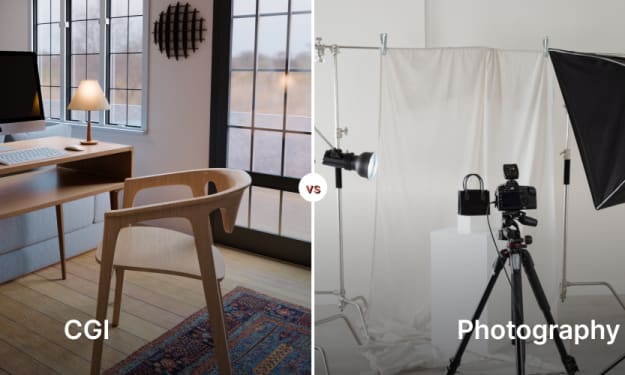
CGI vs. Professional Photography: What's Best for Your Furniture E-Commerce?
If you run an online store, you are familiar with the headache that comes with finding a photographer that can meet your requirements, communicating the brand's tone and style, and other details, and then having product photos taken.
By IkarusDelta2 years ago in Photography
The Rise of AI Video Creators:
In recent years, the advent of Artificial Intelligence (AI) has significantly transformed various industries, and one of the most notable areas of impact has been in content creation, specifically with AI video creators. These innovative tools leverage machine learning algorithms to automate and streamline the process of producing high-quality video content. This article explores the evolution of AI video creators, their capabilities, benefits, and implications for the future of digital media.
By iram rani2 years ago in Photography
Mastering the Art of Photography: Essential Tips
Photography is a blend of science and art, requiring technical know-how and a creative eye. Whether you’re a novice or looking to refine your skills, these tips will help you capture stunning images. 1. Understand Your Equipment Know Your Camera: Whether you're using a DSLR, mirrorless camera, or a smartphone, familiarize yourself with its features. Read the manual, explore the settings, and practice using different modes. Lenses: Different lenses serve various purposes. A wide-angle lens is great for landscapes, while a telephoto lens is ideal for wildlife and sports. Prime lenses, with fixed focal lengths, are often sharper and better in low light. Tripod: A sturdy tripod is essential for low-light conditions, long exposures, and ensuring sharpness in your photos. 2. Master the Basics of Composition Rule of Thirds: Divide your frame into a 3x3 grid. Place the main subject along these lines or at their intersections to create balanced and engaging photos. Leading Lines: Use natural lines to guide the viewer's eye through the image. Roads, rivers, and architectural elements are excellent for this. Framing: Look for natural frames within your scene, like windows, doorways, or trees, to add depth and focus to your subject. Negative Space: Don't be afraid to leave empty space around your subject. It can create a more dramatic and impactful image. Symmetry and Patterns: Symmetry can be visually appealing, and patterns can add interest. Break the pattern with your subject for a striking effect. 3. Lighting is Key Golden Hour: Shoot during the golden hour (just after sunrise or before sunset) for soft, warm light that enhances colors and textures. Avoid Harsh Midday Sun: Midday sunlight can be harsh and create unwanted shadows. If you must shoot during this time, seek shade or use a reflector to diffuse the light. Use Natural Light: When shooting indoors, position your subject near windows to utilize natural light. Experiment with the direction and intensity of the light. Artificial Lighting: For studio photography, learn to use flashes, strobes, and continuous lighting. Softboxes and diffusers help create soft, even lighting. 4. Understand Exposure Aperture: Measured in f-stops, the aperture controls the amount of light entering the camera. A wider aperture (low f-number) creates a shallow depth of field, blurring the background. A narrower aperture (high f-number) keeps more of the scene in focus. Shutter Speed: The duration the camera’s sensor is exposed to light. Faster shutter speeds freeze motion, while slower speeds can create motion blur. Use a tripod for long exposures. ISO: The sensitivity of the camera’s sensor to light. Lower ISO values produce clearer images, while higher values can introduce noise. Adjust ISO according to lighting conditions. Exposure Triangle: Balance aperture, shutter speed, and ISO to achieve the correct exposure. Understand how changing one affects the others. 5. Post-Processing Editing Software: Learn to use editing software like Adobe Lightroom or Photoshop. Basic adjustments like cropping, exposure correction, and color grading can enhance your photos. Don’t Overdo It: Aim for natural-looking edits. Avoid over-saturation and excessive sharpening, as they can detract from the photo’s quality. RAW Files: Shoot in RAW format for maximum flexibility in post-processing. RAW files retain more detail and allow for better adjustments than JPEGs. 6. Practice and Experimentation Shoot Regularly: The more you practice, the better you become. Take your camera everywhere and challenge yourself with different subjects and lighting conditions. Experiment: Try different genres of photography – portrait, landscape, macro, street, etc. Experiment with angles, perspectives, and techniques. Critique and Learn: Join photography communities and forums. Share your work and seek constructive criticism. Learn from others and analyze great photos to understand what makes them stand out. 7. Develop Your Own Style Be Inspired, Not Imitative: While it’s good to draw inspiration from other photographers, develop your unique style. This comes from experimenting and understanding what you enjoy photographing the most. Consistency: Once you find your style, maintain consistency in your work. This helps build a recognizable portfolio. Photography is a journey of continuous learning and creativity. By understanding your equipment, mastering composition, and practicing regularly, you can significantly improve your skills. Remember, the best camera is the one you have with you, so keep shooting and enjoy the process of capturing moments and telling stories through your images.
By COS2 years ago in Photography