wild animals
Animals the way nature intended it; explore the world of wild animals and the controversies surrounding domestication and hunting of feral beasts.
When My Cat Saved Me Without Saying a Word
When people talk about pets, they often focus on the joy, cuteness, and playful chaos they bring to our lives. But what is rarely discussed is how deeply they can heal us—not with words, but with their silent, constant presence. I learned this lesson from my cat, Lily.
By Paw Planet about a year ago in Petlife
I've Been Doing a Little Bird Listening with Merlin Lately
Many moons ago, I lived a stone's throw from Kennesaw Mountain (Kennesaw, GA). The mountain was not only a wonderful historical spot to visit, but the trails and the road to the summit were both outstanding birdwatching locations. Almost every weekend, I'd take Beau and my binoculars and see what kind of birds I could add to my life list. It was particularly exciting to go birdwatching during March and September, as we were right on the migratory path. I even created a small stir in local birding channels once, by spotting an Oregon Junco (a variety of dark-eyed junco) on one of my hikes. And then, I moved.
By Kimberly J Eganabout a year ago in Petlife
Bat Life: The Silent Guardians of the Night
When most people think about bats, fear and superstition often come to mind. For centuries, these fascinating creatures of the night have been misunderstood, linked with darkness, and shrouded in myths. But the reality is far more beautiful and powerful. Bats are not symbols of fear—they are guardians of ecosystems, silent pollinators, and protectors of balance in nature. The picture “Bat Life” captures more than just the shape of a bat; it speaks of resilience, mystery, and survival. A Creature of Mystery Bats are among the most mysterious animals in the world. With their nocturnal habits, ability to navigate in the dark, and silent wings, they seem almost supernatural. Their silhouettes against the moonlit sky inspire awe and curiosity. The “Bat Life” picture, with its striking black silhouette of a bat against a bold orange background, invites us to look past the shadows. It asks us to reconsider our perception of bats—not as creatures of horror, but as beings of strength, grace, and ecological importance. The True Role of Bats In reality, bats play an essential role in maintaining the balance of our environment. Insect-eating bats consume millions of mosquitoes and pests every night, reducing the spread of disease and protecting crops. Without them, farmers would struggle to keep their fields safe, and entire ecosystems would suffer. Fruit bats and nectar-feeding species act as pollinators, much like bees. They carry pollen from flower to flower, helping plants thrive. In tropical regions, many plants rely solely on bats for pollination and seed dispersal. In this way, bats are not just inhabitants of the night—they are builders of forests and protectors of biodiversity. “Bat Life” reminds us of this unseen service. Behind the simple image lies the story of a species working tirelessly in the shadows for the benefit of all living things. Misunderstood and Feared Despite their importance, bats remain one of the most misunderstood creatures in the animal kingdom. Too often, they are linked with fear, disease, or darkness in popular culture. Movies and myths portray them as dangerous, when in fact, most bat species pose no threat to humans. The truth is that bats are fragile. Habitat destruction, climate change, and human fear are pushing many species toward extinction. White-nose syndrome, a fungal disease, has already wiped out millions of bats in North America. Instead of fearing them, we should be protecting them. The “Bat Life” symbol is bold because it challenges this misunderstanding. It presents bats not as villains, but as icons of survival and strength. A Life in the Shadows To live the “bat life” is to live in the shadows, to thrive where others cannot. Bats are creatures of resilience. They show us that even in darkness, there is beauty and purpose. Their ability to navigate using echolocation—sending out high-pitched sounds and listening for the echoes—teaches us that guidance doesn’t always come from light. Sometimes, clarity is found in silence and patience. In many cultures, bats are symbols of rebirth and transition. They remind us that endings are not final but rather a pathway to new beginnings. Just as bats retreat into caves by day and emerge at night, humans also go through cycles of retreat and reawakening. The Human Connection The “Bat Life” image can also be seen as a metaphor for human strength. Many people live in the shadows of society, unseen and unheard, yet still play vital roles. Just as bats contribute quietly to the health of ecosystems, there are countless individuals who work behind the scenes to nurture, protect, and uplift others. Choosing “Bat Life” is choosing to embrace resilience, to honor those who survive against odds, and to celebrate the beauty of living different A Call to Protect If there’s one message this picture leaves us with, it is this: bats deserve our respect and protection. They are not creatures to fear but to honor. Supporting bat conservation projects, protecting their habitats, and educating others about their importance are small steps we can take to ensure these remarkable beings continue to thrive. “Bat Life” isn’t just an image—it’s a call to action. It invites us to step beyond myths and fear, to see bats for what they truly are: guardians of the night and essential allies in the balance of life. Conclusion The picture of “Bat Life” is more than a graphic—it is a symbol of resilience, mystery, and hidden beauty. It challenges us to reimagine the way we view bats, not as creatures of fear but as silent heroes of nature. Living the “bat life” means thriving in the shadows, finding purpose in the unseen, and embracing the power of resilience. It is a reminder that even in darkness, there is light, and even in silence, there is life.
By Fazal wahid about a year ago in Petlife
🦁 The Unbreakable Bond: A Lion and His Kitten
In the heart of the African savannah, a majestic lion named Atlas ruled over his pride with strength and wisdom. His mane was golden, his roar thunderous, and his eyes shone like the brightest stars in the night sky. Atlas was a proud father to a playful and mischievous kitten named Leo. The little ball of fur would frolic in the grass, chasing after butterflies and pouncing on Atlas's tail.
By Fazal wahid about a year ago in Petlife
The Irreplaceable Value of Live Animal Encounters
Animal-rights activists have recently promoted "virtual zoos" as ethical alternatives to live exhibits, utilizing holograms, 360-degree video, and animatronics. For instance, Belgium's GAIA is launching a Zoo of the Future with virtual and augmented reality, and robotic puppets, promising a new, immersive connection with nature "without cages, without captivity, and without suffering."
By Jenna Deedyabout a year ago in Petlife
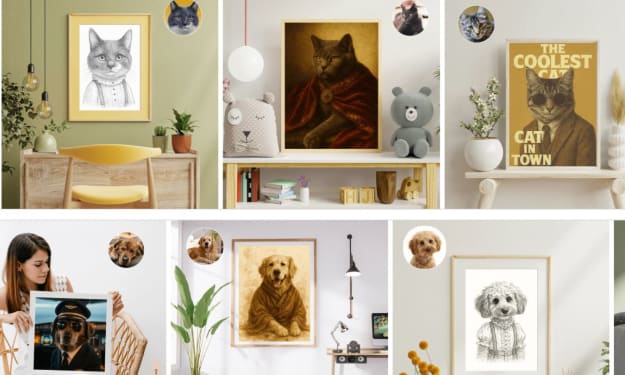
AI Pet Portrait Studio Review
AI Pet Portrait Studio Review - Unlock the Power of AI to Create & Sell Custom Pet Portraits Pets aren’t just animals—they’re family. Every playful bark, wagging tail, or affectionate purr becomes a cherished memory. For many pet owners, capturing these moments in a timeless way has always meant hiring an artist or learning design software. But now, with AI Pet Portrait Studio, creating gorgeous, custom pet portraits has never been easier.
By James Renouf about a year ago in Petlife
The Curious Case of Colorado’s “Tentacled” Rabbits
Did you know that in Colorado, some wild rabbits develop bizarre growths that resemble tentacles or horns? While only a small fraction—less than 5%—of the rabbit population is affected, these peculiar formations have captured the imagination of scientists and folklore enthusiasts alike.
By Soul Pagesabout a year ago in Petlife
The Dog Who Waited at the Bus Stop
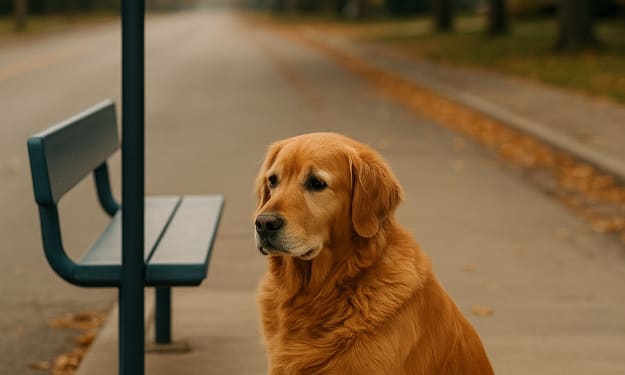
The Dog Who Waited at the Bus Stop By: Abdullah Every town has its landmarks — a clock tower, a diner, a mural on the side of an old brick building. Ours had something else: a dog. For fifteen years, rain or shine, winter or summer, a golden-brown Labrador mix named Max sat patiently by the bus stop on the corner of Maple and Fifth. He wasn’t a stray. He wasn’t lost. And he wasn’t waiting for just anyone. Max was waiting for his person. The Beginning The story, as told by our town’s older residents, began on a chilly autumn morning in 2010. Max’s owner, an elderly man named Arthur, took the bus downtown every day. He’d sit on the bench, Max by his side, and when the bus arrived, Arthur would give Max a pat, whisper something into his ear, and climb aboard. Max never followed — he’d watch the bus pull away, then trot back home on his own. Neighbors often asked Arthur why Max didn’t go with him. Arthur would smile and say, “He knows he’s needed here. My wife gets lonely. Max keeps her company until I’m home.” But one morning in early winter, Arthur didn’t return. A sudden heart attack had taken him while he was downtown. No one knew what to do about Max. That afternoon, when the bus pulled up and Arthur wasn’t there, Max still sat, watching, tail wagging faintly, as if expecting him to appear. The Days Turn Into Years Most dogs might have stopped waiting after a few days. Not Max. Every morning, he would leave the yard, walk the same route to the bus stop, and sit in the same spot, head tilted toward the road. He’d wait through the morning rush, then finally return home around lunchtime. Arthur’s wife, Mary, kept caring for Max, touched by his loyalty. She never tried to stop him from his routine. “He’s still hoping,” she’d say softly when neighbors suggested keeping him inside. “And maybe… so am I.” A Town’s Guardian Over the years, Max became something more than just a loyal dog — he became our town’s guardian. Commuters would bring him treats. Children walking to school would stop to pet him. The bus drivers all knew him by name, greeting him with a honk as they passed. On snowy days, someone would bring a blanket or build him a little shelter near the bench. In the summer, there was always a bowl of water waiting for him. He belonged to everyone, yet he still waited for just one person. Tourists who heard about “the bus stop dog” would detour through our town just to see him. Some took pictures, others simply stood and watched, as if witnessing a piece of living history. The Day He Stopped Waiting Fifteen years is a long time for a dog. Max’s muzzle turned white, his steps slower. But he never missed a day at the bus stop. One crisp October morning, he didn’t return home. Mary found him still lying beside the bench, curled up as if asleep. But Max had passed quietly, facing the direction the bus always came from. The whole town mourned. Flowers appeared at the bus stop, along with framed photos of Max and handwritten notes: Thank you for showing us what love looks like. You waited, and so will we, until we see our loved ones again. Even the bus drivers stopped for a moment of silence that week, pulling over at the bench where Max had spent half his life. A Legacy of Love The town council voted to honor Max. A bronze statue now stands at the bus stop — a perfect likeness of him sitting patiently, ears perked, watching the road. There’s a plaque beneath it that reads: Max 1999–2025 He waited with hope. He loved without end. Now, even years later, people still stop at the bench. Children ask their parents about the dog in the statue, and the story is told again — about a Labrador mix who never gave up, who reminded us every day that love doesn’t end when someone is gone. Why It Stays With Us Max’s story isn’t just about a dog and his owner. It’s about loyalty in its purest form the kind that expects nothing in return. It’s about hope, and about how one small act, repeated every day, can touch hundreds of lives. In a world where things change quickly, Max was constant. He didn’t care about time, about the odds, or about what made sense. He only cared about keeping his promise. And maybe that’s why we remember him. Because deep down, we all want to believe there’s someone who would wait for us no matter how long it takes.
By Abdullah Khan about a year ago in Petlife
Cat Daddy: How One Tiny Kitten Saved My Sanity
At the start of 2025, my mental health was in a rough place. A year filled with personal struggles, heavy memories, and a history of trauma had left me drained. I knew I needed a change — something positive to help me heal. That’s when I started hearing more about how pets, especially cats, can be amazing companions for mental well-being.
By ibrahim khanabout a year ago in Petlife