
Where Does the Bird in a Tree Put Its Trust?
Life lessons and guiding lights

I write a series that I call “52 Guiding Lights." This is the latest story in this category. The last one was “If Only Trees Could Talk."
They are stories about life lessons. When I have enough (52), one for each week of the year, I will put them out as a book. I am over halfway there.
The moral of this story is that we need to trust ourselves more than others or the things around us; that is not always easy to do.
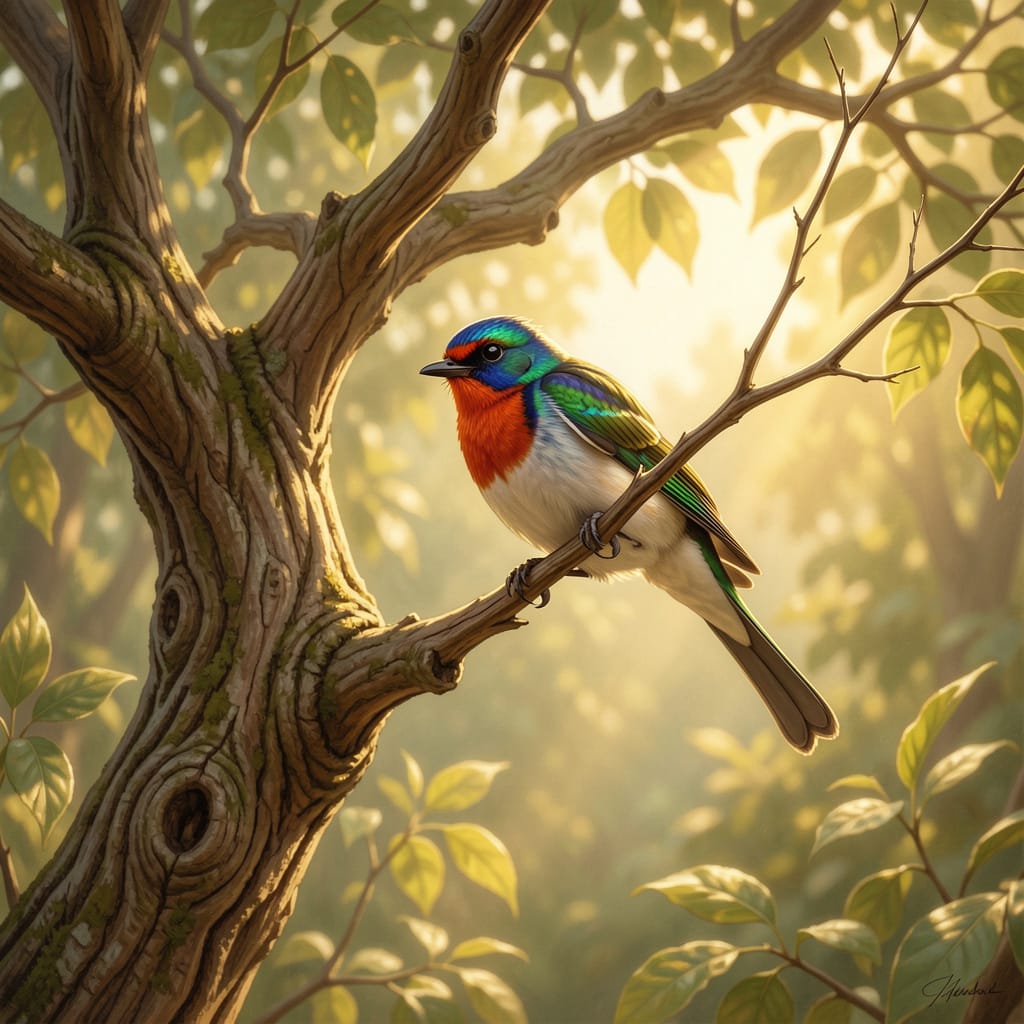
“A bird sitting in a tree is never afraid of the branch breaking because its trust is not in the branch but in its wings.”
When we think of trust, we often jump to its opposite. No trust equates to hurt. “I place my trust in my closest friends,” or “you can trust me to keep a secret.” These are examples of emotional trust.
In everyday life, however, we put trust in many people without really thinking about it. For example:
- We trust the bank to keep our money safe.
- We trust a store to charge a reasonable price for items we might want to buy.
- We trust people on the road to obey the rules so that we can use the roadways without incident.
- We trust a surgeon to operate on the correct part of our body. We expect them to do this with minimal pain and great professionalism.
To survive in society, we have to treat different people. Often, these people have not yet earned the respect we put in them. We do it blindly, hoping that it works out. Embracing vulnerability is a choice. It means trusting that the other party will act with integrity and have your best interests at heart.
Psychologists say trust has three forms:
• Cognitive: trust with your head
• Affective: trust with your heart
• Behavioural: trust in actions
Cognitive trust is what we place in organisations. For example, you trust a bank with your money. Or, you trust a coworker to finish a task you’ll be responsible for. Behavioural trust comes from what you can see. You trust someone when they repeatedly show they can do tasks well and honestly.
The one I left till last was affective trust. This is usually built on deep feelings, a sense of connection, and mutual respect. It is the type of trust that you hope to have in a relationship. It is also the one that we feel most when it is lost because it has the greatest emotional investment.
In this world, there are two types of people: those who trust and those who don't. I don't naturally trust people. My past experiences have taught me that trust can be easily broken. People have to earn my trust before I will trust them. Others will trust until proven wrong.
A lack of trust often comes from past experiences. These may involve violations of safety, boundaries, or confidence. We learn from our experiences. This includes childhood events, relationship betrayals, or actions by friends.
One of life’s lessons is to learn to trust in ourselves, first and foremost. The bird in the tree doesn't have any reason to trust the strength of a branch that it lands on. It does not put its faith in the strength of the branch but in its ability to react and fly off if the branch breaks.
As we go through life, we learn when trust is broken. We use these lessons to prepare for the next time.
One of the best sayings I have come across is from André Gide ("So Be It or The Chips Are Down"):
“Believe those who are seeking the truth; doubt those who find it; doubt all, but do not doubt yourself.”
Be like the branch on the branch; trust in yourself first and the branch second.
Till next time,
Calvin
About the Creator
Calvin London
I write fiction, non-fiction and poetry about all things weird and wonderful, past and present. Life is full of different things to spark your imagination. All you have to do is embrace it - join me on my journey.
Enjoyed the story? Support the Creator.
Subscribe for free to receive all their stories in your feed. You could also become a paid subscriber, letting them know you appreciate their work.
Comments
There are no comments for this story
Be the first to respond and start the conversation.