
The Simplest Tools Make the Biggest Impact
Why Weather Data Deserves a Place in Your Training Plan

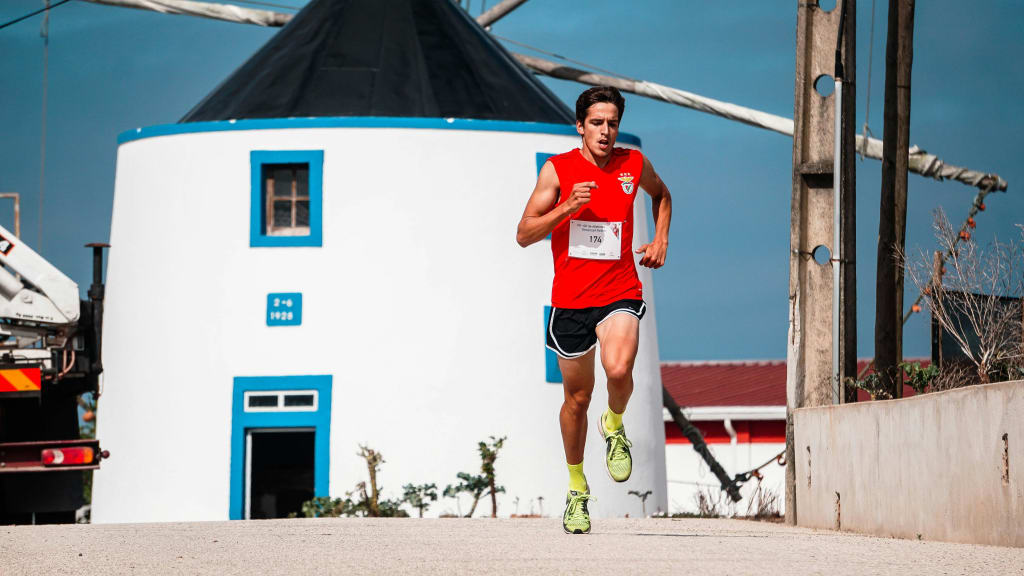
We're living in a golden age for running.
Gone are the days when the stopwatch was the only way to measure progress. Today, we have access to an incredible set of tools and technologies to analyze our performance and uncover new ways to improve. Gait and stride analysis, heart rate monitors, Stryd power meters, VO2 max testing, apps like Strava, Coros, Garmin, and the list goes on.
If you want to know something about your running, chances are there's a way to find it out.
But as much as these tools are revolutionizing the sport, the question remains: which ones actually matter?
The Most Useful Tool Might Surprise You
If you're expecting me to rave about the benefits of a power meter or VO2 max testing, I'm sorry to disappoint. Despite the bells and whistles available, I've stuck to something much simpler: weather data.
Yes, weather. Specifically, dew point and humidity.
Running in diverse locations like Vancouver, Toronto, Boston, and Halifax has taught me just how much these factors can influence performance. Vancouver's mild, coastal air is a far cry from the dense humidity of Toronto in the summer. Halifax's summers can feel stifling, while Boston's spring races bring their own challenges with unpredictable shifts in temperature.
Each of these cities gave me a different appreciation for how humidity and dew point affect effort and pacing. Whether it's a dry, crisp morning run in Calgary or a muggy training session by the Charles River in Boston, understanding how to adjust effort for the conditions became essential for me to stay consistent and motivated.
That's where tools like the Runners Connect Temperature Calculator came in handy. With it, I learned how to adjust my expectations and effort based on temperature and humidity. It wasn't about making excuses; it was about understanding that the weather didn't define my fitness, just my pace.
Breaking It Down: My Toronto Marathon Training Block
Let's rewind to my 2023 Toronto Marathon training block. While I did most of my training in Calgary, a dry city nestled in the prairies, I had to adapt to training and racing in drastically different environments, often near bodies of water where the humidity is unmistakable.
Every Tuesday, I dedicated my training to aerobic runs, building up stamina with steady 16-kilometer efforts. These runs became a cornerstone of my training, but depending on where I was, the experience varied dramatically. In Calgary, the cooler, arid conditions made it easier to maintain my target pace of ~6:00/km. However, as soon as I trained in more humid cities like Toronto or Boston, the difference was undeniable.
The temperature and dew point often worked against me. For example, an average session in Calgary might be 10°C and dry, while in Toronto or Halifax, I'd be battling 25°C with high humidity. Using tools like the Runners Connect Temperature Calculator, I learned that my pace in humid conditions was equivalent to faster paces in optimal weather. Those 16-kilometer efforts in the thick of Toronto's summer, where I'd barely manage 6:40/km, would translate to around 6:05/km in Calgary-like conditions.
This insight gave me a sense of control. Even though the weather didn't cooperate, I knew my training was on track.
Why It Matters
This kind of analysis isn't a perfect science, but it gave me something invaluable: perspective. It helped me compartmentalize my training, understand the impact of external factors, and stay motivated. Instead of feeling defeated by the weather, I found a way to use it to my advantage.
Would I recommend this to others? Absolutely. It's simple, accessible, and, most importantly, effective. You don't need fancy gadgets to analyze your training - sometimes, a little weather data and some curiosity are all you need.
Beyond the Numbers
You don't need fancy gadgets or complex spreadsheets to make weather data work for you. All you need is a simple system. Start by logging the conditions for your key workouts: temperature, dew point, humidity, and how you felt during the session. A notebook, your running app's notes feature, or even a quick voice memo can do the trick.
Over time, you'll start to see patterns. You might notice that you struggle on humid days or that cool, dry mornings are your sweet spot. Knowing this lets you set realistic expectations and helps you avoid beating yourself up when the weather isn't in your favor.
So if you're looking to add an analytical edge to your training, start where you are. The tools are already in your hands, and the insights you'll gain might just be the key to unlocking your next personal best.
Life is Golden.
- Adam D.
----------------------------------------------------------------------------------------
Disclaimer: The AI tools utilized in this article were used solely for editing and grammar checks; all concepts and ideas presented are my own (a human).
PS - If you enjoyed this and thinking to yourself, "Wow, this was really helpful and I enjoyed this article." I've put together a couple of 7-Day Educational Email Courses to help you Run Your First 10km and Run Your First 5km that you might enjoy.
About the Creator
Adam Dipinto
Thinker // Ghostwriter // Runner
I ghostwrite 📝 Educational Email Courses 👉 https://linktr.ee/adam.dipinto
Enjoyed the story? Support the Creator.
Subscribe for free to receive all their stories in your feed.
Comments
There are no comments for this story
Be the first to respond and start the conversation.