
The Productivity Trap: Why I Stopped Optimizing My Life to Start Living It
I spent years trying to “hack” my way to success, only to realize I was running a race toward a finish line that didn’t exist.

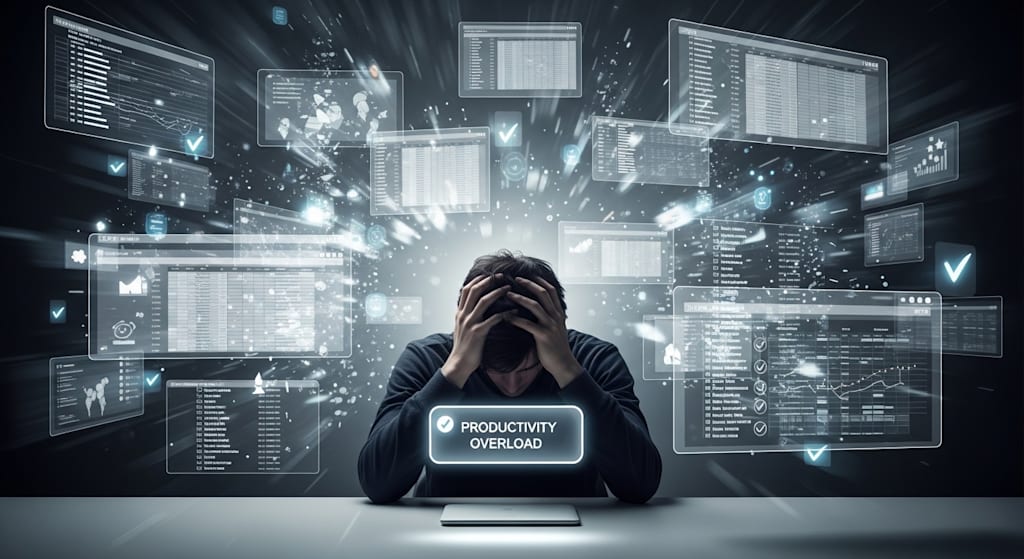
Three years ago, my morning routine was a masterpiece of engineering. I woke up at 4:45 AM, plunged into a three-minute ice bath, journaled for twenty minutes using a specific “brain-dump” methodology, and consumed a cocktail of supplements designed to maximize cognitive output. By 7:00 AM, I had already “won the morning.”
By 7:00 PM, however, I felt like a hollowed-out shell of a human being.
I was a productivity addict. I didn’t just want to be successful; I wanted to be optimized. I tracked my deep-work hours on color-coded spreadsheets. I listened to podcasts at 2x speed to “save time.” I even optimized my social life, scheduling “connection blocks” with friends that felt more like board meetings than hangouts.
I was doing more than ever before, yet I had never felt more directionless. I was chasing productivity, but I had completely lost sight of my purpose.
The Myth of the “Perfect” Output
The problem with the modern obsession with productivity is that it treats the human spirit like a piece of software. We are told that if we just find the right app, the right morning routine, or the right “flow state” hack, we will finally unlock our potential.
But productivity is a tool, not a destination.
I realized this during a Tuesday afternoon breakdown. I was staring at my “To-Do” list, which had fourteen high-priority items left, and I felt a sudden, jarring wave of nausea. I had checked off thirty items that day, but if you had asked me why any of them mattered, I wouldn’t have had an answer. I was efficient, yes. But I was also empty.
I had fallen into the “Efficiency Trap”: the faster you get at clearing your plate, the more the world just piles onto it. I was running faster and faster on a treadmill that was only designed to keep me in place.
From “How Much” to “Why”
I decided to conduct an experiment. I deleted my tracking apps. I stopped the ice baths (which I hated anyway). I stopped trying to “hack” my sleep and just started sleeping until I felt rested.
The first week was terrifying. I felt “lazy.” I felt like I was falling behind a world that was moving at light speed. But in the silence that followed the noise of optimization, a question finally had room to breathe: What actually matters to me?
When you stop obsessing over how much you can do, you are forced to confront what you are doing.
I discovered that my “purpose” wasn’t hidden in a 5:00 AM workout or a perfectly managed inbox. It was found in the things I had been “optimizing” out of my life: the long, rambling conversations with my sister, the three hours I spent getting lost in a book that had nothing to do with business, and the slow, “unproductive” mornings spent watching the light change in my kitchen.
The Purpose of Being Unproductive
We often confuse “being busy” with “being purposeful.” But purpose often requires the very things productivity gurus tell us to avoid: boredom, stillness, and inefficiency.
Purpose is found in the “slow” work. It’s found in the projects that don’t have an immediate ROI. It’s found in the moments where you aren’t trying to get anywhere else.
Today, my “routine” is much simpler. I work when I have energy. I rest when I don’t. I no longer track my hours; I track my impact and my joy. I’ve realized that a life well-lived isn’t measured by how many tasks you’ve crossed off a list, but by how many moments you were actually present for.
If you’re feeling burnt out by the constant pressure to “do more,” here is your permission to stop. Stop optimizing. Stop hacking. Stop chasing a version of yourself that is a machine.
The world doesn’t need more “productive” people. It needs more people who are alive, present, and connected to a purpose that can’t be measured on a spreadsheet.
Sometimes, the most productive thing you can do is absolutely nothing at all.
If this resonated with you, please leave a heart or a tip! Let’s start a conversation in the comments about how you’re finding balance.
About the Creator
Enjoyed the story? Support the Creator.
Subscribe for free to receive all their stories in your feed.
Comments
There are no comments for this story
Be the first to respond and start the conversation.