
The Invisible Rope
A Story of Strength, Conditioning, and Freedom
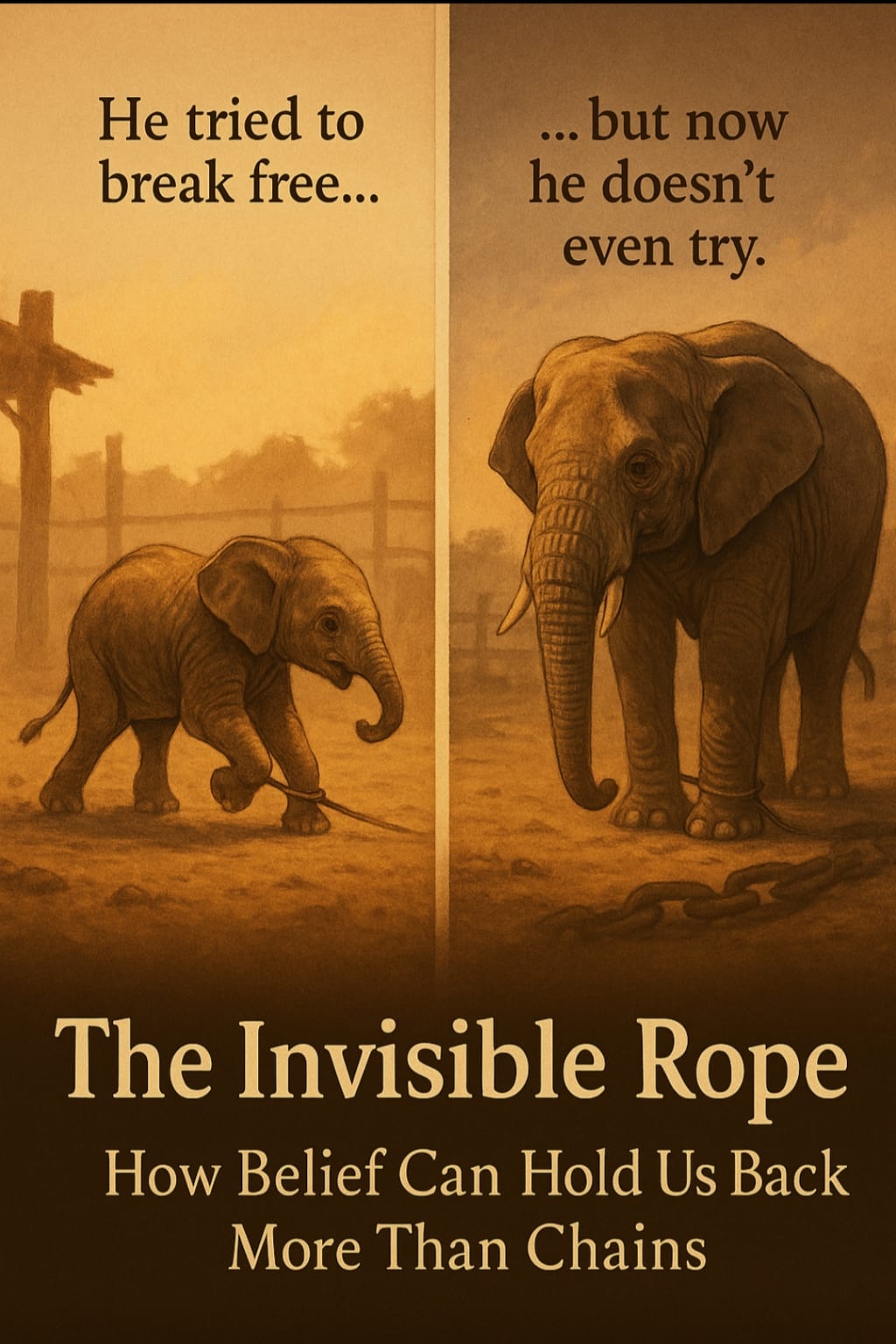
In a quiet, dusty village tucked between golden fields and whispering trees, a weary traveler stopped to rest for the evening. Near the edge of the village, he noticed something both majestic and confusing—a group of elephants standing calmly under the shade of a few tall trees. Their sheer size and power were enough to leave anyone awestruck. Muscles rippled beneath their thick, wrinkled skin, and their trunks swayed gently in the warm breeze. But what truly caught the traveler’s eye wasn’t their grandeur—it was how they were restrained. Each elephant had a thin, fragile rope tied loosely around one leg, the other end staked to a simple wooden peg in the ground. No heavy chains. No fences. No cages. Just that rope. It looked so weak that a single tug could break it. The traveler couldn’t understand. These creatures could crush boulders or pull trees from the earth—so why didn’t they escape? He stood there watching for quite some time. None of the elephants even tried to break free. They just stood there, calm and obedient, as if they truly believed they couldn’t go anywhere. Finally, curiosity got the better of him. He approached an elderly trainer who sat nearby, sipping tea and watching the elephants with the relaxed patience of someone who had done this his whole life. “Excuse me,” the traveler asked, “but how do you manage to keep these enormous animals tied down with nothing but that thin rope? Surely they could break free in a second if they wanted to.” The trainer smiled knowingly, as if he had been asked this question hundreds of times. “When these elephants are very young—just calves—we use this same kind of rope to tie them. At that age, it’s strong enough to hold them. They struggle. They pull. They try everything to escape. But the rope holds, and after many failed attempts, they finally give up. They start to believe they can’t break free.” He paused for a moment, then continued with a trace of sadness in his voice. “As they grow older and stronger, that belief stays with them. Even when they’re more than powerful enough to break the rope easily, they never try again. In their minds, they’re still that weak, helpless baby elephant. They don’t realize that the only thing holding them back now—is their belief.” The traveler stood in silence, letting the words sink in. It wasn’t the rope that restrained the elephants. It was their memory of failure. It was their acceptance of defeat. It was a belief—built from the past—that they were not strong enough, when in truth, they were. As the sun dipped low on the horizon, casting long shadows across the camp, the traveler realized how deeply this simple scene reflected something much greater. How many people, like these elephants, are bound not by physical barriers—but by old, invisible ropes of fear, failure, and doubt? How many give up after failing once or twice, carrying that sense of defeat through the rest of their lives? --- 🧠 Moral of the Story: Just like these elephants, many of us go through life carrying false beliefs—beliefs shaped by early failures, doubts, or criticism. We try something once, fail, and convince ourselves we’re not capable. Then we stop trying. We give up before we even begin. Over time, those beliefs become our reality. We grow stronger, wiser, and more capable—but we don’t notice it. We let the same old fears, the same “ropes,” hold us back. This story reminds us of a powerful truth: The limitations we accept are often not real—they’re mental barriers built from past experiences. The rope is no longer strong. But our belief in it is.We forget to test our limits. We forget to question the beliefs that were once true—but are now outdated.
About the Creator
Enjoyed the story? Support the Creator.
Subscribe for free to receive all their stories in your feed.
Comments
There are no comments for this story
Be the first to respond and start the conversation.