Vocal
The Frog in the Well and the Fish from the River
The Frog in the Well and the Fish from the River by Umairai Anwari Once upon a time, the summer sun blazed mercilessly over the land. The rainy season had passed without a single drop of rain. The ponds and lakes that once shimmered with water began to dry up, their beds cracking under the heat. Fish gasped and struggled helplessly in the shrinking puddles until, one by one, they died. Flocks of cranes, who once lived by those ponds, now took flight toward the great river, where the water still ran deep and fresh. One such crane caught a fat, glistening fish in its beak. Proud of his prize, he thought, “I’ll take this to a tall tree and enjoy it in peace.” But the fish was strong and unwilling to surrender her life so easily. She twisted and flapped her fins with all her might. Startled, the crane loosened his grip for a moment. The fish wriggled free—and by sheer coincidence, she fell straight down into a deep old well below. Inside that well lived many frogs—some young, some old. They had spent their entire lives in the darkness of that damp stone world, knowing nothing beyond its mossy walls. When the fish splashed into their home, the frogs leapt back in fright. They had never seen a creature like her before. After a moment of silence, a large, curious frog hopped forward and asked politely, “Who are you? And where did you come from?” The fish, still catching her breath, replied, “I am a fish—a creature of the water. I came from the river. That river is my home.” The frog tilted his head. “River? What is that?” The fish smiled. “The river is vast. It’s long and wide, and its water flows endlessly. The waves rise and fall, carrying us gently as we swim. It’s full of life, always moving.” The frog frowned thoughtfully, then swam to one side of the well. From there, he called out, “Is the river as wide as this?” The fish laughed softly. “Oh no, dear frog. Your well is nothing compared to the river. The river stretches farther than you can imagine.” The frog, not convinced, leapt to the other side of the well and returned. “Then,” he said proudly, “perhaps the river is as long as this well?” The fish giggled again. “Not at all! The river runs for miles and miles. It’s much, much longer than this.” The frog’s eyes widened in disbelief. “Miles? Impossible! You must be joking. Nothing could be larger than our well. It has water, it has walls, and we all live here happily. What more could there be? Either you are teasing me, or you’ve dreamed up this so-called ‘river.’” The fish sighed. “Dear frog, the problem is that you’ve never left this well. How can you know what lies beyond these walls? The world outside is far bigger than you can imagine. If you ever leave this well, you’ll see how small it really is.” The frog blinked. He didn’t know what to say. He had never imagined a world larger than his own. Just then, fate intervened. A group of boys, wandering in search of water, approached the well. They carried a bucket tied to a long rope. One of the boys lowered it carefully into the well. When they pulled it up, to their surprise, the bucket held not only water—but also a fish and a frog! “Hey, look!” cried one boy. “We dropped the bucket to get water, but it brought us a fish and a frog too!” Another boy said, “Poor fish! How did she end up here? Let’s take her back to the river where she belongs. We can fill our buckets there too.” The boys, kind-hearted and gentle, ran toward the nearby river. When they reached its banks, they released both the fish and the frog into the wide, flowing water. The frog floated for a moment, stunned by the sight before him. The water stretched as far as his eyes could see. The current moved with a gentle power, glimmering under the sunlight. Schools of fish darted through the water, and the sound of the flowing river filled his ears. He turned to the fish, his voice trembling with awe. “You were right. Everything you said was true. I never believed you, but now I see it with my own eyes.” The fish smiled kindly. “Sometimes, we must leave our small world to understand how vast life truly is.” The frog nodded. “I’ll go back to the well and tell everyone what I’ve seen. They won’t believe me—but I’ll tell them anyway. The world outside is real. The river is real.” The fish said softly, “Perhaps one day, they’ll find the courage to leave the well too.” And with that, the fish swam away, gliding gracefully into the shimmering blue water, while the frog sat on a smooth stone, gazing in wonder at the endless river. For the first time in his life, he realized how small his world had been—and how much more there was to discover beyond it. --- Moral: The story reminds us that narrow thinking limits our understanding. Like the frog in the well, those who never look beyond their small world cannot imagine the vastness of life outside their comfort zone. Only by exploring and being open to new experiences can we truly understand how big the world—and our possibilities—really are.
By Ubaid 12 months ago in Motivation
The Wise Farmer and the Hidden Treasure
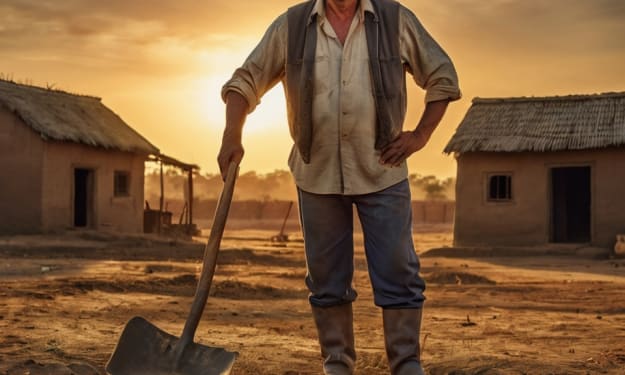
The Wise Farmer and the Hidden Treasure By Muhammad Maqbool Elahi In a small village surrounded by golden fields and dusty paths, there lived a poor farmer. Every day, from sunrise to sunset, he worked tirelessly in his fields — plowing, sowing, and watering the crops with his bare hands. Yet, when harvest season came, his hard work was never rewarded. The village chief, a greedy and powerful man, would arrive on horseback with his guards and seize almost all of the farmer’s crop. He would leave only a small share behind — barely enough for the farmer and his wife to survive the year. The farmer’s life was filled with endless struggle, but he never gave up hope. One afternoon, while digging in the corner of his field, his spade struck something hard. At first, he thought it was a rock, but when he dug deeper, he realized it was a small wooden chest buried beneath the soil. Curious and trembling, he pulled it out. When he opened the chest, his eyes widened in disbelief. It was full of diamonds, pearls, and glittering jewels. The poor farmer stood frozen for a moment, then quickly looked around to make sure no one had seen him. “If the village chief finds out,” he whispered to himself, “he’ll take it all away, just like he takes my crops.” He carried the chest home secretly and showed it to his wife. Her eyes sparkled with joy. “What should we do with this treasure?” he asked. His wife thought for a moment and said, “Let’s bury it in the courtyard. No one will ever think to look there.” The farmer agreed. That night, under the dim light of an oil lamp, they dug a small hole in the courtyard and buried the chest carefully. Later, as his wife prepared to fetch water from the well, the farmer sat quietly, lost in thought. He began to worry: “My wife is kind, but she talks too much. What if she tells her friends about the treasure? The secret will spread like wildfire, and soon the chief will know everything.” Anxious, he stood up, dug up the chest again, and hid it in a secret place deep in the forest. When his wife returned home, he said casually, “Tomorrow, we’ll go to the forest to catch fish.” His wife looked at him in surprise. “Fish? In the forest? Have you lost your mind?” The farmer smiled. “You’ll see tomorrow,” he said mysteriously. Early the next morning, before his wife woke up, the farmer went to the market. He bought a large basket of fresh fish from a fisherman and some hot bread from a tandoor. Then he carried them to the forest. There, he scattered the fish across a small clearing and hung the flatbreads from the branches of trees. Once his strange work was done, he quietly returned home. When the sun rose, he woke his wife. “Come on,” he said. “Let’s go catch fish in the forest.” Still confused, she followed him. When they reached the clearing, she gasped in astonishment. “Look!” she cried. “There are fish on the ground!” She picked up the fish one by one, placing them in her basket. As they walked further, she looked up and froze again. “There are breads hanging from the trees!” The farmer nodded wisely. “Yes,” he said, “sometimes it rains bread here, and the loaves get stuck in the branches.” His wife was completely convinced. When they returned home, she couldn’t stop talking about the “miracle.” Soon, her story spread throughout the village — how fish swam on dry land and bread rained from the sky. Word traveled fast, and it didn’t take long for the greedy chief to hear it. He immediately suspected that the farmer had found something valuable. He summoned both the farmer and his wife to his mansion. When the farmer arrived, the chief glared at him. “I’ve heard you found a chest full of jewels. Is that true?” The farmer looked confused and said, “No, sir. That’s not true at all.” “Don’t lie to me!” the chief thundered. “Your wife already told me everything!” The farmer bowed his head respectfully. “Sir,” he said, “my poor wife has lost her senses. She’s been saying strange things lately. Just yesterday, she told me bread fell from the sky!” The chief raised his eyebrows. When the farmer’s wife heard this, she became furious. “It’s true!” she shouted. “I saw it with my own eyes. Fish were lying on the forest floor, and bread was hanging from trees! The chest was buried in our courtyard the day before it rained bread!” The chief burst out laughing. “You’re right,” he said mockingly. “Your wife really has lost her mind.” But one of his servants whispered something into his ear. The chief frowned and said, “Go and search the farmer’s courtyard. Dig every inch of it!” The servants rushed to the farmer’s house and dug up the entire courtyard. They found nothing — no chest, no jewels, no trace of a treasure. When they returned empty-handed, the chief grew suspicious but could say nothing. The farmer smiled inwardly, thankful for his cleverness. Through his quick thinking, he had fooled both his talkative wife and the greedy chief. His secret treasure remained safe, buried deep where no one could find it. From that day on, the farmer and his wife lived a quiet, prosperous life — free from hunger and free from fear. --- Moral: Wisdom and patience can protect what strength and wealth cannot.
By Ubaid 12 months ago in Motivation
The Dove and Her Lost Child
The Dove and Her Lost Child By Zakariya Tamer In one corner of this vast and beautiful world, there was a lush green forest filled with life. A sparkling stream ran through its heart, singing softly as it flowed. Near the stream lived a white dove with her tiny baby in a warm little nest built on a tall tree. The days passed peacefully — the mother dove would fly out in search of grains and seeds, while her little one waited eagerly for her return. One bright morning, the dove left her nest as usual to find food. But when she came back, her heart nearly stopped — her baby was gone! The nest was empty. Shocked and frightened, she searched all around — under leaves, behind branches, even near the stream — but her baby was nowhere to be found. Her heart filled with grief. With tears in her eyes, she made a promise: she would not rest until she found her lost child. So, the dove began to fly across the forest, calling out again and again, but there was no reply. Tired and heartbroken, she finally landed beside the stream. Unable to hold back her tears, she began to weep softly. From beneath the clear water, a kind fish surfaced and asked gently, “Beautiful dove, what troubles you so deeply? Why are you crying? Are you hurt or ill?” The dove sighed and said, “No, dear fish, I’m not sick. I’m crying because my little baby is missing. When I came home today, my nest was empty. I fear he may have wandered away into the forest and lost his way back. He’s still too small to protect himself.” The fish nodded with sympathy. “Oh, poor mother. You should have kept a closer watch on him. I too am a mother, and I can feel the pain that fills your heart right now.” The dove replied sadly, “That’s what worries me the most — he’s so young and innocent. He doesn’t yet know how to stay safe.” The fish said kindly, “Don’t worry. I will help you look for him. I’ll swim to the farthest end of this stream and see if he came to drink water. Perhaps he’s nearby.” The dove hesitated. “But he’s a bird — he can’t live in the water.” The fish smiled. “Maybe he came close to drink. Let me check. Don’t waste your strength in tears. Crying won’t bring him back — searching will.” Grateful, the dove said, “Thank you, kind friend,” and flew off once more to continue her search. Hours passed. The poor mother grew weary, her wings heavy with exhaustion. Finally, she landed in a field to rest. Her eyes were filled with tears as she whispered to herself, “Where are you, my little one?” Just then, a rabbit who was nibbling on fresh crops noticed her and hopped closer. “What’s wrong, dear dove?” he asked kindly. “If you’re hungry, come with me — there’s plenty to eat here.” The dove shook her head sadly. “No, I’m not hungry.” “Then why are you crying?” asked the rabbit. “I’ve lost my child,” she replied. “He’s been missing since morning. I’ve searched everywhere, but he’s gone.” The rabbit stopped eating and said softly, “Don’t cry. I’ll help you. I can run fast — I’ll search every part of the forest until I find him.” The dove thanked him for his kindness and flew off again, while the rabbit darted into the woods to begin his search. After a while, the dove’s eyes caught sight of a donkey grazing peacefully in a meadow. She flew down and asked, “Dear donkey, have you seen a little white dove anywhere nearby?” The donkey raised his head and said clumsily, “What a strange question! Have you ever seen a donkey look up at the sky? We donkeys only eat grass or carry loads — our heads always stay down.” Just then, a black cat wandered by. Curious, she asked, “What’s going on here?” The donkey explained, “This poor dove has lost her baby. Have you seen it?” The cat grinned wickedly. “No, I haven’t. But if I had, my breakfast would have been taken care of.” Hearing that, the dove trembled and began to weep again. The cat licked her lips and said, “Why waste time crying? Come with me — I’ll eat you, and your pain will end while my hunger will fade.” The donkey stomped his hoof angrily. “You wicked creature! Leave right now, or I’ll kick you so hard you’ll end up in the village among the hungry dogs!” Frightened by his words, the cat ran off. The donkey turned to the dove and said gently, “It’s getting dark. Fly away, dear friend. Don’t listen to cruel creatures. Go home — the night is coming.” The dove thanked the donkey for his kindness and flew toward her nest, exhausted and broken-hearted. As she neared her tree, the moonlight spread softly over the forest. When she finally reached her nest, she froze in disbelief — her baby was sitting safely inside, waiting for her! “My child!” she cried with joy. Tears streamed down her face, but this time, they were tears of happiness. “Where were you?” she asked tenderly. The little dove chirped, “I just went out to look around, but then I couldn’t find the way back. I was scared and lost. But then… something inside me guided me home.” The mother dove smiled warmly and said, “Yes, my child, you’re right. When someone loses their way, love always shows them the path back home — no matter how dark or dangerous the road may be.” And with that, the mother and her child cuddled close together under the stars — safe, warm, and grateful for the miracle of finding their way home again. Moral: When love guides you, even in the darkest times, you will always find your way back home.
By Ubaid 12 months ago in Motivation
The Wolf and the Dog — A Lesson in Freedom
Title: The Wolf and the Dog — A Lesson in Freedom .BY:Khan --- It was a clear, moonlit night. The silver light washed over the forest, glimmering on the leaves and the still surface of a nearby pond. The cold wind rustled softly through the trees, carrying with it the faint cries of distant creatures. In the midst of that tranquil night, a weary, thin, and starving wolf trudged slowly through the underbrush, his ribs showing under his rough fur. He had been searching for food all day, but the forest had given him nothing—no rabbit, no fawn, not even a piece of bone. As he wandered along a dirt path near the edge of the woods, his eyes caught sight of something strange. There, under the moonlight, came a plump, well-fed dog. His fur gleamed, his belly rounded with good meals, and he walked with the easy grace of someone who had never known hunger. The wolf stopped, his hollow eyes fixed on the dog. “Good evening, my friend,” said the wolf politely. “Good evening,” replied the dog, wagging his tail. The wolf examined him curiously and said, “Brother, forgive me if I speak too plainly, but I have never seen an animal so strong, so well-fed, so—content. I roam day and night, I hunt from dawn until midnight, yet I am starving. And you—you look as though you dine on roasted lamb every night. Tell me, what is your secret?” The dog smiled, pleased by the compliment. He puffed out his chest proudly. “Ah, my dear friend, it is not so difficult,” he said with a confident grin. “If you do what I do, you too can live like me—without fear, without hunger, and with comfort every day.” The wolf’s eyes lit up. “Tell me quickly,” he said eagerly. “What must I do?” “It’s simple,” replied the dog. “You must guard the house of my master. Keep watch at night, bark at strangers, chase away thieves. That is all. Do that, and you’ll never be hungry again. You’ll sleep under a roof, you’ll have a warm fire in winter, and a full belly every night.” The wolf’s heart leaped at the thought. He could already imagine the taste of cooked meat and the feeling of sleeping safely without the biting wind. “Brother,” he said joyfully, “I would gladly do this work. My life is full of hardship. I wander through rain and snow, and still my stomach stays empty. If I could live as you do, it would be heaven itself!” The dog nodded cheerfully. “Then come with me,” he said. “You’ll see for yourself.” The two walked side by side under the moonlight, talking about soft beds, warm fires, and bowls filled with food. The wolf felt lighter already, as if he were walking toward a new life. But after a while, his eyes fell upon the dog’s neck. There, under the thick fur, was a dark, worn patch—a deep mark that looked like it had come from a rope or collar. “What is that on your neck?” asked the wolf curiously. The dog hesitated for a moment. “Oh, it’s nothing,” he said quickly. The wolf frowned. “No, no. Tell me the truth. That mark—what is it?” The dog sighed. “If you must know,” he said, “my master ties me up during the day. You see, I can be a bit fierce. So they put a collar around my neck and chain me to the wall until nightfall. When it’s dark, they unchain me, and I run freely around the yard to keep watch. When morning comes, they tie me again. But it’s a small price to pay for the comfort I enjoy. I am fed, loved, and cared for. Even the children of the house play with me and give me their leftovers.” The wolf stopped walking. The dog looked back and said, “Come along, my friend. What are you thinking?” The wolf’s eyes had changed. There was a quiet fire burning in them now. He looked at the dog sadly and said, “Brother, you are indeed well-fed and happy, but your happiness has a chain around its neck. You are not free.” The dog blinked, surprised. “Free? What use is freedom if you are starving? What good is the wild, the snow, and the wind when you have no food, no warmth?” The wolf shook his head slowly. “You may be right,” he said softly. “But I would rather be hungry and free than full and chained. My friend, your comfort is not worth my freedom. I was born in the wild, and the wild is my kingdom. Let me go.” Before the dog could speak another word, the wolf turned and ran—his thin legs carrying him swiftly through the dark forest. The wind howled through the trees, and the moonlight glimmered on his back. He was still hungry, still tired, but his heart beat with the fierce joy of being free. The dog watched him disappear into the shadows and sighed. “Poor fool,” he muttered. But deep down, a small voice whispered—a voice he did not want to hear: “Perhaps he is the wise one after all.” --- Moral: True happiness cannot live behind chains. Freedom, no matter how harsh, is worth more than comfort earned through submission.
By Khan 12 months ago in Motivation
The Day I Stopped Waiting for Motivation
I used to think motivation was the secret ingredient to success. That mysterious burst of energy that would finally make me go to the gym, start the side hustle, finish that online course, or wake up early without questioning my existence.
By Lena Vale12 months ago in Motivation
Poet Who Wrote Without Ink
In a small village near the coast of Ireland lived a man named Thomas Gray. He wasn’t famous, nor was he rich. He worked as a postman, walking miles each day through rain and fog, delivering letters no one remembered once they were opened. Yet, in his pocket, Thomas carried poems — not written on paper, but carved in memory. He had always loved words. As a boy, he’d listen to the sea whispering against the cliffs and imagine it was reciting verses in a language older than time. But his family was poor, and life demanded work, not poetry. So he grew up, found a steady job, and buried his dreams under the quiet rhythm of daily life. But Thomas never stopped composing. Every morning as he walked his route, he spoke softly to himself, shaping lines from what he saw. A crooked fence became a metaphor for stubborn hope. A single yellow flower in the mud became a stanza about courage. He remembered every word, holding them in his mind like fragile glass. At night, when the world slept, he would sit by the small window of his cottage, watching the light of distant fishing boats and whispering the poems he had written that day. He had no notebook, no ink, no audience — only the wind, the stars, and his heart. One stormy evening, as rain beat hard against the window, a young woman named Eliza knocked on his door. She had just moved into the village and had lost her way. Thomas invited her in, offered her tea, and lit a fire to warm her hands. They spoke for hours about books and music. When she mentioned poetry, his eyes lit up like candlelight. “You write?” she asked. Thomas hesitated. “I suppose I do. But not in the usual way. I’ve never owned a proper pen or paper. I just... remember them.” Eliza smiled. “Then your mind must be your book.” From that night on, Eliza began to visit often. Sometimes she’d bring a loaf of bread, sometimes just conversation. Thomas grew to trust her, and one evening, she asked him to recite one of his poems. Nervously, he began. His voice was gentle but steady. The poem was about the sea and a man who spent his whole life waiting for a ship that never came. By the time he finished, Eliza’s eyes were glistening. “Thomas,” she whispered, “you must write these down. The world should hear them.” He shook his head. “No. They’re not meant to be owned. Once I write them, they stop being alive. In my head, they keep breathing.” But Eliza didn’t forget his words. One day, while walking through the village, she heard Thomas reciting softly as he passed the post office. She began to memorize his verses, one after another. She would write them later, carefully, exactly as he had spoken. Months passed. Thomas never knew. To him, his poems still lived only in the air. But one afternoon, when the village held its annual fair, Eliza surprised him. Under a white tent stood a small table with a handwritten sign: Poems by Thomas Gray. Dozens of villagers gathered around, reading the verses pinned to the wall — poems about the sea, the hills, the silence of winter mornings. Thomas froze when he saw them. “You... wrote them down?” he asked. Eliza nodded. “I only borrowed your words. They deserved to be heard.” He stood silently, reading his own thoughts written in her careful handwriting. He felt both exposed and grateful. The villagers clapped and smiled, moved by the beauty and honesty of his words. For the first time, Thomas realized that poetry didn’t lose life when it was written — it simply began a new one. From that day forward, Thomas continued to write — still without ink, still in his head. But Eliza became his pen. She wrote what he spoke, preserving his verses for others to read. Together, they filled pages with the songs of their little village, with stories of love, loss, and the sea that never stopped whispering. Years later, when Thomas grew old and his steps slowed, he sat once more by the window overlooking the cliffs. Eliza, now a writer herself, read his poems aloud beside him. When he passed away one spring morning, the villagers found a small notebook on his table. Its first page carried only one line, written in his uneven handwriting. “I wrote without ink, but not without love.” They buried him overlooking the sea. The wind that day carried his words across the cliffs like a hymn. And the villagers swore that if you stood there quietly at dusk, you could still hear his voice — reciting poetry to the waves, forever unwritten, forever alive.
By LUNA EDITH12 months ago in Motivation
How I Started Freelancing with AI — And Made My First $300 Online. AI-Generated.
It all started during one of those nights when I couldn’t sleep. I was scrolling through my phone, thinking about how I could earn money online. Every video, every ad said the same thing — “Use AI and make money!” But it always felt fake. One day, I decided to test it myself. I had nothing to lose. That night, I made a simple goal: I’ll use AI to earn my first dollar online. 💡 Step 1: Discovering AI Tools At first, I didn’t even know what to do. I searched “how to make money using ChatGPT” and ended up watching tutorials about freelancing. I learned about Upwork, a platform where people hire freelancers for writing, design, marketing, and more. Then it clicked — What if I use AI to help me work faster and better? So I opened ChatGPT and started learning how to write professional proposals, creative articles, and product descriptions. Within a few hours, I realized something: AI can’t replace humans — but it can make humans 10x smarter. 💻 Step 2: Setting Up My Freelance Profile I created my Upwork profile with no experience, no reviews, and zero clients. Still, I wrote my profile carefully, describing how I use AI tools to deliver high-quality writing quickly. Here’s what I wrote in my bio: “I combine human creativity with AI precision to write engaging blogs, scripts, and product descriptions that attract attention.” It sounded professional — because ChatGPT helped me polish every sentence. 😄 Then I started applying for small writing jobs — blogs, short stories, product posts. I sent around 10 proposals in the first week. No replies. But I didn’t give up. 🔥 Step 3: My First Project One morning, I received a message. A client wanted someone to write a 500-word blog about “healthy habits.” He said, “I need it in two hours. Can you do it?” My heart raced. This was my chance. I used ChatGPT to create an outline, added my own ideas, edited the grammar, and delivered the work on time. After an hour, I got the message: “Perfect work! You delivered exactly what I needed.” Then came my first $20 — my first earning ever from freelancing. That moment changed everything. It wasn’t about the amount — it was about proof that it works. ⚙️ Step 4: Combining AI + Effort After that project, I started using AI more strategically. I didn’t let it do all the work — I used it as my assistant. It helped me brainstorm, write faster, and even create catchy titles. I started offering new services like: Blog writing using AI support YouTube scriptwriting Product descriptions and captions Within a month, I completed 8 small projects and made around $300. That’s when I realized something powerful: AI isn’t here to take your job. It’s here to give you a better one. 🌎 Step 5: What I Learned I learned three important lessons from my journey: 1. AI is a tool, not a shortcut. If you depend only on it, you’ll fail. But if you mix it with your own creativity — you’ll win. 2. Freelancing is not instant money. It takes patience, learning, and communication. Clients value honesty and effort. 3. Start small, dream big. My first $20 felt like $2000 — because it gave me confidence. 💬 Step 6: The Message I Want to Share If you’re reading this, maybe you’re also searching for a way to earn from home. Maybe you think you’re not skilled enough, or that freelancing is too hard. But trust me — if I can do it, you can too. You don’t need a degree, expensive software, or a fancy laptop. All you need is curiosity, discipline, and the will to try. AI tools like ChatGPT, Canva, and Notion are free. Upwork and Fiverr are free to join. Your success doesn’t depend on luck — it depends on whether you start today. 💫 Final Words Today, I’m still learning, still improving. But every time I log into Upwork and see new messages from clients, I remember where I started — with zero skills, zero money, and a small dream. That dream became real because I believed in trying. So next time you open your phone and see someone earning online, don’t scroll past — start your own journey. AI won’t do everything for you, but it will walk with you — one step at a time.
By Najeem Ullah12 months ago in Motivation
The Fire Within — How to Awaken Your Inner Strength and Rewrite the Story of Your Life. Content Warning. AI-Generated.
Life is not a straight path. It bends, it breaks, it tests, it rebuilds. Some days you walk under sunlight; other days, you crawl through the dark. But in both, there’s meaning — because every step, no matter how painful, is shaping the person you are becoming.
By Chilam Wong12 months ago in Motivation