Vocal
The Best Foods to Boost Your Mood Naturally:
Ever notice how a bowl of mac and cheese can make a bad day a little better? Or how you instantly feel calmer after sipping on warm tea? That’s no coincidence — what you eat has a powerful effect on how you feel. The truth is that your gut and brain are constantly communicating, and the foods you eat can have a direct impact on your mood, focus, and energy levels.
By Katina Banks11 months ago in Motivation
Selena Quintanilla: The Queen Who Never Died
In the heart of Texas, long before she became a symbol of timeless music, love, and loss, there was a little girl who sang before she could even spell her own name. Her voice, delicate yet powerful, carried a warmth that could hush an entire room. That girl was Selena Quintanilla, and she was destined to change Latin music forever.
By Frank Massey 11 months ago in Motivation
It’s Okay to Feel Lost: Why Confusion Can Be a Good Thing”
Sometimes, being a teenager feels like carrying the weight of the world on your shoulders. You wake up tired even after sleeping, your brain is buzzing with homework, exams, and endless decisions, and your heart feels heavy from friendships, expectations, and constant changes. The late nights scrolling through social media, the pressure to fit in, and the whirlwind of emotions can make even simple days feel overwhelming. It’s easy to feel drained, like nothing you do is enough, but it’s important to remember that this exhaustion isn’t a weakness—it’s a sign that you’re growing, learning, and navigating a world that’s asking a lot from you. Taking a breath, letting yourself rest, and being gentle with your feelings can make the weight a little lighter and remind you that you’re not alone.
By Sondos Ammar11 months ago in Motivation
Out with the Old - In with the New (For We Are the Only Solution)
When one season ends, another begins. It does not do to dwell on the past and forget to live. Sometimes letting go is best, no matter how much it hurts. Adios to the negative influences, to those who gain satisfaction from tearing you down, those who envy your joy and work tirelessly to see it fly away.
By Peter Thwing - Host of the FST Podcast11 months ago in Motivation
Why You Don’t Need Motivation, You Need Momentum
Motivation Is Overrated We love the idea of motivation. We chase it through videos, quotes, and speeches. We wait for that powerful feeling that will finally make us do what we’ve been avoiding. The truth? Motivation doesn’t last. It’s like caffeine — it gives you a rush, then fades away. And when it disappears, most people stop. That’s exactly why goals die halfway through. You don’t need more motivation. You need momentum. What I Learned the Hard Way There were months when I told myself, “I’ll start when I feel ready.” I waited for motivation to hit like lightning. But lightning never came. Then one morning, I tried something different. I stopped waiting to feel good and decided to move anyway. I told myself, “Just do one small thing.” So I got up, made my bed, and opened my laptop. Those two tiny actions didn’t take much effort, but they changed my mood. Once I moved, my energy followed. That was my first taste of momentum. Why Momentum Works When Motivation Fails Motivation is emotional. It depends on how you feel. Momentum is mechanical. It depends on what you do. When you act, even in a small way, your brain releases dopamine — the chemical that makes progress feel rewarding. That small burst pushes you to keep going. You stop waiting for the right mood. You create it through action. In physics, objects in motion stay in motion. Your habits work the same way. Start Smaller Than You Think Most people fail because they start too big. They set goals that look impressive but feel overwhelming. They plan to: Write 2,000 words a day Run 5 miles Meditate for an hour And then when they can’t keep up, they quit. Momentum works the opposite way. It asks for the smallest possible start. If you want to write, write one paragraph. If you want to work out, do five push-ups. If you want to meditate, close your eyes for a minute. Small wins build confidence. Confidence builds consistency. Consistency builds momentum. The 5-Minute Rule Here’s a simple method that never fails me: When I don’t feel like doing something, I promise to do it for just five minutes. Five minutes of writing. Five minutes of cleaning. Five minutes of reading. Once I start, the resistance disappears. That tiny action tells my brain, “We’ve already begun.” Most of the time, five minutes turns into thirty. Because the hardest part isn’t the work — it’s the start. --- Momentum Builds Discipline People often say discipline is doing things even when you don’t feel like it. But here’s the secret: discipline is built through momentum. When you keep showing up, even in small ways, you stop negotiating with yourself. You don’t ask, “Do I feel like it?” anymore. You just do it because that’s who you’ve become. Momentum turns effort into habit. And habit turns struggle into normal. That’s the point where real change happens.
By Nanu Nnabuife11 months ago in Motivation
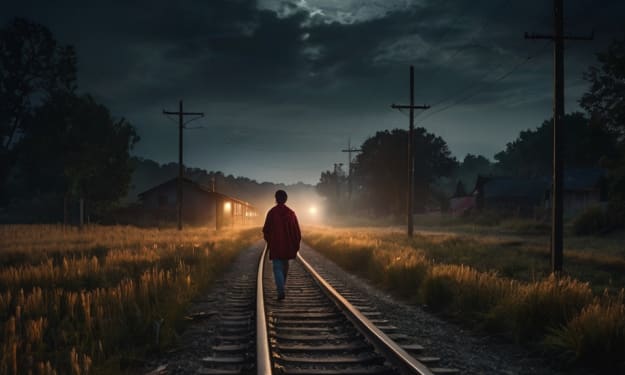
The Boy Who Stopped the Train
The Boy Who Stopped the Train By Dua Mustafa, Khairpur Mirs In a small, humble village surrounded by golden fields and whispering winds, lived a young boy named Abbas. He stayed with his parents and two younger sisters in a mud-brick house that stood at the edge of the village. Life for Abbas and his family was not easy. His father, Ghulam Muhammad, was old and frail, while his mother spent her days sewing clothes for neighbors to earn a little extra. Abbas, though still a teenager, worked tirelessly in the fields owned by the village landlord, Chaudhry Saab — a man known for his wealth, arrogance, and miserliness. Every day, from dawn till dusk, Abbas worked beneath the burning sun or in the biting cold, earning barely enough to feed his family. Yet, he never complained. His heart was pure, his faith unshakable. “Hard work never goes unrewarded,” his mother would often say, and Abbas carried those words like a promise written on his soul. That year, January had brought with it a sharp, dry cold. One evening, as the sun dipped behind the horizon and the fields turned shades of silver under the pale moonlight, Abbas was still working. The other laborers had gone home, their laughter fading into the distance, but Abbas decided to stay. “Let me finish the work today,” he thought. “Tomorrow, my father will rest easy.” Hours passed. The wind grew colder, brushing through the wheat like ghostly hands. As Abbas packed up his tools and tied his bundle, a faint rumbling reached his ears — the deep, rhythmic sound of a distant train. He looked up, eyes bright with curiosity. “It must be the night train from Karachi,” he murmured. He had always loved watching the great iron beast thunder past the fields, its lights glowing like fireflies in the dark. With a smile, he picked up his lantern and hurried toward the railway line that cut through the edge of the farmland. But as he approached, his steps froze. Something was wrong. The steel track — the lifeline of the speeding train — was broken in the middle. A large gap gaped between the rails, its jagged edges glinting in the lantern light. Abbas’s heart pounded in his chest. He could already hear the whistle of the train — louder now, closer. He knew it wouldn’t be long before disaster struck. “Oh no,” he whispered. “If the train comes through, it will derail... all those people will die.” For a moment, panic gripped him. What could a poor boy do against a roaring train? But then courage flooded his heart. Without another thought, Abbas grabbed his red scarf, climbed onto the nearest signal post, and began waving it frantically, shouting at the top of his lungs. “Stop the train! The track is broken! Stop!” His voice echoed through the cold night, carried by the wind. The train’s massive headlights pierced the darkness, blinding him for a second. He waved harder, screaming until his throat burned. And then — with a mighty screech of brakes and a long, desperate whistle — the train slowed, sparks flying beneath its iron wheels, until it finally came to a halt a few feet away from the broken track. Abbas collapsed to his knees, trembling but relieved. The train door opened, and a man in uniform — the driver — stepped down, followed by a few anxious passengers. “What’s the matter, boy?” the driver called out. “Why did you stop the train? Do you realize the Chief Minister’s mother is on board?” Abbas caught his breath and pointed to the broken rail. “Uncle, look there! The track is broken. If the train had gone any further, it would’ve fallen off. Everyone would’ve died!” The driver’s eyes widened. He rushed forward, examined the track, and turned back, his face pale. “Good heavens... you’re right.” He looked at Abbas with awe. “You saved all of us, son. You saved so many lives tonight.” Abbas lowered his head humbly. “No, Uncle,” he said softly. “I only did what was right.” The next morning, Abbas was back in the fields, working as always. The night’s events already felt like a dream. But just as he began harvesting the wheat, a shiny black car rolled down the dusty path toward him — a sight no one in the village had ever seen. The door opened, and out stepped a man in a crisp suit, followed by two guards. He looked around and asked in a commanding voice, “Is Ghulam Muhammad’s son here?” Abbas, startled, stepped forward. “Yes, sir. I am his son. How can I help you?” The man smiled and extended his hand. “You are the brave boy who stopped the train last night, aren’t you?” Abbas nodded shyly. “Yes, sir.” “Well,” the man said, his eyes softening, “you saved my mother’s life — and the lives of hundreds of others. The government has decided to reward your courage. Your family will be given a new house, financial support, and free education for you. This country needs sons like you, Abbas — honest, brave, and selfless.” Tears welled in Abbas’s eyes. His heart swelled with gratitude. He looked up at the sky, whispering a silent prayer of thanks. Allah had indeed seen his struggle, his honesty, his goodness — and had rewarded him in a way he had never dreamed. As the car drove away, Abbas turned back to his fields, the morning sun glowing over the land. The same earth that had once seen his hardship now shimmered with new hope. His story became the talk of the village — a tale of courage, faith, and how one boy’s selfless act changed everything. And from that day on, whenever the train passed through that stretch of track, the driver would slow down, look out the window, and salute the small boy in the fields — the boy who had stopped the train and saved them all.
By Khan 11 months ago in Motivation
The Fall of the Elephant King
The Fall of the Elephant King BY: Khan In the heart of a vast and beautiful jungle, ruled a mighty elephant king. His enormous tusks gleamed like ivory swords, and his deep trumpet echoed through the forest like thunder. To any outsider, the elephant’s reign seemed unshakable — he was large, strong, and feared by many. But beneath that grand image lay a truth the jungle had begun to whisper: the king was lazy. Each day, instead of patrolling his kingdom or leading his herd, the elephant lounged beside the great lake, half-asleep under the shade of old banyan trees. He spent his time gossiping with his friends — the rhinos and the buffaloes — laughing, eating, and bathing. To him, peace meant leisure, not vigilance. The jungle stretched endlessly, green and glittering in the sunlight, filled with rivers that sang and trees that seemed to touch the sky. But beauty often invites envy. Across the borders, in another jungle, the rival beasts had long coveted this land — its abundance, its safety, its water. Years ago, they had attacked, only to be driven away by the courage of the lions who fought fiercely alongside the jungle’s defenders. But peace had made the elephant kingdom forget the taste of fear. The lions, however, never forgot. They had seen the hunger in the enemy’s eyes — and the silence before another storm. Recently, faint roars and growls echoed from beyond the borders. The scent of strangers drifted through the wind. The lions sensed something. While the elephant king enjoyed his lazy afternoons, the lions began to prepare. Quietly, they trained at night. They sharpened their claws against the rocks, guarded the borders in shifts, and kept their cubs close. They were ready, even if their king was not. One evening, when the air was thick with the scent of rain, the lion chief decided enough was enough. He summoned every creature in the jungle to the Great Clearing — from the smallest rabbit to the tallest giraffe. Even the elephant king arrived, looking annoyed that his nap had been interrupted. The lion stood tall on a rock and spoke with the calm authority that only truth gives. “My friends,” he began, his golden mane catching the dying light, “the enemy is moving again. They are preparing to attack. We must be ready before it is too late.” The words rippled through the crowd like wind over tall grass. The smaller animals gasped in fear. Mothers pulled their young closer. But from the back, came a booming sound — the elephant king’s laughter. “Attack us?” the elephant bellowed. “Do you think those little creatures can harm us? Look at us! We are giants! Let them try!” His friends, the rhinos, joined in the laughter, stomping their feet and snorting with pride. “We are too strong to fall,” one of them shouted. The lion didn’t respond with anger. He only looked at them with quiet disappointment. “Strength means nothing,” he said softly, “if the mind is asleep.” But the warning fell on deaf ears. The meeting ended with the smaller animals frightened, the lions alert, and the elephant king amused by what he called “the lion’s bedtime stories.” Days passed. Then one moonless night, while the jungle slept under a blanket of silence, it began. The enemy came like shadows — swift, silent, merciless. Hyenas, wolves, and wild dogs crossed the border in hundreds, their eyes glowing red in the dark. The lions, ever watchful, were the first to hear the distant growls. They rose to their feet instantly. The lion chief roared, a sound so powerful it shook the trees. His pride leaped into action, warning the other animals. Birds flew in panic, monkeys screeched from the treetops, and deer ran toward the riverbanks. But in the lake’s moonlight, the elephants and rhinos still slept. The first strike hit them where they lay. Hyenas bit at their legs, wolves clawed at their eyes. Panic erupted. The mighty elephant king woke in terror as chaos exploded around him. He tried to rise, trumpeting loudly, but it was too late — fear had paralyzed him. From the shadows, the lion and his pride charged, their roars slicing through the darkness. The battle was fierce. Dust and blood filled the air. Claws met teeth, roars met screams, and the jungle became a battlefield. Hours passed. Then, just as dawn began to paint the sky in pale gold, silence returned. The ground was littered with the bodies of the invaders — and many elephants and rhinos who had fallen in their sleep. The once-proud elephant king lay wounded near the lake, his eyes wide with disbelief. He looked toward the lion, who stood tall despite his scars. “You were right,” the elephant whispered, his voice trembling with regret. “My pride blinded me.” The lion bowed his head respectfully. “Your courage could have saved many,” he replied. “But wisdom saves all.” The elephant king lowered his gaze, tears mixing with the morning dew. He knew his reign was over. The jungle needed a leader who would listen, not laugh. That very day, as the sun rose high, the animals gathered once more in the Great Clearing. Together, they made a decision that would shape their future. They crowned the lion chief as their new king — a ruler not of size or strength, but of wisdom and courage. Under his leadership, the jungle healed. The rivers ran clear again, laughter returned to the trees, and every creature, great and small, learned the lesson the elephant king had ignored: Pride may roar, but vigilance keeps the jungle alive.
By Khan 11 months ago in Motivation
The Fifth Sinner
The Fifth Sinner The five men stood silently, their heads bowed in confusion. Their hands trembled slightly — they had been captured by the Devil’s servants and dragged into the dark court of Satan himself. They didn’t understand why they were there. What crime had they committed? From behind a thick black curtain came a burst of cruel laughter. Then a deep, cold voice echoed through the darkness. > “Tell me,” the Devil commanded, “what crime has Sinner Number One committed?” One of the dark figures stepped forward. > “Master, his crime is this: he devoted his life to serving his parents. He cared for them day and night, stood by them in old age, and never left them alone.” The Devil let out a long, mocking laugh that shook the hall. > “Sinner Number Two!” the Devil’s voice thundered. “What has he done?” Another servant answered, > “Master, his heart is filled with compassion. After his brother’s death, he took care of the widow and her children. He loved them more than his own, gave them education and dignity, and helped them stand on their own feet. That, Master, is his crime.” Again, the court echoed with Satan’s laughter. > “And what about the third one?” > “Master, this man rebelled against his own family,” the servant said bitterly. “He brought his sister from the village to the city so she could study. He gave her love, respect, and education — and even found her a good husband. That is his unforgivable sin.” The Devil’s eyes burned with fury. > “Number Four — speak!” > “Master, this man was overcome with a passion to help others. He founded a training center where poor people learned skills to earn a living. Because of him, hundreds became good citizens. That, Master, is his crime.” The Devil slammed his hand on the table. > “Enough! My head will burst with anger! Such sinners are multiplying day by day — our work grows harder!” But one servant hesitated. > “Master, there is still one more — Sinner Number Five.” > “Enough!” the Devil shouted. “I can’t bear to hear more of their good deeds. Take them all away! Give each one a hundred lashes and lock them in the darkest cell — until the madness of goodness leaves their minds!” The five men cried out together, > “No! We’ve done nothing wrong! Don’t punish us! Don’t hurt us!” Suddenly — a scream. And then — silence. Saboor woke up, trembling. Sweat rolled down his forehead as he whispered to himself, > “Oh God… what a terrible dream.” He got up from his bed and walked quickly toward his grandfather’s room. But the room was empty — his grandfather had already gone out for his morning walk after the dawn prayer. Saboor lay down on the old man’s bed, waiting for him to return. A few minutes later, the door opened. > “Saboor, my child,” the old man smiled. “You’re up early today, even though it’s a holiday. Something wrong?” > “Grandfather, please sit down,” Saboor said nervously. “I have something to tell you.” The old man sat beside him on the cot. Saboor began to describe every detail of his strange dream — the court, the laughter, the punishments. When he finished, the old man looked at him quietly, a soft smile touching his wrinkled face. > “So, my child… this is what’s troubling you?” > “Yes, Dada Jan,” Saboor replied. “I can’t understand. How could people be punished for being good?” The old man chuckled gently. > “There’s nothing to fear, Saboor. Remember this — to the Devil, every good person is his enemy. The more you stand for truth and kindness, the more Satan hates you.” Saboor looked puzzled. > “So… does that mean you, too, would be a sinner in the Devil’s eyes?” The old man’s smile faded into calm pride. > “Yes, my son. I, too, would be his fifth sinner.” > “What do you mean, Grandfather?” The old man leaned back, his eyes distant with memory. > “Let me tell you a story — my own story. When Pakistan was created, millions had to migrate through rivers of blood. Families were torn apart. Many parents lost their children, and children lost their parents. Amid that chaos, your late grandmother and I reached a refugee camp.” His voice softened. > “There, we found two little orphans — a boy and a girl. Alone, frightened, with no one left. We took them in, raised them as our own, shared our food, our home, our love. Life was hard in the beginning, but God blessed our efforts. The business grew, and so did the children.” Saboor’s eyes widened as he listened. > “When they grew up,” the old man continued, “we got them married into good families. They built their own lives. That was our reward.” Saboor leaned forward. > “Grandfather… who were those two children?” The old man smiled softly. > “One of them is your father — Dr. Masroor. The other is your aunt, who teaches at the girls’ college.” Saboor froze in astonishment. > “You mean… my father and aunt were those orphans?” > “Yes,” the old man said with quiet pride. “So now you know, my dear boy — your dream’s fifth sinner was me.” Saboor’s eyes filled with tears. He moved closer and hugged his grandfather tightly. The old man’s chest was warm, filled with the peace of love and the coolness of kindness — a place where no shadow of evil could ever reach. --- Moral: > In the eyes of the Devil, every act of kindness is a crime. But in the eyes of God — those “criminals” are His most beloved souls.
By Khan 11 months ago in Motivation
Noni Learns the Value of Work
Noni Learns the Value of Work (An Inspirational Short Story) Noni was a good boy in many ways — cheerful, curious, and kind-hearted. But he had one very bad habit: he was incredibly lazy. He hated doing any kind of work. Whenever someone asked him to help, he would refuse right away. If his mother called out from the veranda, “Noni, dear, can you please bring me some garlic from the kitchen?” Noni would frown and reply, “I won’t. You can get it yourself.” Then he would continue playing with his toys as if he hadn’t heard her at all. When he felt thirsty, he wouldn’t even get up to drink water. He would just shout, “Mom, I’m thirsty! Bring me some water!” Doing homework was another great challenge for him. He would only finish it after his mother asked him again and again. And even when he did, he never bothered to pack his books into his school bag. He would just leave them scattered on the carpet. His mother would sigh, pick them up one by one, and neatly place them in his bag herself. His father faced the same problem. Every morning, when the newspaper delivery boy tossed the paper through the gate, his father would call, “Noni, son, please run and get the newspaper.” But Noni would make excuses. “Dad, there’s a fat cat sitting outside — I’m scared!” So his father would end up going himself. At school, things were no different. He disliked getting up early in the morning. If it weren’t for his father’s scolding, he would have slept till noon. Even in class, while his friends cleaned their desks with small dusters, Noni would just blow the dust away half-heartedly. He often wished his mother were there too — she could have cleaned his desk for him. By the time he turned eight and entered the fourth grade, Noni still hadn’t learned to do even the smallest things himself. He didn’t know how to tie his shoelaces or button his shirt. Every morning, he would sit half-dressed, waiting for his mother to come help him — even though she was busy preparing breakfast, and his father was getting ready for work. One day, while making breakfast, Noni’s mother called out, “Noni, please put the bowl of porridge on the table. I’m toasting the bread.” But Noni replied, “Mom, my pants aren’t buttoned. If I stand up, they’ll fall down.” His mother sighed and placed the bowl on the table herself. His laziness was now a serious problem. His mother often worried about his future. “What will happen to Noni if he keeps avoiding work like this?” she asked her husband one night. His father nodded thoughtfully. “You’re right,” he said. “We have to find a way to change him.” A few days later, on a Sunday afternoon, while his mother was busy cooking lunch, Noni was sitting beside his father watching cartoons. During the commercial break, Noni said, “Dad, I love cartoons! I wish I could watch them all day, every day.” His father smiled. “Cartoons are fun, no doubt — even adults enjoy them. But tell me, if everyone just sat around watching TV all day, who would do the other work?” Noni thought for a moment and replied, “That’s true. If the milkman, the newspaper boy, and the maid all watched cartoons all day, who would bring the milk and paper? Who would clean the house or wash the clothes?” His father’s eyes lit up. “Well said, my boy! That’s a very smart thought.” Encouraged by the praise, Noni continued, “And if you watched cartoons all day, you wouldn’t go to the office. Then you wouldn’t get paid — and we couldn’t buy food or clothes!” His father laughed softly. “Exactly. You see, Noni, so many people around the world work every day — just so that life keeps running smoothly for all of us. Some make our clothes, some make our shoes, some print our school books, and some make the bags to carry them in. Farmers grow the food we eat, laborers build our homes, and others make toys for children like you. Everyone contributes in some way. We should be thankful to all of them.” Noni sat silently for a while, thinking. Then he said, “And Mom also works all day long — cooking, cleaning, and taking care of us. Even when she’s tired or sick, she still keeps working.” His father nodded. “That’s true, son. Mothers are incredibly strong — they work tirelessly for their families. But tell me, what lesson do you think we can learn from all this?” Noni hesitated for a moment, then said quietly, “If so many people are working for us, then we should also work — so that our efforts can help others too.” His father smiled proudly. “That’s the spirit! Children may be small, but they can still help in many ways — by doing their own small tasks. You can polish your shoes, put your books away, hang your uniform neatly, drink water yourself, and help your mother set the table or clear it. When you grow up doing small tasks, you’ll be ready to handle big ones.” He added, “Remember, a good and responsible person is always doing something useful.” That conversation left a deep impression on Noni. Just then, his mother called from the kitchen, “Lunch is ready! Wash your hands and come to the table.” Noni ran to the sink, washed his hands, and went straight to the kitchen. His mother was carrying plates to the dining table. “Mom,” he said eagerly, “you serve the food — I’ll set the table.” His mother looked at him in surprise. Noni carefully took the plates and spoons from her hands and arranged them neatly on the table. Then he rushed back to get glasses and a chilled water bottle from the fridge. His father watched him with a proud smile. His mother placed her hand lovingly on his head. “Noni, I can’t believe what I’m seeing. Is this really my son?” Noni grinned. “Yes, Mom. Dad made me realize that so many people work hard to make our lives easier. From now on, I’ll do my part too. I won’t be lazy anymore.” His mother’s eyes softened. “I’m so happy, my dear. When we work, we not only help ourselves but also others. Making someone else’s life easier is one of the greatest forms of kindness.” Noni nodded firmly. “You’ll never have to ask me to do anything again, Mom. I’ll do my work myself — always.” And from that day onward, Noni truly changed. He had finally learned that doing work — even small, simple tasks — was not a burden, but a beautiful way to live responsibly and make the world a little better for everyone.
By Ubaid 11 months ago in Motivation