Vocal
The Importance of Work: A Journey of Purpose and Fulfilment
The Importance of Work: A Journey of Purpose and Fulfilment Work is often seen as a means of survival, but it is so much more than just a way to earn a living. It defines who we are, gives us purpose, and fills our lives with meaning. Through work, we not only contribute to society but also shape ourselves, grow, and leave behind a legacy. To understand the true importance of work, we must first acknowledge its emotional and psychological impact on us. When we work, we create. Whether it’s a farmer tilling the soil, a teacher shaping young minds, or a doctor saving lives, each of these roles brings something meaningful to the world. Work, in its essence, is the expression of our inner potential. Work as Identity and Fulfilment Imagine a sculptor who carves a block of stone day by day, tirelessly chiselling away to reveal the beautiful statue within. For the sculptor, work is more than just physical labour; it is a form of expression, a reflection of his soul, and the final creation stands as proof of his dedication. Just like that sculptor, each one of us shapes our life through our work. Our careers and jobs give us a sense of identity and belonging. Take the example of a teacher who dedicates years to educating children. Every lesson she teaches, every child she inspires, and every life she touches becomes a part of her legacy. Even though her job may seem mundane to some, for her, it’s a mission. Her work is her way of contributing to the world, and it brings her immense satisfaction. The students she nurtures go on to achieve great things, and in doing so, they carry forward a piece of her work into the future. Work as Growth Work is not always easy. Often, it requires sacrifice, dedication, and resilience. Yet, it is in these struggles that we grow as individuals. Every challenge faced at work teaches us something new, pushes us beyond our comfort zones, and makes us stronger. Consider the story of a young man who started as a daily wage labourer, working in the hot sun for long hours to earn a meagre wage. Despite the hardship, he continued to work hard, save, and learn from his experiences. Over the years, his perseverance paid off, and he opened his own small business. Through hard work and determination, he rose from poverty to success. His journey exemplifies how work shapes not only our destiny but also our character. Work as Contribution to Society Work connects us to the larger fabric of society. It is through our individual roles that society functions smoothly. Every job, no matter how small or seemingly insignificant, plays a crucial role in keeping the world moving forward. The work of a janitor is just as essential as that of a CEO. Without the contributions of every individual, society would fall apart. Think of healthcare workers during the COVID-19 pandemic. These frontline workers put their lives on the line every day to care for the sick and prevent the spread of the virus. Their work was not just a job; it was a selfless contribution to humanity. The importance of their work became evident as they became the backbone of the global fight against the pandemic, reminding us how vital each profession is to society. Work as Purpose Finally, work provides us with a sense of purpose. When we wake up each day with something to accomplish, we feel alive. A retired man who no longer has work to engage in often feels lost and without purpose. This illustrates that work is not just about financial gain; it’s about feeling useful and contributing to something bigger than ourselves. Take the example of Sonu Bhalchandra Brahmakshatriya, who continues to run the renowned Gajraj Gopal Ayurvedic shop in Erandol, inspired by his father's dedication. For him, this work is not just about business—it is a continuation of a century-long tradition of serving the community. It gives him a sense of pride and connection to his roots, and the shop itself becomes a symbol of trust and service to the people. In conclusion, work is not merely a task we perform to get through life—it is life itself. Through work, we define our identity, grow as individuals, contribute to the greater good, and find purpose. It is an integral part of the human experience, and its value cannot be overstated. Whether we are teachers, labourers, doctors, or business owners, each of us, through our work, leaves a lasting mark on the world.
By Dipak Pawar2 years ago in Motivation
What Will Happen to Me?
What Will Happen to Me? In the quiet moments of life, a question often arises in the depths of our hearts: What will happen to me? It’s a question that embodies the uncertainty we face in our journey, a question that haunts us as we navigate the unpredictable waters of existence. From our ambitions and dreams to the inevitable reality of time, this question lingers. But perhaps, it is within this uncertainty that we discover the beauty of life, the resilience of the human spirit, and the power of hope. Life, as we know it, is a tapestry woven with threads of joy, sorrow, success, and failure. We embark on this journey with wide eyes and open hearts, but along the way, we encounter challenges, some expected, others unforeseen. When life throws its curveballs, the thought of what will happen to me becomes more pronounced. But it is these moments of vulnerability that make us human, and they remind us that we are part of something much larger. Take, for instance, the story of a man who lost everything in a financial crisis. His business crumbled, his family was left in despair, and his future seemed bleak. As he sat alone in his empty office, staring at the ruins of his hard work, the question echoed in his mind, "What will happen to me now?" But instead of surrendering to the darkness, he found strength in his pain. He took small steps, sought help from loved ones, and started again. Over time, he built a new life, one that was stronger, richer, and filled with gratitude for the lessons learned through hardship. His story teaches us that even in our darkest hour, when the future feels uncertain, there is always a way forward. What happens to us is not always about what life brings, but how we respond to it. Another touching example comes from a young woman battling a life-threatening illness. Her days were filled with doctors' visits, treatments, and the quiet fear of what will happen to me. She could have given in to despair, but instead, she chose to embrace the present moment with courage and grace. She focused on the love of her family, the warmth of friendships, and the beauty in everyday life. Her illness did not define her; her spirit did. Even when her physical strength waned, her emotional resilience grew. In her, we see a powerful reminder that while we may not control the outcome, we can control how we live in the face of uncertainty. Life is full of such examples—people who have faced unimaginable circumstances but found meaning and purpose despite it all. So, what will happen to you? The answer lies not in predicting the future but in understanding that uncertainty is part of the journey. Life will unfold in ways we cannot foresee, and while we may not always have control over what happens, we do have the power to shape our responses. Perhaps the most beautiful thing about this question is that it invites us to reflect on what truly matters. In a world that is constantly changing, where nothing is permanent, we are reminded that the present moment is all we have. It’s in this moment that we find love, connection, and the quiet joys of life. When we stop worrying about the distant unknown and focus on the now, we discover that life is not about the destination, but the journey itself. If we look at the larger picture, life is a mystery for every living being. From a bird soaring in the sky to a seed buried in the earth, there’s no certainty about tomorrow. And yet, the bird continues to fly, and the seed continues to grow. They trust in the process of life, without knowing what the future holds. Similarly, we too must learn to trust—trust that life will take us where we are meant to go, that we will find strength in adversity, and that we will be guided by our inner compass of love, kindness, and resilience. As we grow older, the question of what will happen to me may evolve. It might shift from concerns about success and career to thoughts about legacy, relationships, and the mark we leave behind. We might wonder if we’ve made a difference in the lives of others or if we’ve lived a life of purpose. In these moments of reflection, we realize that what happens to us is not just about our personal journey, but about the impact we have on the world around us. Each act of kindness, each connection we make, ripples outward, touching the lives of others in ways we may never fully understand. In the end, what will happen to us is not just a matter of fate or circumstance, but a reflection of the choices we make each day. Will we choose fear, or will we choose courage? Will we cling to control, or will we embrace the unknown with trust? Will we allow life’s challenges to break us, or will we let them shape us into stronger, more compassionate beings? The answer to what will happen to me is not written in the stars or found in fortune tellers' predictions. It is written in the way we live each moment, in the love we give, and in the resilience we show. It is written in our ability to find meaning in both joy and sorrow, to rise when we fall, and to keep moving forward even when the path is unclear. So, if you find yourself asking, what will happen to me, know that the answer is already within you. You are stronger than you think, more capable than you realize, and more loved than you can imagine. Trust in the process of life, for while the road may be uncertain, it is also full of beauty, wonder, and endless possibilities. And in the end, it is not about what happens to you, but about how you choose to walk the path laid before you.
By Dipak Pawar2 years ago in Motivation
Encouraging Words for a Friend Going Through a Tough Time
In life, we all have times when things feel overwhelming, and those we care about encounter challenges that weigh them down. In such circumstances, our words can provide consolation, hope, and encouragement. Knowing what to say can make all the difference when your buddy is going through a personal loss, a career setback, health problems, or mental distress. This article will supply you with inspiring, meaningful phrases to help a buddy get through their worst moments.
By Bloom Boldly2 years ago in Motivation
Don’t Be a Slave to Attitude
Don’t Be a Slave to Attitude In a world where first impressions are often deemed the most lasting, the attitude we carry significantly shapes how we navigate our daily lives and interact with others. Attitude acts as a lens through which we perceive our experiences and relationships; it can be our greatest asset or our most formidable obstacle. When we become slaves to a negative attitude, we limit our potential and the richness of our experiences. Conversely, cultivating a positive mindset opens doors, nurtures connections, and enhances our overall quality of life. The Weight of Negativity Negativity is a heavy burden. It can manifest in various forms, from cynicism and pessimism to entitlement and anger. Each of these negative attitudes has the potential to close off opportunities, alienate loved ones, and create an impenetrable barrier between ourselves and the world around us. For instance, consider a person who has faced repeated failures in their career. Instead of viewing these setbacks as learning experiences, they develop a belief that they are destined to fail. This negative attitude not only saps their motivation but also alienates colleagues and friends, reinforcing their sense of isolation. Take the story of Mark, a talented artist whose work was consistently rejected by galleries. Initially, he was filled with hope and determination. However, after numerous rejections, he began to internalise a narrative of failure. His attitude shifted from one of creativity to bitterness. Mark would often berate himself for not being good enough, which led him to withdraw from the artistic community he once cherished. Instead of seeking constructive feedback, he shunned the very connections that could have supported his growth. However, the moment Mark decided to change his attitude marked a turning point in his life. He began attending art workshops and engaging with fellow artists, opening himself up to new perspectives. Through this transformation, he not only improved his craft but also forged meaningful relationships, eventually leading to the successful exhibition of his work. The Power of a Positive Mindset The opposite holds true for those who embrace a positive attitude. A constructive mindset empowers individuals to face challenges head-on, seeing them as opportunities for growth rather than as insurmountable obstacles. Take, for example, Sarah, a single mother who faced immense struggles after losing her job. Rather than succumbing to despair, she focused on the possibilities that lay ahead. With an unwavering belief in her ability to overcome adversity, Sarah began exploring freelance opportunities and taking online courses to enhance her skills. Her positive attitude attracted potential clients, and before long, she had built a successful freelance career. Not only did she provide for her family, but she also became a role model for her children, teaching them the value of resilience and optimism in the face of life’s challenges. Transforming Attitudes Changing one’s attitude is not a simple task; it requires conscious effort and practice. One effective strategy is to cultivate gratitude. By acknowledging the positive aspects of our lives, we can shift our focus away from negativity. Keeping a gratitude journal can be particularly beneficial, as it allows us to reflect on and document our blessings daily. Another approach is to surround ourselves with positive influences. The people we spend time with can have a profound impact on our attitudes. Engaging with those who uplift and inspire us can serve as a catalyst for positive change. For example, after a difficult period, David found solace and encouragement in a community group dedicated to personal growth. Surrounded by individuals who shared their challenges and triumphs, he began to shed his cynical outlook. The support and encouragement from this community transformed David’s perspective, allowing him to embrace hope and pursue his dreams once more. Moreover, mindfulness and self-compassion are crucial in this journey. Practising mindfulness helps us become aware of our thoughts and feelings without judgment. When negative thoughts arise, we can acknowledge them and choose not to act upon them. Self-compassion allows us to treat ourselves with kindness during difficult times, reminding us that it is okay to struggle and that we are not alone in our experiences. A Call to Action Choosing to reject a negative attitude and embrace positivity is a powerful act of self-liberation. It allows us to break free from the shackles of despair and opens our hearts to new possibilities. The transformation may not happen overnight, but with persistent effort and a commitment to change, we can shift our perspectives and redefine our narratives. In a world filled with challenges, we must remember that our attitude shapes our experiences. Rather than being slaves to negativity, let us strive to cultivate an attitude of hope, resilience, and compassion. By doing so, we can create a more fulfilling life for ourselves and inspire others to do the same. As we embark on this journey, let us remind ourselves that while we may not always have control over our circumstances, we can always choose our attitude. In this choice lies our greatest freedom. Embrace it.
By Dipak Pawar2 years ago in Motivation
Luis Arcangel: The Honorary Millennial CEO Redefining Finance. AI-Generated.
In the fast-paced world of finance, where innovation and foresight drive success, Luis Arcangel stands out as a dynamic leader. As an honorary millennial CEO and founding partner of a global financial firm, Luis combines youthful energy with sharp strategic insight, propelling his firm to achieve impressive growth and operate on multiple continents.
By Luis Arcangel2 years ago in Motivation
Pooven Chetty: Visionary Leadership in Software Solutions. AI-Generated.
In today’s rapidly evolving digital landscape, the role of innovative leaders is paramount. One such figure making significant strides in the software solutions arena is Pooven Chetty, a Chartered Accountant (SA) and the CEO of IGS Solutions. With a unique blend of financial expertise and entrepreneurial spirit, Chetty is redefining how businesses leverage technology to drive growth and efficiency.
By Pooven Chetty2 years ago in Motivation
Building Resilience: Strategies for Overcoming Life's Challenges. AI-Generated.
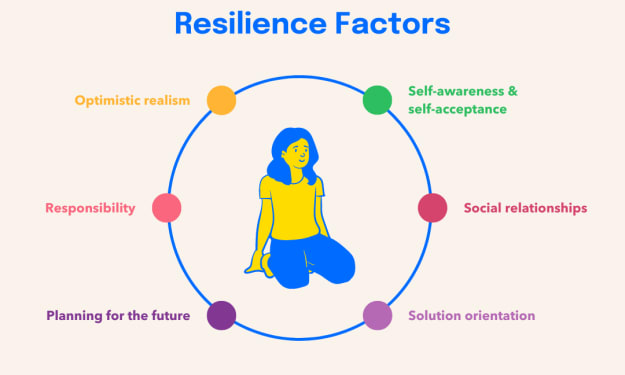
Building resilience is a crucial skill for navigating the unpredictable landscape of life. It encompasses the ability to recover from setbacks, adapt to change, and maintain a positive outlook despite challenges. Resilience is not merely about bouncing back; it involves growth and transformation, allowing individuals to emerge stronger and more capable after facing adversity.
By Siddhesh Gamare2 years ago in Motivation
Generosity of Spirit: What We Can Learn from Ratan Tata
Ratan Tata, the esteemed former chairman of the Tata Group and a prominent figure in Indian industry, died on Wednesday at the age of 86. His life exemplified qualities such as compassion, resilience, humility, and perseverance, serving as an inspiration for those in public service. The Taj Mahal Palace Hotel, founded by Ratan Tata's grandfather in 1903, was targeted during the 2008 Mumbai attacks. In response, Ratan Tata dedicated himself to assisting the families of the hotel employees who were killed or injured, promising to provide lifelong salaries to the families of those who lost their lives, as reported by the BBC.
By Hridya Sharma2 years ago in Motivation
Take Your Steps Forward
Take Your Steps Forward Life is a journey, and at every stage, we are faced with choices that define our path. Some steps are easy, familiar, and comfortable, while others are terrifying, filled with uncertainty and fear. Yet, it is those uncertain steps that often lead to the most profound growth, the deepest self-realisation, and the most meaningful changes in our lives. The act of moving forward, of taking that leap into the unknown, is both an act of courage and faith, a decision to trust in oneself and in the beauty of what lies ahead.
By Dipak Pawar2 years ago in Motivation
How To Deal With A Teenager That Doesn’t Care: 8 Proven Ways
Parenting is difficult enough, but dealing with a kid who appears to be unconcerned can make it even more difficult. Whether it's about school, family, or their own future, their apparent apathy might leave you feeling annoyed, helpless, and confused about what to do.
By Teenage Parenting2 years ago in Motivation
It’s okay not to have the energy to deal with people all the time
Introduction We live in a world that celebrates social interaction, where constantly being connected and “on” is often seen as the norm. Whether it’s through work, social events, or even online communication, people often expect us to be available and ready to engage. But here's the truth: it’s okay not to have the energy to deal with people all the time. In fact, it’s perfectly normal to need some time away from others to recharge. In this article, we'll explore why it's okay to step back, the importance of self-care, and how to manage social interactions when your energy is low.
By Muhammad Nadeem2 years ago in Motivation