Vocal
Discipline vs. Motivation: The Path to True Success
In a world flooded with motivational speeches, self-help books, and social media influencers preaching the power of inspiration, one critical element is often overlooked—discipline. While motivation can ignite a spark, it is discipline that keeps the fire burning. Many people chase motivation, hoping for a surge of energy that will push them toward their goals. But motivation is fleeting; it comes and goes based on emotions, environment, and circumstances. Discipline, on the other hand, is the foundation of success. It is the ability to take action regardless of how you feel, ensuring progress even on days when motivation is nowhere to be found. Let’s explore the importance of discipline, why it outperforms motivation, and how you can cultivate it in your own life. Motivation vs. Discipline: What’s the Difference? 1. Motivation Is Emotional; Discipline Is Habitual Motivation is like a wave—it rises and falls based on external and internal factors. You may feel inspired after watching a TED Talk or reading a success story, but that feeling fades when faced with resistance. Discipline, on the other hand, is built through consistent action. It is not dependent on how you feel but on the habits and systems you have in place. A disciplined person doesn’t wait for inspiration; they follow their plan, no matter what. 2. Motivation Starts; Discipline Finishes Many people start new projects, fitness routines, or personal development journeys fueled by motivation. However, when the excitement wears off, they struggle to stay consistent. Discipline ensures that you follow through on commitments, even when enthusiasm disappears. It’s what separates those who merely dream from those who achieve. 3. Motivation Is Temporary; Discipline Is Permanent Motivation is like an energy boost—it helps you take the first step but doesn’t guarantee long-term progress. Discipline, however, becomes a part of your identity. It turns actions into habits, making success inevitable. Why Discipline Leads to Success 1. Discipline Creates Consistency Success is not built in a day—it is the result of small, consistent actions repeated over time. Whether it’s writing every day, exercising regularly, or practicing a skill, discipline ensures that you show up even when you don’t feel like it. 2. Discipline Builds Mental Toughness Challenges and setbacks are a part of any journey. Those who rely solely on motivation often quit when things get tough. But disciplined individuals push through obstacles, knowing that progress requires perseverance. Arnold Schwarzenegger, for example, didn’t build his legendary physique through bursts of motivation. He followed a strict training regimen, showing up every day regardless of how he felt. His success in bodybuilding, acting, and politics was driven by discipline, not fleeting inspiration. 3. Discipline Fosters Self-Respect and Confidence Every time you stick to a commitment, you build self-trust. When you prove to yourself that you can follow through, your confidence grows. On the other hand, relying on motivation often leads to inconsistency, creating self-doubt. Discipline is a form of self-care—it means respecting yourself enough to do what’s necessary, even when it’s difficult. 4. Discipline Helps You Master Any Skill The world’s top performers—whether athletes, musicians, or entrepreneurs—rely on deliberate practice. They don’t wait for motivation to train or work; they discipline themselves to improve daily. Kobe Bryant was known for his insane work ethic. He practiced before sunrise while others were asleep, proving that discipline, not talent alone, creates champions. How to Develop Discipline 1. Set Clear Goals and Systems Motivation often fades when goals are vague. Instead of saying, “I want to get fit,” create a system: ✅ Exercise for 30 minutes every morning ✅ Meal prep every Sunday ✅ Track progress weekly A structured plan eliminates the need to rely on motivation.
By Pure Crown2 years ago in Motivation
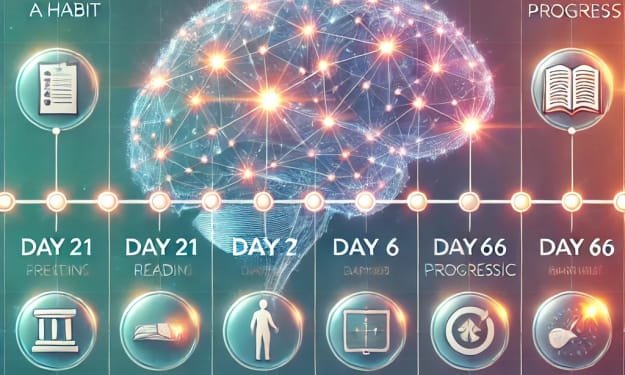
How Long Does It Take to Form a Habit?
We often hear that it takes 21 days to form a new habit. This idea has been widely circulated in self-help books, motivational talks, and personal development circles. But is it true? Can we rewire our brains and establish lasting habits in just three weeks?
By Pure Crown2 years ago in Motivation
Self-Care Tips
No matter how perfect we tend to tell others our lives are, we all have bad days where everything feels overwhelming, stress piles up, and even small challenges seem impossible. These days may not feel like self-care days, but they are the days we need self-care.
By SP 2 years ago in Motivation
Pink Salt Bricks: Wholesale Value & Benefits
Introduction Himalayan salt tiles and bricks have become a favorite nowadays because of their look and feel, health benefits, and flexibility from the design point of view. These are handmade tiles that are functional and decorative at the same time. With an increased consumer tendency towards natural and health-conscious products, the demand for Himalayan Pink salt bricks for walls is a good market for businesses. These tiles are usually noted for their pink, orange, and reddish shades arising from the presence of traces of iron, magnesium, potassium, etc. Modified concerning size and thickness, these Himalayan Salt Tiles for Walls Wholesale
By Pink Salt Blocks2 years ago in Motivation
Heartfelt Happy Birthday Blessings for Your Loved Ones
A birthday is more than just a celebration; it’s a reminder of life’s blessings, love, and the cherished moments we share. Whether it's a close friend, a family member, or a special someone, sending heartfelt birthday blessings can make their day even more meaningful.
By Mario Dickerson2 years ago in Motivation
Story of Lion and Mouse | Inspirational Story | in Hindi. Content Warning. AI-Generated.
Hello friends! Welcome to our channel, where we tell you interesting and inspirational stories. Today we are going to tell you a story which is not only entertaining but also teaches us a great lesson. This story is – "Story of Lion and Mouse." So let's start without delay. First scene: Lion, the king of the jungle It was a long time ago. There was a dense forest in which a powerful lion lived. He was the king of the jungle and all the animals were afraid of him. The whole jungle trembled with his roar. Second scene: Mouse's mischief A small mouse also lived in the same forest. One day, while playing, he went into the lion's cave. The lion was sleeping in deep sleep. The mouse got mischievous after seeing the lion's thick mustache. He started climbing on his tail, sometimes started running on his paws. Third scene: Lion's displeasure The lion's sleep was disturbed. He opened his big eyes in anger and caught the mouse with his sharp claws. The lion roared, "You insignificant creature! How dare you trouble the king of the jungle? Now I will eat you!" Fourth scene: The mouse's request The mouse was scared and tremblingly said, "Your Majesty, please let me go. I am very small and weak. I will never trouble you. If you spare my life, I will definitely help you sometime in the future." The lion laughed loudly on hearing this and said, "You? Will you help me? Ha ha ha! You are so small and weak!" But then the lion thought that such a small creature cannot do any harm to him, so he let the mouse go. The mouse happily ran away from there. Fifth scene: Trouble befalls the lion A few days later, hunters came to the jungle. They laid a big trap to catch the lion. The lion was roaming around in search of prey, when he got trapped in the hunter's trap. He tried to free himself with all his might, but the net was too strong. The lion started roaring loudly. The whole jungle trembled on hearing his roar, but no animal came to help him. Sixth scene: Helping the mouse The same little mouse, who had received life from the lion, was nearby. When he heard the lion's roar, he immediately reached there. He saw that the lion was trapped in the net. The mouse understood that it was his time to help the lion. Without wasting time, he started cutting the net with his sharp teeth. Slowly he cut the net and freed the lion. The lion realized his mistake. He politely said to the mouse, "Thank you, little friend! Today you saved my life. I thought that you were small, so you could not help me, but today you proved that no one is small." The mouse smiled and said, "Maharaj, never underestimate anyone. Everyone has their own strengths." The lion befriended the mouse and they became good friends forever. Learnings from the story: Friends, we learn two important lessons from this story - Never underestimate anyone or weak. Everyone has some special quality. The one who looks weak today, can help you tomorrow. Do good deeds, they always come back. The lion left the mouse, and the same mouse saved his life later. If we do good deeds, they will come back to our lives in some form or the other. So friends, if you liked this story and you learned something from it, then do like and share the article. And yes! If you want to hear more such inspirational stories, then do not forget to subscribe to our channel! Thank you! See you again with another interesting story!
By Horror best kahani2 years ago in Motivation
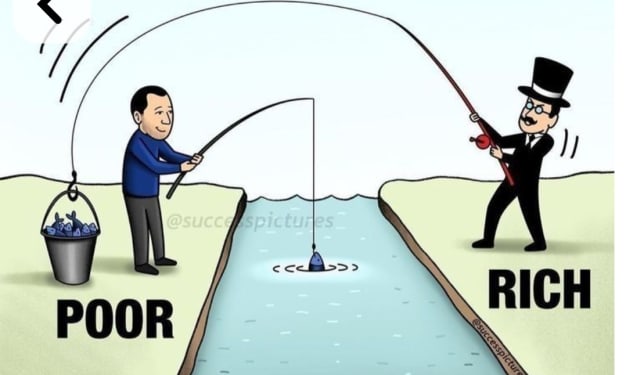
Story of poor vs rich family. Content Warning. AI-Generated.
Hello friends! Today we are going to tell you a story that will touch your heart. This is the story of two families – one rich and one poor. What is the difference in the lives of both? Does real wealth come only from money? Let us know through this interesting story. If you like our stories, then like the article and do not forget to subscribe to the channel.
By Horror best kahani2 years ago in Motivation
The 99th Experiment
The 99th Experiment Sophie Lin wiped her hands on her lab coat, streaking it with yet another failed attempt. The prototype sat on her workbench, a lumpy, brittle mess. She sighed and tossed it into the bin marked “Failures,” which was almost overflowing. “This is number ninety-eight,” she muttered to herself. “How many more until I get it right?” Ever since she was a child, Sophie had dreamed of creating something that would change the world. But dreams didn’t pay the bills, and the constant rejections from investors made her question if she was chasing a fantasy. The world seemed uninterested in her mission—to replace plastic with a fully biodegradable, sustainable alternative. “Eco-plastics are a pipe dream,” one investor had scoffed. “If it were possible, someone would have done it already.” Sophie clenched her jaw at the memory. Maybe that was true. Maybe she was wasting her time. But then she looked at the images pinned above her desk: sea turtles tangled in plastic waste, landfills overflowing with discarded bottles, entire ecosystems choking under humanity’s convenience. She had to keep going. The Breakthrough The next morning, fueled by caffeine and stubbornness, Sophie reviewed her past failures. She had tried plant fibers, algae extracts, even mycelium from fungi. Each experiment had a flaw—too brittle, too expensive, too slow to break down. Then she noticed something in her notes: a material she had dismissed early on because it lacked durability. If she could find a way to reinforce it... Sophie grabbed her goggles and got to work. Hours turned into days, and her tiny lab filled with the scent of heated biomaterials. She experimented with ratios, temperatures, binding agents—tweaking, testing, failing, adjusting. On the evening of the fifth day, she pulled the latest sample from the mold. It was smooth, flexible, and had a resilience unlike anything she had made before. Hands trembling, she ran a stress test. It stretched but didn’t snap. She submerged it in water. No disintegration. Her heart pounded. Could this be it? A Skeptical World Eager to share her breakthrough, Sophie presented her findings at a sustainability conference. She stood before an audience of industry leaders, investors, and scientists—many of whom had dismissed her in the past. “I call it BioFlex,” she announced, holding up a transparent sheet. “A plant-based polymer that mimics plastic’s versatility but decomposes within months instead of centuries.” She demonstrated how it could be molded into bottles, food containers, and packaging. It was heat-resistant, waterproof, and—most importantly—biodegradable. Silence. Then, a voice from the crowd. “What’s the catch?” Sophie took a deep breath. “There isn’t one. The materials are cost-effective, and production can scale to meet industry needs.” Skepticism lingered, but then a well-respected scientist approached her. “If this works as you claim, this could be revolutionary.” The Turning Point A week later, an independent lab verified her claims. The news spread fast. Major corporations, once indifferent, now wanted a piece of her discovery. Environmental organizations hailed BioFlex as a game-changer. But not everyone was pleased. Plastic manufacturers launched smear campaigns, calling BioFlex “untested” and “impractical.” Lobbyists pressured policymakers to slow its adoption. Sophie refused to back down. With the support of environmentalists and grassroots movements, demand for BioFlex skyrocketed. A major beverage company made the first move, announcing it would replace plastic bottles with BioFlex by the following year. Others followed, fearing backlash from consumers who now demanded sustainable alternatives. Within months, entire industries began shifting toward biodegradable materials. Supermarkets reduced their plastic usage, governments introduced incentives for companies using BioFlex, and waste levels started to decline. The 99th Experiment One evening, Sophie sat in her lab, staring at the original BioFlex sample—the 99th experiment. She ran her fingers over its smooth surface, remembering every failure that led to this moment. All the sleepless nights, the doubts, the setbacks. She smiled. Failure hadn’t been the end. It had been the foundation. As she looked out at the world embracing change, she knew—this was just the beginning.
By Vijay Verma2 years ago in Motivation
The Power of Positive Thinking:
Have you ever noticed how some people remain hopeful and resilient even in tough situations, while others quickly spiral into negativity? The difference often lies in mindset—specifically, whether they embrace positive or negative thinking. Positive thinking isn’t just about ignoring problems or forcing a smile; it’s about shifting your mindset to focus on solutions, possibilities, and growth. Science backs this up. Research in psychology and neuroscience shows that optimism rewires the brain, strengthens mental resilience, and even improves physical health. In this article, we’ll explore the science behind positive thinking, how it shapes reality and practical ways to develop a more optimistic mindset. The Science Behind Positive Thinking Optimism is more than just a personality trait—it’s a cognitive process that affects brain function and emotional well-being. Studies in neuroscience reveal that positive thinking activates key areas of the brain, leading to long-term benefits. 1. The Brain’s Reward System and Positive Thinking When we think positively, the brain releases dopamine and serotonin, neurotransmitters associated with happiness, motivation, and relaxation. These chemicals reinforce positive behavior and create a feedback loop: the more we think positively, the more our brain encourages us to continue. 2. Neuroplasticity: Rewiring the Brain for Optimism Neuroplasticity refers to the brain’s ability to reorganize itself by forming new neural connections. This means that by practicing positive thinking, we can reshape our brains to be more optimistic. The more we focus on positive experiences and solutions, the stronger these neural pathways become. 3. The Impact of Positive Thinking on Stress and Health Optimistic individuals tend to have lower levels of cortisol, the stress hormone. Chronic stress can weaken the immune system, increase blood pressure, and contribute to mental health issues. Studies show that people with a positive outlook recover from illnesses faster, have stronger immune responses, and even live longer. How Positive Thinking Shapes Your Reality Optimism is not about denying reality or ignoring problems. Instead, it’s about choosing how to interpret events in a way that empowers rather than discourages us. Here’s how positive thinking influences various aspects of life: 1. Mindset and Problem-Solving A negative thinker sees obstacles as permanent roadblocks, while an optimist sees them as temporary challenges. This shift in mindset leads to better problem-solving skills and a greater willingness to take action. 2. Self-Fulfilling Prophecies Our thoughts shape our behaviors, which in turn shape our outcomes. If you believe you will succeed, you’re more likely to put in effort, take risks, and persevere. Conversely, if you expect failure, you may unconsciously sabotage your efforts. 3. Relationships and Social Influence People are naturally drawn to positive individuals. Optimistic people tend to build stronger relationships because they communicate with kindness, encourage others, and handle conflicts with a constructive attitude. This strengthens social bonds and creates a supportive network, which is crucial for long-term happiness. 4. Emotional Resilience Positive thinking doesn’t eliminate hardships, but it helps people cope better. Optimistic individuals are more likely to bounce back from failures, rejections, and disappointments because they see setbacks as learning opportunities rather than as personal failures. How to Develop a Positive Thinking Habit Optimism is a skill that can be cultivated with practice. Here are some actionable steps to train your brain for positive thinking: 1. Practice Gratitude Daily Gratitude shifts your focus from what’s wrong to what’s right. Start a gratitude journal and write down three things you’re grateful for each day. Over time, this rewires your brain to notice the good in life. 2. Reframe Negative Thoughts Whenever a negative thought arises, ask yourself: Is this thought based on facts or just my fears? What’s a more constructive way to look at this? For example, instead of thinking, “I’ll never get this job,” reframe it to, “I’ll do my best and learn from the experience.” 3. Surround Yourself with Positivity Your environment greatly influences your mindset. Spend time with optimistic people, read uplifting books, and listen to motivational podcasts. Limit exposure to negativity, such as toxic news cycles or pessimistic social media content. 4. Use Positive Affirmations Affirmations are short, powerful statements that reinforce positive beliefs. Examples include: “I am capable and strong.” “I choose to see challenges as opportunities.” “I attract happiness and success.” Saying these daily helps reprogram your subconscious mind toward positivity. 5. Engage in Activities That Boost Mood Physical activity, meditation, and hobbies release endorphins, which enhance positivity. Exercise, in particular, has been shown to reduce stress and improve overall well-being. 6. Help Others and Show Kindness Acts of kindness, whether small or large, generate feelings of fulfillment. Helping others releases oxytocin, the "love hormone," which boosts happiness and strengthens social connections. 7. Accept That Setbacks Are Part of Life Even the most positive people face difficulties. The key is to see failures as lessons rather than dead ends. Instead of dwelling on what went wrong, focus on what can be learned and how to move forward. Conclusion:
By Pure Crown2 years ago in Motivation
Happiness Must Happen: The Paradox of Letting Go and Living with Purpose
Happiness Must Happen: The Paradox of Letting Go and Living with Purpose Viktor Frankl, a Holocaust survivor and renowned psychiatrist, once said, “Happiness must happen, and the same holds for success: You have to let it happen by not caring about it. Instead, you must dedicate yourself to a cause greater than yourself.” This statement captures a profound truth about the nature of happiness and success—they are not goals to be chased but byproducts of a life lived with meaning and purpose.
By Pure Crown2 years ago in Motivation