Vocal
Pure Crown’s Journey: Why Discipline Beats Motivation in the Long Run"
From my personal experience, I’ve struggled with disciplining myself. Many people have taught me many things, but I’ve discovered that simply listening to teaching videos or attending classes is just a small step. Personal discipline is the major key to success. For example, I’ve tried to discipline myself by watching online tutorial videos. But guess what? I could easily watch a 2-hour movie series, yet sitting through a 1-hour YouTube tutorial felt boring and challenging because I wasn’t used to it. However, I’m trying to push myself. Now, I tell myself, “Once I finish a 3-hour tutorial video, I’ll rest.” I constantly remind myself, “Pure Crown, you need to learn how to discipline yourself, even if it’s the hard way.” I still trust the process because I know I’m improving, step by step. This journey has taught me that while motivation can give you a quick boost, discipline is what truly drives long-term progress. Here’s why discipline consistently outperforms motivation in the long run. 1. Motivation is Temporary; Discipline is Consistent Motivation is like a wave—it rises, peaks, and eventually crashes. It’s fueled by emotions, external validation, or short-term excitement. When the initial rush fades, so does the drive to act. Discipline, however, is not dependent on how you feel. It’s a habit, a commitment to showing up even when the excitement wanes. While motivation might get you started, discipline is what keeps you going. 2. Discipline Builds Resilience Life is unpredictable, and challenges are inevitable. Motivation often crumbles in the face of setbacks, but discipline thrives on consistency. When you’re disciplined, you learn to push through obstacles, adapt to changes, and stay focused on your goals. This resilience is what separates those who achieve long-term success from those who give up when the going gets tough. 3. Discipline Creates Habits Success is rarely the result of a single, grand effort. Instead, it’s the accumulation of small, consistent actions over time. Discipline helps you build habits that align with your goals. Whether it’s exercising regularly, studying daily, or working on a project, discipline ensures that these actions become second nature. Over time, these habits compound, leading to significant progress. 4. Motivation is External; Discipline is Internal Motivation often relies on external factors—a motivational speech, a new goal, or the approval of others. These factors are outside your control and can disappear at any moment. Discipline, however, comes from within. It’s a mindset, a decision to prioritize long-term rewards over short-term comfort. By cultivating discipline, you take control of your actions and outcomes, regardless of external circumstances. 5. Discipline Fosters Self-Accountability When you rely on motivation, it’s easy to blame a lack of progress on not feeling inspired or energized. Discipline, on the other hand, requires you to take responsibility for your actions. It teaches you to hold yourself accountable, even when no one is watching. This sense of accountability is crucial for personal growth and achieving meaningful results. 6. Discipline Prepares You for the Long Haul Big goals—whether it’s building a business, mastering a skill, or improving your health—require sustained effort over months or even years. Motivation alone can’t sustain you through the grind. Discipline, however, ensures that you stay committed to the process, even when the results aren’t immediately visible. It’s the difference between sprinting and running a marathon. 7. Discipline Breeds Confidence Every time you follow through on a commitment, you build trust in yourself. This self-trust grows into confidence, reinforcing your ability to tackle bigger challenges. Motivation might give you a temporary boost, but discipline builds a foundation of self-belief that lasts a lifetime. How to Cultivate Discipline If discipline doesn’t come naturally to you, don’t worry—it’s a skill that can be developed. Start small by setting clear, achievable goals and creating a routine. Focus on consistency rather than intensity. Over time, these small acts of discipline will add up, creating a powerful framework for success. Conclusion While motivation is a valuable tool for sparking action, it’s discipline that ensures long-term success. Motivation may light the fire, but discipline keeps it burning. By prioritizing discipline over motivation, you equip yourself with the tools to overcome challenges, build lasting habits, and achieve your goals—no matter how big or small. In the marathon of life, discipline is the steady pace that will carry you across the finish line. Trust the process, and you’ll see the results.
By Pure Crown2 years ago in Motivation
Positive Morning Tuesday Blessings: Embrace Positivity and Joy This Morning
Tuesdays are a beautiful opportunity to start fresh, filled with hope, gratitude, and blessings. While Monday sets the tone for the week, Tuesday allows us to continue our journey with positivity and faith.
By Mario Dickerson2 years ago in Motivation
Best Hindi Story on Positive Thinking
Introduction – Importance of Positive Thinking Story: The Farmer and the Stone Message of the Story Benefits of Positive Thinking Conclusion Positive Thinking: An Inspirational Story 1. Introduction Positive thinking is the most powerful force in life. It affects our thinking, actions and results. A person who has the ability to see the good in every situation and stay positive finds opportunities even in difficulties. In this article, we will understand how positive thinking can change our lives through an inspirational story. 2. Story: The Farmer and the Stone It was a long time ago. A poor farmer named Ramlal lived in a village. He used to farm on his small piece of land and worked hard to support himself and his family. But he had a problem—there was a big stone in the middle of the field, which used to hinder his ploughing every time. Ramlal used to think every day, "I wish this stone was not here. If it were removed, my work would become so easy." But he never tried to move it. He accepted it as his fate and kept getting upset by bumping into the same stone every day. One day a wise sage came to the village. He was famous for motivating everyone and giving solutions to their problems. When he saw Ramlal sad, he asked the reason. Ramlal explained his problem—"This stone has been lying in my field for years. It hinders my ploughing, but I cannot move it. It has become a part of my fate." The sage smiled and said, "Have you ever tried to move it?" Ramlal shook his head, "No, it is too heavy. I cannot move it." The sage inspired him and said, "Try it once!" Ramlal gathered courage and tried to move the stone. As soon as he pushed the stone, it moved easily. Surprisingly, there was a big pit under the stone, in which a lot of gold coins were buried! Ramlal was astonished to see this. For years, he considered this stone as his luck, but in reality, it was the biggest opportunity for him. 3. Message of the story From this story, we learn that we often consider the difficulties of our life as our fate and do not try to change them. But if we try by adopting positive thinking, then perhaps the same obstacle will lead us to success and happiness. 4. Benefits of positive thinking Leads to success – When we think good in every situation, a new energy is generated inside us, which inspires us to move forward. Reduces stress and anxiety – Negative thinking makes us depressed and weak, while positive thinking gives us mental peace. Strengthens relationships – A positive person spreads happiness around him and improves his relationships. Helps in taking the right decision – When we look at any situation from a positive perspective, we are able to take more clear and correct decisions. 5. Conclusion Problems will always come in life, but their solution depends on our thinking. If we adopt positive thoughts and face challenges with courage, then no obstacle can stop our development. "Problems exist only in the mind, until we try to remove them." So, let us also adopt positive thinking in our life and turn every difficulty into an opportunity.
By Horror best kahani2 years ago in Motivation
What To Eat With Coffee To Lose Weight
Coffee is a strong drink that can speed up metabolism, help burn fat, and improve concentration. What we add to our coffee can greatly affect our weight loss efforts. Choosing the right foods helps us enjoy coffee's benefits without taking in too many calories or sugar. Here's a full guide on the best foods to eat with coffee for effective weight loss.
By Bloom Boldly2 years ago in Motivation
The Friday Effect: Why We Feel Happier and More Relaxed as the Weekend Approaches
It’s Friday! You can feel it in the air—the unofficial holiday of the workweek, where everyone suddenly finds a little extra energy, even if they’ve been dragging since Monday. Whether you’re in an office, a classroom, or, like me, just chilling in my hostel pressing my phone all day, Friday just hits differently. But why? Why does Friday feel lighter, happier, and full of possibilities—even if I have the same workload as Thursday? And more importantly, how can I bottle that Friday energy and use it for better productivity and happiness? Let’s dive into the psychology behind the Friday Effect—with a little humor, of course. Why Does Friday Feel So Good? 1. The Weekend Anticipation Effect Friday is like the appetizer before the weekend feast. Even if I have work or classes, just knowing that the weekend is coming makes everything feel more manageable. Scientists call this anticipatory happiness—the joy we feel just by looking forward to something. Think about it: ✅ Monday = “Ugh, five more days.” ✅ Wednesday = “Okay, halfway there.” ✅ Friday = “I survived! Time to celebrate!” My brain releases dopamine (the feel-good chemical) when I anticipate rewards, which is why even if I’m just lying in bed scrolling my phone, Friday still feels way more exciting than, say, a random Tuesday. 2. Social and Cultural Influence Let’s be honest—Friday has the best branding of any day. We’ve got “TGIF” (Thank God It’s Friday!) Restaurants and clubs offer Friday night specials Schools sometimes have shorter hours or “Casual Fridays” Even workplaces ease up—ever noticed how meetings mysteriously disappear on Fridays? All of this trains my brain to associate Friday with fun, relaxation, and an escape from routine. Even if I’m just staying in my hostel all day, writing some articles, and then rewarding myself with a good movie tonight—it still feels special. 3. The Psychological Power of ‘Closing Loops’ Ever noticed how people suddenly become super productive on Fridays? The same person who has been procrastinating all week will suddenly rush to complete assignments, emails, and deadlines. This is because my brain loves closure. Finishing tasks before the weekend makes me feel accomplished, which adds to the Friday high. Plus, let’s be real—I don’t want to drag unfinished work into the weekend (major vibe killer). So, whether it’s clearing my inbox, finishing up my schoolwork, or—like me—writing articles before switching to full “movie mode” tonight, completing things on Friday makes relaxation even sweeter. How to Harness the Friday Effect for Better Productivity and Happiness Okay, now that I know why Fridays feel so good, how do I make the most of this magic? 1. Use Friday Productivity to My Advantage If my brain is naturally wired to close loops on Friday, I can use that to get things done. Finish important tasks early so I can fully enjoy the evening. Make a to-do list for Monday so I don’t wake up stressed after the weekend. Clear out small annoying tasks (emails, laundry, errands) so I can relax with zero guilt. This way, I can fully enjoy the weekend without a productivity hangover. 2. Plan Something Fun (Even If It’s Small) I don’t need a wild Friday night out to feel the Friday Effect. Even small plans can amplify my happiness. Watching a movie (like I am tonight) Ordering my favorite food Calling a friend to catch up Even just going for a walk and enjoying the Friday vibes Giving myself something to look forward to makes Friday feel even more rewarding. 3. Bring the Friday Mindset to Other Days What if I could make every day feel a little more like Friday? Here’s how: Start my day with something fun (a good playlist, my favorite coffee) Plan midweek rewards (a Wednesday treat, a Thursday night movie) Find joy in small things (even a great meme can boost my mood) By sprinkling a little Friday energy throughout my week, I don’t have to suffer until the weekend. Final Thoughts: Enjoy My Friday! So, whether I’m closing out the week like a productivity boss or doing absolutely nothing and loving it, I’m going to enjoy it. Friday is a state of mind. Now if you’ll excuse me, my movie and snacks are waiting. What’s your Friday plan? Let me know in the comments—let’s celebrate the Friday Effect together!
By Pure Crown2 years ago in Motivation
Wellness in the Workplace: How Coworking Spaces Are Prioritizing Mental Health
A workspace is no longer just about desks and deadlines—it’s about creating an environment where professionals feel energized, stress-free, and motivated. Mental health is a priority in the modern world, and workspaces must adapt to support it.
By Wishcowork2 years ago in Motivation
Discipline vs. Motivation: The Path to True Success
In a world flooded with motivational speeches, self-help books, and social media influencers preaching the power of inspiration, one critical element is often overlooked—discipline. While motivation can ignite a spark, it is discipline that keeps the fire burning. Many people chase motivation, hoping for a surge of energy that will push them toward their goals. But motivation is fleeting; it comes and goes based on emotions, environment, and circumstances. Discipline, on the other hand, is the foundation of success. It is the ability to take action regardless of how you feel, ensuring progress even on days when motivation is nowhere to be found. Let’s explore the importance of discipline, why it outperforms motivation, and how you can cultivate it in your own life. Motivation vs. Discipline: What’s the Difference? 1. Motivation Is Emotional; Discipline Is Habitual Motivation is like a wave—it rises and falls based on external and internal factors. You may feel inspired after watching a TED Talk or reading a success story, but that feeling fades when faced with resistance. Discipline, on the other hand, is built through consistent action. It is not dependent on how you feel but on the habits and systems you have in place. A disciplined person doesn’t wait for inspiration; they follow their plan, no matter what. 2. Motivation Starts; Discipline Finishes Many people start new projects, fitness routines, or personal development journeys fueled by motivation. However, when the excitement wears off, they struggle to stay consistent. Discipline ensures that you follow through on commitments, even when enthusiasm disappears. It’s what separates those who merely dream from those who achieve. 3. Motivation Is Temporary; Discipline Is Permanent Motivation is like an energy boost—it helps you take the first step but doesn’t guarantee long-term progress. Discipline, however, becomes a part of your identity. It turns actions into habits, making success inevitable. Why Discipline Leads to Success 1. Discipline Creates Consistency Success is not built in a day—it is the result of small, consistent actions repeated over time. Whether it’s writing every day, exercising regularly, or practicing a skill, discipline ensures that you show up even when you don’t feel like it. 2. Discipline Builds Mental Toughness Challenges and setbacks are a part of any journey. Those who rely solely on motivation often quit when things get tough. But disciplined individuals push through obstacles, knowing that progress requires perseverance. Arnold Schwarzenegger, for example, didn’t build his legendary physique through bursts of motivation. He followed a strict training regimen, showing up every day regardless of how he felt. His success in bodybuilding, acting, and politics was driven by discipline, not fleeting inspiration. 3. Discipline Fosters Self-Respect and Confidence Every time you stick to a commitment, you build self-trust. When you prove to yourself that you can follow through, your confidence grows. On the other hand, relying on motivation often leads to inconsistency, creating self-doubt. Discipline is a form of self-care—it means respecting yourself enough to do what’s necessary, even when it’s difficult. 4. Discipline Helps You Master Any Skill The world’s top performers—whether athletes, musicians, or entrepreneurs—rely on deliberate practice. They don’t wait for motivation to train or work; they discipline themselves to improve daily. Kobe Bryant was known for his insane work ethic. He practiced before sunrise while others were asleep, proving that discipline, not talent alone, creates champions. How to Develop Discipline 1. Set Clear Goals and Systems Motivation often fades when goals are vague. Instead of saying, “I want to get fit,” create a system: ✅ Exercise for 30 minutes every morning ✅ Meal prep every Sunday ✅ Track progress weekly A structured plan eliminates the need to rely on motivation.
By Pure Crown2 years ago in Motivation
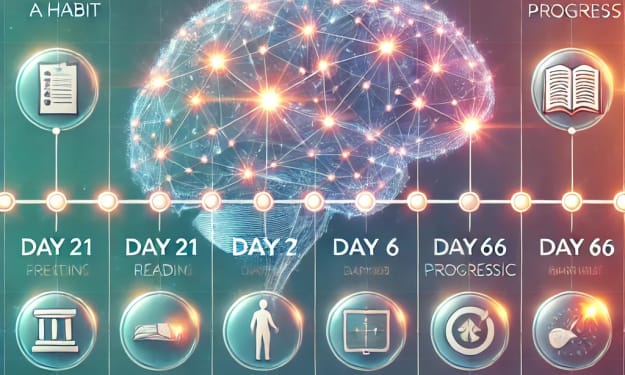
How Long Does It Take to Form a Habit?
We often hear that it takes 21 days to form a new habit. This idea has been widely circulated in self-help books, motivational talks, and personal development circles. But is it true? Can we rewire our brains and establish lasting habits in just three weeks?
By Pure Crown2 years ago in Motivation
Self-Care Tips
No matter how perfect we tend to tell others our lives are, we all have bad days where everything feels overwhelming, stress piles up, and even small challenges seem impossible. These days may not feel like self-care days, but they are the days we need self-care.
By SP 2 years ago in Motivation