Vocal
The Power of Speech: The Role of Public Discourse in Modern Politics.?
**The Power of Speech: The Role of Public Discourse in Modern Politics** In any discussion about politics and power, the importance of speech and oration cannot be denied. Speeches in politics are more than just statements; they are also potent instruments for influencing public opinion. When delivered with the right strategies and impactful language, a speech has the ability to change public sentiment, rally support, or even stir opposition. In the political landscape of Bangladesh, the power of speech and its ability to shape public opinion holds significant weight. How political leaders use their speeches to influence the masses is a crucial factor in the nation's political dynamic.
By H M Sakibabout a year ago in Motivation
"Pornography and Society: Understanding its Impact, Ethics, and Future"
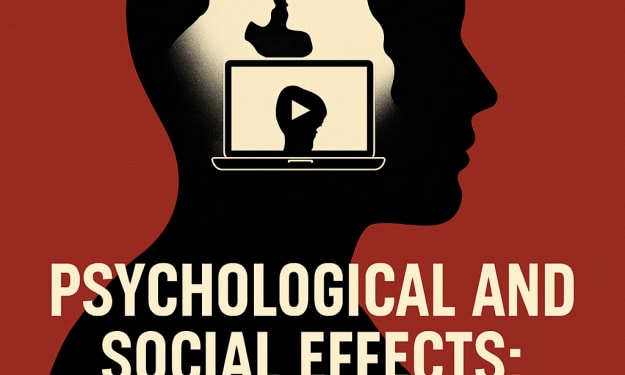
Psychological and Social Effects: How Pornography Shapes Minds and Relationships In the modern era, pornography has become an omnipresent part of the digital landscape, deeply intertwined with the fabric of daily life. It is no longer just confined to seedy corners of the internet but is easily accessible, often just a click away. For many, pornography is an expression of personal freedom and sexual exploration, but its pervasive nature also raises concerns about its psychological and social consequences. As the consumption of adult content continues to rise, researchers, psychologists, and sociologists are increasingly examining its profound impact on individuals and relationships. While some argue that pornography is harmless or even beneficial for certain aspects of sexual education and expression, others caution about its potential to distort perceptions of intimacy, influence sexual behavior, and contribute to unrealistic expectations in relationships. The psychological effects of pornography consumption are complex and multifaceted. On one hand, some studies suggest that it can serve as a harmless outlet for sexual desires or even a tool for learning about sexuality, especially when access to comprehensive sexual education is limited. In this context, pornography can offer individuals a means of exploring their sexual identity and desires in private. However, the problem arises when consumption becomes excessive or when it shapes an individual's sexual framework in unhealthy ways. Research has shown that frequent pornography consumption can lead to the desensitization of sexual stimuli, meaning individuals may become accustomed to more extreme or unrealistic content to achieve the same level of arousal. Over time, this could contribute to a diminished capacity for real-life sexual enjoyment, as partners may not be able to match the intense, often exaggerated scenarios depicted in pornographic media. In addition to desensitization, the potential for addiction is a concern. While not everyone who consumes pornography becomes addicted, there is evidence to suggest that some individuals may develop compulsive viewing habits. This can lead to significant distress and interfere with daily life. Similar to other behavioral addictions, pornography addiction can create a cycle of secrecy, shame, and withdrawal from real-world interactions, making it harder for individuals to form and maintain healthy relationships. People struggling with porn addiction often experience feelings of guilt and embarrassment, further exacerbating the psychological toll. They may also find it increasingly difficult to experience intimacy or arousal in the absence of pornographic content, which can create a vicious cycle of dependency. One of the most concerning psychological effects is the potential for distorted views on sexuality and relationships. Pornography often portrays an unrealistic and idealized version of sexual encounters, focusing heavily on physical pleasure while minimizing or ignoring emotional connection, communication, and mutual respect. In many cases, the content also reinforces harmful gender stereotypes and unrealistic expectations about body image, performance, and sexual behavior. For instance, women in pornography are frequently objectified, depicted as submissive or passive, while men are often shown as dominant and physically perfect. These portrayals can skew perceptions of gender roles and sexuality, especially for individuals who are not exposed to diverse or healthy representations of relationships. When these unrealistic ideals are internalized, they can lead to dissatisfaction with real-life sexual experiences and distorted expectations about what is normal or desirable in a partner. The social effects of pornography consumption extend beyond the individual level and into broader societal implications. Pornography, by its nature, is often detached from the complexities of human connection, reducing sexual encounters to a mere exchange of physical pleasure. This detachment can lead to a devaluation of intimacy in real-world relationships, where emotional and physical connection are equally important. Research suggests that couples who consume pornography together may experience a decline in relationship satisfaction, as one or both partners may develop unrealistic sexual expectations. These expectations can create pressure to perform in certain ways, leading to dissatisfaction and, in some cases, relationship breakdowns. Moreover, pornography can contribute to a culture of objectification, where individuals are seen not as whole, complex human beings but as bodies to be used for sexual pleasure. This objectification can be particularly damaging in intimate relationships, where partners may struggle to view each other as more than just sexual objects. Over time, this can erode the foundation of trust, respect, and emotional intimacy that is essential for healthy, lasting relationships. For those in committed partnerships, the consumption of pornography can sometimes lead to feelings of betrayal or insecurity, especially if one partner feels neglected or insufficient compared to the hypersexualized imagery seen in adult content. The issue of consent is another critical social dimension of pornography. While ethical porn does exist, much of the mainstream adult industry has been criticized for exploiting performers, often under circumstances that may not reflect mutual, informed consent. This creates a troubling paradox in which consumers of pornography might internalize notions of sexual exploitation or coercion, impacting their own behaviors and attitudes toward sex. In this context, pornography does not only shape sexual expectations but may also contribute to a culture of entitlement, where consent is overlooked or misinterpreted. Despite these negative impacts, there are ways to mitigate the harmful psychological and social effects of pornography. Education, both about healthy sexual relationships and the potential risks associated with pornography consumption, can help individuals develop a more balanced perspective. Open conversations about sexuality and intimacy can also create a foundation for mutual respect and understanding in relationships. For individuals struggling with compulsive pornography consumption, seeking professional help, such as therapy or support groups, can provide strategies to manage or overcome addiction. In conclusion, the psychological and social effects of pornography are complex and multifaceted, influencing both individual well-being and broader societal attitudes toward sexuality and relationships. While it is essential to acknowledge that not everyone who consumes pornography experiences negative consequences, the potential for harm, especially when consumption becomes excessive or distorted, cannot be ignored. By fostering open discussions, promoting ethical consumption, and offering resources for those who struggle with addiction, society can help mitigate the impact of pornography and support healthier, more fulfilling relationships.
By Abid khanabout a year ago in Motivation
“Resilience is the art of beginning again.”
At first glance, it seems like a simple statement, but the more I sat with it, the more profound it became. Resilience isn’t about never falling; it’s about the quiet, powerful decision to rise after each fall, no matter how many times life tries to push us down. It’s a commitment to ourselves, a silent promise whispered in the depths of our being: I will try again. As I think back on the moments that tested me—moments filled with disappointments, failures, heartbreaks—I realize that in each instance, I stood at a crossroads. I could choose to stay down, to let the weight of loss press me into the ground, or I could choose to get up, to face the unknown, and to try once more. Looking back now, I see that every time I chose to rise, no matter how small the step forward, I was practicing resilience. And often, those small steps were the bravest of all. It wasn’t always grand or heroic. Sometimes resilience looked like getting out of bed when my heart felt heavy. Sometimes it was sending another application after facing rejection after rejection. Sometimes it was trusting someone again after betrayal. And other times, it was simply allowing myself to hope for better days, even when the present felt unbearably dark. Beginning again takes incredible courage. It means believing in possibility even when everything around you suggests otherwise. It’s writing a new chapter in your story without knowing how it will end. It’s trusting that though things have fallen apart, they can be rebuilt—and perhaps, rebuilt into something even more beautiful and strong. I’ve learned that resilience doesn’t mean we suppress our pain, frustration, or grief. It doesn’t mean pretending we’re okay when we’re not. Instead, it means acknowledging those feelings, honoring them, and letting them pass through us without letting them define us. Resilience is the quiet strength that whispers, “This is not the end. There’s more waiting for you.” When I look at the world, I see resilience everywhere. In the trees that bend but do not break during storms. In the wildflowers that push through cracks in the pavement to bloom. In the birds that rebuild their nests again and again after they’re destroyed. Nature itself is a testament to the art of beginning again. It reminds me that renewal is woven into the very fabric of existence. Every story I admire—every hero, every artist, every leader—shares this common thread: they kept going. They dared to begin again when failure seemed inevitable. They turned their setbacks into stepping stones. And in doing so, they discovered strength they didn’t know they possessed. Their resilience became their legacy, inspiring others to rise as well. Today, I want to remind myself that starting over is not a sign of weakness; it’s a sign of extraordinary strength. Every fresh attempt is proof that I have not given up on myself. Each day I choose to rise, to face the world with hope, I am embodying resilience. Resilience is not a destination; it’s a lifelong practice. And with each beginning, I grow a little braver, a little wiser, a little more whole. Even when the path forward is uncertain, even when fear whispers in my ear, I will begin again. Because deep down, I know: every new beginning carries the seeds of possibility. Tomorrow is another chance. Another blank page. Another opportunity to write a story I’m proud of. And no matter what happens, I am ready to begin again—with hope in my heart, courage in my steps, and faith in the journey ahead.
By The Shraddha Bhartiyaabout a year ago in Motivation
CR-7 Cristiano Ronaldo: King of the Modern Game
Introduction: The Rise of a Football Emperor Cristiano Ronaldo dos Santos Aveiro, known simply as CR7, is not just a footballer—he is a phenomenon. From the humble streets of Madeira, Portugal, to the grandest stages of Old Trafford, Santiago Bernabéu, and beyond, Ronaldo’s journey is one of relentless ambition, superhuman discipline, and an insatiable hunger for greatness.
By Am@n Khan about a year ago in Motivation
This One Cute Habit Can Brighten Someone’s Whole Day
**This One Cute Habit Can Brighten Someone’s Whole Day** I don’t remember exactly when I realized how powerful a smile could be. Maybe it was a random morning at a coffee shop when the barista smiled at me like I wasn’t just another customer in line. Or maybe it was the time a little kid at the park flashed the goofiest grin, completely unbothered by the world.
By AlaTrendabout a year ago in Motivation
The Billionaire’s Path: What They Do That Others Don’t
--- Introduction: The Mindset That Changes Everything Have you ever wondered what makes billionaires different from the rest of us? What do they see that others don’t? The truth is, becoming a billionaire isn’t just about having money—it’s about solving big problems in a way that creates massive value. This story explores what makes billionaires tick and how you can start thinking like one. --- The Story of David: The Quest for Impact Once upon a time in a city full of dreamers, there was a young man named David. He wasn’t born into wealth. In fact, he lived in a small room with peeling walls, and his dreams felt too big for his environment. But David had something that most people ignored: a mindset to solve big problems. While most people chased money, David was obsessed with one question: How do billionaires really think? As he studied the world’s wealthiest individuals, David noticed a strange pattern—billionaires weren’t chasing quick money. They were chasing something much deeper: impact. They didn’t wake up asking, “How can I get rich today?” They woke up asking, “What problem can I solve that millions, or even billions, of people face?” --- Aliko Dangote: The Vision of Self-Sufficiency Take Aliko Dangote, for example. Born in Kano, Nigeria, Dangote didn’t grow up with billions. His family wasn’t poor, but he started small, with a loan from his uncle to trade in rice and sugar. But Dangote didn’t stop there. He saw a problem: Africa was spending billions importing cement, sugar, flour, and basic needs that could be made locally. Instead of accepting the status quo, Dangote asked, “Why should we import what we can produce ourselves?” In response, he built factories that created thousands of jobs and produced products needed by millions. His vision was simple: Make Africa self-reliant. Today, Dangote is one of Africa’s richest men, not because he chased money, but because he solved the problem of Africa’s dependence on imports. His factories have changed the economy and provided jobs and stability to many. --- Howard Schultz: Creating a Global Community Another great example is Howard Schultz, the visionary behind Starbucks. Schultz was born into a poor family in Brooklyn, New York. His father struggled as a truck driver, and Schultz witnessed the harsh realities of life. But he didn’t let his circumstances define his future. One day, while visiting Italy, Schultz walked into a small coffee shop and was struck by the warmth and sense of community. He thought, “What if we brought this experience to America and made it global?” Schultz didn’t just create a coffee brand; he created a third place—a place where people could feel at home, away from work and home. Starbucks became a global symbol of connection, where people could escape the loneliness of modern life. Schultz didn’t just sell coffee; he solved the problem of isolation, providing a space where people could relax, connect, and feel a sense of belonging. --- What Billionaires Have in Common David saw a common thread between Dangote and Schultz. They were visionaries who didn’t just see problems—they saw opportunities to make life better for millions of people. They didn’t chase money. Instead, they focused on value. Here’s what David learned from them: 1. Billionaires Look for Big Problems: Where others see inconvenience, they see a chance to create massive impact. Dangote saw Africa’s dependence on imports. Schultz saw the loneliness of modern life. 2. They Think Long-Term: Billionaires aren’t in a rush to get rich quickly. Dangote spent years building factories, and Schultz spent decades growing Starbucks. They understand that true wealth takes time. 3. They Multiply Value: Instead of asking, “How can I make money?” they ask, “How can I make people’s lives better?” When you add value, wealth follows naturally. --- David’s Transformation David made a decision: he would stop chasing quick money. Instead, he would focus on solving big problems. His friends laughed at him, but David stayed patient, working day and night to build his vision. Eventually, his company exploded—not because he was focused on getting rich, but because he created something that people couldn’t live without. --- The Key to Becoming a Billionaire If you want to become a billionaire, ask yourself every day: What problem am I solving? Whose life am I improving? And are you patient enough to build something that lasts? The road to billionaire status isn’t about looking for shortcuts. It’s about understanding that the bigger the problem, the bigger the reward. Just like Aliko Dangote and Howard Schultz, your success will be defined by the value you create and the lives you touch. --- Conclusion: The Billionaire Mindset Remember, billionaires are not just rich—they are builders, problem-solvers, and visionaries. They sacrifice comfort today to build something that will change the world tomorrow. If you focus on impact and solve big problems, money will follow. The next time you think about your future, ask yourself: What can I do today to solve a problem that will change the world? --- Call to Action: What problems do you see in your community or industry that you could solve? Start thinking like a billionaire today—focus on the impact you can create. Share your ideas in the comments and let’s inspire each other to build a better future!
By young chaseabout a year ago in Motivation
The flower of repentance.
A young man named Yasin lived in a village on the border of West Bangladesh. His life was like a storm—reckless, uncivilized, and devoid of the fear of God. The villagers knew him as a bad boy; at a young age, he got involved in drug dealing, extortion, and many even said that he would sneak into someone's yard at night and steal. But the surprising thing was that his mother Khadija was a pious woman, a memorizer of the Holy Quran. She prayed five times a day, read the Quran, and cried every night for her son's guidance.
By Abdul Barikabout a year ago in Motivation