Vocal
The Hidden Strength Within: Why Every Step Forward Matters More Than You Think. Content Warning. AI-Generated.
Introduction: The Quiet Battle We All Fight Life often feels like a relentless wave crashing against the shore. You work hard, give your best, and yet the results seem delayed, distant, or even invisible. Many of us, standing in moments of doubt, whisper silently: “Maybe this is not for me. Maybe I should give up.”
By Chilam Wongabout a year ago in Motivation
🌟 How to Become a Popular Freelancer
A Journey from Struggle to Stardom The clock struck 2 a.m. I was sitting in front of my laptop, my eyes swollen from staring at the screen all day. The coffee cup beside me had gone cold, and my heart felt heavier than my workload. I whispered to myself: “Maybe freelancing isn’t for me… Maybe I’m not good enough.” That was me three years ago. A broken dreamer, lost between rejection emails and unanswered proposals. Every time I opened a freelancing platform, I saw thousands of profiles shining with five-star ratings, while mine looked like an empty notebook with no story to tell. But deep inside, I knew I couldn’t quit. I remembered my father’s words when I was young: “Beta, a diamond only shines when it is polished through pressure.” Those words became my fuel. --- 🌱 The Beginning of the Struggle I started freelancing with no experience, no reputation, and no fancy portfolio. My first twenty proposals? All rejected. Some clients didn’t even bother to respond. Every failure felt like a nail in my heart. But I didn’t stop. Instead, I began learning. I watched free YouTube tutorials, read blogs on how to get freelancing clients, and practiced for hours on my old laptop. I wasn’t just learning a skill; I was learning patience in freelancing. One day, I landed my very first project. It paid only $5—just enough for a cup of tea in my city. But when the client left me a glowing review, my heart lit up. That review wasn’t just feedback; it was hope. It was my first step toward freelancing success. --- 🌟 The Turning Point Slowly, I realized freelancing isn’t only about talent. It’s about trust, consistency, and authenticity. I started replying to clients with respect and honesty, even when they rejected me. I polished my profile like an artist painting his masterpiece. (This is one of the best freelancing tips I can give you: make your profile shine.) I treated every project, whether $5 or $500, like it was worth millions. And then, the magic happened. Clients came back. They recommended me to others. My empty profile began filling with stars, and with every project, my confidence grew stronger. I still remember the day I earned my first $1,000 freelancing income. I held my mother’s hand, showed her the balance on my screen, and tears rolled down both our eyes. It wasn’t just money—it was proof that dreams, no matter how small, can grow into realities. --- 🌍 Lessons I Learned to Become Popular If you want to know how to become a popular freelancer, here are the truths my journey taught me: 1. Patience is the foundation. Success in freelancing doesn’t come overnight. Every rejection is a hidden lesson. 2. Learn daily. The world is changing fast. The freelancer who keeps upgrading skills will always stay ahead. 3. Build relationships, not just contracts. Clients remember kindness, honesty, and reliability more than flashy resumes. 4. Quality over quantity. Deliver work that speaks for itself. Clients will become your marketers. 5. Stay humble. Popularity is not about showing off, but about lifting others and inspiring them. These are not just steps; they are the freelancing success formula. --- 💡 From a Dreamer to a Guide Today, I work with clients across the world. My income is stable, my reputation strong, and my heart full of gratitude. But the most beautiful thing? I am now guiding new freelancers who once stood where I stood—hopeless, afraid, and ready to quit. Whenever I tell them my story, their eyes sparkle with new belief. And I remind them of the same truth that saved me: “A diamond only shines after it survives the pressure.” --- 🌈 Final Words Becoming a popular freelancer isn’t about chasing fame. It’s about serving with honesty, working with passion, and never giving up when the world tells you to stop. If you are struggling today, remember—you are not alone. Every successful freelancer once felt the same pain you are feeling right now. The only difference? They didn’t quit. So, sit back, breathe, and whisper to yourself: “One day, my story will inspire someone else.” And believe me, it will. 🌟 --- ✍️ Author’s Note: If this story touched your heart, share it with someone who needs hope. Because freelancing is not just a career—it’s a journey of courage, patience, and transformation.
By ✦•············• Freelancer •············✦about a year ago in Motivation
The Weight of Dreams
Ayan’s alarm rang at 5:00 a.m. sharp. He pulled himself from bed, his body begging for rest, but his mind whispering the same promise he repeated daily: “One day, all this will make sense.” By day, he worked in a small café, scrubbing dishes, carrying trays, and cleaning tables. The job wasn’t glamorous, but it paid for rent, instant noodles, and the old laptop that sat waiting for him at night. That laptop wasn’t just a machine—it was his ticket to the life he dreamed of. Ayan wanted to be a designer. He wanted his work to shine on billboards, on shop windows, on the covers of books and magazines. But reality was far less dazzling. Every night, after his café shift ended, he would sit by the flickering light of his screen. He poured his soul into creating logos, posters, and illustrations. His tiny room was filled with sketches taped on the walls—dreams drawn in pencil and ink. But for every design he sent out, for every job application he submitted, the responses were almost always the same: “We regret to inform you…” “Not the style we’re looking for.” “Try again in the future.” At first, he laughed it off. Then he started to feel the sting. And soon, those rejections cut deep into his confidence. Meanwhile, life went on without him. His friends were getting stable jobs, buying cars, planning marriages. Ayan, at twenty-four, was still living in a rented apartment where the ceiling leaked whenever it rained. One evening, after another fourteen-hour day split between the café and his laptop, he received yet another rejection email. He closed the laptop and sat in the dark, staring at the cracked ceiling above his bed. The silence pressed against him like a weight. “Maybe I’m not cut out for this,” he whispered. The thought terrified him. Could he really let go of the only dream that made his heart beat faster? His eyes drifted to the wall where his very first design hung—a rough, imperfect sketch from when he was just a teenager. It wasn’t polished, but it held something pure: passion. That sketch reminded him that his younger self had believed in him without hesitation. If that boy didn’t give up, why should I? The next morning, Ayan made a new plan. Instead of chasing big agencies that didn’t know his name, he started small. He walked into a local bakery and offered to design their menu for free. Surprised but grateful, the owner agreed. The design was simple, but it made the bakery’s brand stand out. Then came a bookstore. Then a small clothing shop. Each project was tiny, but each carried a story—of local people trying to make something out of nothing, just like him. His portfolio grew, not with glamorous work, but with authentic ones. And slowly, clients began to pay. There were still setbacks. Late nights where the software crashed and wiped away hours of work. Months where income barely covered rent. Moments when he wondered if he was climbing a mountain that had no peak. But each struggle sharpened him. Each challenge added weight to his shoulders, and with it, strength. Years later, Ayan stood in front of a tall glass building with his name etched on the door: Ayan Designs Studio. Inside, a small team worked on projects for clients he once only dreamed of approaching. His designs were everywhere now—on billboards, in shopfronts, across digital screens. People walked past them daily without ever knowing the battles, rejections, and sleepless nights behind each piece. But Ayan knew. And that knowledge made his success taste richer than anything he’d ever imagined. He often thought back to that night when he almost gave up, staring at the cracked ceiling. That moment, he realized, was the true test. Success hadn’t come overnight. It came one tear, one rejection, one act of perseverance at a time. Ayan learned something he carried for the rest of his life: Struggling for success doesn’t mean you’re failing—it means you’re building the strength to carry it when it finally arrives.
By LUNA EDITHabout a year ago in Motivation
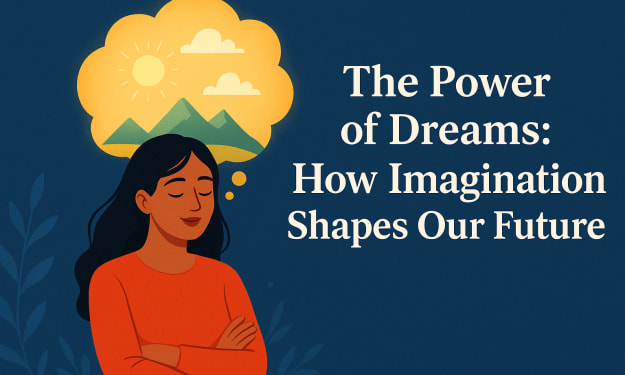
The Power of Dreams: How Imagination Shapes Our Future
Why Dreams Matter Dreams are more than fleeting images we see while we sleep. They are visions, hopes, and ideas that guide us toward building a meaningful life. Throughout history, imagination has been the starting point of every great invention, discovery, and social movement. Without dreams, we would remain stuck in the ordinary; with them, we can create the extraordinary.
By Waqas Ahmad about a year ago in Motivation
The Endless Climb: Building Resilience, Courage, and Hope in the Face of Life’s Mountains. Content Warning. AI-Generated.
Introduction: The Mountains We All Face Every human journey is marked by mountains — challenges that look impossible from the base, fears that tower over our confidence, and setbacks that make us question if the climb is even worth it. Yet, history and everyday life alike reveal a timeless truth: we are stronger than we think, braver than we believe, and more capable than we imagine.
By Chilam Wongabout a year ago in Motivation
Emil Bedretdinov (Emil E7) and the Business of Experience in Hospitality
From Early Jobs to Entrepreneurial Drive Emil Bedretdinov (Emil E7) entry into hospitality was not the result of a carefully designed career plan. At 15, his first job was washing dishes at IKEA. Two years later, he was handing out flyers for nightclubs and organizing parties. With borrowed money and a partnership with a local club owner, he staged his first large-scale event, a success that led to the creation of his first promotional group.
By Vipan K.about a year ago in Motivation
Money Lessons They Didn’t Teach in School: What Rich Dad Poor Dad Can Teach You in 2025
Most Americans grow up learning that working hard, getting a degree, and finding a stable job is the key to success. But Robert Kiyosaki’s Rich Dad Poor Dad shows that this traditional approach can leave you financially trapped. The book isn’t just about money — it’s about mindset, choices, and building a future where your money works for you, not the other way around. In 2025, where the cost of living is rising and financial freedom feels more distant than ever, these lessons are more relevant than ever. Let’s break down the key ideas and how you can apply them today. --- The Tale of Two Dads Kiyosaki grew up with two father figures: Poor Dad – his biological father, educated and hardworking, but stuck in the rat race. Rich Dad – his friend’s father, less formally educated, but financially savvy and entrepreneurial. The contrast was shocking: the same country, same opportunities, but completely different outcomes. The lesson? Your mindset around money and wealth can shape your entire life. --- Assets vs. Liabilities: Know the Difference One of the most important lessons from the book is simple but rarely taught in schools: buy assets, not liabilities. Assets: Things that put money in your pocket (investments, rental properties, businesses). Liabilities: Things that take money out (expensive cars, gadgets, unnecessary debt). Many Americans focus on earning a salary and buying things that look rich but actually create debt. The key to financial freedom is building assets that generate passive income over time. --- Financial Education Beats Income Alone Kiyosaki emphasizes that school teaches you to earn and save, but not to invest and grow money. He calls this financial literacy — understanding how money works, taxes, interest, and investing. Even a small shift in knowledge can have massive impact: Learning about stocks and ETFs can turn $100 a month into a growing investment over years. Understanding taxes legally can save thousands annually. Starting a side hustle develops entrepreneurial skills that a job alone can’t teach. For Americans in 2025, financial education is no longer optional — it’s essential. --- Take Risks Wisely: The Rich Dad Mindset Rich Dad taught Kiyosaki to embrace calculated risks instead of avoiding them out of fear. Many people avoid investing or entrepreneurship because they think it’s “too risky,” yet staying in a comfortable job can be riskier in the long term due to inflation, stagnant wages, and lost opportunities. The rich don’t avoid risk; they manage it. They invest time in learning, analyzing, and planning before making financial moves. --- Work to Learn, Not Just to Earn Another core lesson: don’t just work for money — work to learn skills that increase your value. Poor Dad said: “Work hard, get a promotion, and save money.” Rich Dad said: “Learn accounting, investing, sales, and marketing — then make money work for you.” This is especially relevant in 2025’s gig economy. Learning diverse skills can create multiple income streams, from freelancing to starting a small business, giving you more control over your future. --- Mindset Over Money At the heart of Rich Dad Poor Dad is mindset. Many Americans think wealth comes from luck or high-paying jobs. Kiyosaki proves it comes from knowledge, courage, and action. Changing your mindset means: Believing you can grow your wealth. Seeing opportunities instead of obstacles. Understanding that money is a tool — not the goal. Small shifts in thinking create habits that can dramatically improve your financial life over years. --- Applying the Lessons Today Here’s how you can take action in 2025: 1. Track your money – know exactly where it goes each month. 2. Start a small investment – even $50–$100 a month builds over time. 3. Focus on assets – avoid unnecessary spending on things that don’t generate income. 4. Learn new skills – online courses, YouTube tutorials, and books can teach financial literacy. 5. Embrace calculated risks – start a side hustle, invest in stocks, or explore freelancing. Even small steps create momentum. Just like Kiyosaki learned from his Rich Dad, taking consistent action is what separates financial success from failure. --- Final Takeaway Rich Dad Poor Dad isn’t just a book about money. It’s a guide to thinking differently, acting differently, and creating freedom in your life. In America, where opportunities are abundant but financial traps are everywhere, adopting these principles can transform your 2025 and beyond. Your future isn’t determined by your salary or luck — it’s determined by your mindset, your habits, and the decisions you make every single day. Start small, learn continuously, invest wisely, and let your money work for you. In the end, your Rich Dad mindset can help you live a life of true freedom — and that’s a lesson worth sharing. ---
By Muhammad Riazabout a year ago in Motivation
How Atomic Habits Can Transform Your Life in 2025
Success in America is often painted as something dramatic — the big promotion, the overnight startup, or the instant body transformation. But reality tells a different story: real success comes slowly, one step at a time. James Clear’s bestselling book Atomic Habits delivers this timeless truth with a modern twist: your future is built by the small habits you repeat daily, not the big goals you dream about. In 2025, where distractions are everywhere and people chase quick wins, this message is more important than ever. Let’s explore the key lessons from Atomic Habits and why they matter so much today. --- The 1% Rule: Small Gains Compound into Huge Wins Clear introduces a simple yet powerful idea: if you improve by just 1% each day, those small gains compound over time into something extraordinary. On the flip side, if you get 1% worse each day, small losses pile up until failure feels inevitable. Imagine two people in the U.S. who both want to get fit. One cuts soda from their daily routine while the other continues with fast food every night. At first, there’s little visible difference. But after six months, one is healthier, lighter, and more energetic, while the other feels stuck. The truth is simple: success is the product of daily habits — not once-in-a-lifetime transformations. --- Identity-Based Habits: Be Who You Want to Become Most Americans set goals like: “I want to lose 20 pounds.” “I want to save $10,000.” “I want to write a book.” The problem? Goals focus on outcomes, but habits focus on identity. Instead of saying, “I want to run a marathon,” say, “I am a runner.” Instead of saying, “I want to save money,” say, “I am a saver.” Every small habit you practice is a vote for the person you wish to become. When you read a few pages daily, you’re not just learning — you’re becoming a reader. When you cook a healthy meal, you’re not just eating — you’re becoming a healthy person. In America, where people chase the “bigger, better, faster” dream, this shift in mindset is powerful. Your identity creates long-term change in ways goals alone never can. --- Why Environment Is Stronger Than Motivation We often tell ourselves, “If only I had more motivation, I’d succeed.” But James Clear explains that motivation fades; environment lasts. Think of it this way: If cookies sit on your kitchen counter, you’ll eat them. If your phone buzzes every five minutes, you’ll scroll instead of working. If your TV remote is next to your couch, Netflix wins over exercise. But when you shape your environment, success feels automatic. Want to read more? Put a book on your pillow so you see it before bed. Want to eat healthier? Stock your fridge with vegetables and put junk food out of sight. In a country where distractions compete for attention 24/7, environment design isn’t just helpful — it’s survival. --- Systems Beat Goals Every Time Americans love setting goals. New Year’s resolutions, vision boards, five-year plans — they’re everywhere. But Clear points out the flaw: goals are about results, while systems are about processes. Take two examples: Goal: “I want to lose 30 pounds.” System: cooking balanced meals, tracking calories, exercising daily. Goal: “I want to make $100,000.” System: learning new skills, applying for better jobs, creating side income streams. Which one actually works? The system. Goals give direction, but systems create progress. In the U.S., where big dreams are celebrated, this reminder is crucial: fall in love with the process, and results will follow. --- The Science of Habit Formation: The 4 Laws Clear simplifies habits into a four-step cycle called The 4 Laws of Behavior Change: 1. Make it obvious – Place cues where you see them. (Want to exercise? Keep your shoes by the door.) 2. Make it attractive – Pair a habit with something you enjoy. (Listen to music only when you jog.) 3. Make it easy – Start small. (Do 2 push-ups instead of 50. Read 1 page instead of 30.) 4. Make it satisfying – Reward yourself to reinforce the habit. (Crossing off a checklist or enjoying a smoothie after a workout.) For Americans juggling busy schedules, these laws are practical and doable. They strip away excuses and replace them with a blueprint for real change. --- Why Atomic Habits Still Matters in 2025 So why does this book continue to resonate years after its release? Because the struggle hasn’t changed. People are still battling health issues caused by poor habits. Students still procrastinate and cram the night before exams. Families still struggle with money and overspending. Workers still get stuck in cycles of stress and burnout. The answer isn’t a magic breakthrough — it’s building habits that align with the life you want. In 2025, with AI, fast technology, and endless shortcuts, the temptation for instant results is stronger than ever. Atomic Habits is the antidote — a reminder that slow, consistent progress beats temporary bursts of effort. --- Final Takeaway: Build the Future, One Habit at a Time Your life today is the sum of your habits. If you want a healthier, wealthier, or happier future, you don’t need to reinvent yourself overnight. You need to choose one small habit and stick with it. In the U.S., the American Dream has always been about opportunity. But the hidden truth is this: the dream doesn’t come from luck or one big chance — it comes from small, daily actions that shape your destiny. So as you step into 2025, ask yourself: What’s one small habit I can start today that my future self will thank me for? Because success isn’t built in a day. It’s built every day. ---
By Muhammad Riazabout a year ago in Motivation
15 Best Affiliate Marketing Programs to Skyrocket Your Earnings in 2025. AI-Generated.
Affiliate marketing has grown into a powerful way to earn money online. It offers a path for individuals and businesses to create income, often passively. This industry keeps growing fast; experts project the affiliate marketing market will hit $15.7 billion by 2024. That means big opportunities for those who know where to look.
By Akmal54about a year ago in Motivation
The Scorpion’s Children – A Powerful Lesson About Parents and Gratitude. AI-Generated.
The Scorpion’s Children – A Lesson About Parents How a creature’s sacrifice reflects the reality of human life In the natural world, the scorpion gives us one of the most shocking examples of sacrifice. After giving birth, the mother scorpion allows her babies to climb onto her back. At first, this seems like protection — a mother carrying her young so they can survive. But the reality is heartbreaking.
By Rahman Bsmabout a year ago in Motivation
Unbreakable: How to Cultivate Strength, Courage, and Purpose in an Uncertain World. Content Warning. AI-Generated.
Introduction: Rising in a Shifting World We live in a time of constant change. Technology advances at lightning speed, careers evolve overnight, and personal challenges seem to arrive one after another. In the middle of it all, many people feel uncertain, lost, or overwhelmed.
By Chilam Wongabout a year ago in Motivation