success
The road to success is always under construction; share your equations for success — and learn some new ones.
What To Eat With Coffee To Lose Weight
Coffee is a strong drink that can speed up metabolism, help burn fat, and improve concentration. What we add to our coffee can greatly affect our weight loss efforts. Choosing the right foods helps us enjoy coffee's benefits without taking in too many calories or sugar. Here's a full guide on the best foods to eat with coffee for effective weight loss.
By Bloom Boldly2 years ago in Motivation
The Friday Effect: Why We Feel Happier and More Relaxed as the Weekend Approaches
It’s Friday! You can feel it in the air—the unofficial holiday of the workweek, where everyone suddenly finds a little extra energy, even if they’ve been dragging since Monday. Whether you’re in an office, a classroom, or, like me, just chilling in my hostel pressing my phone all day, Friday just hits differently. But why? Why does Friday feel lighter, happier, and full of possibilities—even if I have the same workload as Thursday? And more importantly, how can I bottle that Friday energy and use it for better productivity and happiness? Let’s dive into the psychology behind the Friday Effect—with a little humor, of course. Why Does Friday Feel So Good? 1. The Weekend Anticipation Effect Friday is like the appetizer before the weekend feast. Even if I have work or classes, just knowing that the weekend is coming makes everything feel more manageable. Scientists call this anticipatory happiness—the joy we feel just by looking forward to something. Think about it: ✅ Monday = “Ugh, five more days.” ✅ Wednesday = “Okay, halfway there.” ✅ Friday = “I survived! Time to celebrate!” My brain releases dopamine (the feel-good chemical) when I anticipate rewards, which is why even if I’m just lying in bed scrolling my phone, Friday still feels way more exciting than, say, a random Tuesday. 2. Social and Cultural Influence Let’s be honest—Friday has the best branding of any day. We’ve got “TGIF” (Thank God It’s Friday!) Restaurants and clubs offer Friday night specials Schools sometimes have shorter hours or “Casual Fridays” Even workplaces ease up—ever noticed how meetings mysteriously disappear on Fridays? All of this trains my brain to associate Friday with fun, relaxation, and an escape from routine. Even if I’m just staying in my hostel all day, writing some articles, and then rewarding myself with a good movie tonight—it still feels special. 3. The Psychological Power of ‘Closing Loops’ Ever noticed how people suddenly become super productive on Fridays? The same person who has been procrastinating all week will suddenly rush to complete assignments, emails, and deadlines. This is because my brain loves closure. Finishing tasks before the weekend makes me feel accomplished, which adds to the Friday high. Plus, let’s be real—I don’t want to drag unfinished work into the weekend (major vibe killer). So, whether it’s clearing my inbox, finishing up my schoolwork, or—like me—writing articles before switching to full “movie mode” tonight, completing things on Friday makes relaxation even sweeter. How to Harness the Friday Effect for Better Productivity and Happiness Okay, now that I know why Fridays feel so good, how do I make the most of this magic? 1. Use Friday Productivity to My Advantage If my brain is naturally wired to close loops on Friday, I can use that to get things done. Finish important tasks early so I can fully enjoy the evening. Make a to-do list for Monday so I don’t wake up stressed after the weekend. Clear out small annoying tasks (emails, laundry, errands) so I can relax with zero guilt. This way, I can fully enjoy the weekend without a productivity hangover. 2. Plan Something Fun (Even If It’s Small) I don’t need a wild Friday night out to feel the Friday Effect. Even small plans can amplify my happiness. Watching a movie (like I am tonight) Ordering my favorite food Calling a friend to catch up Even just going for a walk and enjoying the Friday vibes Giving myself something to look forward to makes Friday feel even more rewarding. 3. Bring the Friday Mindset to Other Days What if I could make every day feel a little more like Friday? Here’s how: Start my day with something fun (a good playlist, my favorite coffee) Plan midweek rewards (a Wednesday treat, a Thursday night movie) Find joy in small things (even a great meme can boost my mood) By sprinkling a little Friday energy throughout my week, I don’t have to suffer until the weekend. Final Thoughts: Enjoy My Friday! So, whether I’m closing out the week like a productivity boss or doing absolutely nothing and loving it, I’m going to enjoy it. Friday is a state of mind. Now if you’ll excuse me, my movie and snacks are waiting. What’s your Friday plan? Let me know in the comments—let’s celebrate the Friday Effect together!
By Pure Crown2 years ago in Motivation
Emily’s World
Emily’s World In a small, dusty village nestled among the hills, where the wind whispered secrets of the past and the soil carried the weight of generations, lived a young girl named Emily. The village was far from the bustling cities, its life marked by simple routines and the rhythm of nature. The sun rose early, and the villagers worked tirelessly in the fields. For them, life was about survival, tradition, and the unspoken bonds that held the community together.
By ANITA2 years ago in Motivation
Discipline vs. Motivation: The Path to True Success
In a world flooded with motivational speeches, self-help books, and social media influencers preaching the power of inspiration, one critical element is often overlooked—discipline. While motivation can ignite a spark, it is discipline that keeps the fire burning. Many people chase motivation, hoping for a surge of energy that will push them toward their goals. But motivation is fleeting; it comes and goes based on emotions, environment, and circumstances. Discipline, on the other hand, is the foundation of success. It is the ability to take action regardless of how you feel, ensuring progress even on days when motivation is nowhere to be found. Let’s explore the importance of discipline, why it outperforms motivation, and how you can cultivate it in your own life. Motivation vs. Discipline: What’s the Difference? 1. Motivation Is Emotional; Discipline Is Habitual Motivation is like a wave—it rises and falls based on external and internal factors. You may feel inspired after watching a TED Talk or reading a success story, but that feeling fades when faced with resistance. Discipline, on the other hand, is built through consistent action. It is not dependent on how you feel but on the habits and systems you have in place. A disciplined person doesn’t wait for inspiration; they follow their plan, no matter what. 2. Motivation Starts; Discipline Finishes Many people start new projects, fitness routines, or personal development journeys fueled by motivation. However, when the excitement wears off, they struggle to stay consistent. Discipline ensures that you follow through on commitments, even when enthusiasm disappears. It’s what separates those who merely dream from those who achieve. 3. Motivation Is Temporary; Discipline Is Permanent Motivation is like an energy boost—it helps you take the first step but doesn’t guarantee long-term progress. Discipline, however, becomes a part of your identity. It turns actions into habits, making success inevitable. Why Discipline Leads to Success 1. Discipline Creates Consistency Success is not built in a day—it is the result of small, consistent actions repeated over time. Whether it’s writing every day, exercising regularly, or practicing a skill, discipline ensures that you show up even when you don’t feel like it. 2. Discipline Builds Mental Toughness Challenges and setbacks are a part of any journey. Those who rely solely on motivation often quit when things get tough. But disciplined individuals push through obstacles, knowing that progress requires perseverance. Arnold Schwarzenegger, for example, didn’t build his legendary physique through bursts of motivation. He followed a strict training regimen, showing up every day regardless of how he felt. His success in bodybuilding, acting, and politics was driven by discipline, not fleeting inspiration. 3. Discipline Fosters Self-Respect and Confidence Every time you stick to a commitment, you build self-trust. When you prove to yourself that you can follow through, your confidence grows. On the other hand, relying on motivation often leads to inconsistency, creating self-doubt. Discipline is a form of self-care—it means respecting yourself enough to do what’s necessary, even when it’s difficult. 4. Discipline Helps You Master Any Skill The world’s top performers—whether athletes, musicians, or entrepreneurs—rely on deliberate practice. They don’t wait for motivation to train or work; they discipline themselves to improve daily. Kobe Bryant was known for his insane work ethic. He practiced before sunrise while others were asleep, proving that discipline, not talent alone, creates champions. How to Develop Discipline 1. Set Clear Goals and Systems Motivation often fades when goals are vague. Instead of saying, “I want to get fit,” create a system: ✅ Exercise for 30 minutes every morning ✅ Meal prep every Sunday ✅ Track progress weekly A structured plan eliminates the need to rely on motivation.
By Pure Crown2 years ago in Motivation
4 Real-Life Examples of People Who Transformed Their Lives Through Habit Changes
Success is often attributed to talent or luck, but in reality, it is the result of small, consistent actions taken over time. Our habits shape our future, determining our health, career, mindset, and overall well-being. The right habits, when practiced consistently, can lead to profound life transformations. Here, we explore four real-life examples of individuals who harnessed the power of habit change to achieve remarkable success. These stories demonstrate that anyone can reshape their life by committing to small, positive changes. 1. James Clear: Writing His Way to Success James Clear, the author of Atomic Habits, is a prime example of how small, consistent efforts can lead to massive success. Before becoming a bestselling author, he was just an ordinary writer struggling to grow an audience. Instead of waiting for the perfect opportunity, he built a habit that ultimately shaped his career. The Habit That Changed Everything He committed to writing and publishing two high-quality articles per week, no matter what. Instead of focusing on overnight success, he concentrated on gradual audience growth. He tracked his progress, refined his writing process, and kept improving with each article. The Result At first, his audience was small, but consistency paid off. Over the years, his blog became one of the most popular personal development websites. Eventually, he compiled his insights into Atomic Habits, which sold millions of copies worldwide. Today, James Clear is regarded as one of the top thinkers on habit formation and self-improvement. His success is a testament to the power of showing up consistently and refining one’s craft over time. 2. Stephen King: Mastering the Habit of Daily Writing Stephen King is one of the most successful authors in history, but his success is not just due to talent. His writing habit is what propelled him to publish over 60 novels and sell more than 350 million copies worldwide. King didn’t wait for inspiration to strike—he made writing a daily ritual. The Habit That Changed Everything He writes 2,000 words every single day, including weekends and holidays. He follows a strict routine, treating writing as a full-time job. He isolates himself from distractions, ensuring deep, focused work. The Result By consistently following his daily writing habit, King has produced numerous bestsellers, including The Shining, It, and Carrie. His discipline proves that talent alone isn’t enough—consistent action and commitment lead to mastery. His story is an inspiration for aspiring writers and creatives, emphasizing that success is built through daily effort rather than bursts of motivation. 3. Arnold Schwarzenegger: From Skinny Teen to Global Icon Before becoming a world champion bodybuilder, a Hollywood star, and a governor, Arnold Schwarzenegger was just a skinny teenager in Austria. His transformation wasn’t the result of luck but of relentless discipline and the right habits. The Habit That Changed Everything He committed to an intense weightlifting routine, training for hours every day. He consistently set small, progressive goals that kept him motivated. He maintained a strong mindset, refusing to let failures or setbacks deter him. The Result Schwarzenegger’s dedication to daily training helped him win the Mr. Olympia title multiple times, launching his career as the greatest bodybuilder of his era. His commitment didn’t stop there—he applied the same habit of disciplined effort to acting and politics, eventually becoming a global superstar and the Governor of California. His story is proof that discipline and consistent effort can turn even the most ambitious dreams into reality. 4. Oprah Winfrey: Harnessing the Power of Reading and Gratitude Oprah Winfrey’s journey from poverty to becoming one of the most influential media personalities in the world is deeply rooted in her lifelong habits of learning and gratitude. She attributes much of her success to these habits, which have shaped her mindset and resilience. The Habit That Changed Everything She reads books daily, constantly expanding her knowledge and perspective. She keeps a gratitude journal, listing at least five things she is thankful for each day. She practices self-reflection and mindfulness, ensuring she remains grounded and focused. The Result These simple but powerful habits helped Oprah develop a strong, positive mindset and build an empire that inspired millions. Her habit of continuous learning enabled her to have deep, meaningful conversations with some of the world’s most brilliant minds, while her practice of gratitude has kept her grounded despite her massive success. Her story highlights how adopting habits that strengthen the mind and soul can lead to both professional and personal fulfillment. Final Thoughts: The Power of Habit Change The stories of James Clear, Stephen King, Arnold Schwarzenegger, and Oprah Winfrey all have one common theme—habit change. None of them achieved success overnight. Instead, they committed to small, daily habits that compounded over time, leading to extraordinary transformations. Key Takeaways from Their Stories: ✅ Consistency is more powerful than motivation. Even on days when motivation is low, sticking to a habit can lead to long-term success. ✅ Small changes lead to massive results. You don’t need to make drastic changes overnight—starting small and staying consistent is the key. ✅ Tracking progress helps reinforce habits. Keeping track of your habits can boost motivation and help you stay on course. ✅ Resilience is essential. Failures and setbacks are part of the process, but staying committed to good habits leads to success. No matter where you are in life, you have the power to reshape your future by changing your habits. Whether it’s writing, exercising, reading, or practicing gratitude, the habits you cultivate today will determine the person you become tomorrow. What habit are you currently working on? Have you experienced a transformation through habit change? Share your thoughts in the comments—your journey could inspire someone else!Start writing...
By Pure Crown2 years ago in Motivation
Breaking Bad Habits and Replacing Them with Good Ones
We all have habits we’d like to break—whether it’s procrastinating, overeating, smoking, or endlessly scrolling through social media. The problem is, that bad habits are often deeply ingrained, making them difficult to change. But here’s the good news: breaking bad habits and replacing them with good ones is entirely possible—if you understand how habits work and have a clear plan of action.
By Pure Crown2 years ago in Motivation
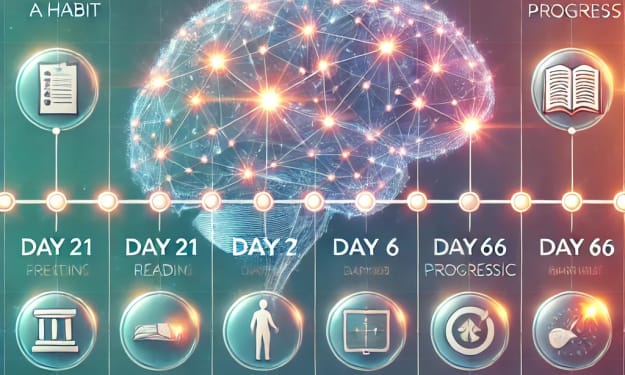
How Long Does It Take to Form a Habit?
We often hear that it takes 21 days to form a new habit. This idea has been widely circulated in self-help books, motivational talks, and personal development circles. But is it true? Can we rewire our brains and establish lasting habits in just three weeks?
By Pure Crown2 years ago in Motivation
"The Habit Loop: How to Build Lasting Habits and Break Bad Ones
At the core of every habit lies a simple but powerful framework known as the habit loop. Coined by Charles Duhigg in his book The Power of Habit, the habit loop consists of three key components: cue, routine, and reward. Understanding this loop is the first step to building habits that stick. Whether you’re trying to adopt a new habit or break an old one, mastering the habit loop can make consistency feel almost effortless. 1. Cue: The Trigger for Action The cue is the signal that initiates the habit. It’s the “why” behind the behavior. Cues can be external (like a time of day, a location, or an event) or internal (like an emotion or a thought). For example: Feeling stressed (internal cue) might trigger the habit of biting your nails. Seeing your running shoes by the door (external cue) might prompt you to go for a jog. Cues are powerful because they operate on a subconscious level. Your brain is constantly scanning the environment for patterns, and when it detects a cue associated with a past behavior, it automatically prepares to execute the routine. This is why habits can feel so automatic—they’re deeply ingrained in your neural pathways. To build a new habit, start by identifying a clear and consistent cue. For instance, if you want to start meditating daily, you could use your morning coffee as a cue—every time you finish your coffee, you sit down to meditate. The more specific and consistent the cue, the easier it will be to trigger the desired behavior. 2. Routine: The Behavior Itself The routine is the action you take in response to the cue. This is the habit you’re trying to establish or change. Whether it’s exercising, reading, or flossing, the routine is the part of the habit loop that requires effort—at least initially. The key to making routines stick is to start small. Instead of committing to an hour-long workout, begin with just 10 minutes. This reduces resistance and makes the habit easier to adopt. Over time, as the habit becomes automatic, you can gradually increase the complexity or duration of the routine. For example, if your goal is to write a book, don’t start by trying to write 2,000 words a day. Begin with 200 words or even just 10 minutes of writing. The goal is to make the routine so easy that you can’t say no. As James Clear, author of Atomic Habits, famously said, “You do not rise to the level of your goals. You fall to the level of your systems.” By focusing on small, manageable routines, you set yourself up for long-term success. 3. Reward: The Positive Reinforcement The reward is what makes the habit worth repeating. It’s the positive outcome that your brain associates with the routine. Rewards can be tangible (like a treat after a workout) or intangible (like the feeling of accomplishment after completing a task). For example, if your goal is to build a habit of writing daily, your reward could be the satisfaction of seeing your progress or treating yourself to a favorite snack afterward. The reward reinforces the habit loop, making it more likely that you’ll repeat the behavior in the future. Rewards are crucial because they satisfy your brain’s craving for dopamine, the “feel-good” neurotransmitter. When you experience a reward, your brain takes note and strengthens the connection between the cue and the routine. Over time, this reinforcement makes the habit more automatic. Why the Habit Loop Works The habit loop works because it taps into the brain’s natural tendency to seek efficiency. When a behavior is repeated consistently within the same loop, the brain starts to automate the process. Over time, the cue and reward become so strongly linked that the routine feels almost effortless. This is why habits are so powerful—they free up mental energy by turning deliberate actions into automatic behaviors. Instead of relying on willpower, which is a finite resource, you can rely on the habit loop to carry you through. Practical Tip: Map Your Habits To apply the habit loop to your life, try mapping out your existing habits. Identify the cues, routines, and rewards for both good and bad habits. Once you understand how your habits work, you can start to tweak the loop—changing the cue or reward to create better habits or break unhelpful ones. For example, if you want to stop scrolling through social media before bed (routine), you could replace your phone (cue) with a book and reward yourself with a sense of relaxation instead of dopamine hits from endless scrolling. Real-Life Example: How One Person Transformed Their Life Consider the story of Sarah, a busy professional who struggled to find time for exercise. She identified her cue (coming home from work), her routine (sitting on the couch), and her reward (relaxing after a long day). To build a new habit, she replaced her old routine with a 10-minute workout and rewarded herself with a relaxing bath. Over time, this small change led to a consistent exercise habit that transformed her health and energy levels. A Thought-Provoking Quote As Aristotle once said, “We are what we repeatedly do. Excellence, then, is not an act, but a habit.” This timeless wisdom reminds us that our habits shape our identity and our future. By mastering the habit loop, you can take control of your actions and, ultimately, your life. Your Turn: Join the Conversation Now that you understand the habit loop, it’s time to put it into practice! What’s one habit you’d like to build or break? Share your thoughts in the comments below—I’d love to hear about your goals and how you plan to use the habit loop to achieve them. Let’s support each other on this journey to consistency and growth!
By Pure Crown2 years ago in Motivation
The Power Of Self Belief
In a dense, vibrant forest, animals of all shapes and sizes lived in harmony. Every year, the animals held a grand event called the "Forest Challenge," where creatures tested their strengths, agility, and wits. This year, a young sparrow named Halo decided to enter, despite being known for her timid nature.
By Pichili Sindhu2 years ago in Motivation