success
The road to success is always under construction; share your equations for success — and learn some new ones.
The Power of Speech: The Role of Public Discourse in Modern Politics.?
**The Power of Speech: The Role of Public Discourse in Modern Politics** In any discussion about politics and power, the importance of speech and oration cannot be denied. Speeches in politics are more than just statements; they are also potent instruments for influencing public opinion. When delivered with the right strategies and impactful language, a speech has the ability to change public sentiment, rally support, or even stir opposition. In the political landscape of Bangladesh, the power of speech and its ability to shape public opinion holds significant weight. How political leaders use their speeches to influence the masses is a crucial factor in the nation's political dynamic.
By H M Sakibabout a year ago in Motivation
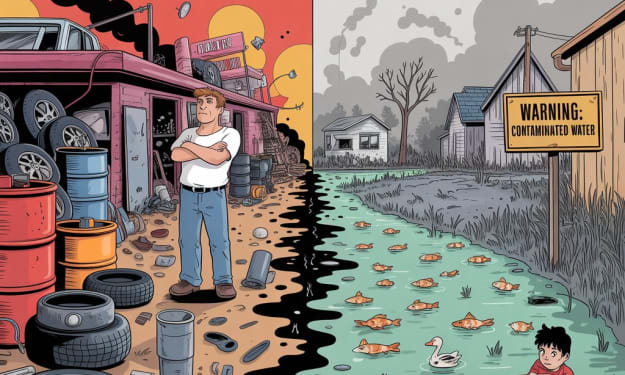
Max and the Big Mess
Max Turner ran a small car repair shop on the edge of Greenhill, a peaceful town surrounded by woods, farms, and a river that snaked through the valley. People in Greenhill cared about their environment—farmers composted, kids recycled at school, and even the mayor rode a bicycle to work on most days. But Max? Max didn’t care.
By Doost Muhammadabout a year ago in Motivation
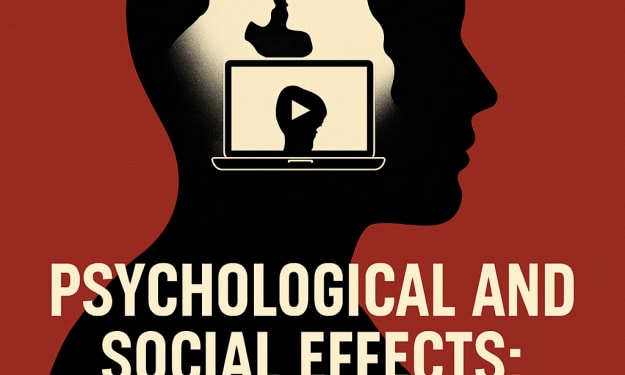
"Pornography and Society: Understanding its Impact, Ethics, and Future"
Psychological and Social Effects: How Pornography Shapes Minds and Relationships In the modern era, pornography has become an omnipresent part of the digital landscape, deeply intertwined with the fabric of daily life. It is no longer just confined to seedy corners of the internet but is easily accessible, often just a click away. For many, pornography is an expression of personal freedom and sexual exploration, but its pervasive nature also raises concerns about its psychological and social consequences. As the consumption of adult content continues to rise, researchers, psychologists, and sociologists are increasingly examining its profound impact on individuals and relationships. While some argue that pornography is harmless or even beneficial for certain aspects of sexual education and expression, others caution about its potential to distort perceptions of intimacy, influence sexual behavior, and contribute to unrealistic expectations in relationships. The psychological effects of pornography consumption are complex and multifaceted. On one hand, some studies suggest that it can serve as a harmless outlet for sexual desires or even a tool for learning about sexuality, especially when access to comprehensive sexual education is limited. In this context, pornography can offer individuals a means of exploring their sexual identity and desires in private. However, the problem arises when consumption becomes excessive or when it shapes an individual's sexual framework in unhealthy ways. Research has shown that frequent pornography consumption can lead to the desensitization of sexual stimuli, meaning individuals may become accustomed to more extreme or unrealistic content to achieve the same level of arousal. Over time, this could contribute to a diminished capacity for real-life sexual enjoyment, as partners may not be able to match the intense, often exaggerated scenarios depicted in pornographic media. In addition to desensitization, the potential for addiction is a concern. While not everyone who consumes pornography becomes addicted, there is evidence to suggest that some individuals may develop compulsive viewing habits. This can lead to significant distress and interfere with daily life. Similar to other behavioral addictions, pornography addiction can create a cycle of secrecy, shame, and withdrawal from real-world interactions, making it harder for individuals to form and maintain healthy relationships. People struggling with porn addiction often experience feelings of guilt and embarrassment, further exacerbating the psychological toll. They may also find it increasingly difficult to experience intimacy or arousal in the absence of pornographic content, which can create a vicious cycle of dependency. One of the most concerning psychological effects is the potential for distorted views on sexuality and relationships. Pornography often portrays an unrealistic and idealized version of sexual encounters, focusing heavily on physical pleasure while minimizing or ignoring emotional connection, communication, and mutual respect. In many cases, the content also reinforces harmful gender stereotypes and unrealistic expectations about body image, performance, and sexual behavior. For instance, women in pornography are frequently objectified, depicted as submissive or passive, while men are often shown as dominant and physically perfect. These portrayals can skew perceptions of gender roles and sexuality, especially for individuals who are not exposed to diverse or healthy representations of relationships. When these unrealistic ideals are internalized, they can lead to dissatisfaction with real-life sexual experiences and distorted expectations about what is normal or desirable in a partner. The social effects of pornography consumption extend beyond the individual level and into broader societal implications. Pornography, by its nature, is often detached from the complexities of human connection, reducing sexual encounters to a mere exchange of physical pleasure. This detachment can lead to a devaluation of intimacy in real-world relationships, where emotional and physical connection are equally important. Research suggests that couples who consume pornography together may experience a decline in relationship satisfaction, as one or both partners may develop unrealistic sexual expectations. These expectations can create pressure to perform in certain ways, leading to dissatisfaction and, in some cases, relationship breakdowns. Moreover, pornography can contribute to a culture of objectification, where individuals are seen not as whole, complex human beings but as bodies to be used for sexual pleasure. This objectification can be particularly damaging in intimate relationships, where partners may struggle to view each other as more than just sexual objects. Over time, this can erode the foundation of trust, respect, and emotional intimacy that is essential for healthy, lasting relationships. For those in committed partnerships, the consumption of pornography can sometimes lead to feelings of betrayal or insecurity, especially if one partner feels neglected or insufficient compared to the hypersexualized imagery seen in adult content. The issue of consent is another critical social dimension of pornography. While ethical porn does exist, much of the mainstream adult industry has been criticized for exploiting performers, often under circumstances that may not reflect mutual, informed consent. This creates a troubling paradox in which consumers of pornography might internalize notions of sexual exploitation or coercion, impacting their own behaviors and attitudes toward sex. In this context, pornography does not only shape sexual expectations but may also contribute to a culture of entitlement, where consent is overlooked or misinterpreted. Despite these negative impacts, there are ways to mitigate the harmful psychological and social effects of pornography. Education, both about healthy sexual relationships and the potential risks associated with pornography consumption, can help individuals develop a more balanced perspective. Open conversations about sexuality and intimacy can also create a foundation for mutual respect and understanding in relationships. For individuals struggling with compulsive pornography consumption, seeking professional help, such as therapy or support groups, can provide strategies to manage or overcome addiction. In conclusion, the psychological and social effects of pornography are complex and multifaceted, influencing both individual well-being and broader societal attitudes toward sexuality and relationships. While it is essential to acknowledge that not everyone who consumes pornography experiences negative consequences, the potential for harm, especially when consumption becomes excessive or distorted, cannot be ignored. By fostering open discussions, promoting ethical consumption, and offering resources for those who struggle with addiction, society can help mitigate the impact of pornography and support healthier, more fulfilling relationships.
By Abid khanabout a year ago in Motivation
🧠 7 Mindset Shifts That Can Seriously Change Your Life
Let’s be real for a second—we’ve all had those days where everything feels stuck. You know, the kind of day where your to-do list is longer than your patience, and you’re questioning every life choice you’ve made since high school. (Just me? Hope not.)
By Md Zillur Rahaman Chowdhuryabout a year ago in Motivation
The Price of Doing Nothing: Why Inaction Is Costing You More Than You Think
You wait. You hesitate. You convince yourself that now isn’t the right time. You say things like: “I’ll do it when I’m ready.” “I need to think about it more.” “What if it doesn’t work out?” And while you’re thinking, waiting, preparing — life keeps moving. Opportunities come and go. Energy fades. And slowly, you begin paying a price no one talks about: **The cost of doing nothing.** --- ### The Illusion of Safety Doing nothing feels safe. It’s low risk, low exposure, low drama. But that safety? It’s an illusion. A trap. When you choose comfort over action, you don’t just avoid failure — you avoid progress, clarity, growth, and confidence. You stay in the same job you hate. You hold onto toxic habits. You keep talking about the idea… but never act on it. It feels safe, but it’s quietly suffocating you. **Real safety isn’t about standing still.** It’s about building skills, learning, adapting, and becoming so capable that you can handle what life throws at you. Standing still? That just weakens your ability to move when it counts. --- ### Missed Opportunities Are Expensive You don’t see it at first. That gig you didn’t apply for. The message you didn’t send. The side hustle you never started. You think: “No big deal. I’ll try later.” But here’s the thing: Opportunities are rarely static. They move, evolve, disappear. And often, they don’t come back. Meanwhile, someone else with less talent — but more action — jumps in, learns, fails fast, improves, and gets ahead. **The cost of inaction isn’t just staying the same.** It’s watching others live the life you wanted while you keep waiting for the “right moment.” --- ### Comfort Zones Kill Growth Your brain loves routine. It wants to keep you safe — not successful. So it resists change, even if that change leads to something better. You stay in the same patterns, do the same things, hang with the same people, and then wonder why nothing changes. Growth isn’t comfortable. It’s awkward. It’s scary. It’s messy. But that’s the point. That’s the price of leveling up. If everything you’re doing feels safe and easy, you’re not growing. You’re repeating. --- ### Fear Disguised as Logic Let’s be honest: Most of the time, we don’t take action because of fear — not logic. But we dress fear up with clever excuses: “I need more research.” “I’m not experienced enough.” “I’ll wait for a better time.” And those sound smart… but they’re not real reasons. They’re fear in a professional costume. Fear of failing. Fear of being seen trying. Fear of judgment. But here’s the kicker — no one successful avoided fear. They just acted in spite of it. --- ### Action Is the Real Superpower Action builds momentum. Action builds confidence. Action builds your future. You don’t need a perfect plan. You need movement. Because clarity doesn’t come from overthinking. It comes from doing. That blog you want to start? Write one post. That skill you want to learn? Watch one tutorial. That message you’ve been avoiding? Send it. Every action, no matter how small, shifts your trajectory. And once you’re moving, magic starts happening. --- ### Final Thoughts: Regret Is the Real Cost People rarely regret what they tried. They regret what they *never* tried. What they delayed. What they ignored. What they talked themselves out of. The cost of doing nothing is invisible at first. But later, it hits hard: - Lost confidence - Missed chances - What-could-have-beens - A version of yourself that never came to life Years from now, you won’t remember the reasons you waited. You’ll remember that you didn’t move. So ask yourself right now: What’s one thing I’ve been putting off? Now ask again: Can I afford the price of *never* doing it? Because inaction doesn’t protect you. It slowly erases you. And the most expensive decision isn’t trying and failing — it’s doing nothing at all.
By SHADOW-WRITESabout a year ago in Motivation
The Day I Finally Faced My Problem
The Day I Finally Faced My Problem: How One Decision Changed Everything For years, I carried the weight of a problem I refused to face. I told myself I’d deal with it “someday” — a vague, safe future that never arrived. My problem wasn’t dramatic or unusual, but it quietly sabotaged my daily life: I was a chronic procrastinator.
By HAMMAD KHAN OFFICIALabout a year ago in Motivation
Rising Beyond the Storm. AI-Generated.
The storm came suddenly that night—lightning clawing across the sky, thunder shaking the earth, and rain pouring down like grief. Maya sat by the small window of her family’s hut, chin resting on her knees. Her mind was louder than the thunder. It had been almost a year since her father died. A truck, a rainy road, and a twist of fate had taken away the man she loved the most—and with him, her dreams. Her father had always called her “Doctor Sahiba,” proud of her top grades and fierce ambition. He promised that one day, she would wear a white coat and heal others. But death doesn’t knock. It comes like the storm—sudden, cruel, and unforgiving. Now Maya spent her days helping her mother at a tea stall in the village market. Their savings were gone. The dreams, too, seemed to fade like mist with each passing day. Every time she glanced at her dusty schoolbooks stacked in a corner, her heart ached. She still read at night—by the flicker of a dim lantern—but hope was running thin. One rainy evening, a man in a wet overcoat ducked into their stall. He was quiet, polite, and worn by travel. As Maya served him tea, he noticed a biology textbook lying behind the counter. “You study?” he asked, surprised. “I used to,” she said, almost apologetically. “I still try.” He introduced himself as Dr. Rehman, a retired physician who occasionally visited rural clinics to volunteer. “There’s a clinic down the road. We’re short of help. If you’re willing, come by,” he offered. “You’ll learn more there than you could from books alone.” Maya looked at her mother, who gave her a silent nod. Something flickered in Maya’s eyes—hope, perhaps. The very next morning, she arrived at the clinic. It was small, worn-out, but filled with the rhythm of life. Maya began by organizing medicine cabinets, helping patients sign in, cleaning wounds, and observing procedures. Dr. Rehman was patient, kind, and taught her everything—how to listen, how to care, how to see not just illness but the human behind it. Every day, Maya rose at dawn, helped at the clinic in the morning, worked at the tea stall in the afternoon, studied at night, and repeated the cycle with unshakable discipline. She was exhausted—but alive in a way she hadn’t felt in months. Still, there were whispers. “She’s just a tea girl pretending to be a doctor,” they said. “She should get married, not waste time.” But Maya pressed on. Months passed. One afternoon, Dr. Rehman handed her an envelope. “This is for your entrance exam. Apply. You’ve earned it.” “I can’t take your money,” she said, her voice trembling. “You’re not taking it,” he replied. “You’re investing it. In yourself.” Maya sat for the exam a month later. She traveled alone to the city. The exam hall was packed with students from better schools, dressed in cleaner clothes, carrying newer pens—but Maya carried something more: grit. When the results were announced, she was in the top percentile. The news spread quickly. The village that once whispered now clapped. “She did it,” they said. “The tea girl did it.” Medical school was a battlefield. Maya struggled to keep up with the fast-paced lectures and expensive materials. She took up part-time jobs—tutoring children, working in the cafeteria, anything to survive. Some nights she cried silently in the hostel bed, overwhelmed and homesick. But every morning, she woke up, tied her hair back, and reminded herself: I’ve come too far to stop now. Years later, after she completed her degree and residency, Maya returned to her village—not just as a visitor, but with a purpose. She wasn’t there to receive applause or praise. She came with a blueprint—a plan to open a free clinic in the very village where she had once fought for her future. With help from former professors, Dr. Rehman’s connections, and NGOs that believed in her vision, the Dr. Maya Khan Community Health Center opened its doors exactly six years after her father died. At the inauguration, she stood before a crowd of neighbors, school children, and her proud mother. She wore the white coat her father had always dreamed of. A framed photo of him stood next to the ribbon she was about to cut. “I was told I wouldn’t make it,” she said into the mic. “That storms would drown me, that poverty would silence me, that being a girl in a small village meant having no future. But I learned that storms pass—and sometimes, they teach you how to fly.” There was not a dry eye in the crowd. After the ceremony, a little girl in a school uniform approached her, shy and awestruck. “I want to be like you,” she said. Maya smiled and knelt down, handing her a pen from her coat pocket. “Then promise me you won’t give up—no matter what the world says.” --- Moral of the Story: When life throws storms your way, rise—not in anger, but with strength. Sometimes the heaviest rains grow the strongest roots. What matters is not where you start, but how fiercely you believe in where you're going. .
By Abdullah about a year ago in Motivation