success
The road to success is always under construction; share your equations for success — and learn some new ones.
“The Lion and the Lone Wolf”
.Deep within the heart of an ancient forest, there lived a mighty lion named Leo the Bold. He was feared and respected by all creatures, not only for his incredible strength but also for his roaring ego. Leo had ruled the forest for years, and no one dared challenge his authority.
By Junior Abdulabout a year ago in Motivation
"Rise Again: Turning Failures into Fuel"
Failure. A word most of us dread. It stings, it embarrasses, and often makes us question our worth. Yet, failure is not the end — it’s often the very beginning of something greater. The greatest minds, inventors, leaders, and dreamers have one thing in common: they failed — sometimes miserably — but they rose again, stronger, wiser, and unstoppable. This article is not about avoiding failure; it’s about embracing it, learning from it, and using it as fuel to push forward — to rise again. The Truth About Failure Failure is inevitable. No matter how smart, talented, or hardworking you are, there will be moments when life knocks you down. You’ll lose jobs, face heartbreaks, get rejected, or fall short of goals. And that’s okay. What matters most is how you respond to failure. Do you give up? Or do you choose to stand up, learn, and keep going? History shows us that failure is not a dead-end — it’s a detour that can lead to extraordinary growth. Thomas Edison failed over 1,000 times before inventing the light bulb. When asked about it, he said, “I didn’t fail 1,000 times. The light bulb was an invention with 1,000 steps.” That’s the mindset we need to adopt: failure is part of the process. Why Failure Hurts — and Why That’s Good Failure hurts because we care. It challenges our confidence, self-worth, and sometimes even our identity. But pain has a purpose. Like a muscle that tears during exercise and grows back stronger, the pain of failure stretches your mind and soul. It teaches you resilience, grit, and emotional strength. Failure forces us to pause, reflect, and improve. Without it, we might stay stuck in mediocrity, never questioning our methods or pushing our boundaries. Lessons Failure Teaches 1. Humility: Failure humbles us. It reminds us we’re not perfect — and that’s okay. It brings us closer to reality and grounds us. 2. Resilience: The more you fall and get back up, the stronger you become. Failure builds mental toughness. 3. Perspective: Sometimes failure redirects you to a better path. What you thought you wanted might not be what you truly needed. 4. Innovation: Some of the best ideas are born out of what didn’t work. When one door closes, your mind opens to ten new ones. Real-Life Examples of Rising Again 💡 Steve Jobs Steve Jobs was fired from Apple — the very company he co-founded. That failure devastated him, but it didn’t stop him. He used the time to explore new ideas, eventually returning to Apple and transforming it into one of the world’s most valuable companies. 🎾 Serena Williams Serena has faced countless losses, injuries, and public criticism throughout her tennis career. But each time, she came back stronger, winning Grand Slams even after giving birth. Her story is a reminder that champions fall — but they don’t stay down. 📚 J.K. Rowling Before publishing Harry Potter, Rowling was a single mother living on welfare. Her manuscript was rejected by multiple publishers. But she didn’t quit. Her persistence turned her into one of the most successful authors in history. How to Turn Your Failures into Fuel 1. Acknowledge the Pain — but Don’t Stay There It’s okay to feel disappointed. Cry if you need to. Be sad. But don’t let it become your permanent state. Use the pain as motivation. 2. Analyze What Went Wrong Every failure carries a lesson. What did you overlook? What can you do differently next time? Honest self-reflection is powerful. 3. Shift Your Perspective Instead of thinking, “I failed,” try saying, “I learned.” Growth comes from experience, and experience comes from mistakes. 4. Take Action Again — With Wisdom Don't let fear paralyze you. Try again, but this time, smarter. Apply what you’ve learned. Adjust your plan. Keep moving. 5. Surround Yourself with Support Find mentors, friends, or communities who uplift you. Their belief in you can reignite your belief in yourself. The Phoenix Within You In many cultures, the phoenix is a symbol of renewal. It burns to ashes and rises again — reborn, stronger and brighter. You, too, have that phoenix within you. Failure may reduce you to your lowest point, but it's also the fertile ground for a fresh start. Rising again isn’t about being fearless. It’s about having the courage to face fear and move forward anyway. Words to Remember “It’s not how far you fall, but how high you bounce back.” — Zig Ziglar “Failure is simply the opportunity to begin again, this time more intelligently.” — Henry Ford “Rock bottom became the solid foundation on which I rebuilt my life.” — J.K. Rowling Final Thoughts Failure is not the opposite of success — it is a part of it. Every great achievement is built on lessons learned from setbacks. Your journey will be filled with ups and downs, victories and defeats. But if you stay persistent, stay hopeful, and keep rising, there’s no limit to what you can become. Let failure shape you — not break you. So the next time life knocks you down, don’t stay there. Rise again. Use the failure as fire. Let it fuel your comeback.
By Noorabout a year ago in Motivation
Entrepreneurship with Heart: Why Kindness Is a Superpower for Founders
But real success today needs more than money, control, or expansion. One powerful trait that is changing business is kindness. Founders like Naushad Parpia are showing that you can lead with care and still build a global company. His story demonstrates that honest and kind leadership fosters stronger relationships, deeper trust, and lasting value in every area. This article discusses why kindness is no longer just a personal trait, but has evolved into a powerful leadership tool in modern business.
By Naushad Parpiaabout a year ago in Motivation
Unlock the Life-Changing Power of Gratitude: How Saying “Thank You” Can Transform Your World
Have you ever wondered why some people seem happier, more peaceful, and resilient, no matter what life throws at them? One secret they share is a simple yet powerful practice: gratitude. Saying “thank you” is more than just good manners — it’s a transformative habit that rewires your brain, uplifts your spirit, and changes your life from the inside out.
By Mahveen khanabout a year ago in Motivation
💸 From Zero to First Dollar: My 10-Day Journey to Earning Online
They say the first dollar is the hardest to make. I’d spent years reading about side hustles, “get-rich-fast” formulas, and influencer success stories—yet I never believed I could actually make money that way. But then, on June 1, 2025, I decided to test a simple challenge for myself: could I earn my first online dollar within ten days?
By Mahveen khanabout a year ago in Motivation
The Bottle Engineer
In a quiet village tucked between dusty hills and rice paddies, the sound of children laughing had grown quieter with each passing year. Parents watched helplessly as their kids fell sick over and over again... vomiting, feverish, dehydrated. Doctors called it waterborne illness. The village called it a curse.
By MIGrowthabout a year ago in Motivation
The True Measure of Education
The True Measure of Education By{Muhammad Faizan} In the bustling city of Mumbai, lived a young man named Aarav Malhotra. At 24, he had just graduated from one of the country’s most prestigious universities with a degree in Business Administration. His family was overjoyed — not just because of his academic achievement, but because Aarav was the first in three generations to earn a university degree. He was hailed as a symbol of pride, success, and promise.
By Muhammad Faizanabout a year ago in Motivation
The Journey to the Mirror of Success
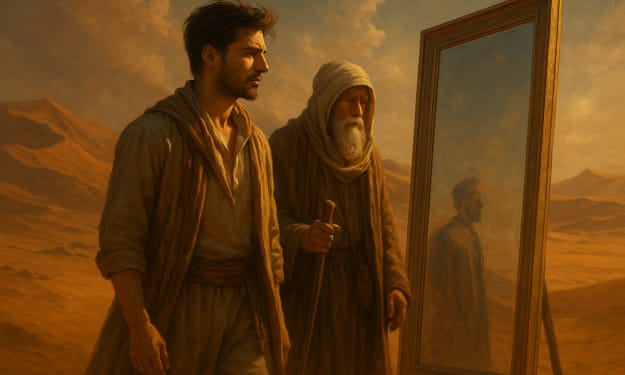
Long ago, in a land of endless dunes and golden sunrises, lived a young man named Zayd. He was strong, clever, and full of ambition — yet restless. He wanted more than just food on the table and a roof over his head. Zayd wanted success. Not just wealth, but a life of meaning, recognition, and purpose. But despite his efforts, success always seemed one step ahead of him — like a mirage in the desert. One day, an old traveler came to his village. Dressed in tattered robes and carrying nothing but a wooden staff and a leather satchel, he called himself a dervish — a mystic who wandered not for riches, but for wisdom. The villagers scoffed at him. But something in the dervish’s eyes — calm, sharp, and eternal — caught Zayd’s attention. “Tell me,” Zayd asked him, “do you know the path to success?” The dervish looked at him for a long moment. Then he smiled. “I do. But it is not written on maps or sold in the market. If you truly wish to find success, you must walk with me.” Without hesitation, Zayd packed his things and followed the old man into the desert. --- The Desert of Self Days turned into weeks. The journey was hard. Blistering sun by day, freezing winds by night. They had little food, less water, and often walked in silence. “Why is this path so difficult?” Zayd complained one evening, his feet raw with blisters. The dervish replied, “Because success must be earned, not handed. The journey shapes the one who reaches the destination. A soft life makes soft men.” Zayd nodded but still felt uncertain. Was this suffering really necessary? --- The Three Gates After many days, they reached a tall stone wall in the middle of the desert. On it were three gates, each carved with ancient symbols. “This,” said the dervish, “is the first test: The Gate of Ego.” “What do I do?” Zayd asked. “Leave behind your pride. Admit what you don’t know. Accept that others may be greater than you.” Zayd hesitated. He thought he was smart, capable — better than most. But he remembered the pain in his heart, the failures he carried. He knelt, whispered an apology to his own arrogance, and passed through the gate. The second gate read: “The Gate of Fear.” “Everyone fears,” the dervish said. “But not everyone faces it.” Zayd closed his eyes and walked through — despite shaking hands and racing thoughts. He remembered every failure, every rejection, and still moved forward. The third and final gate read: “The Gate of Patience.” Zayd sat in front of it for days. Nothing happened. No visions, no rewards. Just silence. He wanted to scream, to leave. But then he remembered: some trees take years to bear fruit. So, he waited. And one morning, the gate opened by itself. --- The Mirror of Success Inside was no palace. No gold. No crowd cheering his name. There was only a mirror. Confused, Zayd looked into it. And for the first time, he saw not the boy who doubted, who feared, who wanted the world’s approval — but a man who had walked through fire and not turned back. He saw strength in his scars. He saw clarity in his eyes. He saw peace. The dervish spoke softly behind him, “Success is not something you find — it’s something you become. The world reflects what you carry within. This mirror only shows you what was already growing inside you.” Zayd smiled. His heart felt full, not with pride, but with purpose. --- Years Later Zayd returned to his village, not as a beggar of success, but as a giver of wisdom. He built schools. He taught children. He worked hard, loved honestly, and lived simply. People called him successful. He simply smiled. He knew the truth: Success is not a destination. It is the person you become through the journey. --- Moral of the Story: True success isn’t found in fame, wealth, or applause. It lies in self-mastery — in facing your ego, your fear, and your impatience. The outside world only reflects the inner one. When you grow within, success finds you.
By Waqif Khanabout a year ago in Motivation
How to Reconnect with Purpose When Everything Feels Flat
There are times in life when everything feels… flat. Your energy is low. Your direction is blurry. The things that once lit you up no longer spark the same joy. You might find yourself going through the motions, wondering, What’s the point?
By Stacy Valentineabout a year ago in Motivation
The Clock That Could Pause Time
In the sleepy town of Windmere, where nothing ever moved too fast, lived a 14-year-old boy named Kian. Like most teenagers, Kian hated mornings, chores, homework, and pretty much anything that required effort. He dreamed of having more time—but not to do more. Just to do nothing longer. Kian wasn’t lazy exactly, just tired of rules. Tired of rushing. Tired of always being told what to do. One evening, while rummaging through his late grandfather’s attic—a place filled with dusty books, broken typewriters, and peculiar trinkets—Kian found something strange: a small brass clock. It was old but not rusty, with glowing hands and symbols instead of numbers. On the back, carved in thin cursive script, were the words: > “Time is not yours to waste.” Below it, a small button marked with a single word: PAUSE. --- 🕰️ The First Push At first, Kian thought it was just a weird decoration. But curiosity got the better of him. He pressed the PAUSE button. Suddenly, everything stopped. Literally. The ticking of the attic clock fell silent. The wind outside froze mid-howl. A moth fluttering near the bulb hung in the air like a painting. Kian ran downstairs—his mom stood mid-step, frozen while holding a cup of tea in one hand. Steam stopped rising. The TV stopped mid-sentence. He could move. He could think. He could touch things. Everything else? Stopped in time. --- 🎮 Life on Pause It was the greatest cheat code ever. Kian used the clock to skip school. Pause time. Finish his tests while everyone was still scribbling. Avoid chores. Pause time again and go skateboarding while the world stood still. He took candy from shops without paying. Moved test answers in classrooms to prank others. Slept in every day. He started to feel like a god. No rules. No deadlines. No consequences. --- 📉 The Weight of Stolen Time But slowly, things began to feel… wrong. One afternoon, while the world was paused, Kian saw a bird frozen mid-flight—with terror in its eyes. A leaf hung, half-fallen, its shadow split across the pavement unnaturally. He tried to eat an ice cream during pause—it stayed cold in his hand but never melted. When he spilled a drink, the water stopped mid-pour, forming a glassy shape like a sculpture. Time had stopped—but it no longer felt peaceful. It felt lifeless. More troubling, Kian began waking up exhausted even after sleeping for hours during paused time. His body didn’t seem to recover. His eyes grew dull. And worst of all: people around him were starting to feel... off. --- 🧓 The Clockmaker’s Warning One night, in a half-dreaming state, Kian heard a whisper coming from the attic. He climbed the stairs and found the brass clock ticking wildly on its own. The shadows in the room twisted, and suddenly, sitting in the dusty old chair where his grandfather used to sit, was a figure made of shifting light—his grandfather. “You’re misusing the gift, Kian.” Kian’s voice shook. “But it’s just a few pauses… just to catch a break…” The figure’s eyes were kind, but heavy with warning. “Time isn’t just minutes and hours. It’s motion. It’s growth. It’s life. You’ve paused time… but in doing so, you’ve paused yourself.” The attic vanished in a flash. When Kian woke up, his body felt heavier than ever. The clock was cold. And ticking again. --- ⏳ The Test That Couldn’t Be Skipped The next week, a fire drill alarm blared at school. Students raced out. But in the chaos, a young girl—his classmate Mina—fell near the stairs. Kian panicked and reached for the clock in his pocket. He paused time. Everything stopped again. He ran to Mina and pulled her up. But her body was like stone. Her face was frozen in fear. Kian felt a lump in his throat. He realized something terrible: He could pause time—but he couldn’t save anyone in it. No matter how many times he paused the world, he couldn't protect the people he loved. Only action in real time had the power to make a difference. He unpaused. Time snapped back. He shouted for help. A teacher rushed in. Mina was taken to the nurse and recovered. Kian stood alone in the hallway, hands shaking. --- 🔄 Choosing Forward That night, Kian took the clock back to the attic. He didn’t smash it. He didn’t throw it away. He simply put it back where he found it—with a note tucked beneath it: > “Thank you for the time. I’m ready to move forward now.” From that day on, Kian changed. He stopped cutting corners. Did his homework honestly. Helped out at home. He still had bad days—who doesn’t?—but he lived them. He grew stronger. Not instantly. Not perfectly. But consistently. --- 🕊️ Moral of the Story We all wish we had more time. But it’s not about how much time we have—it’s about what we do with it. Kian learned the hard way that pausing life to avoid struggle only delays growth. The clock was never meant to help him escape life. It was meant to help him appreciate it. ---
By Abdul Musawer about a year ago in Motivation