success
The road to success is always under construction; share your equations for success — and learn some new ones.
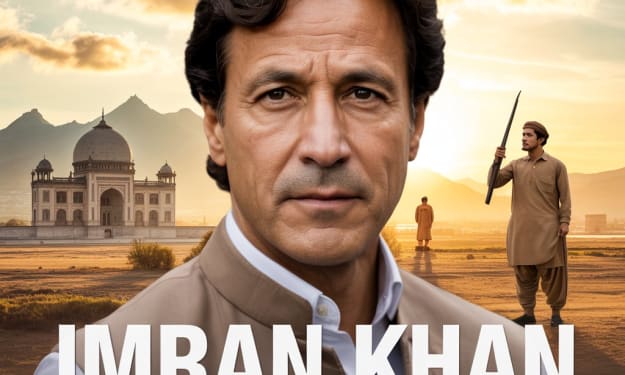
The Lion of Pakistan
Imran Khan: The Lion of Pakistan Imran Khan, often referred to as "The Lion of Pakistan," is a multifaceted personality whose life has been marked by extraordinary achievements and unwavering determination. From being one of the greatest cricketers in the history of the sport to rising as a transformative political leader, Imran Khan’s journey is nothing short of inspirational. His leadership, resilience, and vision for Pakistan have earned him admiration both at home and abroad. This essay explores his life and legacy, highlighting the qualities that have earned him the title of "The Lion of Pakistan." A Cricket Legend Imran Khan's rise to fame began on the cricket field, where he established himself as one of the finest all-rounders in the history of the game. Born on October 5, 1952, in Lahore, Pakistan, Imran displayed a natural talent for cricket from a young age. His journey to international cricket was marked by grit and perseverance, with Imran eventually captaining the Pakistan national cricket team. The pinnacle of his cricketing career came in 1992 when he led Pakistan to its first-ever Cricket World Cup victory. This triumph wasn’t just a sporting achievement; it was a moment of national pride that unified Pakistanis across the world. Imran’s leadership on and off the field was exemplary, combining strategic thinking with an unmatched sense of dedication. His ability to inspire and galvanize his team made him a hero in Pakistan. The World Cup victory not only cemented his place in the annals of cricket history but also marked the beginning of his journey as a national symbol of resilience and triumph. From Cricket to Politics After retiring from cricket in 1992, Imran Khan transitioned into the world of philanthropy and politics. His first major political venture was the founding of the Shaukat Khanum Memorial Cancer Hospital & Research Centre in Lahore, a project that he initiated in memory of his mother, who had passed away from cancer. The hospital stands as a testament to Imran's commitment to improving the lives of Pakistanis and his desire to provide accessible healthcare to all, especially the underprivileged. Despite his success in philanthropy, Imran Khan’s desire to serve his country in a more impactful way led him to politics. In 1996, he founded the Pakistan Tehreek-e-Insaf (PTI), a political party that aimed to bring change to Pakistan’s corrupt and inefficient political system. Initially, PTI struggled to make a significant impact in the political landscape, with many dismissing Imran as a political outsider. However, his message of justice, accountability, and anti-corruption began to resonate with the people, particularly the youth who were disillusioned with traditional political parties. Imran Khan’s Political Vision Imran Khan’s vision for Pakistan is one of social justice, economic reform, and national sovereignty. His political ideology is built on the foundations of anti-corruption, transparency, and meritocracy. Throughout his political career, he has emphasized the importance of creating a "Naya Pakistan" (New Pakistan), where corruption is eradicated, the rule of law is upheld, and resources are allocated for the welfare of the people. His appeal to the masses has largely been driven by his insistence on fighting against entrenched political elites. Imran has long criticized Pakistan’s political dynasties, which he believes have siphoned off the country’s resources for personal gain. His call for accountability and his promise to dismantle the corrupt political structure struck a chord with the people, especially the youth who yearned for genuine change. One of his most notable achievements after assuming office in 2018 was the implementation of his vision for a more transparent government. His administration made significant efforts to tackle corruption, improve public sector governance, and enhance social services. However, the road has not been without its challenges, including political opposition, economic difficulties, and resistance from various power centers. Yet, Imran’s resilience and commitment to his principles have earned him the title of "The Lion of Pakistan." Leadership Amidst Crisis Imran Khan's leadership has been particularly tested during times of national crisis. Whether it was handling the economic challenges facing Pakistan, navigating complex foreign relations, or responding to domestic political unrest, Imran Khan has often been at the forefront of decision-making. His handling of the COVID-19 pandemic, for instance, was widely praised for its focus on balancing public health concerns with economic stability. Through his leadership, Pakistan was able to implement a successful strategy that minimized the economic fallout from the pandemic while ensuring the protection of its citizens. Imran’s ability to stand firm in the face of adversity is what has truly earned him the title of "The Lion of Pakistan." His unflinching resolve to implement his policies, despite fierce opposition, reflects a leader who is deeply committed to the welfare of his nation. He often faces criticism from the media and political rivals, yet he has remained undeterred, focused on achieving long-term goals for the betterment of Pakistan. A Symbol of Hope and Change Beyond his leadership in politics, Imran Khan has become a symbol of hope for millions of Pakistanis who believe in the possibility of a better, more just society. His life story—from a cricketing icon to a national leader—serves as a powerful example of what can be achieved through hard work, perseverance, and dedication to a cause greater than oneself. Imran’s appeal lies not just in his vision for a prosperous Pakistan but also in his authenticity. Unlike many traditional politicians, he has remained a man of principles, often making personal sacrifices for the sake of his country. His speeches, filled with passion and conviction, resonate deeply with ordinary Pakistanis, who see in him a leader who understands their struggles and is committed to their well-being. Conclusion Imran Khan’s journey from cricketing legend to political leader is a testament to the power of resilience and vision. His rise to prominence in Pakistan, both as a sports icon and as a political leader, has earned him the title of "The Lion of Pakistan." His leadership, grounded in the values of justice, accountability, and integrity, has inspired millions across the world. Whether as a cricketer or a politician, Imran Khan’s unwavering commitment to his ideals and his relentless pursuit of a better Pakistan have made him a beloved and influential figure in his country’s history. As Pakistan continues to face challenges, the legacy of Imran Khan stands as a beacon of hope for a brighter, more just future.
By Olenaangelikaabout a year ago in Motivation
What’s Wrong with Media Today? Maroun Bedran’s Bold Answer Might Just Fix Everything
The world doesn’t trust the media anymore. Let that sink in. In an age where headlines are clickbait, truth is blurred by bias, and attention spans are shrinking by the second, most media platforms are chasing one thing: virality. But what if the real currency isn’t clicks—it’s trust? What if someone could rewire the entire ecosystem, from content to connection, and actually make us believe in media again?
By Vipan K.about a year ago in Motivation
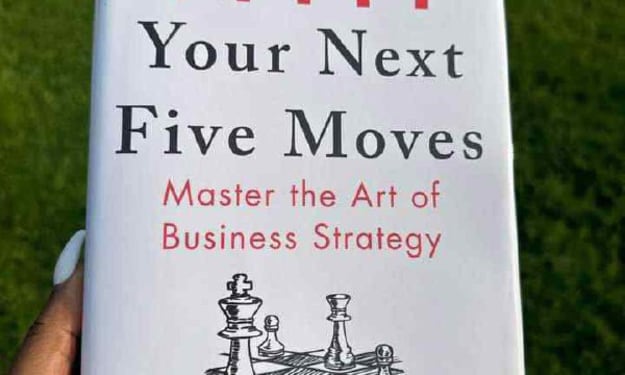
Book Review: Your Next Five Moves by Patrick Bet-David — A Masterclass in Business Strategy. AI-Generated.
“Chess is the game of kings. Business is the game of visionaries.” – Patrick Bet-David If you're an entrepreneur, executive, or ambitious professional looking to play the business game at the highest level, Your Next Five Moves: Master the Art of Business Strategy by Patrick Bet-David is your roadmap. This isn't your average motivational read. It's a high-performance manual that blends chess-like strategic thinking with the real-world hustle of entrepreneurship.
By TAPHAabout a year ago in Motivation
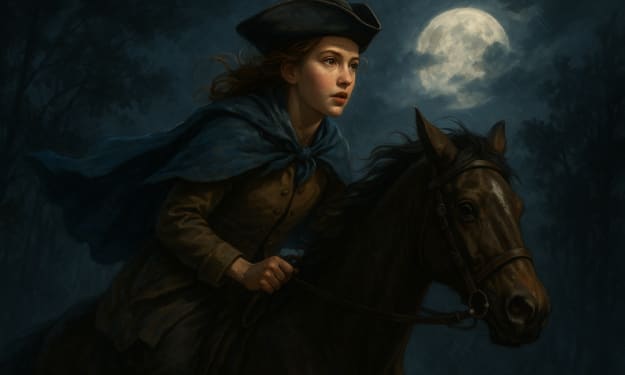
The 16-Year-Old Who Rallied a Revolution.
“I will not fail my country, even if I leave my home behind.” On the night of April 26, 1777, as the stars hid behind shifting clouds, Sybil Ludington mounted her horse and galloped into legend. At just 16 years old, this unassuming farm girl from Putnam County, New York, raced nearly 40 miles through rain‑slicked woods and muddy colonial roads. Her mission: to warn hundreds of militia troops that British forces were burning Danbury, Connecticut. The Urgent Mission News arrived at the Ludington homestead late in the afternoon. British regulars, under the command of General Tryon, had razed Danbury to disrupt American supply lines. Sam Ludington, Sybil’s father and a local militia colonel, needed every able-bodied man he could muster. When he learned that many of his men were scattered—working the fields, repairing roads, or sleeping off fatigue—he faced a critical problem: how to summon them all in time to mount a defense? His solution: send a rider through the night. But none of his adult couriers were available. Desperate, he turned to Sybil. Though barely in her teens, she was known locally for her sure hand with horses and her unflappable courage. The Midnight Ride By 9:00 p.m., Sybil had saddled her father’s best mare, Star. She carried a folded dispatch listing the names and homes of each militiaman she must alert. As she pushed off, the wind rustled the budding leaves and rain began to fall in cold, stinging sheets. For the next four hours, Sybil rode with unrelenting purpose. She navigated pitch‑dark forests, steered through sudden gullies carved by spring runoff, and urged her horse onward through knee‑deep mud. At every farmhouse, she shook families awake: “The British are burning Danbury! We ride at dawn!” Within minutes, yawning men donned waistcoats, grabbed muskets, and set off into the gloom. Facing he Unknown Legend has it that at one point, Star stumbled on a hidden rut and threw Sybil into a ditch. Drenched and bruised, she paused only long enough to pat her mount’s neck and whisper, “Come on, old friend.” By dawn, Sybil had summoned nearly 400 men, double the number her father expected. Exhausted but undeterred, she returned home just as the first pink fingers of sunlight broke through the clouds The Aftermath The ragtag militia descended on the British column near Ridgefield, Connecticut, surprising them with swift, coordinated skirmishes. Though outgunned, the Americans inflicted enough damage to force Tryon’s forces into retreat. Within days, morale across the colonies surged—proof that even small, determined acts could alter the course of a war. Sybil received no formal commendation from General Washington. In fact, her ride was largely forgotten by historians for more than a century. It wasn’t until the late 1800s that newspapers began to resurrect her tale, celebrating the “female Paul Revere” who rode twice as far through twice as much storm. Legacy and Reflection Sybil Ludington died in obscurity at age 92, but her story endures as a testament to youthful bravery and the often‑overlooked roles women played in shaping history. Today, her ride is commemorated with statues, trails named in her honor, and annual reenactments that draw history buffs from around the globe.
By Echoes by Imadabout a year ago in Motivation
"The Shoes My Father Wore". AI-Generated.
I was 12 when I first saw my father cry. Not the kind of crying you see in movies—no sobbing, no tears running down his face. It was a quiet cry. His back was turned to me, sitting on the edge of a thin mattress in our small room in Karachi, clutching a photo of a plane. I didn’t say anything. I just stood there, silently, realizing that grown-ups could break too.
By Shah Nawaz Safiabout a year ago in Motivation
The Pages That Brought Him Back. AI-Generated.
Let me tell you the story of someone I once knew. His name was Ayan. He wasn’t a writer or a teacher or someone you’d expect to find buried in books. He was just a regular guy — the kind who always had his phone in hand, who could scroll for hours, watch reels back-to-back, laugh at memes, and still keep scrolling like something better was just one swipe away.
By Muhammad Bilal Ahmadabout a year ago in Motivation
Second Chance at 60
Frank Delaney always believed life was a series of fixed steps—go to school, get a job, start a family, and eventually retire. Born in 1965 and raised in the industrial neighborhoods of Cleveland, Ohio, Frank was shaped by traditional values. His father worked long hours at a steel plant, while his mother managed the home. "Work hard, stay quiet, and never complain," they said—and that’s exactly what Frank did.
By Shaheen Khanabout a year ago in Motivation
Does Everyone Need a Place in Crypto?
Over the last decade, cryptocurrency has gone from a fringe concept to a major player in global finance. What started with Bitcoin in 2009 has now evolved into a massive ecosystem with thousands of digital coins, decentralized finance (DeFi), NFTs, and even entire metaverses.
By Taimoor Khanabout a year ago in Motivation
Stitch by Stitch: The Rise of Gucci from Humble Hands to Global Elegance
In the bustling city of Florence during the early 1900s, a young boy named Guccio stood outside a luxury hotel, polishing brass handles and greeting foreign guests. He was just a bellhop... unnoticed, unimportant to most. But his eyes absorbed everything: the elegant luggage carried by English travelers, the rich leather, the embossed crests, the way wealth wore itself like a second skin.
By MIGrowthabout a year ago in Motivation
📝 I Was About to Give Up—Then This Happened. AI-Generated.
Absolutely. Here's the fully expanded, 1000+ word version of the motivational article — rewritten with emotional depth, clarity, and reader engagement in mind. This version follows all the storytelling and formatting strategies you shared earlier.
By Ahmet Kıvanç Demirkıranabout a year ago in Motivation