success
The road to success is always under construction; share your equations for success — and learn some new ones.
From Selling Candies to Building a Billion-Dollar Empire
Daymond John’s story begins in Hollis, Queens, New York — a neighborhood filled with hip-hop beats, cultural energy, and, at times, economic hardship. Born in 1969, Daymond was raised by his mother after his parents divorced. Money was tight, but his mother instilled in him the value of hard work and creativity.
By Farzadabout a year ago in Motivation
The Productivity Myth That’s Costing You Hours Every Week. AI-Generated.
If you’re anything like me, you’ve probably fallen into the trap at some point.The trap of thinking if I could just work faster, I’d finally get ahead. The belief that the right app, the perfect routine, or the ultimate to-do list will magically transform your output.
By studio zoomabout a year ago in Motivation
7 Powerful Habits That Will Change Your Life in One Year
Why Small Changes Matter Most people overestimate what they can do in a week, but underestimate what they can do in a year. You don’t need to turn your life upside down to see big results. In fact, drastic changes often fail because they’re too overwhelming to maintain. The secret lies in small, consistent habits that compound over time. In this article, we’ll explore seven powerful habits that, if practiced daily, can completely transform your mindset, health, relationships, and productivity within 12 months.
By Mahmood Afridiabout a year ago in Motivation
The Netflix Story: A Legacy of Disruption
In a cramped living room above a Costa Rican grocery store on August 29, 1997, Reed Hastings and Marc Randolph lit the spark of what would become Netflix. Reed, a former Pure Software executive, paced the floor clutching a DVD while Marc sketched business ideas on a whiteboard. They had just tested mailing a DVD and, watching it arrive intact, realized the $16 billion home-video market was ripe for reinvention. As dawn broke over Scotts Valley, California, two former coworkers-turned-entrepreneurs made their pitch: an online DVD rental and sales site with no late fees, mailing movies in red-and-white envelopes. Hastings invested $2.5 million from a recent acquisition windfall, and with 30 employees and 925 titles, Netflix began as “an e-commerce rental store” for DVDs.
By Frank Massey about a year ago in Motivation
Is Hustle Culture Just the New Face of Modern Slavery?
“Rise and grind.” It’s the modern battle cry for ambition. Social media feeds are flooded with coffee-fueled dawn photos, motivational quotes, and stories of entrepreneurs working 100-hour weeks to “make it.”
By Irfan Aliabout a year ago in Motivation
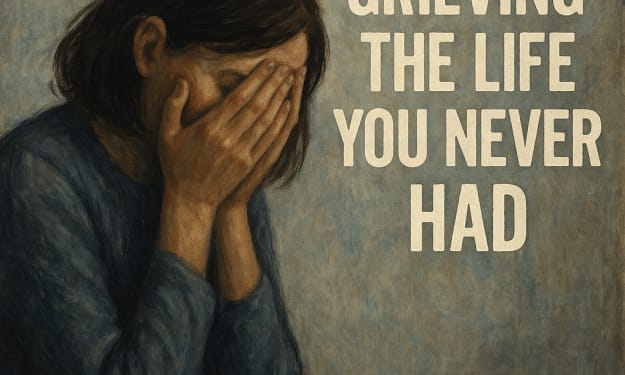
Grieving Life
Grief is often pictured as black clothes at a funeral, tears at a graveside, or the ache of missing someone who is gone. But there is another kind of grief that doesn’t always get recognized—one without a headstone, memorial service, or condolences from friends. It’s the grief for the life you never had. This form of grief can be quiet, invisible, and deeply misunderstood. It’s the mourning of opportunities that never came, dreams that didn’t happen, or circumstances that prevented you from living the version of life you once imagined. It might be about the family you never built, the career you didn’t pursue, the childhood you wish had been different, or the health and abilities you lost before you even got the chance to use them fully. And while it doesn’t leave a visible absence in the same way as death, it can leave a hollow space inside you—a ghost of “what could have been.” --- Recognizing the Loss That Isn’t Tangible The first challenge in grieving the life you never had is that it can feel intangible. How do you explain to someone that you’re grieving for something that never even happened? Society tends to validate grief when it’s connected to something concrete—a person, an object, a place. But this grief is about a hypothetical future that didn’t unfold. It’s about an imagined reality you once planned for, worked toward, or simply hoped would happen. You may experience this grief if: You wanted children but life’s timing, circumstances, or biology made it impossible. You had to abandon a dream because of financial, health, or family obligations. You grew up in an unstable or abusive environment and missed out on the sense of safety and joy others seemed to have. You envisioned a loving partnership that never came to be, or the one you had ended in heartbreak. You pictured yourself in a certain career, city, or lifestyle that never materialized. Even though these things never existed in the physical world, your mind and heart invested in them. They were real to you, and their absence is a legitimate loss. --- Why This Grief Can Feel So Heavy Part of the heaviness of grieving the life you never had is that there’s no clear closure. When someone dies, there’s a moment—however painful—where the finality sets in. With this kind of grief, you may wrestle with uncertainty. You might still ask, “Could it happen someday?” or “Did I make the wrong choices?” There’s also the layer of self-blame. People sometimes torment themselves with “If only…” statements: If only I’d worked harder. If only I’d spoken up. If only I’d been braver. The mind loops through alternate timelines like flipping through channels, replaying moments where life could have gone differently. This makes the grief not just about the loss itself, but about the constant mental reruns of “what might have been.” Another complicating factor is that others might not acknowledge it. Friends may not understand why you’re sad about something that “wasn’t real.” They may tell you to “just be grateful for what you have,” which can leave you feeling guilty on top of grieving. --- Stages of This Kind of Grief While grief is never a neat checklist, many people experience patterns similar to those seen in traditional loss: 1. Denial – Hoping that maybe it’s not too late, or convincing yourself you never wanted it that badly. 2. Anger – Resentment toward yourself, others, or life circumstances for stealing the life you imagined. 3. Bargaining – Trying to mentally negotiate ways to “make up” for the loss. 4. Depression – The deep sadness and emptiness that sets in when the reality sinks in. 5. Acceptance – Not approval or happiness about the loss, but a gradual integration of it into your story. You may move through these in a non-linear way, looping back and forth over months or years. --- Making Space for the Grief The most important step is to give yourself permission to grieve. Just because your loss is invisible doesn’t mean it’s invalid. You can create space for it in the same way you would for any other mourning process: Name the loss. Writing it down or speaking it aloud can make it more real and give you language for what you’re feeling. Ritualize it. Some people find comfort in creating symbolic goodbyes—writing a letter to the life they imagined, planting a tree, or lighting a candle. Find witnesses. You don’t need everyone to understand, but finding at least one person who can hold space without judgment can be healing. Release timelines. Part of grieving is letting go of the rigid expectations of when things “should” happen. --- Integrating the Loss Into Your Story Over time, the goal is not to erase the grief but to weave it into your life story in a way that allows you to move forward without denying its place. This might mean: Discovering joy in unexpected paths you never planned for. Finding ways to honor the person you would have been. Supporting others who are experiencing similar invisible losses. Allowing your values—not just your old dreams—to guide your choices. Integration is about saying: This loss shaped me, but it doesn’t define me entirely. --- When to Seek Support Because this type of grief can be so private, it can be tempting to try to handle it alone. But you don’t have to. Therapists, grief counselors, and support groups (both online and in person) can help you untangle the emotions and find meaning without minimizing your experience. Sometimes, this grief can be intertwined with trauma, depression, or unresolved childhood wounds. In those cases, professional support isn’t just helpful—it’s essential. --- A New Relationship with Possibility Grieving the life you never had doesn’t mean you stop dreaming. In fact, once you acknowledge and honor the loss, you may find new possibilities opening up. They might not look like the original dream, but they can still be rich, meaningful, and deeply yours. Your grief doesn’t cancel your gratitude, and your gratitude doesn’t erase your grief. You can hold both at the same time—thankful for what is, and tender toward what isn’t. Life rarely follows the exact map we draw in our youth. Sometimes the detours are painful, even heartbreaking. But they can also lead to unexpected vistas—new relationships, new ways of living, and a deeper empathy for others whose lives also took an unexpected turn. In the end, grieving the life you never had is an act of self-compassion. It’s saying: The dream mattered, and so do I. --- If you want, I can also give this a more poetic, narrative style so it’s more emotionally evocative rather than clinical. That would make it feel less like a guide and more like a deeply personal essay. Would you like me to do that?
By Samiullah about a year ago in Motivation
The Stranger Who Changed My Life in Ten Minutes
It was one of those evenings when the city felt unusually heavy, as though the air itself was carrying a quiet sadness. The clouds had been gathering all day, swelling like a secret about to spill. By the time I stepped out of my office building, the sky had finally broken open, and rain poured down in steady sheets. The streets shimmered with reflections of streetlights, and puddles spread like little lakes across the uneven pavement. I pulled my jacket tighter around me, but the wind found its way through every gap. My umbrella had broken earlier that week, and I hadn’t gotten around to buying another. Within minutes, my hair was damp, my shoes were soaked, and the cold was creeping into my bones. I kept my head down, watching the patterns of rain dancing on the pavement, trying to walk faster toward home. Halfway along my usual route, I noticed someone sitting alone on a weathered wooden bench by the side of the road. At first, I might have walked past without looking too closely — I had done it before, like so many others, pretending not to notice. But this time, something about the scene pulled at me. He was an older man, maybe in his late sixties. His coat was thin and frayed at the edges, and the brim of his faded cap sagged with rainwater. His hands trembled slightly as he held a small paper cup in front of him, the kind you might get at a cheap coffee stand. I could see a few coins rattling inside. The rain was dripping off his sleeves, yet he sat still, almost as if he’d accepted the weather as part of the evening. It wasn’t his clothes or his posture that caught me. It was his eyes. They weren’t just tired — they were patient. It was the kind of patience that comes from years of enduring life’s sharp edges without letting them break you entirely. There was no bitterness in them, no urgency, only a quiet endurance, as though he had long ago learned that rushing wouldn’t change his fate. I hesitated for a moment before walking toward him. My voice felt small in the wide, wet street. “Do you need something warm to eat?” I asked. His lips curved into a smile — not the quick, polite smile we give strangers out of habit, but the kind that felt genuine, as if my question had pierced through the cold evening. “Only if you’re not in a hurry,” he replied gently. I ducked into the café just across the road and bought a hot coffee and a simple sandwich. The café smelled of roasted beans and fresh bread, a sharp contrast to the damp air outside. I hurried back, the warmth of the coffee seeping through the paper cup into my fingers. When I handed him the food, he shifted slightly, patting the bench beside him. “You don’t have to sit,” he said, “but it’s nice when people do.” I sat down. The bench was wet, and the rain continued to fall, but somehow, in that moment, the discomfort didn’t matter. He began to speak, not in a rush, but in a slow, deliberate rhythm, as though each word carried weight. His name was Martin. He told me he had once been a carpenter, skilled with his hands, building furniture that people kept in their homes for decades. He had been a husband once, and a father. He spoke of his wife, who had passed away after a long illness. The medical bills had taken what little savings they had. Then came the debt, then the loss of his home. Somewhere along the way, he had also lost touch with his only daughter. Misunderstandings, he called them, but the kind that never found resolution. “I’m not angry,” he said after a pause. “Life just… took a different turn than I expected. But if I can still smile at strangers, maybe I haven’t lost everything.” I listened, unsure of what I could possibly say in return. Here was a man who had less than I could imagine living with, and yet there was no trace of resentment in his voice. He spoke with a peace I had never known, even in my comfortable life. At one point, a bus splashed through a puddle nearby, sending a spray of water toward us. He laughed, brushing it off with the same calmness he seemed to apply to everything. “You can’t stop the rain,” he said, “but you can decide whether to curse it or listen to it.” When it was finally time for me to go, I stood up reluctantly. He thanked me — not for the sandwich, not for the coffee, but for the time. “People think giving is about money,” he said, “but sometimes, it’s just about staying long enough to hear someone’s story.” As I walked away, my shoes squelching in the puddles, I felt warmer than I had all evening. The rain still fell, but it no longer seemed as heavy. In just ten minutes, a stranger had reminded me of a truth I had long forgotten: kindness costs nothing, but its value is immeasurable. The next morning, I passed the same spot on my way to work. The bench was empty. Martin was gone. I never saw him again. And yet, every time the clouds gather and the rain begins to fall, I think about him — about patience in the face of suffering, about kindness in the middle of loneliness, and about the quiet dignity of those who have nothing and yet still choose to give. Moral: Kindness isn’t about fixing someone’s entire life. Sometimes, it’s about making a single moment less lonely — and in doing so, you just might change two lives instead of one.
By Ismail khan about a year ago in Motivation
Understanding Mental Health Breaking the Stigma and Finding Support
Understanding Mental Health: Breaking the Stigma and Finding Support Mental health is more than just the absence of illness—it’s the foundation of our emotional, psychological, and social well-being. It affects how we think, feel, and behave in everyday life. It shapes the way we handle stress, relate to others, and make decisions. Yet, despite its importance, mental health often remains clouded by stigma, misunderstanding, and silence.
By Muhammad aliabout a year ago in Motivation
The Fire Within: How to Build Unshakable Motivation and Achieve What You Once Thought Impossible. Content Warning. AI-Generated.
Introduction: Why Some People Keep Going When Others Quit We’ve all met them — those people who seem unstoppable. They face setbacks that would make most of us give up, yet somehow, they rise again. They aren’t always the smartest or the most talented, but they have something powerful burning inside them: an unshakable motivation.
By Chilam Wongabout a year ago in Motivation