success
The road to success is always under construction; share your equations for success — and learn some new ones.
Why Failure Changed My Life for the Better
Failure. A word we all fear, but one that taught me more than any success ever could. There was a time in my life when I believed that failure meant the end — the end of dreams, the end of confidence, the end of who I was. But as I look back now, I realize it was actually the **beginning** of everything good that followed.
By Kashif Wazir12 months ago in Motivation
I Let Artificial Intelligence Run My Life for a Week — And It Changed Everything 💰
# 🧠 I Let Artificial Intelligence Run My Life for a Week — And It Changed Everything 💰  When I first heard about ChatGPT, I laughed. I thought, *“There’s no way a machine can do my job better than me.”* But curiosity won. I decided to run a crazy experiment: Let AI make every decision for a full week — work, money, and even daily choices. I just typed, “What should I do next?” and followed its lead. The results blew my mind. --- ## Day 1: The Assistant That Never Sleeps I asked GPT, *“Help me make money online with zero investment.”* In seconds, it gave me a five-step plan — write articles, design AI images, sell services on Fiverr, create content, and build chatbots. Within three hours, I had: - Three stunning AI images made with Midjourney - A full article ready to publish (this one, actually 😅) - A new Fiverr gig description that sounded like a pro wrote it For the first time, I realized: I didn’t need a team. I just needed ideas… and the right AI tools. --- ## Day 3: The Machine Learns Faster Than Me  The more I used it, the smarter it became. Every prompt, every task — it improved. By Day 3, I had created content for five different platforms while sitting in pajamas, sipping tea. But there was a catch. I started relying on it too much. I’d ask AI what to eat, what to post, even how to reply to texts. It stopped being an experiment — it was becoming a relationship 😅. --- ## Day 5: The Money Started Coming In That’s when it got real. - My AI-written articles hit 12,000 views on Vocal. - One of my Midjourney images sold as an NFT for $37. - A Fiverr client paid me $50 to “AI-optimize” their content. AI wasn’t just helping me — it was *working for me.* --- ## Day 7: The Lesson I Didn’t Expect By the end of the week, I realized something powerful: AI isn’t here to replace us. It’s here to **reward the ones who learn how to use it.** Those who fear it… will be replaced by those who master it. --- ## 🧩 My AI Toolkit - **ChatGPT (GPT-5)** – Writing, brainstorming, strategy - **Midjourney** – Image generation - **Canva Magic Studio** – Editing - **Fiverr + Vocal** – Monetization - **Notion AI** – Productivity management --- ## 💡 The Turning Point A few months ago, I was broke. My dad called me a failure. I’d jumped from one meaningless job to another — waiter, delivery guy, data entry — trying to survive. Nothing worked. Until I decided to stop running from the future… and start working *with* it. AI didn’t just change how I work. It changed how I think. It gave me back something I’d lost for years — **belief**. Now, I make money online doing what I love — creating, experimenting, and learning every single day. And if there’s one thing I’ve learned, it’s this: > “The smartest person in the room isn’t the one who knows everything — > it’s the one who knows how to use AI.” So if you’ve read this far, maybe that’s your sign. Start small. Try something. Ask the machine a question. Because the future isn’t waiting — it’s already typing. --- ### 🔖 Tags: AI, Artificial Intelligence, Productivity, Future of Work, Personal Growth, Technology, Money Online, Inspiration --- ### 💬 Author’s Note If this story inspired you, share it. Because maybe — just maybe — one word can change the way someone sees their future.
By America today 12 months ago in Motivation
Nelson Mandela
Nelson Mandela: The Long Walk to Freedom In the rolling hills of the Transkei region in South Africa, a boy was born in 1918 in a small village called Mvezo. His name was Rolihlahla Mandela, a Xhosa name meaning “pulling the branch of a tree,” or more informally, “troublemaker.” No one knew then that this “troublemaker” would one day grow up to challenge an entire system of injustice and change the destiny of a nation.
By Sher Alam12 months ago in Motivation
How I Found Freedom in an Unfree World – Complete Book Summary & Analysis. AI-Generated.
📘 Introduction: Why This Book Still Matters Harry Browne’s How I Found Freedom in an Unfree World (first published in 1973) is a radical self-help manifesto. Unlike traditional guides that focus on productivity or wealth, Browne’s work is about personal liberty—the ability to live life on your own terms, regardless of societal, political, or cultural constraints.
By TAPHA12 months ago in Motivation
Tom Hanks: The Everyman Who Became a Legend
When you think of Tom Hanks, you think of kindness. You think of that smile that feels like a warm hug, the voice that feels like a reassuring friend, and the soul that shines with authenticity. What makes him so special isn’t just his filmography — it’s the person he is behind the scenes. The man who can make you laugh in Forrest Gump and break your heart in Cast Away is also the man who can walk through a crowd without an entourage, a man who still writes heartfelt thank-you notes to people who help him, and a man who carries the weight of his fame with unparalleled grace.
By Frank Massey 12 months ago in Motivation
High Performance Habits by Brendon Burchard – Summary & Analysis. AI-Generated.
📘 Introduction: Why This Book Matters Brendon Burchard’s High Performance Habits is one of the most influential self-development books of the last decade. Based on extensive research with high achievers, it identifies six habits that consistently separate extraordinary performers from average ones.
By TAPHA12 months ago in Motivation
You Have the Best Ideas
You have the best ideas. That’s not flattery. That’s physics. The universe doesn’t waste genius. When you feel that inner pull — that quiet certainty that what you want to build is worth building — it’s not random. It’s a signal. And most people ignore it.
By Randolphe Tanoguem12 months ago in Motivation
What Is Critical Thinking and How It Helps in Daily Life
1. Introduction – Why This Topic Matters In today’s fast-moving world, information comes at us every second — from news, social media, and people around us. With so many voices and opinions, it’s easy to get confused or make quick decisions without thinking deeply. That’s why critical thinking has become one of the most important life skills we can develop.
By Bilal khan 12 months ago in Motivation
Responsibility: The Word You’re Most Afraid Of
You sit in front of the screen at night. Another day, the same routine. A few hours at work, then some scrolling, something to eat, maybe a show. Somewhere along the way that strange feeling shows up again — that everything seems fine on the outside, yet inside you feel empty. You’re not satisfied, but you’re not doing anything to change it either. And then the excuses start: “It’s the stress,” “It’s the people,” “It’s the country,” “It’s the times. No. It’s you. Sounds harsh? It’s meant to. Because until you understand that no one is responsible for your life except you, you’ll keep spinning in the same loop: frustration, excuses, promises to change, frustration again. And deep down, you already know that. You’ve known it for a long time.
By Mateusz Stachowiak12 months ago in Motivation
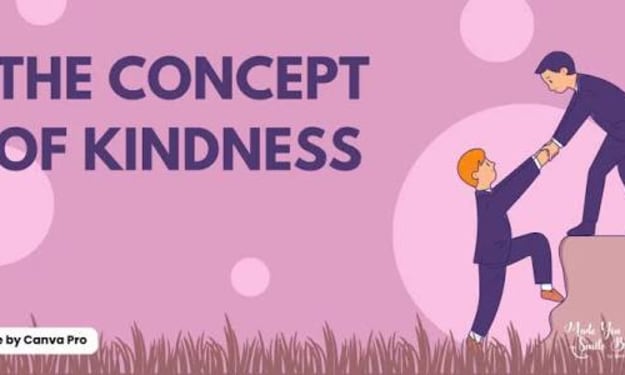
The Power of Small Acts: How Kindness Can Change the World
Introduction: In a world where we often feel overwhelmed by the negativity surrounding us, it’s easy to forget the incredible power of small acts of kindness. Whether it’s holding the door open for someone, offering a smile to a stranger, or simply listening when someone needs to talk — these seemingly insignificant gestures can have a profound impact on both the giver and the receiver. I’ve often wondered how a single moment of kindness could change the course of someone’s day, or even their life. And it’s not just about the other person — it’s about how acts of kindness shape us as human beings. This article explores the ripple effect of kindness, and why it’s so important for our world today. The Ripple Effect of Kindness Have you ever had a bad day, only for a stranger to say something kind or do something thoughtful? I know I have. I can’t remember exactly what they said, but I remember how it made me feel. It was a small act, but it completely shifted my perspective. That one moment of kindness brightened my day and reminded me that there is still goodness in the world. This is what scientists call the ripple effect. It’s the idea that one small action can create a chain reaction of positivity. When we are kind, we don’t just make one person’s life better. We inspire them to be kind to others, who then pass that kindness on. It’s like throwing a stone into a pond — the ripples expand far beyond the point of impact. The Science Behind Kindness Kindness is more than just a feel-good concept. Research has shown that performing acts of kindness not only benefits the recipient but also the giver. In fact, studies have found that helping others can increase our own happiness, reduce stress, and even improve our physical health. When we perform an act of kindness, our brain releases oxytocin, often referred to as the “love hormone.” Oxytocin is associated with feelings of warmth, trust, and connection. It makes us feel good, and it motivates us to keep doing more kind things. What’s fascinating is that oxytocin doesn’t just affect the person receiving kindness — it also increases the giver’s levels of happiness and well-being. Why Kindness Is More Important Than Ever In today’s fast-paced, often fragmented world, it’s easy to forget that we’re all human. We’re constantly rushing from one task to the next, caught up in our own stress and struggles. Social media and technology have made it easier than ever to connect with people, but ironically, many of us feel more disconnected than ever before. That’s why kindness is more important than ever. In a world that feels increasingly impersonal, small acts of kindness can remind us of our shared humanity. They serve as a reminder that, no matter our differences, we all need each other. Whether it’s offering a word of encouragement to someone struggling, or simply being present for someone who feels alone, acts of kindness can help us feel more connected to one another. Every Act Counts It’s easy to feel like our individual actions don’t matter, especially in a world filled with problems that seem too big to solve. But the truth is, every act of kindness counts. Even the smallest gesture can make a world of difference to someone. You don’t have to perform grandiose acts to make a difference. In fact, some of the most powerful acts of kindness are the simplest ones. Taking a few minutes to check in on a friend, paying for someone’s coffee, or helping a neighbor with their groceries might seem small, but to the person on the receiving end, it could mean the world. Creating a Culture of Kindness Imagine if we all made a conscious effort to be kinder every day. What would the world look like? Kindness has the power to create a culture of empathy and compassion. It can help us build stronger communities, foster deeper relationships, and create a world where people feel seen, heard, and valued. It all starts with small, intentional acts. Practical Ways to Spread Kindness If you’re looking to make kindness a part of your daily life, here are some simple but powerful ways to get started: Smile at a Stranger: It might seem small, but a smile can make someone’s day. You never know what they’re going through, and that simple gesture could be exactly what they need to feel seen. Send a Handwritten Note: In a world dominated by digital communication, receiving a handwritten note can feel incredibly personal. It could be a thank you note, a compliment, or just a message to say you’re thinking of someone. Volunteer Your Time: Donating your time to a cause you care about is one of the most meaningful ways to show kindness. It could be anything from helping at a local food bank to mentoring someone who needs guidance. Compliment Someone Genuinely: Take a moment to compliment someone on something specific, whether it’s their work, their kindness, or something about their personality. Genuine compliments can boost someone’s self-esteem and make them feel valued. Listen Without Judgment: Sometimes, the kindest thing you can do is simply listen. Let someone vent, express their feelings, and know that you’re there for them without offering advice or judgment. Conclusion Small acts of kindness don’t just improve the world around us; they improve the world within us. They remind us that, despite the noise and chaos, we are all connected by our humanity. By being kind, we have the power to create a ripple effect that can change the course of someone’s day — and maybe even their life. Kindness doesn’t require grand gestures or extraordinary effort. It simply requires us to be present, to care, and to take action — no matter how small the act may seem. In a world that desperately needs connection, we can be the change by practicing kindness in our everyday lives.
By Famepedia12 months ago in Motivation
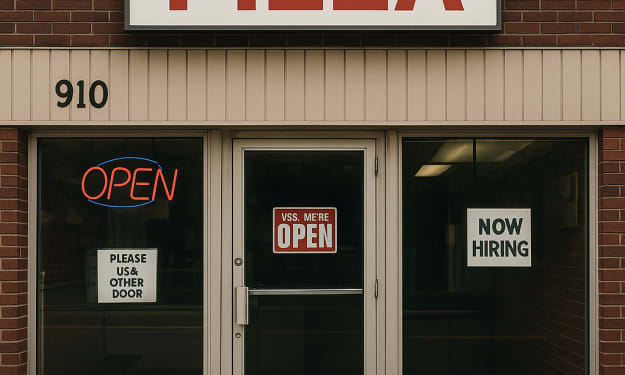
The Pizza Shop Battle I’ll Never Forget
When my wife Candace and I first got our pizza shop, it felt like a dream. A small neighborhood place with a brick oven, a steady stream of regulars, and the smell of garlic that seemed to hang in the air no matter how much we cleaned. We had bought it from a man named Bill, an older Italian guy who was known around town for having a sharp tongue and an even sharper way with money.
By Joey Raines12 months ago in Motivation