social media
Motivation in the modern age of social media; keep your social media feed positive by following inspirational influencers.
I Interviewed 10 Millionaires—Here’s What They All Had in Common. AI-Generated.
We’re taught that millionaires are born different. Maybe they had rich parents. Maybe they were just lucky. Maybe they were born with some magical instinct the rest of us don’t have.
By Muhammad Riazabout a year ago in Motivation
How I Became a Millionaire with No Connections and No Luck . AI-Generated.
When people ask how I became a millionaire, I tell them the truth: > “I didn’t get lucky. I just didn’t quit.” I wasn’t born into wealth. My family struggled to pay rent most months. We didn’t have business ties, no rich uncle, no inheritance. I started with a broken laptop, a cheap phone, and free Wi-Fi from a café that didn’t know I sat outside every night downloading books.
By Muhammad Riazabout a year ago in Motivation
“The Taxi Driver Who Taught Me the True Meaning of Success”
It was a cold November evening in New York City. I had just finished a long meeting downtown and was exhausted — mentally and physically. The wind outside bit through my coat, and all I wanted was to get home. I hailed a yellow cab, sank into the back seat, and told the driver my address in Brooklyn. At first, there was silence — the kind that naturally fills the space between strangers. But the quiet was soon broken by the soft sound of a melody. The driver, a man probably in his mid-50s with gray at his temples and kind eyes in the rearview mirror, was humming. “You like music?” he asked, catching my glance. “Yeah,” I replied, “That’s an old Bollywood song, right?” His eyes lit up. “Yes! Kishore Kumar. My favorite. Reminds me of home. I used to sing it to my kids when they were small.” That opened the floodgates. Over the next 45 minutes, what was supposed to be a routine ride turned into a life lesson I never expected. --- 🧑✈️ The Man Behind the Wheel His name was Abdul, originally from Pakistan. He had moved to the U.S. nearly 25 years ago. “When I came here,” he said, “I thought success meant driving a Mercedes, owning a big house, and wearing designer clothes.” He paused, letting the traffic pass at an intersection. “I chased that dream. Worked 16-hour shifts, barely saw my wife, didn’t know my children were growing up. I earned good money, yes — but I lost time I can never get back.” That hit me. I looked at him closely for the first time — there were lines on his face, but they weren’t from stress. They were from smiling. This man, sitting in an old, somewhat worn-out taxi, looked more content than anyone I had met at work that day. --- 💸 A Different Definition of Success I told him about myself — a marketing executive, working 60-hour weeks, living alone in a nice apartment, eating takeout for dinner almost every night, and glued to my phone during every waking hour. “Sounds like you’ve made it,” he said with a smile. “But I’m not happy,” I admitted. “I don’t even know why I do it anymore.” He nodded. “Because you’re chasing someone else’s definition of success.” He then told me what changed his life: “One day, my daughter — she was about 8 — drew a picture at school of her family. She drew her mother, her little brother, our home… and a car. Not me. Just my taxi.” He paused. “When I asked her, ‘Beta, where’s papa?’ she said, ‘Papa lives in the car.’ That’s when I realized I was becoming rich and invisible at the same time.” --- 🛑 The Turning Point Abdul made a drastic decision. He started working fewer hours. Took weekends off. Started helping his kids with homework. Began cooking meals with his wife. The money wasn’t the same, but the life got better. “I still drive this taxi,” he said, patting the steering wheel. “But I also walk my daughter down the aisle. I watched my son graduate college. I take my wife to the park every Sunday. That — to me — is success.” For the first time in a long while, I didn’t want the ride to end. --- 💬 The Final Words That Changed Me As we pulled up in front of my apartment, I handed him the fare. He smiled and said: “Don’t wait to be rich to be happy. Be happy now — and the rest will follow.” I tipped him generously, but he refused. “You’ve already paid,” he said. “You listened.” --- 🧠 What I Learned That Night That simple cab ride was more valuable than any TED Talk or podcast I’ve ever heard. I realized that success isn’t a number in your bank account. It’s how many moments you share with the people you love. It’s the freedom to laugh, rest, cry, grow — without sacrificing your soul to meet someone else’s expectations. That night, I made a promise to myself. I reduced my work hours. Started calling my parents more often. Reconnected with old friends. Took weekends off. Started reading, painting, even volunteering. And slowly, I started to feel alive again. --- 🟢 Conclusion: Success isn’t about the spotlight. It’s about the warmth in your home, the peace in your heart, and the memories you build with those who matter. Sometimes, it takes a stranger in a taxi to remind you what really counts.
By Umar Farooqabout a year ago in Motivation
The Extraordinary Journey of Steve Jobs
Introduction: Steve Jobs was not just a tech entrepreneur — he was a revolutionary thinker, a visionary leader, and an artist of innovation. From humble beginnings in a garage to reshaping the way we live, communicate, and think, his journey is a lesson in bold dreams, fierce persistence, and timeless creativity. This is not just the story of Apple — it's the story of a man who refused to settle. The Early Struggles: A Troubled Start Steve Jobs was born in 1955 and adopted by Paul and Clara Jobs. His early life wasn’t luxurious or exceptional, but it was full of curiosity. He grew up tinkering with electronics in his family garage, and his rebellious spirit often clashed with traditional education. Jobs dropped out of Reed College after just one semester, feeling that formal education was stifling his creativity. But instead of giving up, he audited creative classes like calligraphy, which would later influence the beauty of Apple’s typography. At this point in his life, Steve was broke, barefoot, and walking miles for free meals at a Hare Krishna temple. But deep inside, he had a vision — to do something truly meaningful. Apple Is Born: The Garage Dream In 1976, Steve Jobs co-founded Apple with his friend Steve Wozniak in a garage. Their first computer, the Apple I, was hand-built and modest — but it marked the beginning of a revolution. Soon after, Apple II became a market success, and Apple became a public company in 1980, making Jobs a multimillionaire at just 25. But Jobs was not content with wealth — he wanted perfection. He dreamed of computers that were not just functional, but beautiful, intuitive, and revolutionary. The Macintosh and the Vision of Simplicity In 1984, Jobs launched the Macintosh — a computer that changed everything. It featured a graphical user interface and a mouse — ideas taken from Xerox but refined into a product that anyone could use. The ad campaign during the Super Bowl became legendary. Jobs believed in “making products people didn’t know they needed until they used them.” But his perfectionism, temper, and vision also made him difficult to work with. In a shocking twist, he was fired from the very company he built in 1985. Falling Down to Rise Higher Being fired from Apple was a public humiliation — but Steve called it "the best thing that could have happened." He went on to create NeXT, a computer company focused on higher education. It didn’t succeed commercially, but it developed powerful software that would later become the foundation of macOS. At the same time, Jobs bought a small animation company called Pixar — which would eventually change the film industry forever. With movies like Toy Story, Finding Nemo, and The Incredibles, Pixar became a storytelling powerhouse. Jobs proved that resilience creates new opportunities. The Return of the King: Apple Reborn In 1997, Apple was on the brink of bankruptcy. Jobs returned to Apple, and within a few years, he turned it into one of the most valuable companies on Earth. He simplified the product line, introduced the iconic iMac, and focused on design, elegance, and user experience. But that was just the beginning. iPod, iPhone, iPad — A New Era of Innovation Jobs unveiled the iPod in 2001, revolutionizing the way we listen to music. Then came the iPhone in 2007 — a product so groundbreaking that it changed the smartphone industry forever. It wasn't just a phone — it was a computer, camera, and music player in your pocket. In 2010, he introduced the iPad, challenging the idea of what a computer should look like. Every launch was done with theatrical flair, and the world watched in awe as Jobs pulled one magical device after another from his signature black turtleneck. The Philosophy of Steve Jobs: Design Meets Soul Jobs believed that design was not just what it looked like, but how it worked. He was obsessed with the details — the curve of the glass, the sound of the click, the box the product came in. He demanded excellence and simplicity. He pushed his team beyond limits. He believed that the customer didn’t always know what they wanted — but once they saw it, they would never go back. His favorite phrase: "Stay Hungry, Stay Foolish." The Final Years: Legacy Etched in Time In 2003, Jobs was diagnosed with a rare form of pancreatic cancer. For years, he fought privately while continuing to innovate publicly. He stepped down as CEO in 2011 and passed away on October 5, 2011. His death shocked the world. Presidents, CEOs, artists, and millions of fans mourned not just the man, but the mind that changed everything Legacy: A Genius That Lives On Steve Jobs left behind more than products — he left behind a way of thinking. A culture of creativity, a legacy of design, and a blueprint for every dreamer who wants to change the world. Apple continues to dominate the tech world — not just because of what it makes, but because of what Steve Jobs believed in: thinking differently. Conclusion: Lessons from a Visionary Steve Jobs proved that success isn't about starting rich, having a degree, or following the crowd. It's about passion, vision, courage, and refusing to settle for "good enough." His life teaches us: Think boldly. Fail gracefully. Lead fearlessly. Create beautifully. Jobs said it best: “The people who are crazy enough to think they can change the world, are the ones who do.”
By Abdul Rahman about a year ago in Motivation
How IoT is Changing the Future of Home Automation
The Smart Home Revolution: How IoT Is Reshaping the Way We Live BY [ WAQAR ALI ] In today’s digital era, home automation is evolving faster than ever, and at the heart of this transformation is the Internet of Things, or IoT. This groundbreaking technology refers to a network of physical devices—ranging from smartphones and appliances to security systems and sensors—that communicate and share data with each other via the internet. What was once only imagined in science fiction films is now becoming a reality in households around the world. Modern homes are no longer simply places to eat and sleep. Thanks to IoT, they are becoming intelligent ecosystems that adapt to the daily needs of their occupants. With smart lights that turn on automatically, thermostats that learn your preferences, and appliances that can be controlled remotely, the concept of a “smart home” is becoming less of a luxury and more of a standard. This shift is not only reshaping the way we interact with our living spaces, but also redefining the future of comfort, efficiency, and safety.
By WAQAR ALIabout a year ago in Motivation
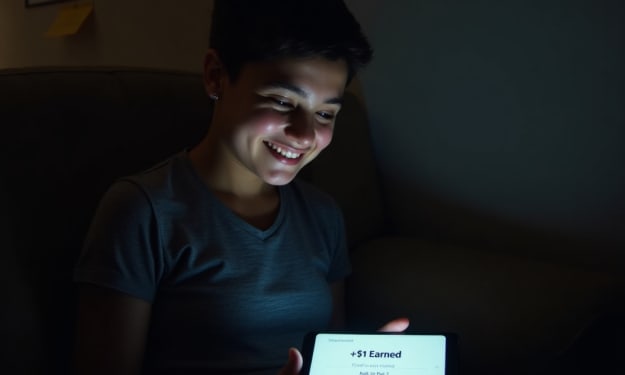
How I Earned My First $1 Online Without Any Skills
Introduction: The Feeling of Nothingness It was one of those late nights when sleep didn’t come easily. Not because I wasn’t tired, but because my mind wouldn’t stop racing. I had no job, no income, and not even a dollar to my name. I kept scrolling through YouTube videos with titles like “Make Money Online in 2025” and “Earn $100 a Day from Home.” Honestly? I didn’t believe any of it. But that night something changed. I made a decision: > “I’ll earn just $1 online. That’s it. If I can do that, maybe I can earn $10. Then $100.” I had no special skills, no website, no investment. Just my second-hand smartphone and Wi-Fi from my neighbor’s router (don’t judge — he knew 😅). --- Step 1: Finding the Right Platform (Enter: TimeBucks) After hours of research, I found something called TimeBucks. It wasn’t flashy. It didn’t promise riches. But it was honest. Free to sign up No ID needed Paid for easy tasks like surveys, watching videos, and even viewing ads The interface looked basic. But that was a relief — no complicated dashboards or learning curve. I signed up instantly. --- Step 2: The First Task That Made Me Believe The first few hours? Disappointment. I clicked a few survey links — disqualified. I watched a couple of TikToks — earned $0.005. It felt useless. But then I found the "Slide Show" ad section. All I had to do was watch simple image slides for 10 seconds each. > Each slide = $0.0015 20 slides = $0.03 100 slides = $0.15 In an hour, I could make around $0.50 Not crazy money — but for someone who never earned online? It felt real. --- Step 3: Micro Hustling — 15 Minutes at a Time I started breaking my day into small online hustling chunks: Morning: 10 minutes of ad viewing Afternoon: 1 short survey Evening: Watching videos for $0.01 Night: Referring one friend (my cousin who also wanted to try) Day 1: $0.16 Day 2: $0.34 Day 3: $0.42 Total = $0.92 On Day 4, I opened my dashboard and saw it — a green notification: > ✅ “You just earned your first $1.00 on TimeBucks” I sat there in silence. One dollar. A digital dollar. But it was mine. --- The Emotional Shift Yara, it wasn’t about the money. It was about proving to myself that it was possible. That this whole "online earning thing" wasn’t just a scam-filled fantasy. I hadn’t written any code, hadn’t sold anything, hadn’t spent a rupee. Just 4 days. Just micro-efforts. And I had done what I had failed to do in years: earn online. That $1 was hope. --- Breaking the Myth: You Don’t Need Skills to Start So many people wait for the perfect moment — “I’ll start when I learn graphic design” or “I need to build a YouTube channel first.” No. You need to start now, with whatever you have. Here's what I had: A used mobile Free internet 30–45 minutes daily Patience And here’s what I didn’t have: Fancy editing skills Website or blog Money to invest 1,000 followers Still, I did it. And so can you. --- Tips for Beginners Who Want Their First Dollar Online 1. Start Small: Don’t aim for $100. Aim for $1. Trust me, the motivation that $1 gives is magic. 2. Use Real Platforms: TimeBucks, SwagBucks, InboxDollars (for USA) — simple, genuine sites. 3. Stay Consistent: Even 15 mins a day is enough if you do it daily. 4. Track Your Progress: Watching your cents grow to a dollar is what keeps you going. 5. Avoid “Get Rich Quick” Traps: If someone asks for money up front — run. --- Where I’m at Now That first dollar turned into $5, then $25. I’ve since started learning Pinterest affiliate marketing and YouTube automation. But TimeBucks was my gateway. And today? I’m writing this story from a borrowed laptop, with $42 in my Payoneer account — all from things I never thought I could do. But the real reward isn’t the money — it’s knowing I can. --- Final Words: Your Turn Now If you’ve read this far, I want to tell you: > You’re one decision away from earning your first online dollar. Not because it’s easy. But because you’re willing to try. Take 10 minutes right now. Sign up for something. Complete one task. Ignore how small the payout is — because that small number could be the biggest shift in your mindset. If I can do it — no skills, no money, no confidence — then believe me, so can you.
By Umar Farooqabout a year ago in Motivation
The emotional toll of constant judgment
Living under constant judgment isn’t always loud or obvious - it’s subtle, persistent, and deeply exhausting. Whether it’s from family, coworkers, friends, or society at large, the feeling of being evaluated can wear down even the most resilient people. Over time, it begins to shape the way we speak, act, and even think about ourselves. We begin to anticipate criticism before we even move, shrinking parts of ourselves to fit into someone else’s version of “acceptable.” In this post, we’ll explore the emotional toll of constant judgment - how it creeps into our lives, affects our mental health, and what we can do to begin reclaiming our peace.
By Olena about a year ago in Motivation
Healing in the Age of Hustle: Why Slowing Down Saved My Sanity.
I used to wear burnout like a badge of honor. “Busy” was my favorite word. If I wasn’t exhausted, I wasn’t trying hard enough. But somewhere between the late-night coffee and the endless to-do lists, I started falling apart. Quietly. Slowly. Until I couldn’t fake it anymore.
By Waqas Ahmadabout a year ago in Motivation
💰 From Bedroom to Billions: The Story of MrBeast
"I was 13, broke, and obsessed—with numbers." That’s how Jimmy Donaldson, the world now knows as MrBeast, described the beginning of a journey that would not only transform his own life but also deeply impact the lives of millions across the globe. No TV show, no famous parents, no big budget. Just a boy with a cracked phone screen, a slow laptop, and a wild dream in a small room in Greenville, North Carolina.
By Muhammad Riazabout a year ago in Motivation
Die Empty: The Philosophy That Made Me Dangerous
Introduction: What If You Died Full? Most people die with their best ideas still inside them. Books unwritten. Businesses unbuilt. Forgiveness never given. They carry songs, inventions, dreams, and love to the grave — untouched. But what if you made a different choice? What if you died empty? "Die Empty" is not a death wish. It’s a life strategy — and once you embrace it, you become dangerous in the best way. What Does “Die Empty” Really Mean? The phrase was popularized by author Todd Henry, but it echoes a much older warrior mindset: > “Live as if you were to die tomorrow. Learn as if you were to live forever.” — Mahatma Gandhi To die empty means to leave nothing behind — not in terms of possessions, but potential. You give your full self to the world while you’re alive. You don’t hoard your talent, love, or courage. You don’t wait for “someday.” Why Most People Die Full There are three main reasons people never live out their potential: 1. Fear of Judgment They fear being misunderstood, mocked, or rejected. So they say nothing. Build nothing. Risk nothing. 2. Procrastination They think there will always be more time. So they delay the important work until “later” — which rarely comes. 3. Comfort Addiction Modern life is engineered for comfort, not growth. Why step into discomfort when you can scroll TikTok or binge Netflix? > The graveyard is the richest place on Earth. It holds unwritten books, unspoken truths, and unlived lives. The Shift: From Passive to Dangerous I wasn’t always this way. I used to be a chronic overthinker. A planner. A “maybe someday” kind of person. Until I hit a point where I realized: time is not promised. Since then, I adopted “Die Empty” as my guiding principle. It made me ruthless with time and dangerous with purpose. Dangerous not in the violent sense — but in the way a laser is dangerous: focused, precise, powerful. Here’s what changed: How the 'Die Empty' Philosophy Transformed Me 🔥 1. I Stopped Waiting for Permission I stopped seeking approval before launching ideas or speaking truth. Now I act fast, then refine. Action over perfection. 🧠 2. I Learned to Say No — Like a Warrior Most people drown in obligations. I cut ruthlessly — if it doesn’t align with my mission, it's gone. 🛠️ 3. I Create Relentlessly Writing, building, mentoring — I treat every day as a creative debt I must pay. Not out of pressure, but out of honor. ⏳ 4. I Measure Time Differently I ask myself, “Would Future Me be proud of how I used this hour?” If not, I pivot. No shame — just course-correct and move. How You Can Adopt This Philosophy Today ✅ 1. Ask Yourself: What Am I Dying With Inside Me? Write it down. Be brutally honest. ✅ 2. Set a Daily “Legacy Task” Each day, do one thing that moves your purpose forward. Small is fine — but make it non-negotiable. ✅ 3. Practice Courage Reps Speak up. Publish. Create. Call the person. Courage, like muscle, grows through use. ✅ 4. Audit Your Life for Leaks What apps, habits, or people drain your power? Patch the leaks. Fortify your mind. You Become Unstoppable When You Realize It Ends Most people live like they’re immortal. They waste days, delay dreams, and live small. But the person who truly understands that death is coming… Lives on fire. With urgency. With love. With focus. > When you decide to die empty, you stop playing defense. You go all in — and that makes you dangerous in the eyes of mediocrity. Final Words: Don’t Just Live — Leave Nothing Behind You don’t need more time. You need more clarity, more bravery, and more action. The clock is ticking. But that’s not a threat — It’s a gift. Let your art, truth, love, and impact pour out of you every day. So that when you die, you don’t go quietly into the grave full of regrets. You go in empty — because you gave it all. 📢 Ready to Die Empty? Share this with someone who needs to hear it. Or better — start your legacy task today.
By Shoaib Afridiabout a year ago in Motivation