social media
Motivation in the modern age of social media; keep your social media feed positive by following inspirational influencers.
The Hidden Strength Within: Why Every Step Forward Matters More Than You Think. Content Warning. AI-Generated.
Introduction: The Quiet Battle We All Fight Life often feels like a relentless wave crashing against the shore. You work hard, give your best, and yet the results seem delayed, distant, or even invisible. Many of us, standing in moments of doubt, whisper silently: “Maybe this is not for me. Maybe I should give up.”
By Chilam Wongabout a year ago in Motivation
🌟 How to Become a Popular Freelancer
A Journey from Struggle to Stardom The clock struck 2 a.m. I was sitting in front of my laptop, my eyes swollen from staring at the screen all day. The coffee cup beside me had gone cold, and my heart felt heavier than my workload. I whispered to myself: “Maybe freelancing isn’t for me… Maybe I’m not good enough.” That was me three years ago. A broken dreamer, lost between rejection emails and unanswered proposals. Every time I opened a freelancing platform, I saw thousands of profiles shining with five-star ratings, while mine looked like an empty notebook with no story to tell. But deep inside, I knew I couldn’t quit. I remembered my father’s words when I was young: “Beta, a diamond only shines when it is polished through pressure.” Those words became my fuel. --- 🌱 The Beginning of the Struggle I started freelancing with no experience, no reputation, and no fancy portfolio. My first twenty proposals? All rejected. Some clients didn’t even bother to respond. Every failure felt like a nail in my heart. But I didn’t stop. Instead, I began learning. I watched free YouTube tutorials, read blogs on how to get freelancing clients, and practiced for hours on my old laptop. I wasn’t just learning a skill; I was learning patience in freelancing. One day, I landed my very first project. It paid only $5—just enough for a cup of tea in my city. But when the client left me a glowing review, my heart lit up. That review wasn’t just feedback; it was hope. It was my first step toward freelancing success. --- 🌟 The Turning Point Slowly, I realized freelancing isn’t only about talent. It’s about trust, consistency, and authenticity. I started replying to clients with respect and honesty, even when they rejected me. I polished my profile like an artist painting his masterpiece. (This is one of the best freelancing tips I can give you: make your profile shine.) I treated every project, whether $5 or $500, like it was worth millions. And then, the magic happened. Clients came back. They recommended me to others. My empty profile began filling with stars, and with every project, my confidence grew stronger. I still remember the day I earned my first $1,000 freelancing income. I held my mother’s hand, showed her the balance on my screen, and tears rolled down both our eyes. It wasn’t just money—it was proof that dreams, no matter how small, can grow into realities. --- 🌍 Lessons I Learned to Become Popular If you want to know how to become a popular freelancer, here are the truths my journey taught me: 1. Patience is the foundation. Success in freelancing doesn’t come overnight. Every rejection is a hidden lesson. 2. Learn daily. The world is changing fast. The freelancer who keeps upgrading skills will always stay ahead. 3. Build relationships, not just contracts. Clients remember kindness, honesty, and reliability more than flashy resumes. 4. Quality over quantity. Deliver work that speaks for itself. Clients will become your marketers. 5. Stay humble. Popularity is not about showing off, but about lifting others and inspiring them. These are not just steps; they are the freelancing success formula. --- 💡 From a Dreamer to a Guide Today, I work with clients across the world. My income is stable, my reputation strong, and my heart full of gratitude. But the most beautiful thing? I am now guiding new freelancers who once stood where I stood—hopeless, afraid, and ready to quit. Whenever I tell them my story, their eyes sparkle with new belief. And I remind them of the same truth that saved me: “A diamond only shines after it survives the pressure.” --- 🌈 Final Words Becoming a popular freelancer isn’t about chasing fame. It’s about serving with honesty, working with passion, and never giving up when the world tells you to stop. If you are struggling today, remember—you are not alone. Every successful freelancer once felt the same pain you are feeling right now. The only difference? They didn’t quit. So, sit back, breathe, and whisper to yourself: “One day, my story will inspire someone else.” And believe me, it will. 🌟 --- ✍️ Author’s Note: If this story touched your heart, share it with someone who needs hope. Because freelancing is not just a career—it’s a journey of courage, patience, and transformation.
By ✦•············• Freelancer •············✦about a year ago in Motivation
The Role of Technology in Shaping Modern Society
The Role of Technology in Shaping Modern Society Introduction Technology has become the driving force of the modern era. It influences every aspect of our lives, from how we communicate to how we work, learn, travel, and even think. Unlike earlier centuries when technological change was gradual, today it moves at lightning speed, transforming societies within years instead of decades. While this progress has improved living standards, created opportunities, and connected humanity like never before, it has also brought challenges such as privacy risks, job displacement, and environmental concerns. This article explores the role of technology in modern society, its benefits, challenges, and the future it promises. --- Technology in Daily Life For most people, technology begins and ends with their smartphones. Yet, daily life is saturated with technological tools in ways that are often overlooked. Smart appliances help manage households, navigation apps guide travelers through unknown cities, and wearable devices track our health. Even simple activities such as paying bills, ordering food, or booking tickets are now digital. Technology has also enhanced convenience. For example, online shopping platforms like Amazon and Alibaba have eliminated geographical barriers, allowing consumers to purchase goods from anywhere in the world. Similarly, ride-sharing apps such as Uber and Bolt have made transportation more accessible. Moreover, technology has created a sense of global connectedness. Social media platforms provide spaces where people share ideas, experiences, and cultures across borders. While this connectivity strengthens global understanding, it also introduces challenges like misinformation and addiction to screen time. --- The Evolution of Communication Communication is perhaps the area where technology has made the most dramatic impact. In the past, letters took days or even months to reach recipients. Today, a message can travel across the world in seconds through email, instant messaging, or video calls. Platforms such as WhatsApp, Zoom, and Microsoft Teams have made global collaboration seamless. Social media has also revolutionized how people interact. Facebook, Instagram, and TikTok are not just entertainment tools; they are platforms for business, activism, and community building. For example, political movements have been organized through social media, and small businesses have found global audiences through digital marketing. However, this evolution has downsides. Cyberbullying, fake news, and the erosion of face-to-face interaction are real concerns. Despite these challenges, digital communication has made the world a smaller, more connected place. --- Technology in Education The role of technology in education cannot be overstated. Digital tools have turned traditional classrooms into interactive learning environments. Platforms such as Google Classroom, Khan Academy, and Coursera provide learning opportunities to millions of students globally. E-learning has broken barriers of geography, allowing a student in a remote village to access the same resources as one in a developed city. During the COVID-19 pandemic, educational technology became a lifeline. Schools and universities adopted online platforms to ensure continuity of education. Though challenges such as unequal access to the internet remain, the pandemic demonstrated the transformative potential of educational technology. Technology also allows for personalized learning. Artificial intelligence can analyze student performance and provide tailored lessons, ensuring that each student progresses at their own pace. This individualized approach represents a major shift from one-size-fits-all education. --- Healthcare and Medical Technology Healthcare has experienced one of the most significant transformations through technology. Modern hospitals are equipped with advanced diagnostic machines, robotic surgical tools, and telemedicine systems. Patients can consult doctors from the comfort of their homes through video calls, reducing the need for travel and wait times. Medical technology has also improved patient outcomes. Wearable devices track vital signs, while artificial intelligence assists in early disease detection by analyzing medical images. For instance, AI tools can detect cancer cells in X-rays more accurately than human eyes in some cases. Additionally, biotechnology has advanced treatments for previously incurable diseases. Genetic engineering, stem cell research, and personalized medicine are paving the way for longer, healthier lives. However, these advancements also raise ethical concerns, such as how far humans should go in altering natural biology. --- Business and Economic Growth through Technology Businesses today cannot survive without technology. From small startups to multinational corporations, digital tools have become essential. E-commerce platforms, digital payment systems, and online advertising have changed how companies operate. Technology has also streamlined internal processes. Enterprise software helps companies manage supply chains, track employee performance, and analyze market trends. Cloud computing allows businesses to store and process large amounts of data without needing expensive infrastructure. Furthermore, technology has created entirely new industries. The app economy, for example, generates billions of dollars annually. Cryptocurrency and blockchain technology have introduced new financial systems, challenging traditional banks. Remote work, powered by digital communication tools, has expanded job opportunities globally. Yet, technological growth in business comes with risks. Automation threatens to replace millions of jobs, and reliance on digital infrastructure increases vulnerability to cyberattacks. Balancing innovation with human employment and security remains a challenge. --- Artificial Intelligence and Automation Artificial intelligence (AI) and automation represent the next frontier of technological progress. AI systems can analyze vast amounts of data, make predictions, and even generate human-like content. Industries such as finance, healthcare, transportation, and entertainment already rely heavily on AI. Automation has revolutionized manufacturing. Robots can work faster, more accurately, and without fatigue, leading to higher efficiency. Self-driving cars, once a fantasy, are becoming a reality with companies like Tesla and Google leading the way. However, AI and automation also pose serious challenges. Job displacement is a major concern, as machines take over tasks traditionally performed by humans. Ethical issues also arise: should AI systems be allowed to make life-and-death decisions in areas like medicine or warfare? Ensuring responsible AI development is crucial to avoid unintended consequences. --- The Dark Side of Technology: Privacy and Security Concerns While technology offers immense benefits, it also comes with significant risks. Privacy is one of the most pressing issues. Every online activity leaves digital footprints that companies and governments can track. Personal data is often collected, sold, and sometimes misused. Cybersecurity threats are another major concern. Hackers target individuals, corporations, and even national infrastructure. Ransomware attacks, identity theft, and phishing scams have become increasingly common. Social media platforms also raise questions about mental health. The pressure to present a perfect life online has been linked to anxiety, depression, and reduced self-esteem, especially among young people. --- Technology and the Environment Technology has a complex relationship with the environment. On one hand, it contributes to pollution, e-waste, and overconsumption of natural resources. The production of electronic devices requires rare minerals, and discarded gadgets often end up in landfills. On the other hand, technology also provides solutions to environmental challenges. Renewable energy technologies such as solar and wind power are reducing dependence on fossil fuels. Smart farming techniques improve crop yields while conserving resources. Advanced waste management systems and eco-friendly innovations show that technology can be a tool for sustainability if used wisely. --- The Future of Technology: Opportunities and Risks Looking ahead, technology will continue to reshape society in unimaginable ways. Breakthroughs in artificial intelligence, biotechnology, quantum computing, and space exploration will open new horizons. For example, space technology may make colonizing other planets possible, while quantum computers promise to solve problems beyond the capacity of traditional machines. However, the risks are equally significant. Without regulation, AI could be misused for surveillance, warfare, or manipulation. The digital divide may widen, leaving underdeveloped regions further behind. Ethical questions will grow as technology becomes more integrated into human life, challenging definitions of identity, privacy, and morality. --- Conclusion: Balancing Progress with Responsibility Technology is both a gift and a challenge. It has transformed human life by making communication faster, healthcare better, education more accessible, and businesses more efficient. At the same time, it has introduced issues such as job displacement, privacy invasion, and environmental harm. The future of humanity depends not just on developing new technologies, but on using them responsibly. Policymakers, innovators, and everyday citizens must work together to ensure that technology serves humanity rather than dominates it. In the end, the role of technology in modern society is not just about progress, but about balance—between innovation and ethics, convenience and privacy, growth and sustainability.
By Noman Khanabout a year ago in Motivation
From Jobless to Limitless
It started with an email. No phone call. No meeting. Just a five-line message from HR. “Due to the integration of AI systems, your position has been made redundant. We appreciate your contributions and wish you the best in your future endeavors.”
By Shehzad Anjumabout a year ago in Motivation
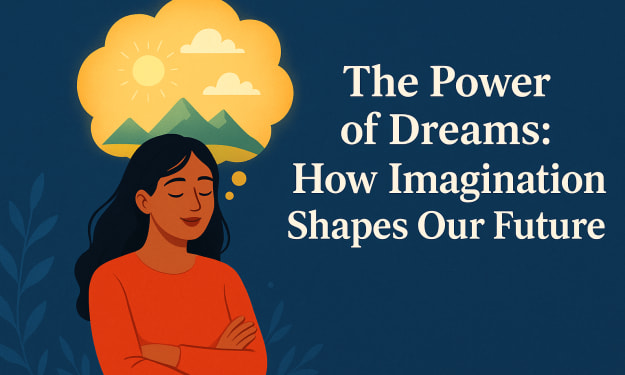
The Power of Dreams: How Imagination Shapes Our Future
Why Dreams Matter Dreams are more than fleeting images we see while we sleep. They are visions, hopes, and ideas that guide us toward building a meaningful life. Throughout history, imagination has been the starting point of every great invention, discovery, and social movement. Without dreams, we would remain stuck in the ordinary; with them, we can create the extraordinary.
By Waqas Ahmad about a year ago in Motivation
The Endless Climb: Building Resilience, Courage, and Hope in the Face of Life’s Mountains. Content Warning. AI-Generated.
Introduction: The Mountains We All Face Every human journey is marked by mountains — challenges that look impossible from the base, fears that tower over our confidence, and setbacks that make us question if the climb is even worth it. Yet, history and everyday life alike reveal a timeless truth: we are stronger than we think, braver than we believe, and more capable than we imagine.
By Chilam Wongabout a year ago in Motivation
Money Lessons They Didn’t Teach in School: What Rich Dad Poor Dad Can Teach You in 2025
Most Americans grow up learning that working hard, getting a degree, and finding a stable job is the key to success. But Robert Kiyosaki’s Rich Dad Poor Dad shows that this traditional approach can leave you financially trapped. The book isn’t just about money — it’s about mindset, choices, and building a future where your money works for you, not the other way around. In 2025, where the cost of living is rising and financial freedom feels more distant than ever, these lessons are more relevant than ever. Let’s break down the key ideas and how you can apply them today. --- The Tale of Two Dads Kiyosaki grew up with two father figures: Poor Dad – his biological father, educated and hardworking, but stuck in the rat race. Rich Dad – his friend’s father, less formally educated, but financially savvy and entrepreneurial. The contrast was shocking: the same country, same opportunities, but completely different outcomes. The lesson? Your mindset around money and wealth can shape your entire life. --- Assets vs. Liabilities: Know the Difference One of the most important lessons from the book is simple but rarely taught in schools: buy assets, not liabilities. Assets: Things that put money in your pocket (investments, rental properties, businesses). Liabilities: Things that take money out (expensive cars, gadgets, unnecessary debt). Many Americans focus on earning a salary and buying things that look rich but actually create debt. The key to financial freedom is building assets that generate passive income over time. --- Financial Education Beats Income Alone Kiyosaki emphasizes that school teaches you to earn and save, but not to invest and grow money. He calls this financial literacy — understanding how money works, taxes, interest, and investing. Even a small shift in knowledge can have massive impact: Learning about stocks and ETFs can turn $100 a month into a growing investment over years. Understanding taxes legally can save thousands annually. Starting a side hustle develops entrepreneurial skills that a job alone can’t teach. For Americans in 2025, financial education is no longer optional — it’s essential. --- Take Risks Wisely: The Rich Dad Mindset Rich Dad taught Kiyosaki to embrace calculated risks instead of avoiding them out of fear. Many people avoid investing or entrepreneurship because they think it’s “too risky,” yet staying in a comfortable job can be riskier in the long term due to inflation, stagnant wages, and lost opportunities. The rich don’t avoid risk; they manage it. They invest time in learning, analyzing, and planning before making financial moves. --- Work to Learn, Not Just to Earn Another core lesson: don’t just work for money — work to learn skills that increase your value. Poor Dad said: “Work hard, get a promotion, and save money.” Rich Dad said: “Learn accounting, investing, sales, and marketing — then make money work for you.” This is especially relevant in 2025’s gig economy. Learning diverse skills can create multiple income streams, from freelancing to starting a small business, giving you more control over your future. --- Mindset Over Money At the heart of Rich Dad Poor Dad is mindset. Many Americans think wealth comes from luck or high-paying jobs. Kiyosaki proves it comes from knowledge, courage, and action. Changing your mindset means: Believing you can grow your wealth. Seeing opportunities instead of obstacles. Understanding that money is a tool — not the goal. Small shifts in thinking create habits that can dramatically improve your financial life over years. --- Applying the Lessons Today Here’s how you can take action in 2025: 1. Track your money – know exactly where it goes each month. 2. Start a small investment – even $50–$100 a month builds over time. 3. Focus on assets – avoid unnecessary spending on things that don’t generate income. 4. Learn new skills – online courses, YouTube tutorials, and books can teach financial literacy. 5. Embrace calculated risks – start a side hustle, invest in stocks, or explore freelancing. Even small steps create momentum. Just like Kiyosaki learned from his Rich Dad, taking consistent action is what separates financial success from failure. --- Final Takeaway Rich Dad Poor Dad isn’t just a book about money. It’s a guide to thinking differently, acting differently, and creating freedom in your life. In America, where opportunities are abundant but financial traps are everywhere, adopting these principles can transform your 2025 and beyond. Your future isn’t determined by your salary or luck — it’s determined by your mindset, your habits, and the decisions you make every single day. Start small, learn continuously, invest wisely, and let your money work for you. In the end, your Rich Dad mindset can help you live a life of true freedom — and that’s a lesson worth sharing. ---
By Muhammad Riazabout a year ago in Motivation
The Scorpion’s Children – A Powerful Lesson About Parents and Gratitude. AI-Generated.
The Scorpion’s Children – A Lesson About Parents How a creature’s sacrifice reflects the reality of human life In the natural world, the scorpion gives us one of the most shocking examples of sacrifice. After giving birth, the mother scorpion allows her babies to climb onto her back. At first, this seems like protection — a mother carrying her young so they can survive. But the reality is heartbreaking.
By Rahman Bsmabout a year ago in Motivation
Unbreakable: How to Cultivate Strength, Courage, and Purpose in an Uncertain World. Content Warning. AI-Generated.
Introduction: Rising in a Shifting World We live in a time of constant change. Technology advances at lightning speed, careers evolve overnight, and personal challenges seem to arrive one after another. In the middle of it all, many people feel uncertain, lost, or overwhelmed.
By Chilam Wongabout a year ago in Motivation
My Thoughts On Writing In 2012
Introduction Since I was at school, I have wanted to write a book and this Seven Days In post from October 2012 shows that I still had not done it then, but recently I published this one in collaboration with Angie Livingstone, The Glittering Fox, which has been my most successful publishing venture so far.
By Mike Singleton 💜 Mikeydred about a year ago in Motivation
“7 Smart Money Moves to Secure Your Financial Future in 2025”
Introduction Money is more than just numbers in a bank account—it’s freedom, security, and the ability to live life on your terms. In 2025, with the global economy shifting rapidly, financial literacy has become not just important but essential. Whether you are a student, a young professional, or someone planning retirement, the decisions you make today will shape your financial tomorrow.
By ✦•············• Freelancer •············✦about a year ago in Motivation