social media
Motivation in the modern age of social media; keep your social media feed positive by following inspirational influencers.
How Beginners Can Start a YouTube Channel and Earn Money in 2025 . AI-Generated.
If you’ve ever watched a YouTuber living their dream life and wondered, “Can I really do that?” — the answer is yes. YouTube has completely changed in the last few years. It’s not just for vloggers and gamers anymore. Today, normal people — students, freelancers, even full-time moms — are building real income streams just by sharing what they love. So, if you’re starting from zero, this guide is for you. Let’s walk through everything step by step. 1. Start with What You Already Know You don’t need to be an expert to start a channel. You just need to share something you understand better than others. Maybe you’re good at explaining tech apps, maybe you cook great food, or maybe you just love making people laugh — that’s enough. The trick is to pick one clear topic and stay focused. Don’t try to do everything at once. In 2025, the most successful small creators are those who talk about one thing — clearly and consistently. 2. Use What You Have — Even Your Phone Forget the idea that you need a studio setup or expensive gear. Most successful YouTubers today started with just their phones. Clean your camera lens, sit near a window for good light, and use your phone’s mic or earphones. That’s all you need. Later, when you start earning, you can invest in a tripod, a ring light, or a better mic. But remember: your voice and story matter more than your camera.
By Najeem Ullahabout a year ago in Motivation
Beyond the Horizon: The Unseen Journey of Resilience, Hope, and Transformation. Content Warning. AI-Generated.
Life often feels like a labyrinth. You step forward, only to find new walls, unexpected turns, and obstacles you never anticipated. There are moments when you pause, doubting whether the next step is worth taking. Yet, those who reach extraordinary places are not those who never stumbled—they are those who rose again and again, with grit, hope, and vision.
By Chilam Wongabout a year ago in Motivation
Why Skills Matter More Than Degrees
I thought opportunities would arise after I finished school, A swarm of companies would form at long last, life would commence. Yet, the following day, reality set in. Time slipped away, Nothing came into my inbox and Refunds declined. Has not received any employment offers with Just silence. Meanwhile, I watched other people with no degrees, no formal education start online businesses, freelance, and make real money. That’s when I learned what no one told me in school: Degrees open doors. But skills keep them open. 1. The Real World Doesn’t Pay for Papers It Pays for Value You can frame your degree and hang it on your wall, but no one will pay you for it. People and companies pay for results. Think about it. A writer earns not because they studied literature, but because they can compose words that sell. A designer earns not because of a credential, but because they can create graphics that move people. A developer earns not because of a diploma, but because they can design something that works. Skills are the new currency and the more valuable your abilities, the more influence you have over your future. 2. The Market Has Changed But Most People Haven’t A few decades ago, degrees mattered because they were rare. Today, everyone has one with What’s unusual now is execution. It’s the individual who can turn a concept into something real. It’s the creator who learns online, practices daily, and generates proof of skill. That’s why freelancers, solopreneurs, and digital innovators are thriving. They didn’t wait for permission, they produced something valuable from scratch. If you have genuine abilities writing, design, marketing, coding the world doesn’t care where you learned them. 3. Skills Give You Freedom, Not Just Security A degree might get you a job. But a skill? It can build you a life. When you rely on your degree, your possibilities depend on others. When you rely on your skills, you generate your own possibilities. You can: Start freelancing. Write and earn on Medium. Build a personal brand. Launch a digital product. When you perfect a skill, you stop waiting for someone to give you a chance because you create one. 4. My Turning Point I remember the day it hit me. I was sitting at my old laptop, tired, broke, and unsure about what was next. I had done everything correctly, studied hard, graduated, applied but nothing was happening. So I stopped waiting. And I started learning. I taught myself how to write online, how to design content, and how to communicate ideas clearly. At first, no one noticed. But slowly, things started to alter. People began to connect with my work and that’s when I realized: Your degree can vanish. But your skills will always pay the bills. 5. Even Employers Are Changing Today, even firms like Google, Tesla, and IBM don’t require degrees. They care more about creativity, adaptability, and problem-solving. They don’t want to know what you studied, they want to know what you can do. So if you’re wondering how to stand out, ask yourself: What skill am I building that makes me valuable? Because if all you have is a degree, you’ll wait for opportunities. But if you have abilities, you’ll create them. 6. How to Build High-Income Skills even If You’re Starting from Zero Step 1 Pick One Skill Choose one that’s in demand for writing, design, marketing, coding, or video editing. Don’t learn everything. Focus on mastery. Step 2 Learn by Doing Take free tutorials, watch YouTube, join online challenges. But don’t simply consume. Write a post, Design something and Code a little project. Step 3 Show Your Work Create a portfolio. Post your work on Medium, LinkedIn, or your website. Let your skill speak louder than your résumé. Step 4 Keep Improving Ask for feedback and learn from mistakes. Every project makes you sharper, more confident, and more employable. 7. The Freedom That Comes From Skills Skills provide you something degrees rarely do control. Control over your time. Control of your income. Control of your direction. With talents, you don’t have to wait for permission, you become the permission. That’s what the future belongs to Not those with the most certificates, but those with the most competence. If you’re feeling stuck, maybe your degree hasn’t delivered the success you expected. Remember this. Your degree was the beginning step. But your skills are the bridges. You don’t need a perfect plan. You only need to start studying, practicing, and building. Because in this new society, skills are the true degree. Start today. Pick one talent that excites you. Spend one hour a day learning it. Turn your curiosity into a craft and your art into cash. Because one day, while others are still waiting for luck, you’ll be developing your own freedom, one skill at a time.
By Aliyu Ibrahim about a year ago in Motivation
AI Side Hustles 2025: Earn Money Online Using Just Your Phone. AI-Generated.
The world of freelancing is changing fast. You don’t need a fancy laptop, a professional setup, or years of experience anymore. In 2025, all you need is your smartphone and a few powerful AI tools to start earning real money online. 📱💰 From writing and design to voiceovers and videos, AI is opening up hundreds of new opportunities — especially for beginners who just want to get started. Here are 10 AI side hustles you can start today, using only your phone.
By Najeem Ullahabout a year ago in Motivation
Whispers of Rain and Daffodils
Whispers of Rain and Daffodils A Mountain Afternoon of Tea, Tranquility, and Golden Blooms The rain had begun as a whisper—soft, steady, and soothing—as if the mountain itself had decided to exhale. Elena stood at the window of her little wooden cabin, tucked high in the emerald folds of the hills. Outside, the world was washed in silver mist and muted greens, and a field of daffodils danced gently in the rain, their golden heads bobbing like a thousand cheerful nods. She smiled. This was the kind of day that some might call gloomy. But to Elena, it was perfect. She had always loved the mountains in the rain. They seemed more alive, more secretive—like the trees and stones were whispering ancient stories only the clouds could understand. She reached for her favorite shawl, a handwoven piece of sky-blue wool, and wrapped it around her shoulders before heading to the little kitchen. The kettle was already steaming, singing a gentle tune. She prepared a tray with care: her favorite porcelain teapot painted with tiny bluebells, two delicate cups, a small jar of wildflower honey, and a plate of freshly baked lemon shortbread. Even though she lived alone, she always set out two cups. One for herself, and one for the spirit of the day—rain, daffodils, peace—whatever you wanted to call it. There was comfort in ritual, in treating even a rainy afternoon as something worthy of celebration. Elena carried the tray to the window seat—a cozy nook filled with cushions and a thick wool blanket. The view was nothing short of magic. The daffodils shimmered in the mist like drops of sunlight caught in a dream. Beyond them, pine trees stretched toward the sky, their branches heavy with raindrops. She poured the tea and took a deep breath. The scent of bergamot and honey filled the room. Just then, a soft knock echoed from the front door. She blinked. Who could be visiting on a day like this? Opening the door, she found her neighbor, Thomas, standing there in a raincoat, holding a small bouquet of daffodils wrapped in twine. His gray curls were damp, and his eyes sparkled beneath the brim of his hat. “I saw your daffodils blooming and thought you might like a few for your table,” he said, smiling. Elena laughed softly, touched. “You brought the sunshine in with you,” she replied. “Come in. I’ve just made tea.” They settled by the window, sipping from their matching cups, watching the rain together in quiet companionship. The sound of the rain played like soft music on the roof, and time seemed to slow. “You know,” Thomas said after a while, “I think days like this remind us to pause. We’re always chasing something in the sun. But here, with the rain and tea and flowers… this is life, too. Maybe even the best part.” Elena nodded. “It’s like the world is whispering, not shouting. And when we listen, we hear things we’ve missed.” They sat for hours, talking sometimes, and sometimes simply watching. The rain never let up, but it never felt heavy. It felt like a gift. By late afternoon, the daffodils outside were brighter than ever, their petals holding tiny raindrops like jewels. Inside, the room glowed with soft lamplight, laughter, and the warmth of shared peace. As the kettle whistled again, Elena smiled to herself. There was something magical about rainy days in the mountains—something most people overlooked in their hurry for clear skies. But not her. Not anymore. She had tea, daffodils, the rain, and company. And in that quiet, golden-lit moment, everything was exactly as it should be.
By Muhammad Saad about a year ago in Motivation
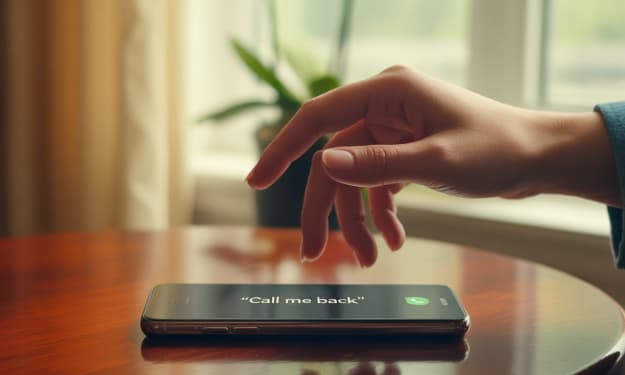
The Text I Never Replied To (And Still Regret)
Introduction It was an ordinary day, or at least I thought it was. My phone buzzed with a message from someone I never expected to hear from again. I saw the notification, glanced at it, and then — for reasons I can’t fully explain — I didn’t respond. It wasn’t out of anger, or lack of care. It was hesitation, fear, and the stubborn voice in my head telling me, “Maybe it’s better to leave things alone.” I didn’t know then that this single choice would echo through the months that followed, filling me with questions, “what ifs,” and a lingering regret that still stings today. --- The Message That Changed Everything The text was simple, almost innocent: > “Hey… I’ve been thinking about you. Can we talk?” It wasn’t a declaration, a confession, or even a demand. It was a quiet, tentative reach — a hand extended through words. But I hesitated. I scrolled past it. I told myself, “It’s too late. I’ve moved on. It’s not worth it.” And then, the day ended, and I never replied. What I didn’t realize at the time was that life doesn’t wait for perfect timing. Opportunities, moments, and connections slip by quietly, sometimes forever. --- The Regret That Followed Days turned into weeks, and weeks into months. I would randomly think about the text — and the person who sent it. My mind replayed every possible scenario: what if I had replied? What if we had talked? What could have happened? Regret is a strange thing. It doesn’t scream at you; it whispers. It creeps into quiet moments — on long walks, in the middle of the night, while staring at my phone. And it asks the same question every time: “Why didn’t you try?” I began to realize that my hesitation had been more than fear — it had been pride, stubbornness, and a fear of vulnerability. And I had paid the price for it. --- Why I Didn’t Respond Looking back, I understand why I didn’t reply. I was afraid: Afraid of rejection, even though I didn’t know the outcome. Afraid of reopening old wounds. Afraid of disrupting the life I had built since our paths diverged. Sometimes the things we avoid the most are the things that could change us the most. But fear can be persuasive, convincing us that safety is better than risk, even when the risk might lead to happiness. --- The Lessons I Learned Living with regret has a way of teaching lessons you don’t forget: 1. Timing is unpredictable. There is no “perfect moment.” Waiting often means missing out. 2. Vulnerability is strength. Hesitation out of fear is natural, but courage to respond can open doors you didn’t know existed. 3. Closure often comes from action. Ignored messages leave questions unanswered, but responding — even if the outcome is painful — gives clarity. 4. Regret can be a guide. It reminds you what you value and what you shouldn’t ignore next time. I can’t change the past. I can’t make that night’s silence disappear. But I can honor it by being braver with opportunities in the future. --- How I Healed From the Regret Healing doesn’t erase the regret. Instead, it teaches you how to live with it without letting it control you. I started writing letters I never sent, not to communicate with them, but to process my own feelings. I learned to forgive myself for hesitating, and to accept that sometimes life gives you lessons instead of do-overs. I also realized that communication — even when scary — is always better than silence. That one unread text reminded me that life is fleeting, people are fragile, and courage often comes in small, unexpected moments. --- A Warning — And a Hope If you’re reading this and you’ve been hesitating on a message, a call, or even a small step toward someone you care about, don’t wait. Fear is natural, but silence can last longer than any conversation ever would. Sometimes the risk of saying something is far smaller than the lifetime of wondering what might have been. And though I carry this regret, I also carry hope — hope that next time, I won’t hesitate. Hope that life will give me another chance, and I’ll be ready. Because the text I never replied to taught me one irreplaceable thing: love, connection, and honesty are always worth the courage it takes to say them. --- Final Thoughts Regret is a quiet companion, but it can be a teacher. That unread text will always remind me of a moment I lost, but it also reminds me of the courage I need in the future. I can’t go back, and I can’t undo it. But I can move forward — more mindful, braver, and ready to respond next time life reaches out. Sometimes, the hardest lesson is the one you learn from a message left unread.
By Akhtar aliabout a year ago in Motivation
She Said She Loved Me—Then Vanished Without a Word
Introduction Love can be sudden, passionate, and consuming. But heartbreak… heartbreak sneaks in quietly, leaving you with questions that have no answers. She said she loved me — and for a time, I believed it with every fiber of my being. Her words felt like promises, soft and unwavering. But then, without explanation, without goodbye, she disappeared. No calls, no texts, no closure. Just silence. I spent months replaying every conversation, every moment, every smile, searching for a clue I might have missed. And in that silence, I learned that love doesn’t always come with explanations, and sometimes the hardest lessons come without warning. --- The First Sign Something Was Wrong At first, it was subtle. A delayed reply here, a missed call there. I chalked it up to being busy, to stress, to life’s unpredictability. But soon, the messages stopped altogether. I sent texts, I called — nothing. The warmth in her words was gone, replaced by an empty void. I asked myself countless questions: Had I done something wrong? Did she stop caring? Was love ever real? The hardest part was knowing I couldn’t force her to stay. Love isn’t about holding on tightly — it’s about choosing to be together. And sometimes, the other person makes a choice without telling you. --- The Silence That Screamed Days turned into weeks. Weeks turned into months. And each day, I felt more invisible, more uncertain. The silence wasn’t just absence — it was a loud, echoing reminder of what I had lost. I realized that silence can be louder than words. It can communicate regret, avoidance, indifference — things that words often fail to express. I tried to fill the void with distractions: work, friends, hobbies. But the echo of her absence followed me everywhere. Every quiet moment reminded me that she had chosen to vanish without reason. --- The Lessons I Learned in Her Absence Pain has a strange way of teaching. It forces you to look inward when you’d rather look outward. 1. Love doesn’t guarantee permanence. Words like “I love you” can be beautiful, but they don’t always come with commitment. 2. Closure isn’t given — it’s created. I waited for answers that never came, but eventually, I had to forgive myself for needing them. 3. Self-worth doesn’t depend on another. Her disappearance made me question myself, but it also pushed me to rediscover my own value. Through the months of wondering, I realized that her vanishing wasn’t a reflection of my worth. It was a reflection of her own inability to face reality — to communicate, to care, to stay. --- Finding Strength in Letting Go The night I finally stopped waiting for her was the night I felt free. I sat alone, just like I had countless nights before, but this time, I didn’t feel desperation. I felt clarity. I understood that holding on to someone who chose silence was only chaining me to pain. Letting go wasn’t easy. Part of me wanted answers. Part of me wanted her back. But I also wanted peace — the kind that comes when you stop chasing someone who isn’t meant to stay. I whispered to myself, thank you — not for her love, but for the lessons her absence taught me. --- Rediscovering Myself After the Silence In the weeks that followed, I started to rebuild my life. I picked up old hobbies I had abandoned. I reconnected with friends I had taken for granted. I learned to enjoy solitude not as loneliness, but as freedom. I began to see that her disappearance created space — space to love myself, space to grow, space to notice who and what I truly deserved. Silence had once been a wound; now, it became a teacher. --- Love Will Come Again I won’t lie — the fear of trusting again lingers. But I’ve learned that love is worth the risk. Losing someone who disappears teaches you to cherish those who stay. It teaches you patience, empathy, and the strength to let go gracefully. When love returns, it will feel different — not desperate, not clinging, but grounded in understanding, respect, and mutual presence. And sometimes, that’s the only way love should exist: fully, without fear, and without silence. --- Final Thoughts If someone has ever vanished from your life without explanation, know this: their silence doesn’t define your worth. It doesn’t erase the love you gave or the lessons you learned. The night I finally stopped waiting for her, I gained something far more valuable than answers: peace. And in that peace, I discovered that life — and love — always has a second chance. Her disappearance hurt. But letting go healed me. And that’s a kind of love that no one can take away.
By Akhtar aliabout a year ago in Motivation
“The Night I Finally Let Go of You”
It was a quiet night — too quiet for a heart that had been screaming for months. The kind of night when the city lights feel distant, and even the air seems heavy with memories you’re trying to forget. I remember sitting by my window, scrolling through old photos, replaying our laughter, and wondering how something that once felt like home could now feel like loss. I told myself I had moved on. I deleted the pictures, blocked your number, and convinced everyone — including myself — that I was fine. But deep down, I wasn’t. I was holding on, quietly, in the spaces between pretending and healing. --- The Weight of What Was You don’t realize how much someone becomes part of your rhythm until they’re gone. It wasn’t just your absence I missed — it was the sound of your late-night calls, the way you said my name, the comfort of knowing that no matter how bad my day was, you were there. After the breakup, everything looked the same, but nothing felt the same. My favorite songs hurt. My favorite places became reminders. Even my favorite coffee didn’t taste right. Grief hides in the smallest things, and love doesn’t fade just because you tell it to. I thought time would erase you. But time doesn’t erase — it only softens the edges. --- The Night Everything Changed That night, I couldn’t sleep. My mind was noisy again — replaying our last fight, the silence that followed, the tears I never let you see. I got up, walked to the window, and looked out at the dark street. For the first time, I didn’t want to remember you — I wanted to understand you. Maybe we didn’t work out not because we didn’t love each other, but because love alone wasn’t enough. We were growing, changing, drifting — and neither of us knew how to hold on without losing ourselves. I realized that I had been clinging to an idea of you — the version that existed before the fights, before the distance, before the silence. But people aren’t meant to stay frozen in time. You changed. I changed. And that was okay. So that night, instead of fighting the memories, I let them come. Every smile, every mistake, every word — I replayed them not with pain, but with gratitude. You were once my favorite chapter, and for that, I was thankful. --- Letting Go Without Saying Goodbye Letting go isn’t about forgetting. It’s about accepting that some stories don’t need an ending to be complete. We always talk about closure as if it’s something someone gives us — but the truth is, closure comes the moment you stop needing answers. That night, I whispered your name one last time — not in sadness, but in peace. I told you, in my heart, thank you. Thank you for teaching me how to love. Thank you for showing me who I am when I care deeply. And thank you for leaving when love turned into longing — because it forced me to learn how to stand on my own. For the first time in a long while, I didn’t cry. I didn’t ache. I just breathed — deeply, freely. --- What I Learned Healing isn’t a straight line. It’s messy, silent, and full of nights that test your strength. But one day, you wake up and realize you’re not checking your phone anymore. The songs stop hurting. The memories lose their sting. You start noticing little things again — how sunlight feels on your face, how laughter sounds without the heaviness, how peace feels when you stop chasing it. Letting go didn’t mean I stopped loving you — it meant I started loving myself again. And that was the night I got my heart back. --- If You’re Still Holding On If you’re reading this and still waiting for someone who’s already gone, I want you to know this: You don’t heal by forgetting them. You heal by forgiving yourself for holding on too long. You heal by realizing that love doesn’t always mean forever — sometimes, it just means “thank you for helping me grow.” The night I finally let go of you wasn’t sad — it was freeing. It was the night I stopped asking why and started saying maybe it was enough just to have loved you once. And that was more than enough.
By Akhtar aliabout a year ago in Motivation
When Life Closed Every Door, I Built My Own
I never thought I’d start over in my late twenties. I had plans, dreams, and a life that felt safe — until everything fell apart within weeks. In 2021, I lost my job. The company I worked for shut down during the pandemic. One morning, I woke up to an email that simply said, “We’re sorry, but we have to let you go.” I stared at the screen, heart racing, not believing that a few sentences could erase years of effort. Bills piled up. My savings dried out faster than I imagined. Friends who once called every day started disappearing one by one. And the hardest part? Watching my parents worry silently, pretending they believed me when I said, “I’ll figure something out.” --- The Days That Broke Me There were nights I couldn’t sleep — scrolling through job listings, sending applications, and refreshing my email like my life depended on it. Days turned into weeks. Weeks into months. I remember one night, sitting in the dark, staring at the blinking cursor on my old laptop. My reflection looked tired — hopeless. I whispered to myself, “Maybe this is it. Maybe I’m not meant to make it.” But deep down, something small — something stubborn — whispered back: “Try one more time.” --- A Chance Encounter A few days later, while aimlessly scrolling YouTube, I stumbled on a video about “earning online.” I laughed at first. I thought it was just another scam. But curiosity made me watch anyway. The guy in the video wasn’t showing off cars or mansions — he was just explaining how he built small income streams through affiliate marketing. Something clicked. I didn’t have a job. I didn’t have money. But I had time — and maybe, just maybe, I could learn. I started researching every night. I read blogs, joined forums, and took free courses. My eyes burned from staring at the screen, but my heart felt alive again. I was learning something new. --- The First Failure I decided to try Amazon affiliate marketing. I created a small Pinterest account and started posting product pins — the kind of stuff I saw others doing. Nothing fancy. Just consistency. The first month, I earned $0.00. The second month, $0.75. It felt laughable. But that $0.75 was everything to me. It wasn’t about the money. It was proof — that the system worked, and I could make it work better. So I doubled down. I started creating better visuals, writing real reviews, and focusing on helping people instead of selling. Slowly, things started changing. --- Building My Own Door By the fourth month, I made around $90. It felt surreal. I remember withdrawing that first amount and just staring at it in my account, whispering, “I did this.” No boss. No office. No fancy degree. Just persistence and late nights. I realized something powerful that day — When life closes every door, maybe it’s trying to tell you to stop knocking. To start building your own. So I kept going. I learned design. I started my own small blog. Later, I opened a YouTube channel sharing what I learned. I wasn’t an expert — just a guy who refused to quit. And people connected with that honesty. Within a year, I wasn’t just surviving — I was finally living on my terms. --- The Moment That Changed Everything One afternoon, I was sitting with my mom in the living room. She looked at me and said softly, “You look peaceful these days.” That’s when it hit me — peace wasn’t something I found; it was something I built, one late night at a time. I didn’t become a millionaire. I didn’t buy a sports car. But I rebuilt my life — one decision, one failure, and one quiet victory at a time. --- What I Learned 1. Rock bottom isn’t the end. It’s the solid ground you can rebuild from. 2. Consistency beats talent. I wasn’t the smartest or the fastest — I just didn’t stop. 3. Comparison kills progress. Everyone’s journey is different; the only person you should compete with is your past self. 4. Small wins matter. $0.75 may not change your life, but it can change your mindset. --- Looking Back Sometimes I think about the version of me who almost gave up. The one sitting in the dark, wondering if life had any meaning left. I wish I could tell him that one day he’d be free — not because someone opened a door for him, but because he learned how to build his own. If you’re reading this and you feel stuck, I want you to remember something: No situation is permanent. No pain lasts forever. And even when every door seems closed, you still have the power to create one — with your bare hands and your unshakable will. --- Because the truth is simple: Sometimes life breaks you, not to destroy you — but to rebuild you into the person you were meant to become.
By Umar Farooqabout a year ago in Motivation