social media
Motivation in the modern age of social media; keep your social media feed positive by following inspirational influencers.
Don’t Be a Slave to Attitude
Don’t Be a Slave to Attitude In a world where first impressions are often deemed the most lasting, the attitude we carry significantly shapes how we navigate our daily lives and interact with others. Attitude acts as a lens through which we perceive our experiences and relationships; it can be our greatest asset or our most formidable obstacle. When we become slaves to a negative attitude, we limit our potential and the richness of our experiences. Conversely, cultivating a positive mindset opens doors, nurtures connections, and enhances our overall quality of life. The Weight of Negativity Negativity is a heavy burden. It can manifest in various forms, from cynicism and pessimism to entitlement and anger. Each of these negative attitudes has the potential to close off opportunities, alienate loved ones, and create an impenetrable barrier between ourselves and the world around us. For instance, consider a person who has faced repeated failures in their career. Instead of viewing these setbacks as learning experiences, they develop a belief that they are destined to fail. This negative attitude not only saps their motivation but also alienates colleagues and friends, reinforcing their sense of isolation. Take the story of Mark, a talented artist whose work was consistently rejected by galleries. Initially, he was filled with hope and determination. However, after numerous rejections, he began to internalise a narrative of failure. His attitude shifted from one of creativity to bitterness. Mark would often berate himself for not being good enough, which led him to withdraw from the artistic community he once cherished. Instead of seeking constructive feedback, he shunned the very connections that could have supported his growth. However, the moment Mark decided to change his attitude marked a turning point in his life. He began attending art workshops and engaging with fellow artists, opening himself up to new perspectives. Through this transformation, he not only improved his craft but also forged meaningful relationships, eventually leading to the successful exhibition of his work. The Power of a Positive Mindset The opposite holds true for those who embrace a positive attitude. A constructive mindset empowers individuals to face challenges head-on, seeing them as opportunities for growth rather than as insurmountable obstacles. Take, for example, Sarah, a single mother who faced immense struggles after losing her job. Rather than succumbing to despair, she focused on the possibilities that lay ahead. With an unwavering belief in her ability to overcome adversity, Sarah began exploring freelance opportunities and taking online courses to enhance her skills. Her positive attitude attracted potential clients, and before long, she had built a successful freelance career. Not only did she provide for her family, but she also became a role model for her children, teaching them the value of resilience and optimism in the face of life’s challenges. Transforming Attitudes Changing one’s attitude is not a simple task; it requires conscious effort and practice. One effective strategy is to cultivate gratitude. By acknowledging the positive aspects of our lives, we can shift our focus away from negativity. Keeping a gratitude journal can be particularly beneficial, as it allows us to reflect on and document our blessings daily. Another approach is to surround ourselves with positive influences. The people we spend time with can have a profound impact on our attitudes. Engaging with those who uplift and inspire us can serve as a catalyst for positive change. For example, after a difficult period, David found solace and encouragement in a community group dedicated to personal growth. Surrounded by individuals who shared their challenges and triumphs, he began to shed his cynical outlook. The support and encouragement from this community transformed David’s perspective, allowing him to embrace hope and pursue his dreams once more. Moreover, mindfulness and self-compassion are crucial in this journey. Practising mindfulness helps us become aware of our thoughts and feelings without judgment. When negative thoughts arise, we can acknowledge them and choose not to act upon them. Self-compassion allows us to treat ourselves with kindness during difficult times, reminding us that it is okay to struggle and that we are not alone in our experiences. A Call to Action Choosing to reject a negative attitude and embrace positivity is a powerful act of self-liberation. It allows us to break free from the shackles of despair and opens our hearts to new possibilities. The transformation may not happen overnight, but with persistent effort and a commitment to change, we can shift our perspectives and redefine our narratives. In a world filled with challenges, we must remember that our attitude shapes our experiences. Rather than being slaves to negativity, let us strive to cultivate an attitude of hope, resilience, and compassion. By doing so, we can create a more fulfilling life for ourselves and inspire others to do the same. As we embark on this journey, let us remind ourselves that while we may not always have control over our circumstances, we can always choose our attitude. In this choice lies our greatest freedom. Embrace it.
By Dipak Pawar2 years ago in Motivation
How to Get Any Woman and Make Her Fall in Love with You (Adviсes for Men) | Stoicism
Let me tell you something that no one else will: if you want a woman to fall in love with you, you have to master yourself before she will. The truth is that most men are not very good at this. Forget everything you've been taught about dating: it's not about giving expensive gifts or looking like the guy in the magazine.
By Timothy Emeh2 years ago in Motivation
Generosity of Spirit: What We Can Learn from Ratan Tata
Ratan Tata, the esteemed former chairman of the Tata Group and a prominent figure in Indian industry, died on Wednesday at the age of 86. His life exemplified qualities such as compassion, resilience, humility, and perseverance, serving as an inspiration for those in public service. The Taj Mahal Palace Hotel, founded by Ratan Tata's grandfather in 1903, was targeted during the 2008 Mumbai attacks. In response, Ratan Tata dedicated himself to assisting the families of the hotel employees who were killed or injured, promising to provide lifelong salaries to the families of those who lost their lives, as reported by the BBC.
By Hridya Sharma2 years ago in Motivation
Take Your Steps Forward
Take Your Steps Forward Life is a journey, and at every stage, we are faced with choices that define our path. Some steps are easy, familiar, and comfortable, while others are terrifying, filled with uncertainty and fear. Yet, it is those uncertain steps that often lead to the most profound growth, the deepest self-realisation, and the most meaningful changes in our lives. The act of moving forward, of taking that leap into the unknown, is both an act of courage and faith, a decision to trust in oneself and in the beauty of what lies ahead.
By Dipak Pawar2 years ago in Motivation
How To Deal With A Teenager That Doesn’t Care: 8 Proven Ways
Parenting is difficult enough, but dealing with a kid who appears to be unconcerned can make it even more difficult. Whether it's about school, family, or their own future, their apparent apathy might leave you feeling annoyed, helpless, and confused about what to do.
By Teenage Parenting2 years ago in Motivation
Digital Marketing for Small Business: How to Get Started in Florida
In today's digital world, a robust online presence is essential for businesses of all sizes. Understanding how to utilize digital marketing effectively might be the difference between small businesses in Florida struggling to stay competitive and succeeding. This post will help you use digital marketing for small business in Florida, from creating a local presence to using the right tools and strategies.
By Josephine Thomas2 years ago in Motivation
Revolutionize Your Business: A Practical Guide to Dominating the Future
Welcome to our weekly series, The Winning Entrepreneur: Your Weekly Guide to Success, a program designed for ambitious entrepreneurs and people who want to turn their ideas into successful businesses. Last week we talked about Leadership and Team Management. This week we’re talking about Innovation and Adaptation: Anticipating the Future of Your Industry. Are you ready to take your company into the future? Here’s how you can do it in a practical and effective way.
By Andrea Zanon2 years ago in Motivation
TEARS AND SMILES
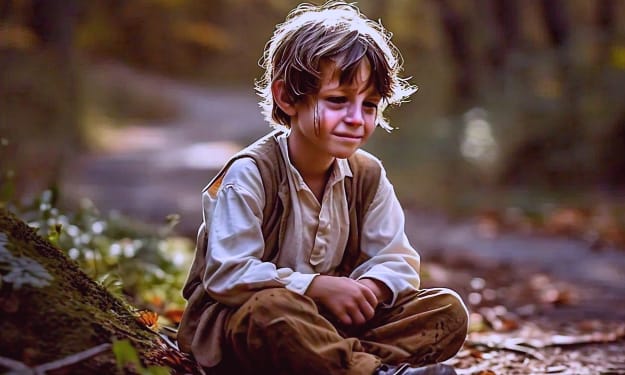
**Tears and Smiles: A Story of Light and Shadow** In a village nestled between two tall mountains, where the sky seemed to kiss the earth, lived a boy named Arjun. The villagers often saw him sitting alone by the river, watching the water ripple with the winds, as though speaking to it. There was something in his eyes that caught everyone’s attention—a delicate dance between tears and smiles. Arjun wasn’t always this way. As a child, his laughter echoed across the village. His smile was like the first ray of sunshine after a storm, lighting up everyone who crossed his path. But life, with all its turns and twists, had carved paths of tears on his young face. The villagers often wondered what had changed the cheerful boy, but they never dared to ask. Arjun’s mother, Mira, was the pillar of his world. Her love enveloped him like a warm blanket on cold nights, and her laughter was the music that filled their small home. She had an incredible gift—her smile. No matter how hard life got, Mira’s smile never wavered. It wasn’t just a simple stretch of lips but an expression of strength, of resilience. The village admired her, for Mira’s life wasn’t easy. Arjun’s father had left them when he was barely three years old. The reason was a mystery no one ever spoke of, but Mira bore the weight alone. She worked tirelessly in the fields, day after day, to ensure Arjun had everything he needed. She shielded him from the world’s harshness, always telling him, “My tears are hidden in my smiles, and my strength comes from your happiness.” Years passed in this quiet rhythm until one fateful night when the village was struck by a terrible storm. The winds howled like wolves, tearing at the trees and roofs. Arjun and his mother were safe inside their small home, but the storm outside mirrored the storm in Mira’s heart. She had fallen ill weeks before, and though she tried to hide it from Arjun, the sickness began to wear her down. That night, as the storm raged, Mira’s condition worsened. She called Arjun to her side, her voice barely a whisper. Tears filled her eyes for the first time in years, but there was a smile on her face still. “Arjun,” she said, her hand resting on his cheek, “life is a dance between tears and smiles. You must never forget that both have their place in this world.” Her words clung to him, even as her breath faltered and her eyes closed forever. Arjun sat by her side, feeling the weight of the world crash over him. He wanted to cry, but the tears didn’t come. He wanted to smile, to honor her last wish, but his lips wouldn’t move. Instead, he sat there, caught between the two, feeling the raw ache of life’s cruelty. For days after Mira’s death, Arjun wandered the village, his heart a broken vessel, leaking sorrow with every step. He went back to the river where he used to laugh and play, but now it was only a mirror to his pain. The villagers watched him, their own hearts heavy with sympathy. But Arjun kept his distance, drowning in his own grief. One day, as he sat by the river, an old man approached him. He was a stranger to the village, a traveler with eyes that seemed to have seen the world’s every joy and sorrow. He sat beside Arjun without a word, staring at the river’s gentle flow. After a long silence, the old man spoke. “The river,” he said, “is like life. It flows endlessly, sometimes fast, sometimes slow. It reflects the sky, just as we reflect the world around us—our tears and our smiles.” Arjun remained silent, unsure of what to say. “Young boy,” the old man continued, “I can see your heart is heavy. But do not be afraid of your tears. They are not a sign of weakness, but of love. And love, whether in joy or sorrow, is the strongest force in this world.” Arjun looked at the old man, his eyes filling with tears for the first time since his mother’s death. The dam inside him broke, and he cried—cried for his mother, for the life they had shared, and for the future that seemed so uncertain without her. The old man placed a hand on his shoulder, not to stop the tears, but to let them flow. When the tears subsided, Arjun felt a strange sense of relief. The grief was still there, but it was lighter, less suffocating. The old man smiled at him. “Now,” he said, “let your tears water the seeds of your strength. Your mother’s smile lives in you. Carry it forward, not as a mask for your pain, but as a reminder that both joy and sorrow have their place in your heart.” Arjun nodded, feeling the truth in the man’s words. As the sun began to set, casting golden light over the river, Arjun felt something shift inside him. He stood up, his heart still aching, but no longer overwhelmed by the weight of his grief. He knew he would carry his mother’s memory with him always, not just in the tears he shed but in the smiles he would find again, someday. The old man watched as Arjun walked away, his back a little straighter, his step a little firmer. The traveler smiled to himself, knowing that the boy had taken his first step toward healing. The village would soon see Arjun’s smile again, though it would be different this time—deeper, more knowing, touched by the understanding that life is, and always will be, a balance of tears and smiles. And so, life continued in the village. The seasons changed, the river flowed, and the mountains stood tall. But now, whenever the villagers saw Arjun by the river, they saw not just a boy weighed down by loss, but a young man who had learned the truth of life’s rhythm—a rhythm that dances between the light of smiles and the shadow of tears.
By Daniel Sam2 years ago in Motivation
The Secret List of Teenage Girl Insecurities: Unlock the Truth
Introduction: The Hidden Struggles of Teenage Girls Hey there! Have you ever thought about what young girls really think? There are a lot of insecurities, and many of them fight behind the pictures, laughs, and drama. Let us shed some light on this problem that is too often ignored.
By Teenage Parenting2 years ago in Motivation
Unlock the Most Powerful Mindset for Success—Don’t Wait!
Introduction: Unlocking The Secret Sauce Are you sick of feeling like you can’t move forward while other people seem to be moving at lightning speed? Now, let’s gear up and talk about the most powerful mindset for success. The way you think can really change everything.
By Bloom Boldly2 years ago in Motivation
The Dual Facets of Life
The Dual Facets of Life In a small, picturesque town nestled between rolling hills and winding rivers, there lived a man named Arjun. He was a humble man, known by everyone in the village for his quiet demeanor and his ability to blend seamlessly into the environment. His house, standing on the edge of the village, was a modest structure, adorned with a small garden that bloomed with vibrant flowers. The house itself was simple, a reflection of the simplicity of Arjun’s outward nature. But what people saw outside, what the world witnessed, was only one facet of Arjun’s life. Inside the walls of his home, behind closed doors, was a different story altogether. Outside his home, Arjun was the perfect picture of politeness and composure. He greeted everyone with a smile, always offered help to those in need, and was the first to step forward during any village gatherings or festivals. His nature was kind and warm, his words thoughtful and measured. The villagers adored him, often speaking of his calm and serene presence. For years, they had admired his patience and gentle spirit, thinking of him as someone who rarely had a bad day, someone who had mastered the art of life. The children would run up to him, asking him to tell stories of his travels, while the elderly respected him as a man who understood the deeper truths of life. However, the Arjun that existed outside his house was not the same Arjun within the confines of his home. The moment he stepped through the door of his modest house, something changed. The weight of the world seemed to lift off his shoulders, and his true nature emerged. The calm exterior was shed like an old garment, and he revealed a side of himself that no one in the village knew. Inside, Arjun was not the quiet, collected man everyone thought him to be. He was passionate, intense, and full of dreams and desires that he rarely spoke of. At home, his small garden transformed into a place where he could express his love for the wildness of nature. He would spend hours nurturing the flowers, talking to them as though they were his closest friends. His laughter would echo across the rooms as he joked with his wife, Shalini, and their children. His passion for life, so carefully hidden outside, burst forth in all its brilliance. The house would come alive with his energy, with his vibrant stories, and with the music he loved to play on his old harmonium. Shalini often teased him, calling him her "two-faced husband," but she did so with a smile that held no malice. She understood better than anyone the need for balance, the need for a duality in life. "One cannot be the same person everywhere, all the time," she would say. "The world demands patience and restraint, but the home is where we are free to be ourselves." Indeed, Arjun’s children adored the man who existed inside the house. He would spend evenings playing with them, inventing games, and encouraging them to explore their imaginations. He was not the disciplined man of the village here; he was a father who embraced the messiness of life, the chaos of children’s laughter, and the beauty of spontaneity. He believed that inside the home, one’s true nature should be allowed to flourish, to bloom without the restrictions of societal expectations. But it was not just joy and laughter that marked the difference between the Arjun of the village and the Arjun of the home. Inside his house, he allowed himself the vulnerability that he could never show outside. There were days when he felt the weight of the world pressing down on him, when the responsibilities of providing for his family or maintaining his standing in the village felt overwhelming. In these moments, he would sit by the window, staring out at the distant hills, his thoughts heavy and his heart troubled. But Arjun never let these moments spill over into his life outside. He believed that the world outside demanded strength, demanded composure. He had seen too many men falter, too many lives unravel when the burdens of personal troubles were brought into the public eye. For Arjun, there was a sacredness in keeping the two parts of his life separate. His vulnerability was reserved for the home, where he was surrounded by those who loved him unconditionally, where he could express his fears and doubts without judgment. One evening, after a particularly hard day at work, Arjun sat on the porch of his house, watching the sunset. His son, Ankit, came and sat beside him. There was a rare silence between them, one that spoke of shared understanding. Finally, Ankit spoke, his voice soft, "Baba, why are you so different when you're outside? The way you are with us here, it's like you're a different person out there." Arjun smiled, placing a hand on his son’s shoulder. "It’s because the world outside is not our own, my son," he began. "Outside, we must wear a mask, not because we are being false, but because the world requires it. We need to be strong for others, show them stability, because that is what helps society function. But here, at home, among our family, we are free. Free to laugh, free to cry, free to be as we are, without worrying about how it will affect others. The house is where our soul resides, while outside, we must guard that soul with layers of protection." Ankit thought about his father’s words for a while, and then nodded slowly. "So, it’s okay to be different?" he asked. "Yes," Arjun replied, his voice filled with warmth. "It’s not just okay; it’s necessary. To survive outside, we must sometimes hold back parts of ourselves. But inside the home, never hide who you are. Let your spirit run free here. This is where we gather strength, where we recharge. So, when we step outside again, we are ready to face whatever comes our way." The lesson stayed with Ankit as he grew older. He, too, learned the art of balancing his inner and outer worlds, understanding that the two were not in conflict, but rather two sides of the same coin. He watched his father navigate life with grace and resilience, and understood that strength wasn’t just about being tough; it was about knowing when to show your true self and when to protect it. As the years passed, the village continued to admire Arjun for his calm and patient demeanor. Little did they know that the true Arjun, the passionate, vibrant, and deeply emotional man, existed in the warmth of his home. And that was how it was meant to be—because some aspects of one’s nature are too precious, too sacred to be shared with the world outside. In the end, Arjun’s life was a testament to the idea that one’s nature could be both calm and stormy, gentle and fierce, and that both were equally important. Outside, he was the serene river, but inside his home, he was the roaring ocean, full of life, depth, and beauty.
By Dipak Pawar2 years ago in Motivation