social media
Motivation in the modern age of social media; keep your social media feed positive by following inspirational influencers.
Metamorphosis:
Hello! This is the Journey of Transformation Once upon a time, a corner of the world, a small caterpillar finds itself on a leaf, feeling insignificant and trapped. With fear of the world, it remains unaware that within it lies great latent potential—a spark of transformation destined to flourish. This marks the beginning of the butterfly's journey, a story of metamorphosis, resilience, and beauty.
By Nicole Nieves2 years ago in Motivation
The Day My Dreams Took Flight
The sun was simply starting to look into the great beyond, projecting its brilliant beams into my little, jumbled room. I lay conscious with considerations representing things to come going through my mind. I have consistently longed for an existence of extravagance, a day-to-day existence where money was no object. I needed to have the option to purchase anything I needed, venture to the far corners of the planet, and help those less lucky.
By Iftikhar Akram2 years ago in Motivation
Why Saving Money Important for Me The Top Reasons Are . Content Warning. AI-Generated.
Start Saving Money Today With These Top Reasons Saving money isn't just about setting aside cash for the next rainy day. It is building stability, freedom, and opportunity in your future. So whether it is saving money for a specific thing or just padding a little financial cushion, no doubt the savings benefits are undeniable. Let's take a closer look at the top reasons to save money now and how this will positively impact your life.
By Kajal Singh2 years ago in Motivation
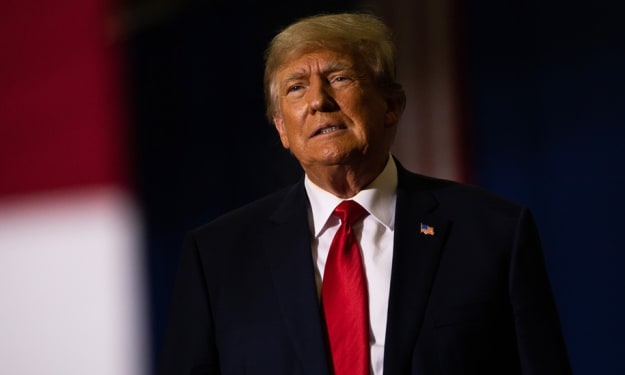
A Bogus New Rationale for Trump’s Economic Agenda
His allies now claim that he wouldn’t really impose massive global tariffs if elected. But the uncertainty created by threats is bad enough. By Scott Lincicome Perhaps the most levelheaded defense of Donald Trump’s misguided plan for steep global tariffs is that they’ll never be imposed. Trump surrogates have lately been assuring the business world that the former president will, if elected, use merely the threat of across-the-board import taxes of 10 to 20 percent to pressure other countries to lower their own barriers to American goods. The result: freer trade among participating nations, and more revenue for American companies, without ever firing anything more than a warning shot.Howard Lutnick, a billionaire co-chair of the Trump transition, recently made a version of this argument on CNBC, using the auto industry as an example. “If we said, ‘We’re going to tariff you the way you tariff us,’ do you think they’re going to allow Mercedes and all these Japanese companies and Porsches and BMWs to all of a sudden have 100 percent tariffs in America?” he said. “Of course not. They’re going to come and negotiate, and their tariffs are going to come down, and finally Ford and General Motors are going to be able to sell in these places.” The idea that the White House can use import restrictions to affect foreign governments’ policies is not entirely without precedent. Research shows that from the 1970s through the early 1990s, various administrations sometimes succeeded in prying open foreign markets by threatening tariffs or other protectionist measures. A reasonable case can even be made that Trump’s 2019 promise to slap 10 percent tariffs on Mexican imports helped push our southern neighbor to cooperate more fully on restricting illegal immigration. Trump’s new global tariff threat, however, would likely be far less successful, and would impose significant costs even if the tariffs were never applied. The “just a threat” strategy sounds nice in the abstract but in reality suffers from fatal flaws: It ignores not only America’s checkered history of such gambits but also the economic damage that threats alone can inflict on the American and global economies. The occasional tariff-threat success stories are exceptions to a broader negative trend. In a comprehensive analysis of every U.S. unfair-trade investigation from 1975 to 1993—91 cases targeting foreign discrimination against U.S. goods, services, and intellectual property—Kimberly Ann Elliott and Thomas O. Bayard found that American efforts to pressure foreign countries to open up their markets were successful less than half of the time. The authors’ definition of “success” was generous to U.S. officials: It could include just the partial achievement of U.S. objectives and result in no actual trade liberalization. Even then, the wins occurred mostly when a single country was dependent on the U.S. market—a situation that applies to only a few countries today—and during a short period in the mid-1980s, when the U.S. had far more economic heft in global markets than it has now. (China in 1991, for example, shipped almost one-third of its exports to the United States; today, the number is about 15 percent.) When the U.S. government actually applied trade restrictions, moreover, the strategy worked only twice in 12 tries. In the other 10 cases, foreign governments did not acquiesce to American demands; despite new U.S. protectionism, they kept in place the policies and practices to which Washington objected.Trump-era trade actions have encountered similar difficulties. No nation lowered its tariffs on U.S. goods in response to tariffs imposed, or merely threatened, during the Trump administration, and most of those U.S. tariffs remain in force today. Even worse, several foreign governments—in China, the European Union, India, Turkey, Canada, Mexico, and Russia—retaliated against U.S. exports, which in some cases remain depressed. Since then, Trump’s “Phase One” deal with Beijing, signed in early 2020 and hailed as proof that the tariffs were working, because China had agreed to buy American farm goods and open certain domestic markets, has fizzled out; China has largely failed to follow through. And, as the current U.S. Trade Representative Katherine Tai just confirmed, the China tariffs have not changed Chinese government policies or behavior. Overall, a recent analysis of the Trump-era retaliation shows that “a one percentage point increase in foreign tariffs was associated with a 3.9 percent reduction in U.S. exports.” So Trump’s previous strategic tariff experiment resulted in less trade, not more, and America is still paying for it.Just the threat of a tariff also can inflict considerable economic costs, because it increases uncertainty for business, which has been found to reduce U.S. investment, output, and hiring. An unpredictable policy environment gives private companies an incentive to stay out of the U.S. market until policy is clarified, resulting in a lower level of current economic activity overall. Numerous studies have confirmed these effects, but they’re really just common sense: Who would want to wager millions of dollars on a new U.S. facility that might soon face higher production costs, or be unable to sell products abroad, thanks to possible tariffs? Various measures of what economists refer to as “trade policy uncertainty,” or TPU, spiked during Trump’s time in office as he routinely announced or teased radical changes to U.S. tariff policy on Twitter. According to one index, average TPU during the Trump administration was the highest recorded under any president since 1960, when the series began. A study in the Journal of Monetary Economics estimated that the increase in Trump-era uncertainty reduced aggregate U.S. investment by $23 to $47 billion in 2018 alone.American trade law compounds this uncertainty by giving the president broad and ambiguous power to quickly impose new tariffs without congressional input or approval. As my Cato Institute colleague Clark Packard and I detail in a new paper, following the Smoot-Hawley tariff debacle of the 1930s—in which Congress dramatically increased U.S. protectionism and thereby set off a global trade war that deepened the Great Depression—the legislative branch delegated much of its constitutional trade authority to the executive. Congress assumed that the president, with national constituency and foreign-affairs responsibilities under Article II, was less likely to repeat Smoot-Hawley. This approach to U.S. trade policy making worked reasonably well for 80-plus years, but Trump (and, to a lesser degree, Joe Biden) exposed a key flaw: The laws at issue are so broad and ambiguous as to allow a president to unilaterally impose or maintain damaging tariffs on dubious grounds.Over the past seven years, moreover, U.S. courts have rejected every challenge to the Trump-era tariffs on steel, aluminum, and Chinese imports, and to the laws under which the tariffs were imposed. Judges have proved to be particularly deferential to the executive branch in cases alleged to involve “national security,” a term so broad and undefined that one Trump-administration lawyer famously refused to concede that it couldn’t apply to imported peanut butter. Given this precedent, the next president will effectively have a green light to impose new tariffs—and dictate U.S. trade policy—with little concern that the other branches of government will stand in the way. Any such tariffs, as well as their size and scope, will thus come down to the whims of one person in the Oval Office, who might be Trump. Future courts might find global, across-the-board tariffs to be fundamentally different from past actions and thus beyond the bounds of whatever law was used to justify them, but that outcome is far from guaranteed. Until Congress changes the law, trade policy will be vulnerable to abuse and will therefore continue to thicken the fog surrounding trillions of dollars in annual U.S. trade.That fog is, unfortunately, again building up as trade-policy uncertainty has climbed back to levels not seen since Trump’s time in office. His victory next week would likely boost uncertainty even more, with inevitable collateral damage to the U.S. investment climate and economy. Indeed, with reports of corporate angst and delayed investment already proliferating, the damage appears to have already begun.
By Abd Ullah2 years ago in Motivation
The 6 Stages of Grooming Adults: Recognizing the Signs and Protecting Yourself
Predators use grooming as a way to take advantage of, control, and influence their prey. Grooming is usually talked about in terms of kids, but it's just as important to know how it affects adults. Adults can be groomed in a number of settings, such as work ties, friendships, and close relationships. People can protect themselves and others by understanding the steps of grooming. We'll go over the 6 steps of grooming adults below, along with some useful tips and examples to make people more aware.
By Bloom Boldly2 years ago in Motivation
The Rise of the TikTok Travel Challenge: Exploring Hidden Gems Around the World!
In a world where travel has become more accessible than ever, social media platforms like TikTok have played a major role in inspiring people to explore new destinations. One of the most recent trends to take over the platform is the TikTok Travel Challenge, a viral movement where users share their personal travel experiences, showcasing hidden gems and breathtaking destinations that don’t always make the typical tourist lists.
By TrendifyNews2 years ago in Motivation
The Paradox of Our Time: Fighting Loneliness in a Connected World
Introduction: A World More Connected Yet Apart We live in an age where technology has bridged vast distances, allowing us to communicate in real-time across the globe. Yet, paradoxically, loneliness has become a silent epidemic. Despite the constant notifications, video calls, and scrolling through social media feeds, many people report feeling isolated, unfulfilled, and unseen. This paradox of our time raises a poignant question: how can we be surrounded by connectivity and still feel so disconnected?
By mureed hussain2 years ago in Motivation
Why Happiness Eludes Those Who Seem to Have It All
Why Happiness Eludes Those Who Seem to Have It All Introduction Isn’t it strange? In a world where people from wealthiest nations seemingly "have it all," happiness often feels elusive. Meanwhile, individuals in less affluent regions sometimes radiate joy with so much less. Why is this? The answer lies in how we perceive our lives, often clouded by comparison, unrealistic standards, and a lack of gratitude. The Happiness Paradox Contrasting Happiness in Wealthy vs. Less Wealthy Nations Wealthy nations offer comfort, technology, and opportunities, but these don’t necessarily translate into happiness. People often feel pressured to meet higher standards of success and perfection, which can lead to dissatisfaction. The Illusion of Having “The Most” Having the most—money, opportunities, or material things—can create an illusion of happiness. But the reality is, these things don’t always fulfill our deeper emotional and psychological needs. The Role of Comparison in Unhappiness Social Media and Its Impact on Mental Health Social media amplifies comparison. Endless streams of curated content create unrealistic benchmarks. Every scroll can chip away at self-esteem, making it easy to feel “less than.” Why Comparison is the Thief of Joy As Theodore Roosevelt famously said, “Comparison is the thief of joy.” By constantly measuring our lives against others, we lose sight of our unique journey. The Endless Race for More Chasing after what others have—be it wealth, beauty, or success—is a never-ending cycle. No matter how much you achieve, there’s always someone further ahead. Gratitude as a Path to Happiness The Science of Gratitude and Its Impact on the Brain Gratitude has been scientifically shown to increase dopamine and serotonin, the feel-good chemicals in the brain. Practicing gratitude rewires the mind to focus on positives. How Gratitude Disrupts Negative Thought Cycles By appreciating what you already have, gratitude helps you break free from the loop of negative thinking. The Uniqueness Factor Celebrating Individuality You are your greatest asset. No one else can be you, and embracing this uniqueness is liberating. Why Your Greatest Asset is Being You When you stop comparing and start valuing your individuality, you unlock the key to genuine happiness. Tackling Depression and Anxiety Understanding Selective Depression and Anxiety Depression and anxiety often come in waves. Recognizing that these feelings aren’t permanent can be empowering. How Conditioned Thoughts Shape Mental States Negative thought patterns often stem from years of conditioning. Awareness is the first step to breaking the cycle. Breaking Free from Limiting Beliefs Rewrite the narrative in your mind. Instead of “I can only be happy if…,” focus on “I am happy because…” The Danger of Social Media Filters The Truth Behind Filtered Perfection Filters distort reality, making it easy to believe that everyone else’s life is perfect. This illusion is harmful. Exaggeration and Omission: A Double-Edged Sword Many people amplify the good and hide the bad on social media, creating a skewed perception of reality. Living in the Present Making the Best of What You Have Happiness doesn’t come from having the best; it comes from making the best of what you have. Accepting Life’s Unpredictability Life is full of twists and turns. Embracing uncertainty allows you to grow and adapt. Creating a Compelling Future The Power of Meaningful Goals Having something to work toward gives life purpose and keeps you motivated. How Purpose Can Transform Your Present A compelling future makes the present challenges seem manageable and worthwhile. Letting Go of the Past Holding onto past regrets prevents you from moving forward. Learn from them, then release them. Practical Steps to Foster Happiness Daily Practices to Cultivate Gratitude Start each day by listing three things you’re grateful for. This small habit can shift your mindset. Limiting Social Media Exposure Set boundaries for your social media use to avoid falling into the comparison trap. Journaling and Mindfulness Writing your thoughts and practicing mindfulness can help you stay grounded and focused on the positives. Conclusion Happiness isn’t about having the most—it’s about appreciating the journey, embracing your individuality, and finding purpose. By letting go of comparison, practicing gratitude, and focusing on meaningful goals, you can create a fulfilling and joyful life. FAQs 1. What are the main reasons for unhappiness in wealthy nations? Unrealistic expectations, social comparison, and a lack of gratitude often contribute to unhappiness. 2. How can I stop comparing myself to others? Focus on your unique journey, limit social media exposure, and practice gratitude regularly. 3. Does social media cause depression? While not the sole cause, excessive social media use can exacerbate feelings of inadequacy and unhappiness. 4. How does gratitude improve mental health? Gratitude boosts feel-good chemicals in the brain, helping to reduce negative thought cycles. 5. What are quick ways to boost happiness daily? Practice gratitude, take a walk, spend time with loved ones, and engage in activities you enjoy
By Muhammad irshad2 years ago in Motivation
In Ghana, Human-Wildlife Conflict Is Taking a Steep Toll on Education
DRY, EVERGREEN FORESTS and rugged rocky outcrops dot the sprawling grasslands of Ghana’s Shai Hills Resource Reserve. The region’s varied ecosystem is home to a wide range of wildlife, including green monkeys, spot-nosed monkeys, and baboons. These primates depend on scattered woodlands of Baobab, Acacia, and Shea trees, as well as the reserve’s broader landscape for shelter and a diet of fruits, seeds, and insects. However, in recent years, they have come to rely more and more on human food sources to supplement their natural diet, and some have begun to adopt more creative strategies in their search for food as well.
By Abd Ullah2 years ago in Motivation