social media
Motivation in the modern age of social media; keep your social media feed positive by following inspirational influencers.
How I Made $5,000 in One Week from Home (Without Any Experience!)
Okay, full transparency: if someone told me a year ago that I could make $5,000 in just seven days — from home, in sweatpants, without a fancy degree or tech skills — I would’ve laughed, HARD.
By Md Zillur Rahaman Chowdhuryabout a year ago in Motivation
How to Use Mirrors to Double Your Manifestation Results (Shocking Trick!)
Are your manifestations taking too long? Do you feel stuck? What if I told you a mirror could fix that? I used to struggle too. Then I tried this. My results doubled in weeks. Keep reading.
By PhilipM-Iabout a year ago in Motivation
Rising from the Ashes: How One Setback Sparked a Journey of Triumph
The rain poured down in heavy sheets as Mark sat alone in his car, staring at the rejection letter clutched tightly in his hands. This was the third one this month—another door slammed shut in his face. He had poured his heart and soul into his work, yet it seemed like the universe was conspiring against him. He felt defeated, like his dreams were slipping further out of reach with every passing day.
By Ishaq Ahmadzai about a year ago in Motivation
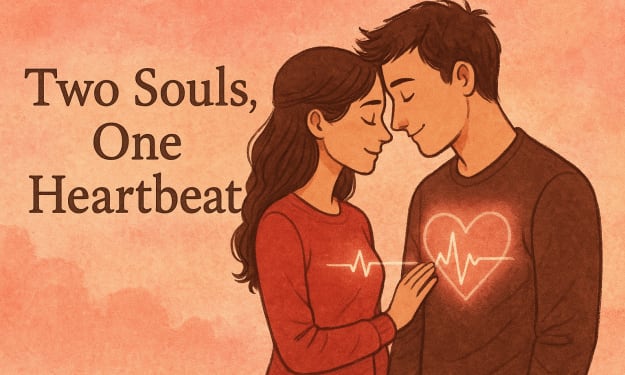
" two souls, one heartbeat" . Content Warning.
In a quiet town nestled between whispering forests and the gentle curl of a silver river, there lived two people who, at first glance, seemed like strangers fated never to meet. Aiden was a musician—brooding, quiet, and lost in melodies only he could hear. His days were spent crafting haunting harmonies on his weathered piano in the attic of an old stone cottage, once belonging to his grandmother. He barely ventured out, save for the occasional walk at dusk when the sky burned orange, and the town was bathed in golden hush. Lena, on the other hand, lived in light. A paramedic, always on the move, her hands carried life and hope, her smile a promise that everything would be okay. She lived in the now, grasped every fleeting second, and believed time was too fragile to waste. But deep inside, where no one could see, Lena carried a grief she never spoke of—the loss of her twin brother, Liam, three years ago. He had been a musician, too. Quiet, like Aiden. Lost in sounds that only he could hear. It was a late September evening when they met. A storm had swept through the town, knocking out power and cutting off the main road. Lena, on her way back from a late shift, took the forest trail—the only way home. The rain made the path slippery, and just as she rounded a bend near the river, her car skidded and slammed into a fallen tree. She wasn't hurt, just shaken. Phone dead, she stepped out and looked for shelter. That’s when she saw the faint glow of a lantern through the trees. It flickered from the attic window of an old stone cottage. Aiden wasn’t expecting company. He rarely did. When he opened the door to find a woman soaked to the bone, rainwater dripping from her lashes but eyes burning with life, he just stared. “I crashed,” she said simply. “I saw your light.” He stepped aside wordlessly. Lena spent the night in the warmth of the old cottage, wrapped in a woolen blanket, listening to the sound of rain and an unfamiliar tune from the attic. She followed it, quietly, and found Aiden at the piano. His fingers moved like memory—soft, sure, aching. “Your music,” she said softly, “sounds like someone I used to know.” He turned, startled. “Really?” “My brother. He used to play like that.” She didn’t say more. In the days that followed, their lives began to thread together. The storm had caused a landslide, closing the forest road indefinitely. Lena stayed in town, took a short break from work, and slowly found herself returning to the cottage—not out of necessity anymore, but something unexplainable. Aiden, too, changed. He began leaving his attic to meet her on her walks. He laughed—awkwardly, at first, like someone remembering how. He played music just for her. And when he played, Lena listened with eyes closed, hand on her chest, as though feeling something stir that had long been buried. They learned each other in quiet moments—over old records and tea, through shared silences and the brushing of fingers in passing. Aiden discovered Lena hummed while she cooked, that she tilted her head when she read, and laughed without restraint. Lena learned that Aiden only composed at night, that he never wore socks, and that the piano was the only thing left from his grandmother. One evening, as autumn painted the trees amber and gold, Aiden showed Lena a piece he had been working on. “It’s called ‘One Heartbeat,’” he said, handing her the sheet music. She studied the notes. “It’s beautiful. Sad… but full of hope.” He looked at her then, deeply, as though seeing something that had eluded him for years. “I didn’t know what it was about until I met you.” She looked down, heart thudding. “Aiden, I need to tell you something.” That night, in the attic under a sky full of stars, Lena told him about Liam. About how he had died in a car accident on the same road where she crashed. About the silence that followed his death, how she hadn’t listened to music since. Until Aiden. Aiden listened, eyes glistening. Then, without a word, he sat at the piano and played the piece again—but slower, softer. And Lena cried. Not because of pain, but because in that music, she felt Liam again. “You brought him back to me,” she whispered. “I think you brought me back to life,” Aiden replied. --- Winter came. The river froze. The forest wore white. And inside the stone cottage, love bloomed. It wasn’t loud or fast. It was patient, kind, healing. Aiden kissed her like she was his first note. Lena held him like he was the answer to a question she had long stopped asking. They were two people, different rhythms, but somehow, in each other, they found the same beat. When they lay together, heart to heart, they often said they could feel one heartbeat between them. It was a joke at first, but soon it felt true. One night, as snow fell silently outside, Aiden woke gasping, clutching his chest. Lena rushed to him. “Aiden?” “My heart,” he choked. “Something’s wrong.” She drove him to the hospital in the middle of a blizzard, hands trembling on the wheel. The doctors ran tests. Hours passed. “It’s a congenital condition,” they told her. “Rare. He was likely born with it. It’s a miracle he’s made it this far.” Aiden needed a heart transplant. Time was running out. Lena refused to leave his side. She gave up her job. Sat by his hospital bed with a suitcase full of music sheets and love. And then came the call. A donor had been found. The surgery was scheduled. The night before, Aiden asked for a piano. The hospital staff brought in a keyboard. Wires trailed from his chest, but his fingers found the keys. He played One Heartbeat for her. Slow. Deep. As if engraving it onto time. “If I don’t make it—” “You will.” “Promise me, Lena. If I don’t… keep playing. Keep living. For both of us.” She kissed his forehead. “We are not two. We’re one. I’ll feel you in every beat.” He smiled. “Two souls…” “…One heartbeat.” --- The surgery was long. Complicated. Lena sat in the waiting room clutching the sheet music. Hours passed. Then, the surgeon appeared, eyes tired but warm. “He made it.” She collapsed into tears. --- Months later, the forest trail reopened. Spring returned. Lena and Aiden stood where they first met—beneath the trees, beside the river. He held her hand. His heart, stronger now, beat firmly beneath her palm. They had survived the silence, the sorrow, the storm. And now, every moment forward would be shared. He built her a studio next to his attic. She returned to medicine part-time. But at dusk, they always came together—hands on keys, breath in sync. The music they made wasn’t just beautiful. It was alive. Because it came from two souls. One heartbeat.
By D A R Kabout a year ago in Motivation
Searching for Meaning
I never expected an existential crisis to show up in a coffee shop. It was just a gray Thursday afternoon. The kind where the sky looks like wet concrete and every sound seems muffled by the drizzle. I stood in line, half-scrolling my phone, waiting to order the same latte I always did, when it hit me.
By Zakir Ullahabout a year ago in Motivation
Day 2 of My $0 to $12,000 in 90 Days Challenge — Building Momentum One Call at a Time
After a productive Day 1, Day 2 of my challenge was less about hype and more about focused momentum. If you're new here, I’ve taken on a personal challenge to go from $0 to $12,000 in just 90 days, using only ethical, white-hat digital marketing strategies. That means no courses, no selling to my audience — just results from actual client work, Pay Per Call marketing, SEO, and paid ads.
By Rahul Pathakabout a year ago in Motivation
"Pornography and Society: Understanding its Impact, Ethics, and Future"
Psychological and Social Effects: How Pornography Shapes Minds and Relationships In the modern era, pornography has become an omnipresent part of the digital landscape, deeply intertwined with the fabric of daily life. It is no longer just confined to seedy corners of the internet but is easily accessible, often just a click away. For many, pornography is an expression of personal freedom and sexual exploration, but its pervasive nature also raises concerns about its psychological and social consequences. As the consumption of adult content continues to rise, researchers, psychologists, and sociologists are increasingly examining its profound impact on individuals and relationships. While some argue that pornography is harmless or even beneficial for certain aspects of sexual education and expression, others caution about its potential to distort perceptions of intimacy, influence sexual behavior, and contribute to unrealistic expectations in relationships. The psychological effects of pornography consumption are complex and multifaceted. On one hand, some studies suggest that it can serve as a harmless outlet for sexual desires or even a tool for learning about sexuality, especially when access to comprehensive sexual education is limited. In this context, pornography can offer individuals a means of exploring their sexual identity and desires in private. However, the problem arises when consumption becomes excessive or when it shapes an individual's sexual framework in unhealthy ways. Research has shown that frequent pornography consumption can lead to the desensitization of sexual stimuli, meaning individuals may become accustomed to more extreme or unrealistic content to achieve the same level of arousal. Over time, this could contribute to a diminished capacity for real-life sexual enjoyment, as partners may not be able to match the intense, often exaggerated scenarios depicted in pornographic media. In addition to desensitization, the potential for addiction is a concern. While not everyone who consumes pornography becomes addicted, there is evidence to suggest that some individuals may develop compulsive viewing habits. This can lead to significant distress and interfere with daily life. Similar to other behavioral addictions, pornography addiction can create a cycle of secrecy, shame, and withdrawal from real-world interactions, making it harder for individuals to form and maintain healthy relationships. People struggling with porn addiction often experience feelings of guilt and embarrassment, further exacerbating the psychological toll. They may also find it increasingly difficult to experience intimacy or arousal in the absence of pornographic content, which can create a vicious cycle of dependency. One of the most concerning psychological effects is the potential for distorted views on sexuality and relationships. Pornography often portrays an unrealistic and idealized version of sexual encounters, focusing heavily on physical pleasure while minimizing or ignoring emotional connection, communication, and mutual respect. In many cases, the content also reinforces harmful gender stereotypes and unrealistic expectations about body image, performance, and sexual behavior. For instance, women in pornography are frequently objectified, depicted as submissive or passive, while men are often shown as dominant and physically perfect. These portrayals can skew perceptions of gender roles and sexuality, especially for individuals who are not exposed to diverse or healthy representations of relationships. When these unrealistic ideals are internalized, they can lead to dissatisfaction with real-life sexual experiences and distorted expectations about what is normal or desirable in a partner. The social effects of pornography consumption extend beyond the individual level and into broader societal implications. Pornography, by its nature, is often detached from the complexities of human connection, reducing sexual encounters to a mere exchange of physical pleasure. This detachment can lead to a devaluation of intimacy in real-world relationships, where emotional and physical connection are equally important. Research suggests that couples who consume pornography together may experience a decline in relationship satisfaction, as one or both partners may develop unrealistic sexual expectations. These expectations can create pressure to perform in certain ways, leading to dissatisfaction and, in some cases, relationship breakdowns. Moreover, pornography can contribute to a culture of objectification, where individuals are seen not as whole, complex human beings but as bodies to be used for sexual pleasure. This objectification can be particularly damaging in intimate relationships, where partners may struggle to view each other as more than just sexual objects. Over time, this can erode the foundation of trust, respect, and emotional intimacy that is essential for healthy, lasting relationships. For those in committed partnerships, the consumption of pornography can sometimes lead to feelings of betrayal or insecurity, especially if one partner feels neglected or insufficient compared to the hypersexualized imagery seen in adult content. The issue of consent is another critical social dimension of pornography. While ethical porn does exist, much of the mainstream adult industry has been criticized for exploiting performers, often under circumstances that may not reflect mutual, informed consent. This creates a troubling paradox in which consumers of pornography might internalize notions of sexual exploitation or coercion, impacting their own behaviors and attitudes toward sex. In this context, pornography does not only shape sexual expectations but may also contribute to a culture of entitlement, where consent is overlooked or misinterpreted. Despite these negative impacts, there are ways to mitigate the harmful psychological and social effects of pornography. Education, both about healthy sexual relationships and the potential risks associated with pornography consumption, can help individuals develop a more balanced perspective. Open conversations about sexuality and intimacy can also create a foundation for mutual respect and understanding in relationships. For individuals struggling with compulsive pornography consumption, seeking professional help, such as therapy or support groups, can provide strategies to manage or overcome addiction. In conclusion, the psychological and social effects of pornography are complex and multifaceted, influencing both individual well-being and broader societal attitudes toward sexuality and relationships. While it is essential to acknowledge that not everyone who consumes pornography experiences negative consequences, the potential for harm, especially when consumption becomes excessive or distorted, cannot be ignored. By fostering open discussions, promoting ethical consumption, and offering resources for those who struggle with addiction, society can help mitigate the impact of pornography and support healthier, more fulfilling relationships.
By Abid khanabout a year ago in Motivation
🧠 7 Mindset Shifts That Can Seriously Change Your Life
Let’s be real for a second—we’ve all had those days where everything feels stuck. You know, the kind of day where your to-do list is longer than your patience, and you’re questioning every life choice you’ve made since high school. (Just me? Hope not.)
By Md Zillur Rahaman Chowdhuryabout a year ago in Motivation