movie review
Movies that make us feel warm and inspired; from stories about love found in a hopeless place, to heroes fighting for the greater good, and more.
The Last Chair in the Room
1- The Empty Auditorium The first time Maya stood on a stage, the auditorium was nearly empty. Just a janitor sweeping the back row and an old woman knitting in the second. She was 17, full of nerves, and every word in her speech trembled out of her like a bird afraid to fly. But she did it. She spoke for exactly 4 minutes and 32 seconds. And when she finished, no applause followed. The janitor kept sweeping. The woman kept knitting. She walked offstage, cheeks flushed, thinking: Maybe I’m not meant for this. But something stopped her from tearing up her note cards. A chair. A single, plastic chair in the middle of the room. Empty, upright, facing the stage. Waiting. Maya decided that day that no matter how many people filled or didn’t fill that room, she would always speak as if someone was sitting in that last chair. Listening. Needing. Hoping. Because once upon a time, she had been that person. --- 2. The Fear of Being Ordinary Maya was not born with a silver spoon or a perfect voice. Her father drove taxis in Detroit; her mother cleaned homes. They taught her to survive, not to dream. But Maya, as a child, would steal moments under her blanket with a flashlight, writing stories on old receipts, cereal boxes, and napkins. Her stories were about warriors with no swords, queens with broken crowns, and misfits who refused to fit in. But the older she grew, the louder the world became. “Be practical.” “Find a real job.” “Motivational speaking? That’s not a career, that’s a TED Talk fantasy.” She tried to obey. She enrolled in a business course at a local community college. She sold insurance for two years. She even worked at a shoe store where the slogan was: “Fit in or walk out.” Irony never paid well. Still, every time she passed a mirror, Maya felt the same gnawing truth: She was afraid of being ordinary. --- 3. The Risk Nobody Saw One stormy Thursday in April, Maya made a decision that terrified even herself. She quit her job, withdrew her college application, and took the remaining $372 from her savings. She spent $100 on a cheap microphone and the rest renting a hall for her first event. She printed fifty flyers that said: > “You’re Still Enough: A Free Motivational Talk” By Maya Reynolds – A Nobody with Something to Say. The night of her event, it rained so hard the power flickered in the hall. Only three people showed up. A boy with acne who said nothing. A woman with swollen eyes. And a man with a coffee stain on his tie who kept looking at his watch. Maya could’ve canceled. She could’ve apologized. Instead, she took a deep breath and imagined the last chair in the room. She imagined someone sitting there who was about to give up but chose to come anyway. So she spoke. She told them about her failures, her fears, the time she nearly dropped out of high school, and the voice inside her that kept whispering: “Try one more time.” When she finished, the room was silent. But the woman with the swollen eyes walked up and said, “I was going to take my life tonight. I came here instead.” Maya never charged for her events after that. Not for a long time. That night changed her, not because she was thanked—but because she realized something profound: Success isn’t measured by crowds. It’s measured by impact. --- 4. Going Viral Isn’t Everything In today’s world, everyone wants to go viral. Maya tried it once. She uploaded a dramatic, tear-filled video with sad piano music in the background. It got 1,200 views in two weeks. The comments? > “Cringe.” “Stop faking it.” “Another wannabe guru.” It crushed her. For three weeks, she didn’t get out of bed. But then, a handwritten letter arrived. It was from the boy with acne who had attended her first event. He wrote: > “I never said anything, but you changed my life. I’m studying psychology now because you made me feel heard. Thank you for seeing me.” That letter sat on her desk every day for the next five years. Because what Maya learned was this: Going viral is a moment. Changing someone is a mission. --- 5. The Day She Almost Quit At 28, Maya had been giving talks for over a decade. She was still living in a tiny apartment above a laundromat, driving a rusty Corolla with a broken window, and eating canned soup three nights a week. She was invited to speak at a conference in Chicago. Her dream event. But a week before, the organizer called and said: > “We’ve replaced you with a bigger name. Someone with a larger following.” Maya didn’t cry this time. She didn’t scream. She just looked in the mirror and said, “Maybe I’m not good enough.” But that night, she got an email. From a teenager in India. It read: > “I found one of your old YouTube videos. I was bullied for my weight and tried to starve myself. But your story made me stop. I want to be a speaker too, like you.” That one email lit a fire in Maya that a thousand rejections couldn’t kill. She replied with just four words: “You’re already speaking. Keep going.” --- 6. The Chair Was Never Empty By the time Maya turned 32, she had spoken in 46 cities across 9 countries. She still didn’t have a blue checkmark. Still hadn’t written a bestselling book. But when she spoke, the rooms were full. Not just with people—but with stories. Survivors. Fighters. Dreamers who had once almost given up. She gave her final speech of the year in a high school gymnasium in Cleveland. She had lost her voice that week, was recovering from the flu, and debated canceling. But she didn’t. And in the crowd sat a girl named Ellie. Sixteen, foster kid, shy, sitting in the last chair. After the talk, Ellie came up and whispered, “I didn’t know anyone else felt like me.” Maya smiled. “Me too,” she said. --- 7. The Legacy You Don’t See Maya never got famous. Not in the way Instagram defines it. She never married. Never owned a house. She kept her Corolla until it died on the highway at 241,000 miles. But her inbox was filled with letters from people in ten different languages. Letters that said: “You made me believe again.” “You helped me leave my abusive relationship.” “You made me feel seen.” And every time Maya stepped on a stage, she looked at the last chair. Even if the room had a thousand people, she focused on the invisible soul sitting quietly in the back, wondering if they mattered. Because they did. Because Maya once had. --- 8. The Final Talk Maya passed away at 44 after a sudden heart condition. Only 93 people came to her funeral. But what mattered is who came. The boy with acne—now a psychologist. The girl named Ellie—now a speaker herself. The woman with swollen eyes—now running a shelter for women like her. The janitor who heard her first speech—who had kept the flyer all those years. And sitting quietly in the back row of the chapel? A new face. A young man with trembling hands, holding a notebook. After the ceremony, he approached the podium and said, “I never met her. But her video saved me last year. I had planned my suicide. Then I heard her say: ‘The world needs your story.’” He paused. “So here I am. Telling it.” --- Epilogue: The Chair Remains Some stories don’t need to be shouted to be heard. Some legacies aren’t written in books, but in broken hearts mended, lives saved, and strangers who felt understood. Maya Reynolds was never a celebrity. But she was something rarer: A lighthouse in a storm. A voice in the dark. A hand reaching for the forgotten. And somewhere, in every room, a chair remains. Waiting for the next Maya. And the next soul who needs her.
By Arshad khanabout a year ago in Motivation
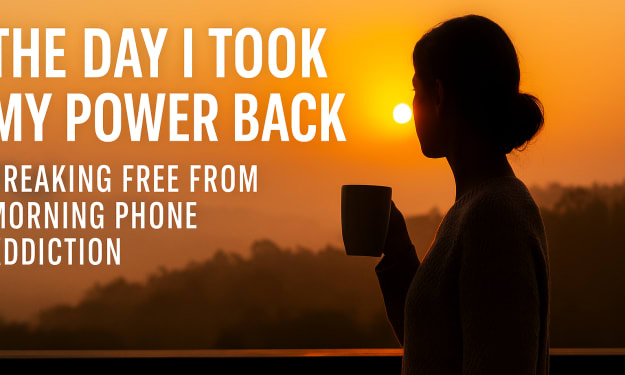
The Day I Took My Power Back: Breaking Free from Morning Phone Addiction
Introduction Every morning used to begin the same way: my eyes still half-closed, my hand already reaching for my phone. Before I even left my bed, I had checked WhatsApp, Instagram, Twitter, and two news apps. I hadn’t even brushed my teeth or spoken a word, but the noise of the world had already entered my head.
By Hasnain khanabout a year ago in Motivation
A Businessman’s Journey
Arjun stood at the edge of a bustling street in Mumbai, holding a single worn leather bag and a heart beating with anticipation. The city felt like a giant machine, every person a cog working toward a dream. At twenty-two, Arjun was no different. He had left the quiet village where he was born to find a path, a purpose. All he had was a degree, a faint hope, and a relentless drive.
By Abdullah khanabout a year ago in Motivation
From Failure to Success: A Lesson for the Brokenhearted. Content Warning.
Sometimes the darkest nights give birth to the brightest mornings. Don’t let failure define your story—let it refine it.”* We all stumble. We all fall. But those who rise again after falling—stronger, wiser, and more determined—are the ones who truly understand the meaning of life.
By Saaya Gsmabout a year ago in Motivation
Why Gen Z Is Quiet Quitting Life, Not Just Work
The term "quiet quitting" exploded across social media in recent years, capturing the imagination and frustration of a workforce no longer willing to go above and beyond. But what happens when this passive resistance spreads beyond the job into everyday life, relationships, and even dreams? Enter Gen Z: a generation not only quietly quitting work but slowly checking out of the structures, expectations, and even the hopes that have defined previous generations.
By Hamad Haiderabout a year ago in Motivation
Brewing dreams: the story of Sara's Cafe'
When Sara Khan stood beside her tiny yellow coffee cart on a cold winter morning in Lahore, she was shivering not just from the wind — but from uncertainty. She had just taken the biggest risk of her life. While her classmates accepted office jobs with good salaries and air-conditioned rooms, she had taken her graduation money, borrowed an old espresso machine from a cousin in Dubai, and started a coffee business on the sidewalk. She wasn’t from a business family. Her father was a retired teacher and her mother ran a small home-based sewing service. Sara had learned about hard work, honesty, and resilience from watching her parents stretch every rupee, never complain, and still offer chai to every guest. She believed she could do more than just earn a living — she wanted to create something meaningful. But business was slow. For the first month, she barely sold ten cups a day. People were skeptical. Some mocked her prices, others questioned her decision. One man even said, “Aurat se business nahi hota, beta.” But Sara smiled, thanked him for the advice, and served him a cup anyway. Each night she went home tired, sometimes defeated, but never willing to give up. Then came the turning point — a food blogger named Omar Aziz stumbled upon her cart one late evening. He was in a rush but curious. He took a sip of her signature hazelnut mocha and stopped mid-sentence. “This is... amazing,” he said. He snapped a photo, asked a few questions, and left. Two days later, Sara woke up to a buzz of notifications. Omar had posted her photo on Instagram with the caption: “Best coffee I’ve tasted in Lahore — and it’s from a one-woman street cart run by a fearless dreamer. Support local. Support passion.” By 9 a.m., there was a line. Students from the nearby college, office workers, and even a couple of local celebrities stopped by. Word spread like fire. People came not just for the coffee but for the story. Everyone loves a good underdog — especially one that serves killer cappuccinos. Within three months, Sara’s Café became a viral name. Customers brought their friends. Some stayed to chat. Others posted photos with her. Her cart was no longer a cart — it was a movement. --- Chapter 2: Brewing Bigger Dreams With her savings, Sara rented a tiny shop just two streets away. The location wasn’t glamorous, but it had a roof, space for four tables, and most importantly — a future. Her mother helped in the kitchen, learning to bake banana bread and cinnamon rolls. Her younger brother, Sameer, managed orders and learned how to make latte art from YouTube. The community pitched in — a customer donated old furniture, another painted a mural on her wall that read: “Strong women. Strong coffee. Stronger dreams.” It became her slogan. She introduced loyalty cards, added herbal teas and desi options like cardamom chai and saffron milk. Soon, Sara’s Café wasn’t just a coffee place — it was a home for conversations, ideas, poetry nights, and warm hugs. Bookworms found comfort. Struggling writers wrote their first pages. Students prepped for exams sipping on steaming mugs of motivation. --- Chapter 3: Storms and Stand Tall Just as things were smooth, a big international franchise opened across the road. It had neon lights, touch screens, and heavy discounts. Her customer count dropped. Some people even asked if she would shut down. For the first time, Sara felt anxious. But she didn’t fight them — she leaned into what made her different. She posted a heartfelt video on social media: > “I’m not here to compete. I’m here to connect. If you love local, love honesty, and want your coffee with a story — I’ll be here, brewing with love. Always.” The video went viral. Hashtags like #BrewWithSara and #SupportLocal trended on Pakistani Twitter. Influencers visited, praising her courage. Celebrities posted selfies from her shop. Her sales not only recovered — they doubled. --- Chapter 4: Beyond Coffee Success didn’t change Sara — it changed her mission. She began hiring women who had never worked before. Some were single mothers, others were survivors of abuse. Sara trained them in customer service, gave them flexible hours, and fair wages. In 2023, she launched the “Barista Sisterhood Program” — free training for girls from rural areas to learn coffee-making and entrepreneurship. She partnered with NGOs to give scholarships, started a podcast about women in business, and even mentored students at her old university. She was invited to give a TEDx talk, titled: “Start Small. Dream Loud.” Her talk was raw, real, and emotional. She shared her struggles, her mistakes, and her triumphs. When she ended by saying, > “You don’t need permission to start — you just need courage to continue,” the hall erupted in applause. --- Chapter 5: A Legacy in the Making Today, Sara’s Café has expanded to five branches across Lahore and Islamabad. Each one carries the warmth of the original cart — hand-painted signs, book corners, poetry boards, and staff who smile like they know your story. She still visits her first cart, preserved like a monument in her flagship branch. She touches it, closes her eyes, and remembers the shivering girl who poured her heart into every cup. She is now recognized as one of the top 30 under 30 entrepreneurs in Pakistan. But when asked about her biggest success, she says: > “It’s not the awards. It’s the young girl from Bahawalpur who wrote to me, saying she started her own tea cart after watching my video.”
By Shehzad khanabout a year ago in Motivation
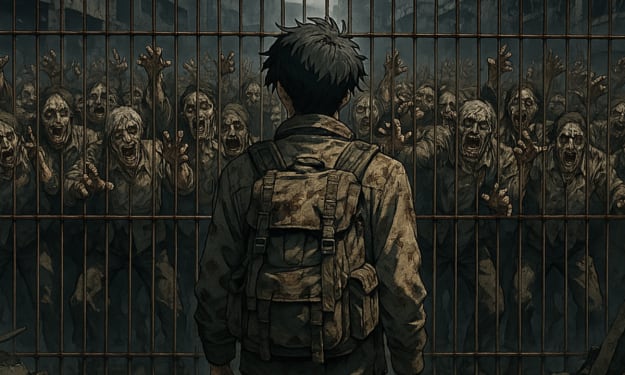
Living Before Dying: The Existential Wisdom of Zom 100
The fear of death, or the uncertainty of life itself, can play a powerful role in shaping our goals. The thought of our mortality often brings the fragility of life into sharp focus, granting us a clearer perspective on what truly matters.
By Selina Khatun about a year ago in Motivation
Still I Run
Still I Run The wind bit through the empty streets like a reminder that the world never paused for anyone’s pain. Mira tightened her scarf around her neck and adjusted the worn-out shoes on her feet. Her lungs burned, but she kept running. Not because she enjoyed the chase, but because stopping wasn’t an option anymore. Two years ago, Mira’s life had been simple. She had dreams stitched with hope—a modest job, an old diary full of aspirations, and a circle of friends who believed in her. But life has a way of tearing away the foundation when you least expect it. Her father’s sudden illness drained the family’s savings. Her mother, once a pillar of strength, broke under the weight of medical bills and sleepless nights. Mira was forced to drop out of college, take up odd jobs, and become the caretaker for a home that no longer felt safe. Every night, she returned home exhausted, bruised not just physically but emotionally. Her dreams felt like distant stars — beautiful, but unreachable. The weight of responsibility pressed down on her chest so hard she could barely breathe. And yet, every morning, Mira tied her shoes and ran. She ran from despair, from the voices that told her she wasn’t enough. She ran from the suffocating walls of her small apartment, from the haunting silence of loss. And as her feet pounded the cracked pavement, her mind soared with possibility. Running wasn’t just exercise; it was freedom. The rhythm of her breath, the steady beat of her heart—it was the only moment she felt alive, in control. Each step was a declaration that she refused to be defeated. One evening, after a long day at the market, she noticed a flyer pinned to a lamppost: “Annual City Marathon — Register Now!” Something sparked inside her. She stared at the flyer, fingers trembling. Could she? Could she run not just to escape, but to face the world? The next few weeks were a blur of early mornings and aching muscles. Mira pushed herself harder than ever. When the neighbors whispered about her “wasting time,” she ignored them. When her body begged for rest, she ran anyway. Race day arrived. The city buzzed with energy, runners stretching and chatting, families cheering. Mira stood among them, heart pounding like never before. The gunshot echoed, and they were off. The first few kilometers were easy. She found her pace, her breath steady, the world blurring around her. But halfway through, exhaustion clawed at her. Her legs screamed to stop. Doubts flooded her mind — Why am I doing this? What if I fail? But deep inside, a quiet voice whispered: Still I run. She thought of her mother’s tired smile, her father’s whispered prayers, the dreams she’d once scribbled in that old diary. Step by step, she pushed through the pain. With every meter, the weight of her struggles lightened. She wasn’t just running a race; she was reclaiming her life. As Mira crossed the finish line, tears streamed down her face—not from exhaustion, but from triumph. She had beaten more than just the clock. She had beaten the odds. People cheered, but Mira’s victory was quiet and profound. She had proven that no matter how many times life tries to knock you down, you can always rise—and keep running. Because giving up is easy. Running forward, even when it hurts, takes courage. And Mira had plenty of that.
By TrueVocalabout a year ago in Motivation
The City's Unheard Melodies
The City's Unheard Melodies My life in the city had always been a cacophony. The relentless honk of traffic, the distant wail of sirens, the ceaseless chatter of crowds—it was the unchanging soundtrack of urban existence. I had trained myself to block it all out, drowning it beneath the familiar comfort of my headphones, creating pockets of silence within the chaos. But then, the silence broke—not with a bang, but with a whisper. A melody. It began subtly—a low, resonant hum emerging from the deep rumble of a subway train as it passed beneath the pavement. It wasn’t the usual metallic screech or gust of displaced air. It was delicate, almost mournful. A tune woven gently into the roar. I brushed it off as exhaustion, a trick played by my weary mind. But the melody returned. Again. And again. Soon, I started hearing them everywhere. A high, bright trill from the tangled power lines above a marketplace, like a burst of laughter barely held back. A slow, sorrowful note breathed from the crumbling bricks of an old colonial building. Sharp, pounding rhythms vibrating through the scaffolding of a construction site. These weren’t ordinary sounds. They couldn’t be recorded or replayed. They were the city’s secret music, audible only to those willing to listen deeply. I abandoned my headphones. I began walking with intention, not just through the city, but into it—ears open, heart tuned. Every melody I heard was unique, soaked in its own emotion. The power lines’ trill vibrated with joy and possibility. The aged building sighed with grief and forgotten stories. It felt as though the city itself had found its voice—telling its tales not with words, but through hidden vibrations echoing beneath the surface. My logical mind resisted. Was it synesthesia? Hallucination? But the consistency, the emotional truth of the melodies, couldn't be denied. I felt like a conductor who had stumbled upon an invisible orchestra—an ever-changing composition of a living metropolis. And the more I listened, the more I understood. These were no random sounds. They were memories. Echoes of emotions once felt, moments once lived, still resonating through the steel, stone, and glass. The power line’s song grew louder where people dreamed and dared. The old building’s sadness thickened near places of quiet despair or forgotten tragedy. The melodies were imprints of history, fragments of time embedded in the city’s very structure. Then came the moment I truly grasped their power. One evening, walking a dim alley I’d never noticed before, I heard a discordant, chaotic melody beneath my feet—raw, panicked, violent. It throbbed with rising dread. Following the sound, I came upon an old, rusted fire hydrant slowly leaking a thin stream of water. As I stood there, a violent image flashed in my mind—something terrible had happened here. The next morning’s local news confirmed it: a decades-old unsolved hit-and-run had occurred in that very alley. A young man, struck down beside a hydrant. The city had remembered. I began to sense more than just the past. The bustling financial district hummed with uneasy dissonance, warning of a market collapse days before it happened. A gentle, hopeful tune bloomed from a city park, whispering of a love story not yet begun. Somehow, I had become the city’s vessel—its listener, its witness, perhaps even its prophet. But it became too much. I tried retreating—reaching for my headphones again—but it was too late. The melodies had seeped into me. They no longer lived only in the city; they echoed through my bones, through my breath. I had become part of the song. The city no longer seemed like a structure of buildings and boulevards. It had become a soul—a living, breathing consciousness built from concrete and memory. It whispered its secrets, told its truths, offered warnings—but only to those who dared listen beyond the surface. Now, when I walk these streets, I don’t just hear noise. I hear the city’s symphony—its grief and joy, its tragedies and triumphs, its forgotten past and unknowable future. And I know one thing with haunting certainty: The city never forgets. It simply waits… For someone to hear its song.
By Noman Afridiabout a year ago in Motivation
The Doorbell: How a Child’s Knock Opened a Heart Shut for Decades
For nearly twenty years, he had lived alone in a creaky old house on the corner of Maple Street. No one saw him at the grocery store. No one saw him on walks. His yard was always clean, but no one saw him cleaning it. Some kids whispered that he was a ghost. Others thought he was just mean.
By Abdulmusawerabout a year ago in Motivation
The Paper Bird: How a Child’s Wish Changed a Man’s Heart
The world had stopped meaning anything to Daniel after his wife died. He used to be full of life—an art teacher who loved his students, walked home whistling, and believed in the beauty of small things. But when cancer stole Lily from him, it also stole his light. He quit his job. He stopped painting. His days became numb shadows of the past.
By Abdulmusawerabout a year ago in Motivation
It Started With a Smile: How One Act of Kindness Changed a Life Forever
Kareem once lived a simple life. He didn’t have luxury, but he had stability. A quiet apartment on the east side of the city, a job at the local paper mill, and a routine that made life predictable. He would wake up at 6, drink his tea, walk to work, and return just in time to watch the sunset from his tiny balcony.
By Abdulmusawerabout a year ago in Motivation