how to
How to become motivated to become the best version of yourself.
Everyone Said It Wouldn’t Work—How I Built a Career with AI
Everyone Said It Wouldn’t Work—How I Built a Career with AI Growing up in a small town, I always heard the same words repeated around me—“It’s not possible,” “That’s not for people like us,” or worse, “Don’t dream too big.” For most of my life, I believed those voices. I thought success in technology or freelancing was something meant only for the privileged — people with expensive degrees, fluent English, and big-city connections.
By Syed Mokter Hossainabout a year ago in Motivation
The Beggar Who Traveled Through Time
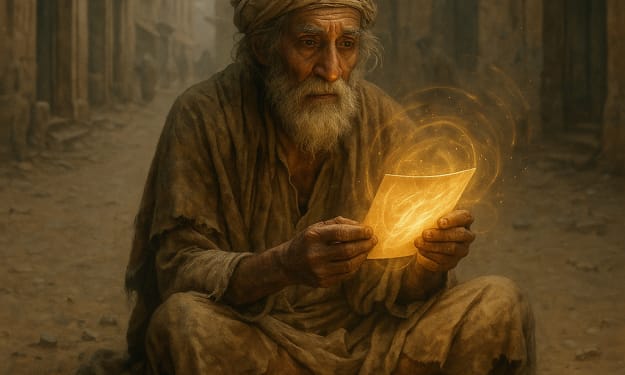
It was a hot, dry afternoon in Lahore. The traffic hummed past on the main road, indifferent to the man who sat under the broken shade of a neem tree. He was a beggar, or at least he looked like one. His clothes were patched and faded, his beard unkempt, and his eyes half-closed. He sat there every day, mumbling verses no one cared to understand. Children laughed and ran past him, some throwing coins, others insults. Shopkeepers ignored him, and passersby pretended not to notice. But no one knew that this man, who called himself Baba Zamaan, was once a scientist, and not just any scientist—he was the mind behind a secret government experiment that had failed twenty years ago. Back in 2005, Baba Zamaan, then known as Professor Zaman Ali, had been working on a project called “ChronoKey”—a device that could unlock fragments of time. Funded in secrecy, tested in silence, it was meant to open a controlled ripple through time. But the experiment had gone horribly wrong. During the final test, the device exploded, and Zaman vanished. He was presumed dead. But he didn’t die. He had jumped. Not forward. Not backward. Sideways—in a sliver of time that ran parallel to ours. There, he had no food, no water, no sound, only darkness and echoes of forgotten moments. He wandered in that realm for what felt like years. Time was meaningless there. Until one day, he found a way back. When he reappeared in the middle of a street in Lahore, no one recognized the aged, disoriented man. He had no memory of who he was. The trauma of timeless isolation had shattered his mind. All he remembered was the device, and a whisper: “Time is a beggar’s game.” Years passed. Zaman, now Baba Zamaan, became a fixture on the roadside. His mind flickered between brilliance and madness. He wrote symbols on the dirt with a stick, muttering equations that even advanced physicists would struggle to understand. One rainy afternoon, a university student named Faraz noticed the old man. Faraz was curious by nature and intrigued by the strange symbols the beggar scribbled. He began visiting him daily, sitting beside him, asking questions. At first, Baba Zamaan ignored him. But slowly, the fog in his mind began to lift. He spoke in riddles, asking Faraz, “If time is a river, do you drink from it, or do you drown?” Faraz laughed, but listened. One day, Baba Zamaan handed him a crumpled notebook. “This,” he said, “is the map of the hours lost.” Inside were sketches of a device, pieces of equations, and a final note: "The ChronoKey still breathes. Under the earth, beneath the light." Driven by curiosity, Faraz took the notebook to his physics professor, Dr. Ishrat. The professor’s face turned pale as he read. “Where did you get this?” When Faraz told him about the beggar, Dr. Ishrat’s hands trembled. “This… This is Professor Zaman Ali’s work. He disappeared two decades ago. We all thought he died.” Excited and shocked, Faraz and Dr. Ishrat returned to the spot the next morning, but Baba Zamaan was gone. Only a symbol remained, etched in the mud: the symbol of the ChronoKey. Weeks passed. Faraz couldn’t sleep. He kept studying the notebook until one night, something clicked. He built a prototype, crude but functional. When activated, it emitted a soft hum and projected a hologram of Baba Zamaan. In the hologram, Baba spoke clearly: “If you’ve found this, then time has chosen you. I am no longer of this world, but of many. Don’t look for me. Look ahead. One day, you too will stand at the edge of time. Choose wisely.” Faraz never saw Baba again. But he knew he hadn’t imagined him. That hologram, the equations, the memory—they were all real. He buried the ChronoKey prototype in a box and hid it in his closet. Years later, Faraz became a renowned physicist. He never told anyone the full story. But whenever he passed that old neem tree, now long gone, he whispered, “Thank you, Baba Zamaan.” And somewhere in the sliver of time, an old beggar smiled, whispering, “The river flows on.”
By Noman Afridiabout a year ago in Motivation
Life's Small Moments and Their Unfathomable Importance
In the rush of our daily lives, we often overlook the small moments that weave together the tapestry of our existence. We chase after big achievements, striving for success and recognition, but in doing so, we forget that the most profound lessons often come from the smallest of experiences. These fleeting, seemingly insignificant moments hold the key to understanding who we truly are and what it means to live a fulfilled life. The Beauty of the Everyday Imagine waking up to the sound of birds singing outside your window, feeling the warmth of the sun as it peeks through the curtains. Or the feeling of your favorite coffee brewing early in the morning, filling the house with a familiar aroma that instantly brings a sense of calm. These are simple moments, yet they are full of meaning. They remind us that life is not only about monumental events but also about appreciating the small, everyday blessings that often go unnoticed. We often forget that life’s richness doesn’t come from grand gestures but from these small instances that make us feel alive. A smile from a stranger, the sound of laughter shared with a friend, or a quiet moment spent in nature – these are the moments that add color to our lives. Yet, how many times have we been too busy to truly appreciate them? We live in a world that constantly tells us to go faster, do more, and achieve higher. But what if, instead of chasing after the future, we paused to live in the present? The Power of Connection Some of the most powerful moments in life come when we make genuine connections with others. It might be a conversation that lasts only a few minutes but leaves a lasting impact on your heart. Perhaps it’s a simple gesture, like holding the door open for someone, or a moment of vulnerability shared with a close friend. These small interactions can change the course of our day, and even our life, in ways we cannot predict. Take, for example, the power of a compliment. A well-timed word of kindness can lift someone’s spirits in ways that no material gift can. The smallest act of kindness – a hug, a compliment, a few words of encouragement – has the power to change someone’s entire outlook on life. Yet, we often take these simple moments for granted, not realizing that they can be the turning points that help someone feel seen, heard, and valued. The Gift of Presence In a world where we are constantly distracted by our phones, emails, and social media, the art of being present has almost become a lost skill. How often do we find ourselves in a room full of people, yet we’re not really there? Our minds are elsewhere, consumed by thoughts of what’s next, what’s pending, or what we’ve missed. The ability to be fully present in a moment, to truly engage with the people around us, is one of the most profound gifts we can offer. When we learn to be present, we start to notice the small moments that we’ve been overlooking. We hear the laughter of a child, feel the warmth of a loved one’s hand, or simply breathe in the quiet stillness of the night. These moments of presence are the foundation upon which deeper connections and greater understanding are built. By being fully present, we open ourselves to life’s richness and beauty. Life’s Unspoken Lessons There is an undeniable power in the small, quiet moments that don’t demand attention but still leave a lasting impression. Think of the moment when you’re walking alone, and you find yourself lost in thought, suddenly realizing something important about yourself. It’s in these moments of stillness that our minds have the space to reflect and make sense of the world around us. It’s easy to miss the lessons that life’s small moments offer because they are often not wrapped in dramatic events or emotional upheavals. But they are there, waiting for us to notice. It could be in the simplicity of a sunset, the peace of a morning walk, or the kindness of someone who doesn't expect anything in return. These moments are life’s silent teachers, imparting wisdom that we can carry with us, even when the noise of the world becomes overwhelming. Embracing the Imperfect In our pursuit of perfection, we often overlook the beauty in imperfection. Life is not meant to be flawless. It’s the small imperfections – the missed opportunities, the unplanned moments, and the mistakes we make – that give life its unique flavor. These moments teach us resilience, growth, and the importance of embracing who we truly are, flaws and all. There is beauty in vulnerability, in the courage to be imperfect. When we accept that life’s small moments are not always perfect, we free ourselves to experience them fully. These moments may not always go as planned, but it’s in their unpredictability that they become meaningful. It’s in their fleeting nature that they remind us of the impermanence of life, urging us to cherish them before they are gone. The Importance of Slowing Down The most important lesson these small moments offer is the reminder to slow down. We live in a fast-paced world, where time is often measured by productivity and achievement. But by slowing down and paying attention to the small moments, we can reconnect with the essence of life. We can learn to savor the present, to be grateful for what we have, and to find joy in the simple things. When we slow down, we give ourselves the opportunity to truly experience life. We start to notice the beauty around us – the sound of the wind rustling through the trees, the warmth of the sun on our skin, the soft touch of a loved one’s hand. These moments are fleeting, but they are also deeply important. They are the threads that bind us to the world, reminding us of our place in it. Conclusion: The Value of Life’s Small Moments In the end, it’s the small moments that shape the course of our lives. They are the ones that stay with us long after the big events have passed. The kindness of a stranger, the laughter of a child, the feeling of peace after a busy day – these are the moments that define us. They remind us that life is not about the grand gestures but about the simple, everyday experiences that make us feel alive. So, the next time you find yourself rushing through life, take a moment to pause. Look around and appreciate the small moments that make life so beautiful. For it’s in these moments, fleeting as they may be, that the true richness of life resides.
By Sohail Abbasabout a year ago in Motivation
The Power of Speech: The Role of Public Discourse in Modern Politics.?
**The Power of Speech: The Role of Public Discourse in Modern Politics** In any discussion about politics and power, the importance of speech and oration cannot be denied. Speeches in politics are more than just statements; they are also potent instruments for influencing public opinion. When delivered with the right strategies and impactful language, a speech has the ability to change public sentiment, rally support, or even stir opposition. In the political landscape of Bangladesh, the power of speech and its ability to shape public opinion holds significant weight. How political leaders use their speeches to influence the masses is a crucial factor in the nation's political dynamic.
By H M Sakibabout a year ago in Motivation
The Majesty of the Falcon: A Symbol of Power and Grace
The falcon, often revered for its strength, grace, and precision, is more than just a bird of prey. It represents power, freedom, and the spirit of unyielding determination. Known for its unmatched hunting skills and exceptional flying abilities, the falcon has captivated the human imagination for centuries. But there’s something deeper, something symbolic, that sets this magnificent bird apart. This story aims to delve into the majestic world of the falcon, unraveling its profound impact on nature, culture, and the human heart. --- A Hunter Like No Other The falcon’s reputation as a formidable hunter isn’t just folklore. It is a bird of exceptional skill and precision. With its aerodynamic body built for speed and agility, the falcon can reach astonishing speeds of over 240 miles per hour when diving. This makes it the fastest bird in the world and the fastest animal on the planet. Its sharp talons and keen eyesight allow it to swoop down upon its prey with deadly accuracy. In the wild, falcons are known to hunt small to medium-sized birds and mammals. But beyond their role as predators, they are symbols of perseverance, as they never give up on their pursuit, relentlessly chasing their target until they achieve success. --- A Symbol of Freedom For many cultures, the falcon is not just a bird; it’s a symbol of freedom and courage. In ancient civilizations, falcons were seen as messengers between the heavens and earth, representing the connection between the mortal world and the divine. Egyptians, for example, associated the falcon with Horus, the god of the sky, representing strength and protection. In the modern world, the falcon continues to inspire people, particularly those who value independence and self-reliance. It reminds us that, just like the falcon in the sky, we too can rise above obstacles and soar to greater heights. Its presence in literature, art, and mythology continues to evoke feelings of awe and reverence, urging humanity to seek freedom and greatness. --- The Bond Between Human and Falcon Perhaps one of the most fascinating aspects of the falcon is its relationship with humans. Falcons have been used in falconry for over 3,000 years, making it one of the oldest forms of hunting. The bond between a falconer and their bird is a unique one, built on trust and respect. In ancient times, falconry was a sport of royalty, symbolizing status, wealth, and a deep connection with nature. Even today, falconers around the world maintain this ancient tradition, training falcons to hunt with them. The bond between the falconer and the falcon is one of mutual understanding. The falcon, wild at heart, learns to trust the falconer, while the falconer learns to respect the falcon's natural instincts. This partnership is a testament to the deep respect humans have for these majestic creatures and their place in the world. --- Falcons in Modern Culture The influence of the falcon extends far beyond hunting and symbolism. Today, it appears in sports team logos, military insignias, and even on the flags of several nations. It’s a symbol of precision, power, and focus—qualities that are highly valued in modern society. The falcon's sharp focus on its target, its ability to move swiftly, and its instinctive drive to succeed resonate with people in various walks of life. In the world of aviation, the falcon has even inspired aircraft designs, with engineers studying the bird’s flight mechanics to create faster, more efficient airplanes. The falcon’s sleek and aerodynamic body continues to inspire innovations in technology, design, and engineering, showing how nature often serves as the ultimate blueprint for human progress. --- The Spiritual Significance of the Falcon Beyond its physical attributes, the falcon holds significant spiritual meaning. Many spiritual leaders and philosophers have drawn parallels between the falcon's unyielding determination and the pursuit of higher knowledge. Just as the falcon rises above the clouds, humans are urged to rise above their limitations and chase after enlightenment and truth. In some traditions, falcons are seen as spirit guides, representing vision, clarity, and the ability to see things from a higher perspective. They are symbols of a spiritual journey—reminding us to seek clarity in our own lives, to rise above the noise and distractions, and to find our true path. --- Conclusion: The Timeless Legacy of the Falcon The falcon is much more than a bird of prey. It’s a creature that represents the best of what humanity strives to be: powerful, free, precise, and wise. Through its speed and elegance, the falcon has carved its place in the hearts and minds of people across the world. Whether as a symbol of strength in ancient cultures or as a modern-day inspiration, the falcon continues to soar high, leaving a legacy that will endure for generations to come. The falcon is not just a bird; it is a reminder of our potential to rise above, to hunt our goals with determination, and to soar to new heights, no matter what challenges lie ahead.
By Noman Afridiabout a year ago in Motivation
🧠 7 Mindset Shifts That Can Seriously Change Your Life
Let’s be real for a second—we’ve all had those days where everything feels stuck. You know, the kind of day where your to-do list is longer than your patience, and you’re questioning every life choice you’ve made since high school. (Just me? Hope not.)
By Md Zillur Rahaman Chowdhuryabout a year ago in Motivation
The Price of Doing Nothing: Why Inaction Is Costing You More Than You Think
You wait. You hesitate. You convince yourself that now isn’t the right time. You say things like: “I’ll do it when I’m ready.” “I need to think about it more.” “What if it doesn’t work out?” And while you’re thinking, waiting, preparing — life keeps moving. Opportunities come and go. Energy fades. And slowly, you begin paying a price no one talks about: **The cost of doing nothing.** --- ### The Illusion of Safety Doing nothing feels safe. It’s low risk, low exposure, low drama. But that safety? It’s an illusion. A trap. When you choose comfort over action, you don’t just avoid failure — you avoid progress, clarity, growth, and confidence. You stay in the same job you hate. You hold onto toxic habits. You keep talking about the idea… but never act on it. It feels safe, but it’s quietly suffocating you. **Real safety isn’t about standing still.** It’s about building skills, learning, adapting, and becoming so capable that you can handle what life throws at you. Standing still? That just weakens your ability to move when it counts. --- ### Missed Opportunities Are Expensive You don’t see it at first. That gig you didn’t apply for. The message you didn’t send. The side hustle you never started. You think: “No big deal. I’ll try later.” But here’s the thing: Opportunities are rarely static. They move, evolve, disappear. And often, they don’t come back. Meanwhile, someone else with less talent — but more action — jumps in, learns, fails fast, improves, and gets ahead. **The cost of inaction isn’t just staying the same.** It’s watching others live the life you wanted while you keep waiting for the “right moment.” --- ### Comfort Zones Kill Growth Your brain loves routine. It wants to keep you safe — not successful. So it resists change, even if that change leads to something better. You stay in the same patterns, do the same things, hang with the same people, and then wonder why nothing changes. Growth isn’t comfortable. It’s awkward. It’s scary. It’s messy. But that’s the point. That’s the price of leveling up. If everything you’re doing feels safe and easy, you’re not growing. You’re repeating. --- ### Fear Disguised as Logic Let’s be honest: Most of the time, we don’t take action because of fear — not logic. But we dress fear up with clever excuses: “I need more research.” “I’m not experienced enough.” “I’ll wait for a better time.” And those sound smart… but they’re not real reasons. They’re fear in a professional costume. Fear of failing. Fear of being seen trying. Fear of judgment. But here’s the kicker — no one successful avoided fear. They just acted in spite of it. --- ### Action Is the Real Superpower Action builds momentum. Action builds confidence. Action builds your future. You don’t need a perfect plan. You need movement. Because clarity doesn’t come from overthinking. It comes from doing. That blog you want to start? Write one post. That skill you want to learn? Watch one tutorial. That message you’ve been avoiding? Send it. Every action, no matter how small, shifts your trajectory. And once you’re moving, magic starts happening. --- ### Final Thoughts: Regret Is the Real Cost People rarely regret what they tried. They regret what they *never* tried. What they delayed. What they ignored. What they talked themselves out of. The cost of doing nothing is invisible at first. But later, it hits hard: - Lost confidence - Missed chances - What-could-have-beens - A version of yourself that never came to life Years from now, you won’t remember the reasons you waited. You’ll remember that you didn’t move. So ask yourself right now: What’s one thing I’ve been putting off? Now ask again: Can I afford the price of *never* doing it? Because inaction doesn’t protect you. It slowly erases you. And the most expensive decision isn’t trying and failing — it’s doing nothing at all.
By SHADOW-WRITESabout a year ago in Motivation
10 Proven Strategies to Enhance Patient Satisfaction in Healthcare
Delivering high-quality care is no longer just about accurate diagnoses or modern equipment. Today, it’s about how patients feel during their healthcare journey. From the front desk greeting to the follow-up care, every touchpoint shapes a patient’s perception of your service.
By Ram Thakurabout a year ago in Motivation
Rising Beyond the Storm. AI-Generated.
The storm came suddenly that night—lightning clawing across the sky, thunder shaking the earth, and rain pouring down like grief. Maya sat by the small window of her family’s hut, chin resting on her knees. Her mind was louder than the thunder. It had been almost a year since her father died. A truck, a rainy road, and a twist of fate had taken away the man she loved the most—and with him, her dreams. Her father had always called her “Doctor Sahiba,” proud of her top grades and fierce ambition. He promised that one day, she would wear a white coat and heal others. But death doesn’t knock. It comes like the storm—sudden, cruel, and unforgiving. Now Maya spent her days helping her mother at a tea stall in the village market. Their savings were gone. The dreams, too, seemed to fade like mist with each passing day. Every time she glanced at her dusty schoolbooks stacked in a corner, her heart ached. She still read at night—by the flicker of a dim lantern—but hope was running thin. One rainy evening, a man in a wet overcoat ducked into their stall. He was quiet, polite, and worn by travel. As Maya served him tea, he noticed a biology textbook lying behind the counter. “You study?” he asked, surprised. “I used to,” she said, almost apologetically. “I still try.” He introduced himself as Dr. Rehman, a retired physician who occasionally visited rural clinics to volunteer. “There’s a clinic down the road. We’re short of help. If you’re willing, come by,” he offered. “You’ll learn more there than you could from books alone.” Maya looked at her mother, who gave her a silent nod. Something flickered in Maya’s eyes—hope, perhaps. The very next morning, she arrived at the clinic. It was small, worn-out, but filled with the rhythm of life. Maya began by organizing medicine cabinets, helping patients sign in, cleaning wounds, and observing procedures. Dr. Rehman was patient, kind, and taught her everything—how to listen, how to care, how to see not just illness but the human behind it. Every day, Maya rose at dawn, helped at the clinic in the morning, worked at the tea stall in the afternoon, studied at night, and repeated the cycle with unshakable discipline. She was exhausted—but alive in a way she hadn’t felt in months. Still, there were whispers. “She’s just a tea girl pretending to be a doctor,” they said. “She should get married, not waste time.” But Maya pressed on. Months passed. One afternoon, Dr. Rehman handed her an envelope. “This is for your entrance exam. Apply. You’ve earned it.” “I can’t take your money,” she said, her voice trembling. “You’re not taking it,” he replied. “You’re investing it. In yourself.” Maya sat for the exam a month later. She traveled alone to the city. The exam hall was packed with students from better schools, dressed in cleaner clothes, carrying newer pens—but Maya carried something more: grit. When the results were announced, she was in the top percentile. The news spread quickly. The village that once whispered now clapped. “She did it,” they said. “The tea girl did it.” Medical school was a battlefield. Maya struggled to keep up with the fast-paced lectures and expensive materials. She took up part-time jobs—tutoring children, working in the cafeteria, anything to survive. Some nights she cried silently in the hostel bed, overwhelmed and homesick. But every morning, she woke up, tied her hair back, and reminded herself: I’ve come too far to stop now. Years later, after she completed her degree and residency, Maya returned to her village—not just as a visitor, but with a purpose. She wasn’t there to receive applause or praise. She came with a blueprint—a plan to open a free clinic in the very village where she had once fought for her future. With help from former professors, Dr. Rehman’s connections, and NGOs that believed in her vision, the Dr. Maya Khan Community Health Center opened its doors exactly six years after her father died. At the inauguration, she stood before a crowd of neighbors, school children, and her proud mother. She wore the white coat her father had always dreamed of. A framed photo of him stood next to the ribbon she was about to cut. “I was told I wouldn’t make it,” she said into the mic. “That storms would drown me, that poverty would silence me, that being a girl in a small village meant having no future. But I learned that storms pass—and sometimes, they teach you how to fly.” There was not a dry eye in the crowd. After the ceremony, a little girl in a school uniform approached her, shy and awestruck. “I want to be like you,” she said. Maya smiled and knelt down, handing her a pen from her coat pocket. “Then promise me you won’t give up—no matter what the world says.” --- Moral of the Story: When life throws storms your way, rise—not in anger, but with strength. Sometimes the heaviest rains grow the strongest roots. What matters is not where you start, but how fiercely you believe in where you're going. .
By Abdullah about a year ago in Motivation
From Chaos to Clarity: How One Risk-Taker Turned Setbacks into a Six-Figure Digital Empire
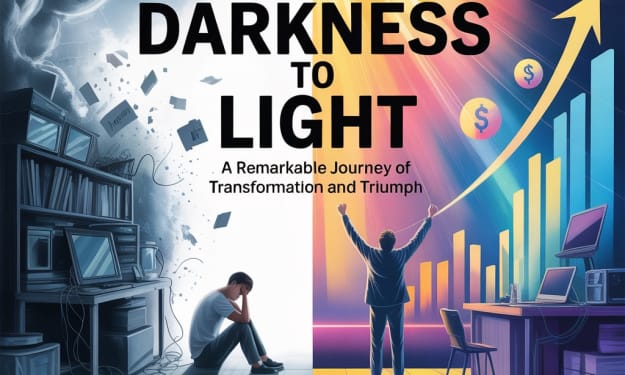
From Darkness to Light: A Journey of Transformation Life is a series of challenges. From the moment we are born, we are thrown into a world full of opportunities and obstacles, joy and sorrow, success and failure. But what truly defines a person isn’t how they handle the smooth sailing times, but how they rise when life throws its worst at them. This is the story of one such individual who transformed their life from chaos to clarity, from darkness to light. Our story begins in a small, cluttered room filled with uncertainty. The weight of failure hung heavily in the air. The protagonist—let's call them Alex—had spent years chasing dreams, only to watch them slip away one by one. Their journey, filled with high hopes and ambitious goals, had been met with unexpected obstacles: financial struggles, career setbacks, and personal disappointments. For a long time, the darkness seemed unending. The path forward was obscured by a fog of self-doubt and confusion. Alex had always been passionate about digital entrepreneurship, particularly in the world of online business and digital marketing. However, despite putting in long hours, trying different strategies, and investing both time and money into various ventures, success seemed elusive. Every business idea, every new project, ended in failure. The weight of these disappointments began to take a toll. The frustration of watching others around them succeed while they stayed stuck in the same place led to feelings of inadequacy. “What was I doing wrong?” Alex often asked themselves. In the midst of this struggle, Alex’s lowest point came when their finances hit rock bottom. It seemed like there was no way out. Their bank account was drained, their dreams shattered, and the constant pressure from bills and responsibilities was overwhelming. At this point, it would have been easy to give up, to accept failure as their reality. But there was something inside Alex, something unshakable, a small voice telling them to keep going. And so, Alex did something they hadn’t done before: they reflected. They took a moment to pause, to step back and look at their journey from a different perspective. They realized that every failure had taught them something valuable. Each setback wasn’t a dead end but a lesson in resilience and determination. It was in this moment of self-reflection that Alex made a decision—a decision to turn their life around, to turn their failures into stepping stones rather than obstacles. The transformation didn’t happen overnight. It was a slow, painstaking process, but every step forward was worth it. Alex began by breaking down their goals into smaller, more manageable steps. Instead of focusing on the big picture, they concentrated on making incremental progress every single day. They re-educated themselves, read books, watched tutorials, and learned from people who had already succeeded in the same field. One of the first major shifts in Alex's mindset was learning to embrace failure rather than fear it. They realized that failure wasn’t something to be ashamed of, but an essential part of the growth process. Every failed attempt had brought them closer to understanding what worked and what didn’t. They began to approach their ventures with a renewed sense of optimism and courage, knowing that the road ahead wouldn’t be easy, but the results would be worth it. In their pursuit of success, Alex also started to take care of their mental and physical well-being. They began exercising regularly, practicing mindfulness, and surrounding themselves with positive influences—people who believed in their potential. This holistic approach to personal growth began to show results. Slowly but surely, Alex started to see improvements. The digital business ventures that had once failed started to show signs of life. Their efforts were now beginning to bear fruit. What had once seemed impossible was now becoming achievable. Alex’s first breakthrough came when they finally launched a digital marketing campaign that not only gained traction but began to generate revenue. With each small success, their confidence grew. It wasn’t just about the money—it was about proving to themselves that they were capable, that they could overcome the obstacles in their path. As Alex’s journey continued, they began to share their story with others, becoming an inspiration to those who were also struggling. They realized that their transformation wasn’t just about them; it was about helping others rise out of their own darkness. Alex used their experience to mentor others, sharing the lessons they had learned along the way. The story of Alex’s journey from darkness to light is a testament to the power of resilience, self-belief, and perseverance. It’s a reminder that no matter how dark the path may seem, there is always a way forward. The key is to never give up, to keep moving forward, and to trust that every struggle, every setback, is an opportunity for growth. In the end, Alex not only turned their life around but also built a thriving digital empire. Their success wasn’t just measured by financial gain, but by the impact they had on others. Today, Alex is a successful entrepreneur, a mentor, and an advocate for personal growth and transformation. They continue to inspire others to never give up, no matter how tough life may get, because they know that with the right mindset, any obstacle can be overcome, and every darkness can be turned into light. This is the essence of true success: not just achieving your goals but evolving into a person who has the strength and wisdom to rise above any challenge, no matter how daunting it may seem.
By Muhammad Ilyasabout a year ago in Motivation