how to
How to become motivated to become the best version of yourself.
The Forest She Grew
It began with a single sapling, a little girl, and a question no one could answer. “Why are there no trees left here?” nine-year-old Alina asked her grandfather as they walked through a once-verdant hillside near their village. The ground beneath their feet was cracked, dry, and silent.
By MIGrowthabout a year ago in Motivation
The Fake Face Era: When Beauty Becomes a Digital Illusion
The Fake Face Era: When Beauty Becomes a Digital Illusion By Muhammad Ibrahim --- In today’s hyper-connected world, where photos and videos dominate every platform, appearance has become a digital currency. But the faces we see online – flawless, symmetrical, glowing – are rarely real. Welcome to the Fake Face Era, where beauty is often just an illusion, crafted by filters, editing apps, and artificial intelligence. From Instagram selfies to TikTok filters and deepfake videos, the line between real and fake has become dangerously blurred. What started as simple enhancements has transformed into a cultural crisis that affects self-esteem, relationships, and our perception of truth. --- The Rise of the Fake Face In the early days of social media, beauty filters were just a fun gimmick. A dog face on Snapchat, glitter eyes on Instagram – harmless entertainment. But as these technologies advanced, they became more powerful and more deceptive. Today, apps like Facetune, Photoshop, and TikTok’s “beauty mode” can alter your facial features in seconds: Skin becomes smooth like porcelain Eyes grow larger and brighter Lips plump, cheekbones sharpen Blemishes vanish, and wrinkles disappear People now look at their filtered faces more than their real ones. Over time, this creates a disconnection between who we are and who we pretend to be. --- The Psychological Impact The fake face phenomenon is not just cosmetic – it’s deeply psychological. Psychologists have reported a sharp rise in “Snapchat dysmorphia” – a condition where individuals desire plastic surgery to look like their filtered selfies. Common mental health effects include: Body dysmorphic disorder (BDD) Anxiety and social withdrawal Depression and low self-worth Obsession with likes, comments, and validation When you constantly compare yourself to fake perfection, your real self never feels “good enough.” Teenagers, in particular, are the most vulnerable. Growing up in a world where fake is the norm, they begin to hate their natural faces. --- The Illusion of Perfection Social media has created a global beauty standard that is nearly impossible to achieve without digital help. The message is clear: > If you want to be beautiful, you must be flawless. This idea is dangerous. It tells people that pores, scars, uneven skin tones, or signs of aging are ugly. It makes us ashamed of being human. The irony? Even celebrities and influencers with access to the best skincare, makeup, and trainers still edit their photos – proving that no one truly looks like the images we admire. --- AI and Deepfake Technology: A New Threat The danger doesn’t stop at filters. Artificial Intelligence has entered the picture, and with it, a new breed of fake faces: deepfakes. These are hyper-realistic videos and images created using AI, where someone’s face is swapped or altered to say or do things they never actually did. Imagine: A fake video of a politician giving a speech A celebrity “leaked” in a scandal Someone creating a fake identity to scam or manipulate Deepfakes make it harder to trust what we see, eroding truth and authenticity in media. In the Fake Face Era, seeing is no longer believing. --- Social Media’s Role Platforms like Instagram, TikTok, and Snapchat are at the heart of this problem. Their algorithms reward appearances. Posts with more beauty, more perfection, and more “wow factor” get pushed to the top. This creates a cycle: 1. Users feel pressure to look perfect. 2. They use filters and edits. 3. They get more likes and validation. 4. Others copy the same methods. Before long, everyone is posting a version of themselves that doesn’t exist. --- The Fake Face in Relationships Romantic relationships are also suffering. When people fall for someone based on their filtered photos, reality often brings disappointment. In dating apps, fake faces dominate profiles. Once you meet in person, the illusion fades – and so does the attraction. This trend also breeds insecurity. If your partner is always online with a “perfect face,” it can make you question your own value. Trust, intimacy, and real connection are replaced by shallow aesthetics. --- The Business of Beauty Let’s not ignore the profit motive. The fake face industry is worth billions: Beauty apps generate millions in downloads and subscriptions. Skincare and makeup companies market products to “fix” flaws that filters have made unacceptable. Cosmetic surgery clinics promise to make you look like your edited selfie. Big Tech, beauty brands, and even influencers benefit from our insecurities. The more we hate our natural face, the more we spend to change it. --- How to Fight Back Escaping the Fake Face Era won’t be easy, but it’s possible. It starts with awareness and a return to authenticity. Here’s how you can resist: 1. Limit filter usage – Post unedited photos sometimes. Let people see the real you. 2. Curate your feed – Follow creators who show real skin, real flaws, and real lives. 3. Practice self-compassion – You don’t need to be perfect to be beautiful. 4. Educate others – Talk about fake face culture. Teach younger siblings, friends, and students to value authenticity. 5. Support honest media – Engage with brands and platforms that promote body positivity and real representation. --- A New Definition of Beauty Beauty should not be defined by pixels and algorithms. It should be about expression, uniqueness, and character. True beauty is in the laugh lines, the imperfect smiles, the scars that tell stories, and the diversity of human faces. In the end, the fake face is just a mask. And the more we rely on it, the more we lose touch with our real selves. It’s time to reclaim our identities, one real face at a time. --- Final Thoughts We are living in an era where fake is fashionable and illusion is admired. But deep inside, people crave honesty, connection, and truth. The Fake Face Era may be now, but it doesn’t have to be forever. Let’s bring back authenticity — not just in how we look, but in how we live. Because no filter can replicate the power of a real, confident, unedited face.
By Muhammad ibrahim about a year ago in Motivation
How to Breathe Again After Failure. Content Warning.
I used to think failure was a dead end. It felt like a cliff you fell off, with no way back up. When I was younger, failure meant shame — a mark I couldn’t wash away. But life, in its quiet, relentless way, taught me something else: that failure is not the end. It’s a pause, a painful teacher, and, if you let it, the start of something new. I still remember the first time I truly failed. Not a small mistake, but the kind of collapse that leaves you gasping. I was twenty-three, fresh out of college, convinced I would breeze into my dream career. I applied to every job I thought I deserved. Rejections piled up like unpaid bills. Each “thank you for your interest, but…” chipped away at my confidence until there was nothing left but self-doubt. After months of no’s, I stopped trying. I told myself I wasn’t good enough. I avoided friends because I couldn’t stand their success stories or their pitying looks. Days turned into weeks of feeling stuck, unworthy, ashamed. That was the first time I learned how failure can suffocate you. It steals your breath, your hope, your sense of who you are. But in that dark season, I also learned something more important: that breathing again is possible — even after you feel like you’ve drowned. --- Step One: Sit with the Pain My mother used to say, “You have to feel it before you can heal it.” But when I failed, I wanted to run. I tried to numb the pain with distractions: binge-watching shows, scrolling mindlessly through social media, anything to avoid sitting with my thoughts. But numbing only made the hurt last longer. It wasn’t until one rainy evening, alone in my apartment, that I finally let myself cry. I let the disappointment wash over me. I admitted, out loud, how much I wanted those opportunities and how afraid I was of never finding another. That night, I realized avoiding pain doesn’t make it go away — it buries it deeper. To breathe again, you have to let yourself feel the sting of failure, to acknowledge what it meant and what it cost you. Only then can you begin to release it. --- Step Two: Challenge the Story in Your Head Failure whispers lies: “You’re worthless.” “You’ll never get another chance.” “You’re not enough.” After my job rejections, these thoughts looped endlessly in my mind. One day, exhausted by the weight of my own self-criticism, I wrote them down. Then I forced myself to question each one. Was I really worthless? No — I had people who loved me, skills I had worked hard to build. Would I never get another chance? Of course not — life rarely gives only one opportunity. Was I not enough? Maybe I wasn’t the right fit for those jobs, but that didn’t mean I had no worth. By challenging those stories, I began to rewrite them: “I am learning.” “This is temporary.” “I am more than this failure.” That simple shift — from final judgments to open possibilities — felt like a breath of fresh air after months underwater. --- Step Three: Talk to Someone You Trust When you fail, isolation becomes a tempting hiding place. I told myself no one would understand, or worse, they would judge me. But the longer I stayed silent, the heavier my burden grew. Eventually, I confided in a close friend. Instead of judgment, she offered compassion — and stories of her own failures. I learned I wasn’t alone; everyone falls, everyone doubts. Talking didn’t erase my pain, but it lightened it. I realized then: community gives us oxygen. Sharing your struggles is an act of courage, and it can reconnect you to the world beyond your failure. --- Step Four: Find What Failure Taught You It took time to see any value in my failure. At first, it felt like wasted effort and shattered dreams. But as I processed, I realized those months had taught me resilience I wouldn’t trade for anything. I learned how to cope with uncertainty. I discovered passions I hadn’t considered before. I even became a better listener, more compassionate to friends facing their own setbacks. Failure had not stolen my potential — it had deepened it. Once I recognized that, my disappointment began to transform into determination. --- Step Five: Start Small, Move Forward When you’ve failed, even the simplest steps feel monumental. After my lowest point, I challenged myself to apply for one job — not ten, just one. I told myself the goal wasn’t to get hired immediately, but to practice trying again. That one application led to another, and eventually to interviews. It took time, but each small action restored my confidence, breath by breath. You don’t have to leap out of failure with grand gestures. Healing often begins with the tiniest, quietest steps. --- Step Six: Redefine Success One of the most powerful lessons failure taught me was to question what success actually meant to me. Before, success looked like a perfect résumé, a prestigious title, a clear upward path. But those markers hadn’t brought me peace — only pressure. After failing, I realized success for me was about growth, purpose, and balance. It was about finding work that aligned with my values, even if it didn’t impress everyone else. When you redefine success on your own terms, you free yourself from living someone else’s expectations — and open space to breathe deeply again. --- Step Seven: Remember You Are Not Your Failure Above all, I learned this: failure is an event, not an identity. You are not defined by what didn’t work out. You are defined by your willingness to stand back up, to try again, to believe in your worth even when circumstances suggest otherwise. Life will knock the wind out of you sometimes. But you can always learn to breathe again. --- Today, years after that first big failure, I’ve experienced others. Some were even more painful. But I no longer fear them the way I once did. I know that as long as I can sit with my feelings, challenge my stories, reach out for support, learn from my mistakes, and take small steps forward, I can always find my breath. And so can you.
By Huzaifa Writerabout a year ago in Motivation
Brewing dreams: the story of Sara's Cafe'
When Sara Khan stood beside her tiny yellow coffee cart on a cold winter morning in Lahore, she was shivering not just from the wind — but from uncertainty. She had just taken the biggest risk of her life. While her classmates accepted office jobs with good salaries and air-conditioned rooms, she had taken her graduation money, borrowed an old espresso machine from a cousin in Dubai, and started a coffee business on the sidewalk. She wasn’t from a business family. Her father was a retired teacher and her mother ran a small home-based sewing service. Sara had learned about hard work, honesty, and resilience from watching her parents stretch every rupee, never complain, and still offer chai to every guest. She believed she could do more than just earn a living — she wanted to create something meaningful. But business was slow. For the first month, she barely sold ten cups a day. People were skeptical. Some mocked her prices, others questioned her decision. One man even said, “Aurat se business nahi hota, beta.” But Sara smiled, thanked him for the advice, and served him a cup anyway. Each night she went home tired, sometimes defeated, but never willing to give up. Then came the turning point — a food blogger named Omar Aziz stumbled upon her cart one late evening. He was in a rush but curious. He took a sip of her signature hazelnut mocha and stopped mid-sentence. “This is... amazing,” he said. He snapped a photo, asked a few questions, and left. Two days later, Sara woke up to a buzz of notifications. Omar had posted her photo on Instagram with the caption: “Best coffee I’ve tasted in Lahore — and it’s from a one-woman street cart run by a fearless dreamer. Support local. Support passion.” By 9 a.m., there was a line. Students from the nearby college, office workers, and even a couple of local celebrities stopped by. Word spread like fire. People came not just for the coffee but for the story. Everyone loves a good underdog — especially one that serves killer cappuccinos. Within three months, Sara’s Café became a viral name. Customers brought their friends. Some stayed to chat. Others posted photos with her. Her cart was no longer a cart — it was a movement. --- Chapter 2: Brewing Bigger Dreams With her savings, Sara rented a tiny shop just two streets away. The location wasn’t glamorous, but it had a roof, space for four tables, and most importantly — a future. Her mother helped in the kitchen, learning to bake banana bread and cinnamon rolls. Her younger brother, Sameer, managed orders and learned how to make latte art from YouTube. The community pitched in — a customer donated old furniture, another painted a mural on her wall that read: “Strong women. Strong coffee. Stronger dreams.” It became her slogan. She introduced loyalty cards, added herbal teas and desi options like cardamom chai and saffron milk. Soon, Sara’s Café wasn’t just a coffee place — it was a home for conversations, ideas, poetry nights, and warm hugs. Bookworms found comfort. Struggling writers wrote their first pages. Students prepped for exams sipping on steaming mugs of motivation. --- Chapter 3: Storms and Stand Tall Just as things were smooth, a big international franchise opened across the road. It had neon lights, touch screens, and heavy discounts. Her customer count dropped. Some people even asked if she would shut down. For the first time, Sara felt anxious. But she didn’t fight them — she leaned into what made her different. She posted a heartfelt video on social media: > “I’m not here to compete. I’m here to connect. If you love local, love honesty, and want your coffee with a story — I’ll be here, brewing with love. Always.” The video went viral. Hashtags like #BrewWithSara and #SupportLocal trended on Pakistani Twitter. Influencers visited, praising her courage. Celebrities posted selfies from her shop. Her sales not only recovered — they doubled. --- Chapter 4: Beyond Coffee Success didn’t change Sara — it changed her mission. She began hiring women who had never worked before. Some were single mothers, others were survivors of abuse. Sara trained them in customer service, gave them flexible hours, and fair wages. In 2023, she launched the “Barista Sisterhood Program” — free training for girls from rural areas to learn coffee-making and entrepreneurship. She partnered with NGOs to give scholarships, started a podcast about women in business, and even mentored students at her old university. She was invited to give a TEDx talk, titled: “Start Small. Dream Loud.” Her talk was raw, real, and emotional. She shared her struggles, her mistakes, and her triumphs. When she ended by saying, > “You don’t need permission to start — you just need courage to continue,” the hall erupted in applause. --- Chapter 5: A Legacy in the Making Today, Sara’s Café has expanded to five branches across Lahore and Islamabad. Each one carries the warmth of the original cart — hand-painted signs, book corners, poetry boards, and staff who smile like they know your story. She still visits her first cart, preserved like a monument in her flagship branch. She touches it, closes her eyes, and remembers the shivering girl who poured her heart into every cup. She is now recognized as one of the top 30 under 30 entrepreneurs in Pakistan. But when asked about her biggest success, she says: > “It’s not the awards. It’s the young girl from Bahawalpur who wrote to me, saying she started her own tea cart after watching my video.”
By Shehzad khanabout a year ago in Motivation
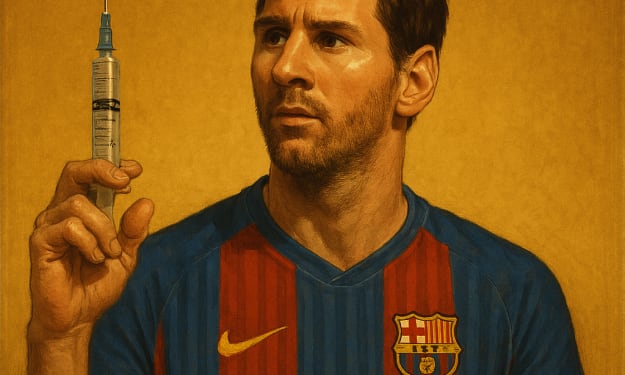
## The Needle and the Lion: How Lionel Messi Conquered Doubt, One Injection at a Time
The dusty streets of Rosario, Argentina, thrummed with the energy of countless kids chasing a dream embodied by a ball. Among them, darting with preternatural skill, was a tiny figure: Lionel Andrés Messi. His talent was undeniable, a spark of genius evident even then. But a shadow loomed over his dazzling feet – a shadow cast by his own stature. By age 11, while his peers shot upwards, Leo remained heartbreakingly small, standing just 4 feet 2 inches (1.27 meters). The whispers started, not about his magic, but about his size: "Too small... He'll never make it... He's not built for this." The truth, however, was far more profound than mere genetics. Leo Messi faced a formidable opponent long before any defender: *Growth Hormone Deficiency (GHD).*
By Shehzad Ahmadabout a year ago in Motivation
I Was Drowning in Burnout: My 30-Day Mental Health Reset That Saved My Sanity
I Didn’t Know I Was Burned Out—Until I Stopped Feeling Anything at All My days felt like copy-paste versions of each other: wake up, scroll, work, scroll more, sleep (if I could). I was exhausted but couldn’t rest. I was surrounded by people but felt empty. I thought I was just tired—until I realized I hadn’t laughed, cried, or felt joy in weeks.
By Khayal Muhammad about a year ago in Motivation
Created to Create: Why I Stopped Competing and Started Building. AI-Generated.
By Marc Reflects There came a time in my journey when I had to stop and ask myself: Am I really living, or just copying? Am I building something real, or simply trying to outdo the person next to me?
By Marc Reflects about a year ago in Motivation