healing
How to heal fully and properly.
Bouncing Back After a Setback: 8 Strategies for Resilience and Comeback Success
Setbacks are an inevitable part of life. Whether it's a failed exam, a rejected job application, a business collapse, or a personal disappointment, setbacks can feel discouraging. But what separates those who succeed from those who give up is how they respond to failure. The good news? You can train yourself to bounce back stronger than ever. Here are some practical strategies to help you recover, rebuild, and rise after a setback. 1. Allow Yourself to Feel, but Don’t Stay Stuck The first step to bouncing back is acknowledging the setback. It’s okay to feel disappointed, frustrated, or even angry. Suppressing emotions only makes them worse in the long run. What to Do: Give yourself permission to process your emotions. Cry if you need to. Journal your thoughts. Talk to a trusted friend. Set a time limit for your grief. Allow yourself a day or two (or a week for major setbacks), then commit to moving forward. Remind yourself: This is a chapter, not the whole story.
By Pure Crown2 years ago in Motivation
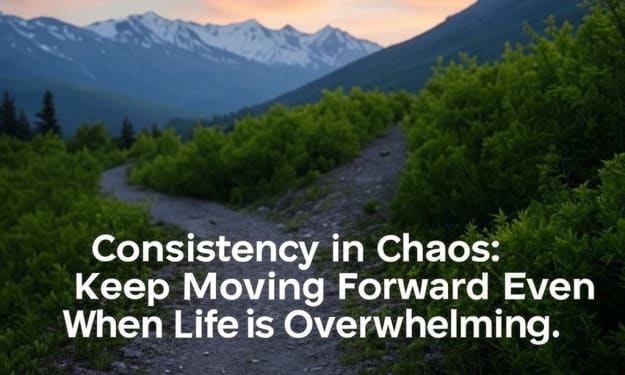
10 Unshakable how to maintain consistency in overwhelming Times
Life has a way of piling on responsibilities, deadlines, and unexpected challenges, leaving us feeling overwhelmed and stretched thin. In these moments, consistency—the steady, daily effort that leads to long-term success—can feel impossible. But what if I told you that consistency isn’t about doing more? It’s about doing what matters most, even when life feels chaotic. 1. Start with Your “Why” When you’re drowning in tasks, it’s easy to lose sight of why consistency matters. Take a moment to reconnect with your “why.” Why is this goal important to you? How will it improve your life or the lives of others? For example, if you’re trying to exercise consistently, remind yourself that it’s not just about looking good—it’s about feeling energized, reducing stress, and being healthy for your family. When your “why” is clear, it becomes easier to prioritize consistency, even on tough days. Action Step: Write down your “why” and keep it somewhere visible. Use it as a reminder when you feel like giving up. 2. Simplify Your Goals When you’re overwhelmed, trying to tackle too many goals at once can backfire. Instead, focus on one or two key areas where consistency will have the biggest impact. For example, if you’re juggling work, family, and personal projects, ask yourself: What’s the one habit that will make everything else easier? What small action can I take daily to move closer to my goals? By simplifying your goals, you reduce decision fatigue and create space for consistent action. Action Step: Identify one habit or goal to focus on for the next 30 days. Let everything else take a backseat. 3. Create a Minimum Viable Routine Consistency doesn’t mean doing everything perfectly—it means showing up, even in small ways. A “minimum viable routine” is the bare minimum you can do to stay on track, even on your busiest days. For example: If your goal is to exercise, commit to a 10-minute walk or stretch. If you’re building a writing habit, aim for 100 words a day. If you’re learning a new skill, dedicate 5 minutes to practice. These small actions may seem insignificant, but they keep the momentum going and prevent all-or-nothing thinking. Action Step: Define your minimum viable routine and commit to it daily, no matter what. 4. Use Time Blocking When you’re overwhelmed, consistency often falls by the wayside because you don’t have a plan. Time blocking—scheduling specific blocks of time for your priorities—can help you stay on track. For example: Block 15 minutes in the morning for meditation or journaling. Schedule 30 minutes in the evening for exercise or learning. Set aside 10 minutes before bed to plan for the next day. By treating these blocks as non-negotiable appointments, you ensure that consistency becomes a part of your daily routine. Action Step: Look at your schedule and block time for your top priority. Start with small, manageable chunks. 5. Focus on Systems, Not Motivation Motivation is fleeting, especially when you’re overwhelmed. Instead of relying on it, build systems that make consistency automatic. For example: Lay out your workout clothes the night before. Keep a journal and pen on your bedside table for morning reflections. Use a habit tracker app to monitor your progress. These systems remove friction and make it easier to stay consistent, even when you don’t feel like it. Action Step: Identify one system you can create to support your consistency. 6. Practice Self-Compassion When life gets overwhelming, it’s easy to beat yourself up for missing a day or falling behind. But consistency isn’t about perfection—it’s about progress. If you miss a day, don’t let it derail your entire journey. Instead, practice self-compassion and remind yourself that setbacks are part of the process. The key is to get back on track as soon as possible. Action Step: Write down a self-compassion mantra, such as, “I’m doing my best, and that’s enough.” Repeat it when you feel discouraged. 7. Leverage the Power of Micro-Habits Micro-habits are tiny actions that take less than a minute to complete but can have a big impact over time. When you’re overwhelmed, these small steps can help you stay consistent without adding stress. For example: Do one push-up after brushing your teeth. Write one sentence for your book or journal. Drink a glass of water as soon as you wake up. These micro-habits are so small that they’re almost impossible to skip, yet they create a sense of accomplishment and keep you moving forward. Action Step: Choose one micro-habit to incorporate into your daily routine. 8. Ask for Help Trying to do everything on your own is a recipe for burnout. When you’re overwhelmed, don’t hesitate to ask for help. For example: Delegate tasks at work or home. Ask a friend or family member to hold you accountable. Join a community or group with similar goals. By sharing the load, you free up mental and physical energy to focus on what truly matters. Action Step: Identify one area where you can ask for help and take action today. 9. Celebrate Small Wins When you’re overwhelmed, it’s easy to focus on what you haven’t accomplished. However, celebrating small wins can boost your motivation and reinforce your commitment to consistency. For example: Did you complete your minimum viable routine today? Celebrate! Did you show up, even when it was hard? That’s a win. Did you get back on track after a setback? Give yourself credit. These small celebrations remind you that progress is happening, even if it’s not always visible. Action Step: At the end of each day, write down one small win and celebrate it. 10. Remember: Consistency Compounds When you’re overwhelmed, it’s easy to feel like your efforts don’t matter. But consistency compounds over time, turning small actions into life-changing results. For example: Writing 100 words a day adds up to a book in a year. Exercising for 10 minutes a day improves your health over time. Saving $5 a day grows into a significant amount over the years. By staying consistent, even in small ways, you create a foundation for long-term success. Action Step: Trust the process and keep showing up, no matter how small the action. Final Thought Prioritizing consistency when you’re overwhelmed isn’t about doing more—it’s about doing what matters most. By simplifying your goals, creating a minimum viable routine, and focusing on progress over perfection, you can stay consistent even in the busiest seasons of life. Remember, consistency isn’t a sprint; it’s a marathon. Small, steady actions, repeated over time, lead to extraordinary results. So, take a deep breath, start small, and trust that your efforts will compound into something amazing.
By Pure Crown2 years ago in Motivation
How Jake Realized He Was Enough, Just As He Is
Jake had always felt like he was running a race he couldn’t win. No matter how hard he tried, how much he achieved, or how many people praised him, there was always a lingering thought in the back of his mind: It’s not enough. You’re not enough.
By MIGrowth2 years ago in Motivation
Vajrasana Benefits for Women: Strengthen Pelvic Muscles & Reduce Stress
Yoga, an ancient practice with a history spanning over 5,000 years, is deeply embedded in Indian culture and has now gained worldwide recognition. With its simple yet effective poses, yoga enhances relaxation, mental clarity, and physical strength. One such beneficial posture is Vajrasana, known for aiding digestion, strengthening pelvic muscles, and promoting a sense of calm and focus. It is especially advantageous for women.
By fitlifebyvidhan2 years ago in Motivation
Former meth addict
My addiction to methamphetamine started when I was 13 years old. June 2001, I lost my dad. I didn’t know how to handle the emotions I was experiencing. So I ran away for 2 weeks and I started using drugs. When I was using, the drugs numbed the pain and emotions I was experienced. The most painful thing was not being able to say good bye. Let’s Fast forward to the year 2007 when I found out I was pregnant with my son. I got sober for a couple years. Until I started using once again. My parents adopted him and it was the best option for him. In the year 2009 I got pregnant with my oldest daughter. Once again I stayed sober for a couple years. In the year 2010 I got pregnant with my middle daughter and during that time I was pregnant I was using however I didn’t find out I was pregnant until I was 7 ½ months along. So when I found out I was pregnant I got clean again. Child Protective Services was called on me my mother had called on me because she was worried about her granddaughters I was so mad at her and I stopped talking to her for years. So I started using it again to mask the pain and emotions I was feeling after my daughters got taken away by the state. In 2014 I found out I was pregnant with my youngest daughter. I called my mom and told her that I just found out I was pregnant I was homeless and using drugs and I asked to come home to turn my life around and my parents let me come home. I was sober for three years I moved into an apartment and I started using again. My mom and sister called Child Protective Services on me again because they were concerned about my daughter’s safety and well-being. I was so angry and hurt I kept using I lost my children my house myself and my family so the only thing I knew was self medication. I tried and tried getting and staying sober. Being homeless and trying to go to sleep wasn’t an option because being a single homeless woman horrible things could have happened to me. Being homeless is scary and stressful so using different types of drugs was the only way I could cope it was my normal. I live like this many years I got sick and tired of living this way and not having anything to live for.
By Lora Shields 2 years ago in Motivation
Opportunity and Its Utilization
Opportunity and Its Utilization Friends, opportunity is like a ladder in life—it helps us climb towards our dreams and aspirations. At every turn in life, opportunities knock on our doors, but recognising and making the best use of them is entirely up to us. Those who seize opportunities at the right time often achieve remarkable success, while those who ignore them may find themselves regretting later.
By Dipak Pawar2 years ago in Motivation
Mastering Your Mood: The Secret to Productivity
Let's discuss something sneaky—like stealth-mode sneaky—that is most likely destroying your output. And no, not your phone beeping every five seconds nor an infinite to-do list. Your mood is what drives this. Yes, your emotional condition and energy level. You wouldn't have seen that one arriving, then?
By Enes Alku2 years ago in Motivation
Fake Breaks and Time Leaks: The Silent Productivity Killers
Alright, let's discuss something subtly—like very sneaky. You know those times when you "just taking a quick break" to check your email, skim around Instagram, or view a haphazard YouTube clip? Indeed, such are not as benign as first seems. Actually, they could be undermining your output more than you could be aware of. The worst part is that they are not only arbitrary distractions; rather, they are what I like to refer to as time leaks and fake breaks. And believe me, these two fit rather nicely in efficiency heaven.
By Enes Alku2 years ago in Motivation
The Silent Killer of Productivity You Did Not See Approaching
Alright, let's discuss multitasking—something that might cause a few feathers to fly. Indeed, that activity we all boast of being some sort of superpower. Not according to a spoiler alert. Actually, it's most likely undermining your output more than you are aware of.
By Enes Alku2 years ago in Motivation
The Power of Starting: Overcoming Procrastination
Alright, let's discuss one of those sly little offenders that like playing around with our output—waiting for the "perfect moment." You know, that wonderful moment when the stars line up, the coffee is made exactly perfect, and you feel as like you could instantly rule the planet. A hint of spoilers: that moment? It hardly shows up at all. If it does, chances are someone else has already lapped you since they did not wait for it.
By Enes Alku2 years ago in Motivation
The Friday Effect: Why We Feel Happier and More Relaxed as the Weekend Approaches
It’s Friday! You can feel it in the air—the unofficial holiday of the workweek, where everyone suddenly finds a little extra energy, even if they’ve been dragging since Monday. Whether you’re in an office, a classroom, or, like me, just chilling in my hostel pressing my phone all day, Friday just hits differently. But why? Why does Friday feel lighter, happier, and full of possibilities—even if I have the same workload as Thursday? And more importantly, how can I bottle that Friday energy and use it for better productivity and happiness? Let’s dive into the psychology behind the Friday Effect—with a little humor, of course. Why Does Friday Feel So Good? 1. The Weekend Anticipation Effect Friday is like the appetizer before the weekend feast. Even if I have work or classes, just knowing that the weekend is coming makes everything feel more manageable. Scientists call this anticipatory happiness—the joy we feel just by looking forward to something. Think about it: ✅ Monday = “Ugh, five more days.” ✅ Wednesday = “Okay, halfway there.” ✅ Friday = “I survived! Time to celebrate!” My brain releases dopamine (the feel-good chemical) when I anticipate rewards, which is why even if I’m just lying in bed scrolling my phone, Friday still feels way more exciting than, say, a random Tuesday. 2. Social and Cultural Influence Let’s be honest—Friday has the best branding of any day. We’ve got “TGIF” (Thank God It’s Friday!) Restaurants and clubs offer Friday night specials Schools sometimes have shorter hours or “Casual Fridays” Even workplaces ease up—ever noticed how meetings mysteriously disappear on Fridays? All of this trains my brain to associate Friday with fun, relaxation, and an escape from routine. Even if I’m just staying in my hostel all day, writing some articles, and then rewarding myself with a good movie tonight—it still feels special. 3. The Psychological Power of ‘Closing Loops’ Ever noticed how people suddenly become super productive on Fridays? The same person who has been procrastinating all week will suddenly rush to complete assignments, emails, and deadlines. This is because my brain loves closure. Finishing tasks before the weekend makes me feel accomplished, which adds to the Friday high. Plus, let’s be real—I don’t want to drag unfinished work into the weekend (major vibe killer). So, whether it’s clearing my inbox, finishing up my schoolwork, or—like me—writing articles before switching to full “movie mode” tonight, completing things on Friday makes relaxation even sweeter. How to Harness the Friday Effect for Better Productivity and Happiness Okay, now that I know why Fridays feel so good, how do I make the most of this magic? 1. Use Friday Productivity to My Advantage If my brain is naturally wired to close loops on Friday, I can use that to get things done. Finish important tasks early so I can fully enjoy the evening. Make a to-do list for Monday so I don’t wake up stressed after the weekend. Clear out small annoying tasks (emails, laundry, errands) so I can relax with zero guilt. This way, I can fully enjoy the weekend without a productivity hangover. 2. Plan Something Fun (Even If It’s Small) I don’t need a wild Friday night out to feel the Friday Effect. Even small plans can amplify my happiness. Watching a movie (like I am tonight) Ordering my favorite food Calling a friend to catch up Even just going for a walk and enjoying the Friday vibes Giving myself something to look forward to makes Friday feel even more rewarding. 3. Bring the Friday Mindset to Other Days What if I could make every day feel a little more like Friday? Here’s how: Start my day with something fun (a good playlist, my favorite coffee) Plan midweek rewards (a Wednesday treat, a Thursday night movie) Find joy in small things (even a great meme can boost my mood) By sprinkling a little Friday energy throughout my week, I don’t have to suffer until the weekend. Final Thoughts: Enjoy My Friday! So, whether I’m closing out the week like a productivity boss or doing absolutely nothing and loving it, I’m going to enjoy it. Friday is a state of mind. Now if you’ll excuse me, my movie and snacks are waiting. What’s your Friday plan? Let me know in the comments—let’s celebrate the Friday Effect together!
By Pure Crown2 years ago in Motivation