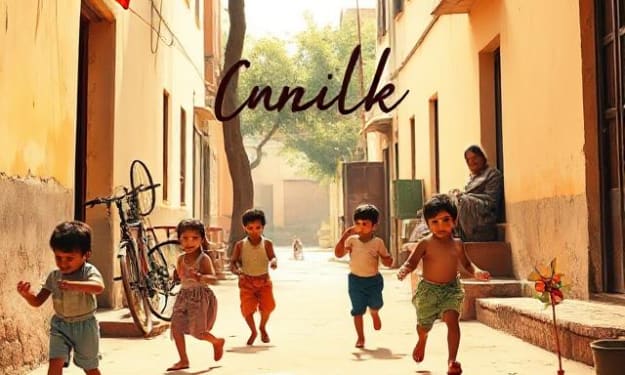
happiness
Happiness, defined; things that help you find happiness, keep it, and share it with others.
I Found a Letter in a Thrift Store Book—and It Changed the Way I See the World.
I wasn't planning on finding anything that day—let alone a piece of someone’s past. It was one of those rainy Saturday afternoons that just felt endless. The kind where the sky is stuck in a shade of dull gray and the air smells like wet pavement. The kind where nothing seems urgent except the desire to disappear for a little while. I had no plans, no destination. I just needed to be anywhere but home, alone with the swirl of thoughts I couldn't quite untangle. That’s how I ended up in a tiny thrift shop I’d never noticed before. It was tucked between a laundromat and a nail salon, the kind of place that looks more like an afterthought than a business. The sign was half-faded, the windows foggy from condensation. I almost passed it by. Inside, the place was dim and musty, and the air was thick with the scent of old paper, forgotten clothes, and worn-out furniture. There was a creak in the floorboards with every step I took. Something about that place felt suspended in time, like I’d stepped into someone else’s memory. It felt oddly comforting. I wandered aimlessly, brushing my fingers along old winter coats and boots that had clearly seen a lot of winters. There were chipped teacups, tangled costume jewelry, outdated electronics, and shelves cluttered with knick-knacks nobody had claimed in years. And then, tucked away at the back of the store, I found a small wooden bookcase. It was a little crooked, and the books were jammed in haphazardly, as though they'd been placed there without much thought. That’s where I found it—A Tree Grows in Brooklyn. The cover was soft from use, corners bent, the spine cracked in the middle. The pages were yellowing, and it had that slightly sweet, musty smell that only old books carry. I picked it up, not because I was looking for that particular story, but because something about it felt right. Like it was meant to find its way into my hands. As I flipped through it, something fell out—an envelope, aged and paper-thin, wedged neatly between the pages around Chapter 3. At first, I assumed it was just a forgotten receipt or maybe a bookmark left behind. But then I noticed it was unsealed. No name. No address. No date on the outside. Just a simple, cream-colored envelope, the kind that had yellowed softly with time. Curious, I opened it. Inside was a single folded sheet of lined paper, the handwriting small and careful. I began to read. --- June 4, 1965 To whoever finds this, If you’re reading this, I guess this book ended up somewhere new. That makes me happy and a little nervous, too. My name is Evelyn. I’m 19, and today I’m leaving home for the first time. I packed this book in my suitcase because I love it—and I guess I hoped it would comfort me somehow. I don’t know what will happen next. My father thinks I’m wasting my time going to college. He says it’s not a place for girls. But I want something more than what’s expected of me. I don’t want to just be “someone’s wife.” I want to write. To think. To matter. If you found this letter, maybe you’re facing something scary, too. Maybe you’re standing on the edge of a decision and wondering if you have the strength. I hope you do. I hope you know you’re not alone. Keep going. Please keep going. —Evelyn --- I read the letter once. Then again. And again. Each time, her words echoed a little louder in my mind, like ripples in still water. I wasn’t just reading someone’s memory. I was holding something sacred—something real. A snapshot of courage. A declaration of hope. A bridge, built from one life to another, across decades of time. There I stood, in a quiet thrift store on a rainy afternoon, holding a stranger’s letter in my hands—and yet I felt known. Evelyn didn’t know who would read her words, but somehow they found me at exactly the right moment. As if she had written it not just for someone, but for me. At the time, I was wrestling with my own doubts. I had been thinking about quitting a writing class I’d signed up for, feeling like maybe it didn’t matter. Like maybe the world didn’t need another voice trying to be heard. Like maybe mine wasn’t worth listening to. But here, in Evelyn’s neat script, was a message that shook me awake: “I want to write. To think. To matter.” I bought the book, of course. The cashier barely looked up as I paid in cash. I don’t even think they knew the treasure that was tucked inside. Now, the book lives on my nightstand. The letter, still carefully folded, remains tucked between Chapter 3 and 4—right where I found it. Sometimes, late at night, I take it out and read it again. I imagine Evelyn, a young woman with a suitcase full of dreams, writing those words at a tiny desk in 1965. I wonder what happened to her. Did she become a writer? Did she make it through college despite what her father said? Did she ever know that her letter reached someone? I may never know. But what I do know is this: her words mattered. And if her words mattered—so do mine. So do yours. There’s something powerful about the way stories travel. The way they outlast us. The way they find their way into someone else’s hands long after we’ve written them. Like a whisper that travels through time, reminding us we’re not alone. Evelyn’s letter changed something in me. Not in a dramatic, movie-ending kind of way—but in a quiet, lasting one. Like a seed planted deep, waiting to bloom. So now, when I hesitate, when I doubt, when I wonder if I’m good enough or brave enough, I remember that letter. I remember Evelyn. And I keep going. Please—you keep going, too.
By Shaida 2 years ago in Motivation
Little Joys of Childhood
There was a time when happiness came wrapped in simplicity. It didn’t need a smartphone, a credit card, or a weekend getaway. It only needed a few friends, a patch of open ground, and the sound of the ice cream cart’s bell in the distance. That was childhood — a time of wonder, curiosity, and the little joys that stitched our days into warm memories. I grew up in a small town, where life was slow, yet full of color. Our street was not wide, but it echoed with laughter every evening. We didn’t have parks nearby, so the street became our cricket pitch, our race track, and sometimes even our imaginary kingdom. Every day after school, we’d throw off our bags and rush out, still in uniform, with dust-covered shoes and uncombed hair. Our mothers shouted from behind, “Pehle kuch kha lo!” (Eat something first!) but we were already halfway out the door. We couldn’t waste a single minute of playtime. Those moments, those races under the sunset, and those little arguments over whose turn it was to bat—those were the treasures of our day. One of my fondest memories was playing with marbles—kanche. Each of us had our own prized collection, kept in rusted biscuit tins or cotton pouches stitched by our mothers. We played for hours, crouching low, measuring distances with twigs, and showing off our best shots. Winning someone else’s best marble was a moment of pride, but the real joy was in the shared laughter, the teasing, and the thrill of aiming just right. Summers had their own magic. The fan spun lazily in the afternoon heat while we lay on the cool floor, sipping mango juice and reading comics like Chacha Chaudhary or Tinkle. But evenings were different. They were made for adventures. As the sun dipped, we gathered for langri, pakdam pakdai, and chhupan chhupai. The neighborhood kids would all show up, barefoot and buzzing with energy. We’d hide behind trees, walls, or sometimes even inside someone’s open gate. The thrill of being caught or not being found was unmatched. Rainy days were even better. The first rain of the season brought a smell that no perfume could ever match—the scent of wet earth. We’d run outside, arms stretched wide, letting the rain soak us completely. We built paper boats and watched them float away in the water-filled streets, cheering like we had launched real ships. Sometimes, a bigger wave would swallow our little boat, and we'd chase the current, laughing as our feet splashed in muddy puddles. Then there were the festivals—when joy became a community celebration. On Eid, our friends brought sheer khurma, and we returned the love on Diwali with sweets and crackers. Holi was pure madness. We didn’t need expensive colors—some gulal, a few buckets of water, and sneaky balloons thrown from rooftops were enough to make it unforgettable. Our clothes were ruined, our faces unrecognizable, but our smiles were always the brightest. One cannot forget the bond we shared with our grandparents. My nani used to tell us bedtime stories of kings, magical birds, and clever rabbits. We’d sit around her on the charpai, eyes wide open, hanging on to every word she said. Sometimes she added her own twist to the stories, and we never knew which part was real and which was made up. But we believed it all. That was the magic of childhood—the ability to believe. There was also a special joy in collecting things—colorful wrappers, shiny stones, feathers, and even matchbox covers. They weren’t expensive, but they were priceless to us. We’d trade them like precious gems and show them off with pride. I remember creating a ‘museum’ in an old shoebox and charging my cousins one rupee for a “tour.” Life back then wasn’t without its troubles. We got scolded for bad grades, scraped our knees often, and sometimes cried over lost toys. But we bounced back quickly. A piece of imli (tamarind) or a candy from the roadside shop was enough to lift our spirits. We didn’t need much, because we had everything—we had childhood. Now, as I sit in front of a glowing screen, with notifications popping up and bills waiting to be paid, I often find myself drifting back to those days. I think of the smell of my old schoolbag, the feel of wet mud between my toes, the sound of my best friend’s laugh, and the warmth of my mother’s lap after a long day of play. Those days are gone, but the little joys remain—etched in memory like a beautiful painting. They remind me that true happiness isn’t found in big achievements or possessions, but in the small, everyday moments we often overlook. So whenever life feels overwhelming, I close my eyes, take a deep breath, and revisit those lanes of my past. The lanes where I chased kites, rode bicycles with no brakes, and laughed till my stomach hurt. And for a moment, I am a child again.
By IRSHAD MUHAMMAD2 years ago in Motivation
The Pressure of Social Interactions and the Need for Small Talk
Have you ever felt this? You step into a room buzzing with laughter, chatter, and clinking glasses. People greet each other with easy smiles. Conversations flow effortlessly around you. But inside, you feel a storm rising. "What do I say? Should I compliment their outfit? Ask about their job? What if I say something stupid? What if they think I’m boring?" The anxiety sits heavy on your chest, tightening your throat, making your mind race. You smile, nod, laugh when they laugh, but inside you are just surviving minute by minute. Small Talk, Big Exhaustion We think of small talk as harmless chatter — commenting on the weather, a recent show, or how busy work has been. But for many, it’s not harmless. It’s draining. Every question feels like a test. Every silence feels like a failure. You carefully measure every word you say, hoping it lands well, hoping it keeps the flow going. Behind the scenes, your brain is working overtime: Are they interested? Did I sound weird? Why did I just say that? Please, let this end soon... The exhaustion of constantly performing, constantly managing impressions, leaves you emotionally wiped out by the end of even a short gathering. You Are Not Alone Here’s the truth no one says aloud: You are not the only one feeling this. That smiling, confident person you admire across the room? Maybe they practiced that smile in the mirror. Maybe their heart is racing too. Maybe they’re silently rehearsing their next sentence, terrified of an awkward pause. Social anxiety hides behind polished appearances. So many people walk into social situations feeling underprepared, underconfident, and overstimulated — but they mask it so well, you think you’re the only one struggling. You’re not. Do We Always Need to Fill the Silence? Imagine a world where silence isn’t awkward. Where you can sit with someone without feeling the pressure to talk. Where a simple shared moment, a glance, or a quiet sip of coffee holds meaning on its own. Why do we believe that connection only happens through words? Why is performance a requirement in every interaction? Maybe it’s time to let go of that old idea. Maybe true connection comes from being present, not just being talkative. The Science Behind It Studies show that people with social anxiety often experience heightened activity in the amygdala — the part of the brain responsible for fear and threat detection. This means even casual conversations can feel like a threat. Psychologists explain that our brains are wired to seek social approval because, evolutionarily, being accepted by a group meant survival. But today, in a world overflowing with social interactions — online and offline — this wiring often backfires, leaving us anxious, drained, and isolated. Personal Stories: A Glimpse Inside Emma, 27, describes attending a friend’s birthday party: "I stood there, clutching my drink, smiling when people passed by, but every time someone tried to chat, I panicked. I kept thinking, they’re going to figure out I’m boring. I left early, went home, and cried, wondering why it’s so hard for me." Jamal, 34, shares: "In work meetings, I rehearse sentences in my head over and over before speaking. By the time I get the courage, the topic has moved on. I feel invisible, but speaking up feels like jumping off a cliff." These stories are not rare. They echo in countless hearts. Breaking the Cycle: What Can We Do? Here are some strategies to ease the pressure: 1. Reframe Your Thoughts Instead of thinking, "They’ll judge me," try: "They’re human too, and probably worried about how they come across." 2. Shift Focus Outward Instead of monitoring how you’re performing, focus on genuinely listening. People love to feel heard. 3. Practice Small Moments Build your confidence by practicing brief interactions — a smile at the barista, a greeting to a neighbor. Small wins add up. 4. Allow Silence Remind yourself: silence isn’t failure. It can be comfortable. Take the pressure off. 5. Be Kind to Yourself After social events, don’t spiral into self-criticism. Celebrate the effort you made, even if it felt awkward. A Beautiful Truth Here’s the most beautiful part: you are worthy of connection, even without perfect words. You don’t need to be the funniest, the smoothest, or the most interesting person in the room. You just need to be you. Your quiet presence, your thoughtful gaze, your simple "hello" — they matter more than you realize. Every human heart is looking for connection, and sometimes, the bravest thing you can do is just show up. So next time you feel that pressure rising, breathe deep, soften your shoulders, and remind yourself: You are enough, just as you are.
By Sohail Abbas2 years ago in Motivation
"How to Become a Legendary Content Creator Like MrBeast: How to Go from Nothing to Viral". AI-Generated.
[The Opening Line, Bursting with Vitality and Emotion] Do you ever ponder the possibility of a million views? Do you want to create content that not only entertains but inspires, helps, and makes a difference?
By Habib Mahmud2 years ago in Motivation
From Zero to Billionaire: The Incredible True Story of MrBeast’s Rise to YouTube Royalty
Introduction In the vast world of YouTube, few personalities stand out like Mr beast, whose real name is Jimmy Donaldson. Today, Mr beast is considered one of the wealthiest and most influential YouTubers globally. However, his rise to fame and fortune wasn’t an easy one. Jimmy’s story is a testament to the power of hard work, creativity, and dedication. From his humble beginnings as a teenage content creator to becoming a billionaire through his viral videos and charitable acts, MrBeast's journey is nothing short of extraordinary. In this success story, we’ll explore how MrBeast went from being an average YouTuber to a global sensation.
By Arab Shah2 years ago in Motivation
My Breaking Point Became My Turning Point
I still remember the day I hit rock bottom. I was drowning in debt, my relationships were strained, and I felt like I was sleepwalking through life. Every morning was a struggle, every decision felt like a monumental task, and every night was a battleground against self-doubt and anxiety. I was lost, and I didn't know how to find my way back.
By Zakir Ullah2 years ago in Motivation
"The Art of Doing Nothing: Why We All Need to Embrace Boredom
iting The Art of Doing Nothing: Why We All Need to Embrace Boredom In a world that constantly glorifies productivity, hustle, and busyness, doing nothing has become an almost shameful act. Our schedules are packed, our minds are overstimulated, and even moments of rest are filled with endless scrolling through social media. Yet, in the quiet moments when we’re not actively doing something—those stretches of so-called “boredom”—we often find the most meaningful insights, creativity, and peace. This is the art of doing nothing, and it’s a skill we must all learn to embrace in order to truly thrive. Redefining Boredom Boredom is often viewed negatively. It’s associated with laziness, inefficiency, or a lack of purpose. However, boredom is not inherently bad—it’s simply the absence of immediate stimulation. When we experience boredom, our minds are free to wander, reflect, and reset. It’s in these unstimulated states that our brains begin to connect ideas, dream up solutions, or even question the direction of our lives. Psychologists have found that boredom can enhance creativity. A 2014 study published in the journal Academy of Management Discoveries found that people who engaged in a boring activity—like sorting beans by color—came up with more creative solutions to problems afterward than those who were actively engaged in more stimulating tasks. In short, boredom can be a breeding ground for innovation. The Pressure to Be Busy Modern society equates being busy with being important or successful. There’s a constant pressure to “do more,” to “stay productive,” and to fill every moment of our day with a task, a goal, or a screen. Even our downtime has been hijacked by the need for stimulation—Netflix, TikTok, YouTube, podcasts, emails, and texts all fight for our attention. This relentless pace leaves little room for stillness, which is essential to our mental and emotional well-being. Constant stimulation doesn’t allow the brain to rest, which can lead to stress, anxiety, and burnout. We become so used to distractions that the mere idea of sitting quietly, doing nothing, can feel uncomfortable or even frightening. But this discomfort is precisely why doing nothing is so important. The Art of Doing Nothing Doing nothing doesn’t mean being lazy or unproductive in the long term. It means allowing yourself space to be present without the need to perform or achieve. It’s about giving your mind and body a break from the constant pressure of output. This could mean sitting on a park bench without your phone, lying on the grass and watching clouds, sipping coffee in silence, or simply daydreaming. In many cultures, the concept of doing nothing is celebrated. In Italy, it’s called dolce far niente—the sweetness of doing nothing. In the Netherlands, they embrace niksen, which literally means “doing nothing” and is recognized as a legitimate way to reduce stress and restore balance. These philosophies acknowledge that rest, stillness, and unstructured time are not luxuries but necessities. Benefits of Embracing Boredom When we allow ourselves to be bored and unoccupied, several positive things happen: 1. Mental Clarity: Without the constant noise of distraction, we begin to hear our inner voice more clearly. Thoughts and emotions rise to the surface, allowing us to better understand ourselves. 2. Creativity Boost: The idle mind becomes a playground for the imagination. Some of the best ideas arise when we’re not trying to think of anything specific. 3. Stress Reduction: Doing nothing helps to calm the nervous system and counteract the stress hormone cortisol, leading to a greater sense of calm and well-being. 4. Better Focus: Just like muscles need rest to grow stronger, our attention span needs downtime to remain sharp and effective. 5. Reconnection with the Present: In boredom, we return to the now. We become more aware of our surroundings, sensations, and simple pleasures we usually overlook. How to Practice Doing Nothing Embracing the art of doing nothing starts small. You don’t need to schedule hours of boredom—just find small windows of time where you allow yourself to simply be. Try leaving your phone behind during lunch, sitting quietly for five minutes in the morning, or taking a short walk without any destination or earbuds. It’s important to resist the urge to fill every moment. Let boredom arise. Let your thoughts roam. And when you feel uncomfortable, stay with that feeling. That’s where the transformation begins. Conclusion Doing nothing is not a waste of time—it’s a radical act of self-care in a world addicted to noise and motion. Boredom isn’t a void to be feared but a space to be cherished. It’s in this stillness that we rediscover who we are, tap into deeper creativity, and find true rest. So the next time you find yourself bored, don’t reach for your phone. Sit with it. Embrace it. Let boredom do its quiet, necessary work.
By Abid khan2 years ago in Motivation
“5 Signs You're Living Someone Else’s Dream”
It Took Me Years to Realize—Don’t Make the Same Mistake I was 26 when I landed the job everyone said I should want. The salary was great. The office was sleek. The business card even had that satisfying weight to it—the kind that made you feel important when you slid it across a table. My parents were proud. My friends were impressed. My LinkedIn glowed. But something felt off. Every morning, I’d sit in traffic gripping my coffee like a lifeline, staring blankly at taillights and wondering: Is this it? At first, I blamed stress. I told myself it was just the adjustment period. That all good things take time to feel right. But days turned into weeks. Then months. And a dull ache started to settle in—a quiet voice I kept trying to silence. I was successful. I was doing everything “right.” So why did I feel like I was failing? It took me years to realize: I wasn’t living my dream. I was living someone else’s. --- The Invisible Script We’re All Given Most of us are handed a script from the moment we’re old enough to understand language. Go to school. Get good grades. Choose a stable career. Climb the ladder. Retire early. Be happy. And we follow it—because we’re told that’s what success looks like. It’s safe. It’s predictable. It’s what “everyone” does. But here’s what nobody tells you: following the script doesn’t guarantee fulfillment. Sometimes, it leads you so far from yourself that you forget who you really are. I was chasing milestones I didn’t even question—because they looked good on paper. Because they made people nod in approval. Because veering off that path felt like failure. But deep down, I wasn’t building a life. I was performing one. --- The Wake-Up Call The shift didn’t happen all at once. There wasn’t a dramatic quitting scene or a sudden spiritual awakening. It was quieter than that—more like erosion than explosion. I started noticing things: The way my energy drained after meetings, but surged when I wrote in my journal. How I envied people doing creative work, even if they made less money. That sick feeling on Sundays, knowing Monday was coming. Then came the breaking point. I was passed over for a promotion I didn’t even want—but I cried about it. Not because I needed the role, but because it made me realize how much of my self-worth was tied to something I didn’t care about. That night, I wrote one line in my notebook: Whose life am I living? --- Learning to Listen to Myself It took time to unlearn the noise. I started asking hard questions: If no one was watching, what would I be doing right now? What moments make me lose track of time? When do I feel most like myself? And slowly, the answers came. I loved storytelling. I loved helping people reflect. I loved creating—not for applause, but for connection. That’s when I began to write—seriously. Not in the margins of my day, but in the center of it. I started publishing essays. I shared things I thought would scare people off—but instead, they drew others in. My life didn’t change overnight, but it began shifting in the right direction. Toward me. --- Don’t Make the Same Mistake If you’re reading this and something inside you feels unsettled—don’t ignore it. That feeling is not weakness. It’s wisdom. It’s your inner self, knocking. Don’t wait years to answer. You don’t need to quit your job tomorrow or throw your life into chaos. But you do need to ask the question: Is this really what I want? And if the answer is no, then know this: you are allowed to change. You are not a failure for choosing a different path. You’re not ungrateful for wanting more. You’re not selfish for prioritizing joy over performance. You are human. And humans were made to grow—not to conform. --- The New Definition of Success Today, my life looks less polished—but it feels more true. I earn less money, but I earn more peace. I don’t have a corner office, but I have space to breathe. I’m not chasing someone else’s dream—I’m creating my own. And that, I’ve learned, is what real success looks like: Living a life that aligns with your values. Waking up and feeling whole—not just productive. Doing work that lights you up—even when no one’s watching. It took me years to realize all of this. But you don’t have to wait that long. Start asking the hard questions now. Follow the whisper before it becomes a scream. Because the biggest mistake isn’t taking a wrong turn—it’s staying on a path that was never yours to begin with.
By Abid khan2 years ago in Motivation
Climbing to the Top 20%: The Path to Success and Financial Freedom
Have you ever wondered why a small portion of people seem to earn most of the money and enjoy the best that life has to offer? This is not a coincidence. It reflects a well-known concept called the Pareto Principle, or the 80/20 Rule. Named after Italian economist Vilfredo Pareto, who first introduced it in 1895, this principle states that 20% of the people generate 80% of the results, wealth, or rewards in any given situation. This pattern shows up in business, economics, and nearly every area of life.
By Abdul Mateen 2 years ago in Motivation
Choosing to be Better
“How wonderful it is that nobody need wait a single moment before starting to improve the world.” – Anne Frank This quote struck me the very first time I read it. It was simple yet profound-gentle, but unshakably powerful. Over the years, it has become a quiet mantra I return to again and again. Because embedded in those few words is something revolutionary: the reminder that we don’t have to wait.
By Annie Edwards 2 years ago in Motivation