happiness
Happiness, defined; things that help you find happiness, keep it, and share it with others.
How to Face Every Problem in Your Life — Even When It Feels Impossible
Life doesn’t ask for permission before it throws chaos your way. One minute you’re cruising, and the next — your plans fall apart, your confidence crumbles, and nothing makes sense. Problems are the price of being alive. Some are small — a bad day, a missed deadline, a broken phone. Others hit harder — losing someone, failing big, or wondering if you’ll ever feel “okay” again. But here’s the truth most people don’t say out loud: ** It’s not the problem that defines you — it’s how you face it. ** This isn’t about being fearless. It’s about finding strength when fear shows up anyway. Let’s break down how to face any problem — without losing yourself in the process. --- ### 1. Feel Everything — Then Get Clear The first step isn’t action. It’s **acknowledgment**. Feel the frustration. Cry if you need to. Scream into a pillow. Go silent for a while. You’re allowed to break — just don’t unpack and live there. Clarity comes after the emotional fog clears. Once you’ve let the emotions breathe, ask: - What’s actually happening? - What’s in my control? - What’s just fear talking? You can’t solve a problem while pretending it doesn’t hurt. You solve it by respecting it — and then rising above it. --- ### 2. Break It Down Into Smaller Fights Big problems feel like monsters because we try to defeat them in one swing. But most problems don’t need one big move — they need **small, consistent actions**. Ask yourself: - What’s the first small win I can get today? - What’s the next right thing I can do? If the whole picture overwhelms you, zoom in. Don’t try to fix your whole life. Fix the next 10 minutes. Momentum starts small — but once it starts, it grows fast. --- ### 3. Don't Do It Alone (Even If You Want To) We’re taught to “be strong” by going silent. But silence often breeds shame. And shame keeps you stuck. Here’s the truth: **You don’t need 50 people. You need one real one.** Tell someone. A friend. A mentor. A stranger on the internet. A therapist. You don’t have to hand them your burden — just let them see you carrying it. Being witnessed in your struggle gives you power. It turns isolation into strength. --- ### 4. Reframe the Pain You can’t always choose what happens, But you can choose the **meaning** you attach to it. Ask yourself: - What is this problem teaching me? - What version of me could come from this pain? - How might this be preparing me for something greater? This isn’t toxic positivity. It’s realignment. Reframing doesn’t remove the pain — it gives it a purpose. --- ### 5. Remember: You’ve Done Hard Things Before You’ve made it through bad days. You’ve carried things people never even knew about. You’ve smiled through tears. You’ve woken up and kept going when you didn’t want to. That’s not weakness. That’s **proof**. Proof that you’re more resilient than you give yourself credit for. Don’t forget how far you’ve come — even when you’re not where you want to be yet. --- ### Final Thoughts: You’re Allowed to Struggle — But You’re Not Meant to Stay There Problems are not signs of failure. They are part of the human experience. The goal isn’t to avoid problems. It’s to get **stronger, wiser, calmer, and braver** through each one. So next time you’re in the storm — don’t just ask, “Why me?” Ask: “What is this building in me?” Then take a deep breath. Stand up. And face it. You don’t have to conquer everything today. You just have to **show up** stronger than the problem. --- **Comment below what problem you're facing in your life right now — and I’ll write a dedicated story to help you solve it.** No judgment. No fluff. Just real help for real humans .
By SHADOW-WRITES2 years ago in Motivation
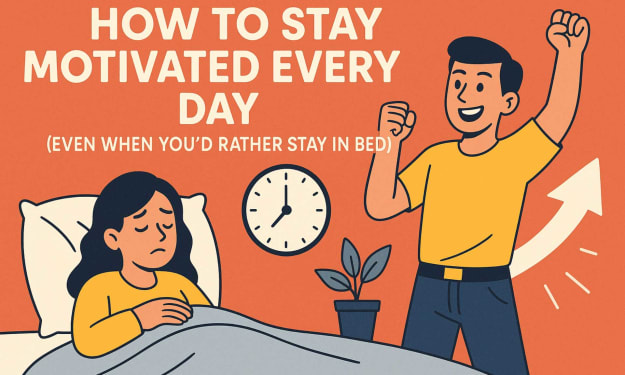
🚀 How to Stay Motivated Every Day (Even When You'd Rather Stay in Bed)
Let’s be real—staying motivated every single day sounds like the dream, doesn’t it? But if you’re anything like me, some days you wake up feeling like a superhero… and others? Well, you feel more like a burrito wrapped in a blanket. And you know what? That’s totally normal.
By Md Zillur Rahaman Chowdhury2 years ago in Motivation
Lessons from the Road
Once upon a time, in a bustling exchange town settled between verdant mountains and dry fields, lived a persevering dealer named Ibrahim. Ibrahim was famous for his judgment and unwavering work ethic. Each week, he would set out on long ventures over tricky territories, conveying products to neighboring towns. Going with him on these strenuous trips was his faithful jackass, Buried, a hefty animal with a tender personality but unmatched resilience
By Fayaz ahmad2 years ago in Motivation
How Small Habits Can Lead to Big Success: The Power of Consistency 🌱
The Power of Small Habits We all dream of achieving something extraordinary, whether it’s building a successful career, maintaining a healthy lifestyle, or living a life full of purpose. But here’s the catch — big success doesn’t happen overnight. It’s not about taking massive actions in a short burst. Instead, it’s the small, consistent habits that build over time and shape the life we lead. If you’re looking to change your life or reach a big goal, it’s easy to feel overwhelmed by how far away it seems. But let me tell you something: You don’t need huge changes to create massive results. It’s the little things you do every day that matter the most. --- Tiny Habits, Big Impact 🔥 Think of your daily habits as small drops in a bucket. At first, they might seem insignificant. But over time, those drops add up, and soon enough, you’ve filled the bucket. This principle is called the compound effect, and it’s a concept that’s been used by some of the most successful people in the world. Take a look at any high achiever, and you’ll notice that their success isn’t due to one huge moment — it’s the result of consistent, small actions that lead to bigger outcomes. --- The Secret to Success: Consistency Over Intensity 💪 The secret isn’t in working harder or doing everything at once. The magic lies in being consistent. The more you repeat a small habit, the more it becomes a part of who you are. Eventually, it becomes automatic, and you don’t even have to think about it. For example, instead of committing to run 5 miles a day (which might feel like a huge commitment), you could start with 5 minutes of jogging. Doing this every single day will help you gradually build endurance, and before you know it, running becomes a natural part of your routine. --- Examples of Small Habits That Lead to Success 🏆 1. Reading 10 Pages a Day 📖 If you read just 10 pages of a book every day, that’s 3,650 pages in a year! Imagine how much you would learn. Over time, this habit can make you a highly knowledgeable person. 2. Waking Up 30 Minutes Earlier ⏰ Waking up just half an hour earlier can give you extra time to work on your goals. You could use this time for personal development, meditation, or planning your day. This small change can lead to huge productivity gains. 3. Drinking More Water 💧 Drinking an extra glass of water every day can improve your health in ways you might not even notice. Small health changes like this add up to huge benefits over time. 4. Writing for 10 Minutes a Day ✍️ Whether it’s journaling, blogging, or writing a book, committing just 10 minutes a day to writing can result in a finished book or blog after a few months. That’s the power of consistency! 5. Exercising for 15 Minutes Daily 🏋️♂️ A 15-minute daily workout is better than going all-out once a week. This habit keeps you in shape, improves mental clarity, and boosts overall health. --- Why Small Habits Are So Effective 🧠 The reason small habits work so well is because of how our brains are wired. When we do something over and over, our brain creates neural pathways that make it easier to repeat that behavior without effort. Once a habit becomes ingrained in your brain, it’s not just about the action anymore — it becomes part of your identity. So, instead of thinking, “I’m trying to be healthy,” you start thinking, “I am a healthy person.” --- How to Start Small: Make It Ridiculously Easy 😌 Here’s a secret: The easier you make a habit, the more likely you are to stick with it. Don’t try to start big. Instead, make your habit so easy that you can’t fail. For example: Start by walking for 5 minutes a day instead of committing to an hour-long workout. Write just one sentence a day instead of committing to writing 500 words. Drink one glass of water after you wake up instead of trying to drink 8 cups a day immediately. The key is to make the habit so simple that you can’t make excuses. Once you’ve mastered the small habit, you can gradually increase it. --- The Compound Effect: Small Changes Lead to Big Results 📈 The compound effect works because habits build upon each other. Once you’ve established one habit, it becomes easier to add another. Small successes give you the confidence and momentum to keep going. For example, let’s say you’ve gotten used to walking for 5 minutes every day. After a few weeks, you might naturally increase that to 10 minutes, then 20 minutes. Eventually, you’ll find yourself running long distances with ease because you built up that habit one small step at a time. --- Take Action Today: Start Small, Dream Big ✨ You don’t need to overhaul your entire life today. Start small. Start with one habit that’s easy to commit to. Over time, as you build more and more positive habits, you’ll start seeing huge results in your life. Success isn’t about doing everything at once. It’s about making tiny, consistent efforts that add up to something amazing. So, what will your first small habit be? Maybe you’ll write one page of your book, or stretch for 5 minutes a day, or meditate for a minute each morning. No matter what you choose, remember — consistency is the secret to massive success. Start today. Your future self will thank you! 🌟
By Akshit RANA2 years ago in Motivation
Why Are People Less Intelligent Than You Becoming Wealthy?
Have you ever noticed someone who seems less intelligent than you but is still earning more money? It can evoke a sense of jealousy. You might wonder if these individuals possess some hidden genius. However, the reality is that they may not be as clever as you perceive them to be.
By Ayush Verma2 years ago in Motivation
From Rags to Riches. Content Warning.
Growing up in a dusty village in Pakistan, Adeel knew what hunger felt like—not just the hunger for food, but the hunger for a better life. His father sold vegetables from a pushcart on the roadside, earning barely enough to keep the family afloat. School was a luxury they could hardly afford, but Adeel insisted on going—even if it meant studying by candlelight after a full day helping his father sell tomatoes and onions. His childhood wasn’t filled with toys or gadgets. It was filled with dreams. Dreams that seemed too big for a boy born into poverty. The Struggles of a Street Vendor’s Son Adeel was no stranger to hard work. By the age of 12, he knew how to haggle with wholesale suppliers, handle customers, and calculate daily earnings in his head. People around him often mocked his ambitions. “What will a street vendor’s son ever become?” they laughed. But Adeel had already decided—he would not spend his entire life pushing a cart. After completing high school with the help of a kind-hearted teacher who waived his fees, Adeel started learning basic English and computer skills at a local internet café. Every night, he watched YouTube videos about online businesses, e-commerce, and most of all—Amazon. He couldn’t afford a laptop, so he saved screenshots on a borrowed phone and read them offline whenever he got a chance. Knowledge became his obsession. A Ticket to a New Life At 22, Adeel made the bold decision to go to Dubai, even though he had no relatives there, no job, and no clear plan. He took a loan, bought a one-way ticket, and landed in the City of Gold with only 700 dirhams in his pocket. Life in Dubai was not what he expected. He worked as a helper in a warehouse during the day, earning just enough to survive. But at night, he kept learning. He watched tutorials, joined Facebook groups about Amazon FBA, and messaged strangers for advice. He was laughed at, ignored, and even scammed once—but he didn’t stop. After 14 months of non-stop grind, Adeel saved enough to launch his first product on Amazon UAE: a simple home storage box. It failed. But his second product—a medical-grade thermometer—sold out within two weeks. He reinvested every dirham, kept his lifestyle simple, and focused on learning more. Slowly, his small Amazon store turned into a stable business. Building an Empire from the Bottom Three years later, Adeel now owns a registered trading company in Dubai. His Amazon storefront offers over 60 products in home, medical, and kitchen categories. He has hired a small team, including two sales agents working on commission across the UAE. He didn’t just change his life—he built a bridge for others. Every month, he sends money back to his family. His younger brother is now in university. He even started a small scholarship fund for kids in his home village who can’t afford school. Adeel still lives modestly. No flashy cars, no big parties. When asked why, he simply says, “I remember where I came from. That’s what keeps me going.” Lessons from Adeel’s Journey Adeel’s story is not just about money. It’s about vision, resilience, and faith. Here are three takeaways from his journey: 1. Dreams Don’t Belong to the Rich Only If you can see it in your mind, you can hold it in your hand. 2. Failure is Just a Lesson in Disguise Adeel’s first product failed—but it taught him more than any success ever could. 3. Don’t Wait for the Perfect Moment—Create It He didn’t have a plan, money, or connections. What he had was belief. Final Thoughts In a world full of noise, Adeel’s story is a whisper of hope. It reminds us that no background is too humble, no dream too big, and no struggle too long—if you keep moving forward. His journey from a dusty street cart in Pakistan to a business hub in Dubai proves one timeless truth: Success doesn’t come to those who wait. It comes to those who dare.
By Tahir Mehmood2 years ago in Motivation
From Shadows to Sunrise
At sixteen, Maya's voice barely left her throat. Not because it lacked power or beauty — in fact, those who overheard her humming to herself would pause, struck by the soul carried in her quiet melodies. But Maya didn’t believe in her voice. Not yet.
By Rahimullah Mohmand2 years ago in Motivation
One Choice Away
Ever find yourself sitting in total silence, maybe staring at the ceiling or your phone, thinking... How the heck did I get here? Not like in a dramatic movie moment, but just that quiet realization that somewhere along the line, something got off track. Maybe it's your job that just sucks the life outta you. Or a relationship where you feel like a background character. Or maybe, you just don’t recognize yourself anymore.
By Md Motiur Rahman2 years ago in Motivation
The Shocking Truth About Weight Loss Nobody Talks About
Weight loss is one of the most widely discussed topics in the world of health and wellness. From fitness influencers on social media to late-night commercials promoting the next miracle supplement, advice on shedding pounds is everywhere. Yet, despite all the noise, millions of people still struggle to lose weight—and more importantly, to keep it off. Why is that? Why do so many motivated individuals, who follow diet plans and exercise routines religiously, still face setbacks? Beneath the surface of meal prep photos and gym selfies lies a lesser-known truth about weight loss—one that rarely makes headlines, but might change the way you look at your journey entirely. Let’s explore what no one really talks about. 1. It’s Not Just About Willpower For years, many people believed that losing weight was simply a matter of “eating less and moving more.” While those principles are generally true, they don’t paint the full picture. Weight loss is not just a physical challenge—it’s a biological and psychological one as well. Your body has built-in systems designed to protect you from losing weight too quickly. Hormones like ghrelin (which increases appetite) and leptin (which signals fullness) shift as you lose weight, often making you feel hungrier and less satisfied with food. This is your body’s natural way of maintaining balance. So if you’ve ever felt like your body was resisting your progress, you’re not imagining it. It’s a survival response. And understanding this can help you be more patient and compassionate with yourself. 2. The Scale Doesn’t Tell the Whole Story Here’s another truth people often overlook: the number on the scale isn’t always a reliable measure of success. Let’s say you start a new workout routine. Over time, you might gain muscle—a healthy and essential tissue that weighs more than fat. Meanwhile, your body becomes stronger, leaner, and more energetic. But if you’re only focused on the scale, you might feel disappointed or discouraged. Weight fluctuates naturally based on many factors—hydration, sodium intake, hormone levels, and more. That’s why non-scale victories, such as better sleep, improved mood, or looser clothing, are just as important. 3. Quick Fixes Rarely Last We’ve all been tempted by the promise of fast results. “Lose 10 pounds in 7 days” sounds exciting, especially if you’ve been working hard without seeing progress. But here’s the truth no one emphasizes enough: Sustainable weight loss takes time. Crash diets and extreme restrictions might lead to temporary results, but they often come at a cost. Once the diet ends, weight tends to return—sometimes even more than before. That’s not failure on your part; it’s simply your body reacting to deprivation. Instead, gradual changes—like eating more whole foods, getting regular movement, and building consistent habits—are far more effective in the long run. 4. Stress and Sleep Matter More Than You Think One of the most surprising truths about weight loss? It’s not only about food and exercise. Chronic stress increases the hormone cortisol, which can contribute to weight gain, especially around the abdomen. Meanwhile, lack of sleep affects hunger and fullness hormones, leading to increased cravings and reduced self-control. So if your lifestyle is filled with stress, late nights, and mental exhaustion, your weight loss efforts might feel stalled—no matter how disciplined you are in the kitchen or gym. Making time for rest, relaxation, and quality sleep is not lazy—it’s smart. In fact, it might be the missing piece you’ve been looking for. 5. One Size Doesn’t Fit All One of the biggest mistakes in the world of weight loss is assuming that what works for one person will work for everyone. Some people thrive on a low-carb lifestyle. Others feel better eating small meals throughout the day. Some enjoy high-intensity workouts, while others find success with walking and gentle movement. Your body, history, preferences, and needs are unique. Instead of copying someone else’s blueprint, focus on discovering what works best for you. This approach is not only more enjoyable—it’s more sustainable. 6. Mindset is Everything Here’s perhaps the most powerful—and most underrated—truth about weight loss: your mindset determines your long-term success. If you see weight loss as punishment, the journey will feel miserable. But if you treat it as a path to better health, energy, and self-respect, it becomes empowering. Becoming healthier isn’t just about subtracting things from your life. It’s about adding nourishing food, joyful movement, and self-care. When you shift your mindset from “I have to do this” to “I get to do this,” everything changes. 7. Progress Isn’t Always Linear Here’s something no one tells you at the start: you will have setbacks. There will be weeks when the scale doesn’t move. Days when motivation is low. Times when you fall off track. That doesn’t mean you’ve failed. It means you’re human. Progress is not a straight line—it’s a winding road. What matters most is not how perfectly you stay on track, but how gently you guide yourself back when you wander. Final Thoughts The shocking truth about weight loss isn’t that it’s impossible or mysterious—it’s that so much of the advice we hear leaves out the full story. Real, lasting weight loss is about consistency, patience, and self-compassion. It’s about focusing on habits instead of hacks, wellness instead of weight, and progress instead of perfection. So the next time you feel frustrated, remember: your journey is valid. Your efforts matter. And even if no one else talks about it, the truth is simple— You don’t need to do more. You just need to do what’s right for you—and keep going.
By Sajid 2 years ago in Motivation
The Real Reason You Can’t Focus Anymore (And How to Fix It)
## Reclaiming Your Focus in the Age of Endless Distractions You sit down to work. You swear you’ll focus. You open your laptop… and somehow end up watching a YouTube video titled “10 Animals Smarter Than Humans.” Sound familiar? It’s not laziness. It’s not lack of discipline. It’s a system working *exactly* as designed — just not in your favor. We live in a world engineered to steal your attention. From notification pings to algorithmic feeds, distraction is no accident. It’s the product. But here’s the good news: your focus isn’t broken. It’s just been **hijacked** — and you can take it back. Let’s dig into how. --- ### The Myth That Something’s Wrong With You When you can’t focus, you blame yourself. You say things like: - “I just have no discipline.” - “I’ve always been bad at concentrating.” - “Maybe I have ADHD.” But the truth is, your brain evolved to **seek novelty, scan for threats, and conserve energy**. That was a survival advantage 50,000 years ago. Now? It makes you refresh Twitter 20 times a day while ignoring your to-do list. You’re not broken. You’re **human**. You just need better tools than willpower. --- ### Why the Modern World Destroys Focus Focus is a muscle. And most of us are trying to sprint with legs we never train. Let’s break down the biggest culprits: 1. **Your Phone** It’s not just a tool — it’s a dopamine machine. Every ding, buzz, and badge is a slot machine hit for your brain. 2. **Multitasking** It feels productive. But it’s a lie. You’re just rapidly switching tasks, and every switch costs you mental energy. 3. **Information Overload** You’re consuming 34 gigabytes of information daily — roughly the same amount of data as a brain could handle in a lifetime 100 years ago. 4. **The Always-On World** Everywhere you turn, someone wants your attention. Notifications, pings, alerts. It’s as if the world has decided you should never be alone with your thoughts. --- ### The Cost of Distraction Distractions seem harmless at first. A quick scroll. A “just one more” episode. But over time, those small breaks accumulate into a serious **cost**: - **Reduced productivity**: Task-switching eats into your ability to finish work on time. - **Increased stress**: Constant distraction fuels mental fatigue. - **Poor quality work**: When you’re scattered, your work reflects that scatter. - **Lower well-being**: Your brain needs deep work, not shallow engagements. --- ### How to Get Your Focus Back So, how do you reclaim your attention in a world built to steal it? Start with these **practical steps**: 1. **Turn Off Notifications** You can’t control the flood of distractions, but you can control your reaction. Turn off non-essential notifications. Start with your phone. Then apply the same idea to apps on your computer. The fewer signals your brain has to respond to, the better. 2. **Work in Focused Sprints** Instead of trying to focus for hours, break your work into focused sprints. Try the **Pomodoro Technique**: 25 minutes of focused work, followed by a 5-minute break. This system trains your brain to concentrate on one task at a time. 3. **Create a Distraction-Free Environment** Your environment plays a huge role in your ability to focus. Clear your workspace of anything unrelated to the task at hand. Use apps like **Forest** or **Focus@Will** to create a workspace that helps you stay engaged. 4. **Practice Mindfulness** Mindfulness exercises like meditation can train your brain to stay present. You don’t need hours of practice — just a few minutes each day can improve your ability to focus over time. 5. **Limit Information Consumption** It’s easy to become overwhelmed by the sheer amount of information we consume. Set boundaries for how much time you spend on social media, watching TV, or consuming random content. The less you indulge in mindless browsing, the more you can reclaim your time and attention. 6. **Schedule “Nothing” Time** Give yourself time to think, reflect, and recharge. Doing nothing isn’t lazy — it’s necessary. Our brains need rest to remain sharp and focused when we need it most. --- ### Final Thoughts: Focus Is Your Superpower Focus is a rare and powerful resource. In a world of endless distractions, those who can concentrate and do deep work stand out. It’s not about willpower. It’s about **strategy**. It’s about setting up systems to protect your attention. Because when you control your focus, you control your life. You control your productivity. You control your energy. And most importantly, you control your future. So, take your focus back. Start today. And make your future self thank you.
By SHADOW-WRITES2 years ago in Motivation