happiness
Happiness, defined; things that help you find happiness, keep it, and share it with others.
How I Escaped a Toxic Relationship and Rebuilt My Life
No one ever walks into a relationship thinking it will break them. I didn’t either. When I first met him, I thought I had found my person — someone who understood me, made me laugh, and made me feel seen. He was charming, attentive, and knew exactly what to say to make me feel special. I let my guard down. I trusted. I believed. But over time, the light I had once seen in him turned to shadow, and I found myself trapped in something I couldn’t even name at first: a toxic relationship. At the beginning, it was subtle. A comment here, a sarcastic jab there. He would tell me I was “too sensitive” or “overthinking everything.” I started doubting myself, wondering if maybe I was the problem. He controlled who I talked to, what I wore, where I went — always under the disguise of “love” or “protection.” If I objected, he’d either explode in anger or give me the silent treatment for days. Toxicity doesn’t show up like a villain in a movie. It sneaks in wearing charm and promises. I didn’t even realize how isolated I had become. My friends stopped calling. My family’s messages went unanswered. I had given all my energy trying to keep the peace in a war I didn’t start. And the worst part? I blamed myself for the chaos. I thought if I just tried harder, loved more, stayed quieter — things would change. I stayed for far too long, not because I didn’t want to leave — but because I was scared. Scared of starting over. Scared he’d hurt himself. Scared he’d hurt me. Scared that maybe no one else would ever love me. That’s the thing about emotional abuse — it convinces you that you’re unworthy, that you're lucky someone even tolerates you. You begin to shrink yourself so much that you barely exist. You become a shell of the person you once were. The breaking point came one evening when I looked in the mirror and didn’t recognize myself. My eyes looked dull, my smile forced. I wasn’t living — I was surviving. That night, something inside me shifted. I realized that I didn’t need a perfect plan; I just needed a first step. So I took it. I packed a small bag — just enough to get by. I went to my cousin’s house without warning, barely able to explain through the tears. I turned off my phone. I cried myself to sleep for the next three days. And then, slowly, I began to rebuild. Rebuilding wasn’t instant. It was messy, uneven, and full of setbacks. It took months — even years — to feel like myself again. I started therapy, even though I was terrified of facing what I had buried deep inside. I journaled every day, letting out the pain, the confusion, the guilt. Some days I felt strong; other days, I questioned everything all over again. But each day, I kept going. I reconnected with friends and told them the truth — and to my surprise, they welcomed me with open arms, not judgment. I had believed for so long that no one would understand, that I would be blamed. But they held space for me. They reminded me of who I was before I was made to feel small. One of the hardest parts was forgiving myself. I was angry for letting it go on so long, for not leaving sooner. But healing taught me that survival sometimes means silence, and that the real courage was in walking away. I had to remind myself over and over again: I did what I could with what I knew at the time. Now, years later, I look back not with shame but with strength. I have rebuilt a life rooted in peace, boundaries, and self-worth. I no longer chase after people who make me feel like I'm too much or not enough. I don’t tolerate emotional games, and I no longer try to fix people who are committed to breaking others. I know now that love doesn’t control or belittle — it uplifts and protects. To anyone reading this who may feel trapped, hopeless, or invisible: please know, you are not alone. The voice inside you that’s whispering “this isn’t right” — trust it. You don’t need everything figured out to take the first step. Just take it. Even if your hands are shaking and your heart is breaking, walk away. Not because it’s easy — but because you are worth it. Freedom isn't always loud or dramatic. Sometimes, it's as simple as packing a bag, turning off a phone, and choosing yourself. And when you do, you’ll realize: that was never the end. It was the beginning of everything.
By Muhammad Saeedabout a year ago in Motivation
Forget, Enjoy, and Rebuild Yourself: A Journey Toward Wholeness
Life is a journey and, in that journey, each individual has to encounter challenges, heartbreaks, and failures which create the individual. But most of us are lugging our past around like a heavy backpack—refusing to release, refusing to move ahead. "Forget, Enjoy, and Rebuild Yourself" is a theme that addresses those moments of stagnation. It presents a guide for anyone yearning for emotional freedom and a new beginning.
By Niaz Khanabout a year ago in Motivation
Building a Daily Healing Ritual (Even When You're Still Struggling)
Healing isn’t a straight line. Some days you feel like you’re making progress and others you’re just trying to survive. When trauma has shaken your foundation, even the simplest routines can feel impossible. That’s why creating a daily healing ritual, something small, nourishing, and consistent, can be life-changing.
By Stacy Valentineabout a year ago in Motivation
Celebrating Life and Legacy: Terrance Bell's "Party Outside"
As Father's Day approaches, accomplished entrepreneur, devoted dad, and celebrated songwriter and recording artist Terrance Bell is set to uplift hearts with his new single, "Party Outside," set to debut on June 20, 2025. This summer's vibrant anthem is more than just an R&B song; it is a moving tribute to Terrance's late father, encouraging listeners to celebrate life, love, and the cherished memories that shape our existence.
By Phyllis Caddellabout a year ago in Motivation
Log Out, Tune In
Let’s talk about something that doesn’t come with a filter, a heart button, or an algorithm boost: self-love. Because in this hyper-edited, endlessly scrollable world, loving yourself might just be the most rebellious thing you can do. And no, I don’t mean the kind of self-love that ends with you buying a new serum just because a girl with perfect lighting swears by it. I’m talking about real, gritty, uncomfortable, unpretty self-love—the kind you build when no one’s watching.
By Annie Edwards about a year ago in Motivation
He Wasn’t Rich—But He Gave Me Everything" (A Story of Love, Sacrifice, and a Harsh Realization)
My name is Lena. I'm 28 years old. I’m married to Mark, who is 30. We’ve been together for five years now. Mark is the kind of man most people don’t talk about, because he’s not flashy, not loud, not showy. But he is kind. He is soft-spoken. He is deeply loving. He takes care of me in every possible way. When I’m sick, he’s right there, sitting beside me, holding my hand. He cooks for me. He never raises his voice. He never gets angry. He has never raised his hand against me—ever. He listens. He respects me, always. I know I am loved. I feel it every day in the little things he does. But life is not easy. Mark works in construction. It's a tough job—long hours under the scorching sun in the summer, and freezing cold in the winter. He earns about $2,500 a month. That’s not a lot, especially in today’s world. Meanwhile, I have a stable office job. I earn $5,000 a month. Twice as much as Mark. Mark doesn’t say it often, but I can tell—he feels small because of this. Sometimes he tells me, “I wish I could give you more.” And I always respond, “Start a business then.” But he looks down and says, “I don’t know how.” I love him with all my heart, but I also get frustrated. I want more in life. A bigger house. A nicer car. A business of our own. Financial freedom. Luxury. But we live in a small apartment. No glitter. No elegance. Just… enough. And so I started saying things I shouldn’t: “Other husbands buy their wives gifts.” “Other couples live in big houses.” “Other men run their own businesses.” “You’re not like them.” “You’re not enough.” Every time I said those words, Mark didn’t argue. He didn’t defend himself. But his eyes… they said everything. They were full of hurt. Full of sadness. Out of the $2,500 he earns, Mark sends $1,200 to his parents. They depend on him. The remaining $1,300 he gives to me. But even then, I feel like it’s not enough. And I get upset. I complain. One night, Mark came home later than usual. “Where were you?” I asked. “Looking for another job,” he replied. I felt a spark of hope. “Did you find one?” “No,” he said, “but I won’t give up.” The next morning, he left even earlier—before the sun had risen. That night, he came back after dark. He looked tired—drained. “I found a second job,” he said. “At a restaurant. I’ll make another $2,000.” My heart felt lighter. I hugged him. “Well done, Mark.” But soon, everything changed. He was never home. He worked construction all day and at the restaurant all night. No time to talk. No time to smile. No time to breathe. Then one night, he came home and collapsed. I screamed, “Mark! What’s happening?!” He whispered, “I’m just… tired.” I rushed him to the hospital. The doctor examined him and shook his head. “He’s overworked. He needs rest.” I cried. I held Mark’s hand and whispered, “I’m sorry. I didn’t know.” Mark gave a faint smile and said, “Don’t cry. I did this for us.” And in that moment, something inside me broke—then healed. I saw clearly what I had been blind to for so long. Mark doesn’t need to be rich. He doesn’t need to buy me a luxury car. He doesn’t need to be like other men. He loves me. He sacrifices for me. He respects me. He gives everything he has—for us. And that… is everything. I looked into his tired eyes, held his hand tighter, and said, “I love you, Mark. I truly do.” He smiled again. “I love you too, Lena.” That night, I made a promise to myself: I will never compare Mark to anyone ever again. I will never measure his worth by money. Because money matters—but love matters more. Mark is my wealth. Mark is my blessing. Mark is enough. And I am lucky—so lucky—to be loved by him. --- Written by: Lena A real story of love, regret, and awakening
By khalidabout a year ago in Motivation
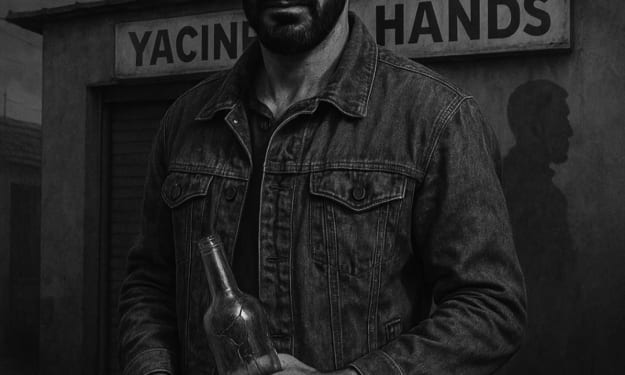
The Last Bottle . Content Warning.
In a worn-down neighborhood on the edge of a forgotten city, lived a man named yacine. His face was etched with years of hardship, and his eyes always held a distant sadness, like a man permanently stuck in yesterday. Once a promising mechanic, yacine had a golden touch with engines and a laugh that could light up a room. But life hadn’t been kind. His mother died when he was just sixteen. His father, unable to cope, sank into his own bottle and disappeared from yacine’s life soon after. Left alone, yacine tried to stay afloat, but grief was a heavy weight, and alcohol offered a cruel kind of comfort. One drink became two, then three, until the only thing left in yacine’s life was the bottom of a bottle. He lost jobs, friends, and eventually his dignity. People in the neighborhood would shake their heads as he stumbled home each night, talking to ghosts that only he could see.
By Juba kiouas about a year ago in Motivation
The Real Monsters Don’t Scream They Watch Silently
(A story about what true evil really looks like and what it doesn’t.) In a town nestled deep within the folds of silence, people spoke often about fear. They whispered it in classrooms, repeated it in cafés, and shouted it through glowing screens. Fear had changed its form it no longer looked like war or famine. It looked like someone with a different opinion. A stranger with a louder voice. A neighbor with the wrong bumper sticker. Fear wore masks now politicians with fiery speeches, influencers with controversial views, families who didn't pray the same, love the same, or vote the same. But for all the noise, for all the outrage, the scariest thing in the town wasn’t any of them. It was a small, quiet house that stood on the edge of a forest, just beyond the reach of the last flickering streetlamp. No one lived there anymore not since the authorities uncovered what was buried in its basement. There were no names. No photos. No stories. Just bones. Tiny bones. Children's bones. Alongside them, collars from dogs long dead, chewed and broken. No one could say who had lived there, who had done it. No manifesto, no political cause, no religious slogan. Just darkness pure, unfiltered, and unapologetic. But the town didn’t speak of that house anymore. It was easier to rage at headlines. Easier to demonize those who wore a different color, followed a different flag, or reposted the wrong meme. It felt safer, more manageable, to blame ideas than to face evil that had no face at all. So they argued. They protested. They blocked and unfriended. They raised their voices, not realizing the real danger had never needed one. They labeled each other monsters for voting “wrong,” loving “wrong,” living “wrong.” But the real monsters didn’t care about such things. They didn’t attend rallies. They didn’t tweet. They didn’t hold signs or chant slogans. They just watched. Quietly. Patiently. No one warned the townspeople about the man who smiled at funerals but never cried. Or the woman who never blinked when a child scraped their knee in front of her. Or the old man who always sat in the dark, watching the playground with an expression that never changed. Because monsters didn’t always hide under beds. Sometimes, they opened the door when your child knocked. Sometimes, they taught at schools, worked at banks, or served food with the same hands that once ended lives. One night, a young boy named Luca crawled into his mother’s bed and asked, “Are monsters real?” She didn’t lie. She simply brushed the hair from his face and said, “Yes. But not the ones you see on TV.” “Then how do we know who they are?” “You don’t,” she whispered. “Not until it’s too late.” True monsters don’t need a platform. They don’t scream for attention. They walk among people unnoticed, silent, faceless, blending perfectly with the world. They don’t want change. They want chaos. They don’t seek votes. They seek victims. But that kind of evil doesn’t make headlines. It doesn’t go viral. It doesn’t fit into a hashtag. So the people kept shouting. Kept pointing fingers at each other. They burned bridges over ideologies, turned families into battlegrounds, and trusted their fear more than each other. And all the while, in quiet corners and empty streets, the real monsters watched. Unnoticed. Unbothered. Smiling. Because no one sees the fire when they’re too busy screaming about the smoke.
By Ashraf about a year ago in Motivation
The Man Who Chose to Rise
There was a time when Elliot Moore couldn’t even get out of bed. Not because he was physically weak but because the weight on his chest wasn’t something any doctor could diagnose. His room was silent, but inside his head, voices screamed. Doubt. Guilt. Shame. All of them told him the same thing: You’re done. You failed. You’re nothing. Three years ago, Elliot had a life most would envy. A stable job, a warm home, people who smiled when he entered a room. But when the company he worked for collapsed unexpectedly, everything unraveled. Bills piled up. Friends grew distant. The world, once full of color, turned gray. At first, he told himself it would pass. He sent out résumés, went to interviews, faked smiles. But rejection followed rejection. Each one wasn’t just a “no” it was a hammer to the chest. Eventually, he stopped trying. He stopped answering calls. He stopped opening the blinds. The silence became his only companion. Months passed like ghosts unseen, but deeply felt. He grew thinner, quieter, a shell of the man he once was. No one visited. No one asked. The world moved on, and he stayed behind. But one morning, something strange happened. It started with a knock. Soft. Almost like a mistake. He ignored it. Then it came again. And again. Annoyed, Elliot dragged himself to the door and opened it slightly. There stood a boy. Twelve years old, maybe thirteen. Holding a rake in one hand, a plastic bag in the other. “Sir, your yard’s a mess,” the boy said shyly. “I can clean it for five bucks.” Elliot blinked. The boy’s eyes weren’t filled with pity or judgment. Just sincerity. “I don’t have five bucks,” Elliot muttered, about to close the door. “That’s okay,” the boy said. “I’ll do it anyway.” Confused, Elliot watched from his window as the boy began gathering leaves, clearing the walkway, picking up trash. There was no hurry in his steps, no demand in his actions. Just quiet effort. When he was done, he waved and walked away. Elliot didn’t sleep that night. Not because of the boy but because of what it stirred inside him. That silent part of the soul that remembers who it used to be. The part that still wanted to fight. The next day, Elliot opened the curtains. The day after that, he took a shower. And the day after that, he stepped outside for the first time in months. The air smelled different. The sky, though overcast, didn’t feel oppressive. He noticed the shape of trees, the rustle of wind, the laughter of children walking by. He didn’t magically become whole. He didn’t land a job overnight. But he took one small step, then another. Elliot started volunteering at a shelter. Just washing dishes at first. Then serving meals. Then organizing supplies. The people there didn’t ask what he used to be. They only cared that he showed up. And he kept showing up. He began to journal. Just ten minutes a day. He wrote what he was grateful for, even if it was something as small as, “The sun touched my face today.” A year later, Elliot had a modest job at a local library. He wasn't rich. He didn't need to be. He had purpose. He had peace. One afternoon, while locking up the library, he saw that same boy again. A little taller now. Same honest eyes. “You remember me?” the boy asked. Elliot smiled. “I do.” “I was scared to knock that day,” the boy said. “But something told me I should.” Elliot nodded, voice steady. “You saved my life.” The boy blinked. “I just cleaned your yard.” “No,” Elliot said softly. “You reminded me I was still human.” Life doesn’t collapse all at once. It falls apart piece by piece. But the same way, it can be rebuilt moment by moment, step by step. Sometimes, it takes a stranger. Sometimes, it takes hitting the lowest point. But those who choose to rise, who fight quietly, who rebuild without applause they are the strongest of all.
By AK Popalabout a year ago in Motivation
How to Be More Intelligent: 8 Ways to Sharpen Your Mind
Intelligence is not only something you have from the beginning; it’s possible to build on it as well. Even though both genetics and early life matter, scientists have proven that everyone can sharpen their minds, better their way of thinking, and continue to learn new things.
By Mahmood Afridiabout a year ago in Motivation