happiness
Happiness, defined; things that help you find happiness, keep it, and share it with others.
We Spent $100,000 Shopping on a Random Wednesday
It started as an ordinary Wednesday. The kind where you wake up, sip your coffee, scroll through your phone, and convince yourself you’re going to the gym later. At least, that was my plan—until I received a text from my best friend, Mia:
By MIGrowthabout a year ago in Motivation
The Goat, the Crow, and the Mouse: A Lesson in Wise Kindness Why good deeds should be guided by wisdom, not just a generous heart
In a dense forest, a goat wandered freely, without the slightest fear of danger. A crow, perched on a branch, noticed her unusual confidence and flew down.
By Akhtar Gulabout a year ago in Motivation
The Power of Relentless Persistence: How Ordinary People Achieve Extraordinary Dreams. Content Warning. AI-Generated.
Introduction: The Hidden Ingredient Behind Every Success Story Every inspirational biography has a moment that makes readers pause: a point where the hero could have quit but didn’t. We admire their resilience, but we often underestimate the quiet, unglamorous force behind their victory — persistence.
By Chilam Wongabout a year ago in Motivation
7 Tiny Daily Habits That Transformed My Life in 30 Days
The Surprising Truth About Big Life Changes Most people think you need massive effort and big life changes to see real transformation. But here’s the truth I discovered: it’s the small, consistent habits you do every day that shape your life the most.
By Dadullah Danishabout a year ago in Motivation
Why I’m No Longer Chasing My Best Life
For years, I was chasing something I couldn’t quite define. I thought it was called “my best life.” You know, the one social media tells you you’re supposed to have: the perfect career, the enviable travel photos, the stylish home, the glowing skin, the picture-perfect relationship.
By Mahveen khanabout a year ago in Motivation
From Selling Candies to Building a Billion-Dollar Empire
Daymond John’s story begins in Hollis, Queens, New York — a neighborhood filled with hip-hop beats, cultural energy, and, at times, economic hardship. Born in 1969, Daymond was raised by his mother after his parents divorced. Money was tight, but his mother instilled in him the value of hard work and creativity.
By Farzadabout a year ago in Motivation
7 Powerful Habits That Will Change Your Life in One Year
Why Small Changes Matter Most people overestimate what they can do in a week, but underestimate what they can do in a year. You don’t need to turn your life upside down to see big results. In fact, drastic changes often fail because they’re too overwhelming to maintain. The secret lies in small, consistent habits that compound over time. In this article, we’ll explore seven powerful habits that, if practiced daily, can completely transform your mindset, health, relationships, and productivity within 12 months.
By Mahmood Afridiabout a year ago in Motivation
The Netflix Story: A Legacy of Disruption
In a cramped living room above a Costa Rican grocery store on August 29, 1997, Reed Hastings and Marc Randolph lit the spark of what would become Netflix. Reed, a former Pure Software executive, paced the floor clutching a DVD while Marc sketched business ideas on a whiteboard. They had just tested mailing a DVD and, watching it arrive intact, realized the $16 billion home-video market was ripe for reinvention. As dawn broke over Scotts Valley, California, two former coworkers-turned-entrepreneurs made their pitch: an online DVD rental and sales site with no late fees, mailing movies in red-and-white envelopes. Hastings invested $2.5 million from a recent acquisition windfall, and with 30 employees and 925 titles, Netflix began as “an e-commerce rental store” for DVDs.
By Frank Massey about a year ago in Motivation
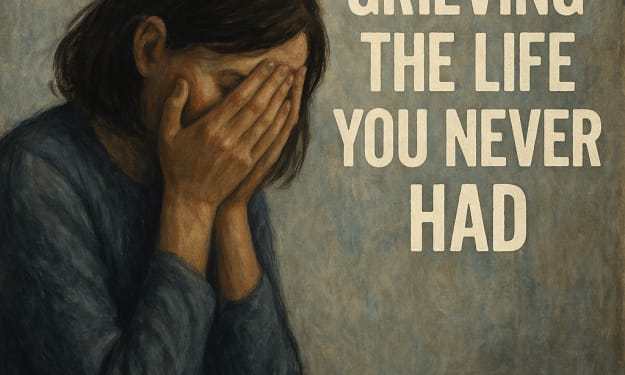
Grieving Life
Grief is often pictured as black clothes at a funeral, tears at a graveside, or the ache of missing someone who is gone. But there is another kind of grief that doesn’t always get recognized—one without a headstone, memorial service, or condolences from friends. It’s the grief for the life you never had. This form of grief can be quiet, invisible, and deeply misunderstood. It’s the mourning of opportunities that never came, dreams that didn’t happen, or circumstances that prevented you from living the version of life you once imagined. It might be about the family you never built, the career you didn’t pursue, the childhood you wish had been different, or the health and abilities you lost before you even got the chance to use them fully. And while it doesn’t leave a visible absence in the same way as death, it can leave a hollow space inside you—a ghost of “what could have been.” --- Recognizing the Loss That Isn’t Tangible The first challenge in grieving the life you never had is that it can feel intangible. How do you explain to someone that you’re grieving for something that never even happened? Society tends to validate grief when it’s connected to something concrete—a person, an object, a place. But this grief is about a hypothetical future that didn’t unfold. It’s about an imagined reality you once planned for, worked toward, or simply hoped would happen. You may experience this grief if: You wanted children but life’s timing, circumstances, or biology made it impossible. You had to abandon a dream because of financial, health, or family obligations. You grew up in an unstable or abusive environment and missed out on the sense of safety and joy others seemed to have. You envisioned a loving partnership that never came to be, or the one you had ended in heartbreak. You pictured yourself in a certain career, city, or lifestyle that never materialized. Even though these things never existed in the physical world, your mind and heart invested in them. They were real to you, and their absence is a legitimate loss. --- Why This Grief Can Feel So Heavy Part of the heaviness of grieving the life you never had is that there’s no clear closure. When someone dies, there’s a moment—however painful—where the finality sets in. With this kind of grief, you may wrestle with uncertainty. You might still ask, “Could it happen someday?” or “Did I make the wrong choices?” There’s also the layer of self-blame. People sometimes torment themselves with “If only…” statements: If only I’d worked harder. If only I’d spoken up. If only I’d been braver. The mind loops through alternate timelines like flipping through channels, replaying moments where life could have gone differently. This makes the grief not just about the loss itself, but about the constant mental reruns of “what might have been.” Another complicating factor is that others might not acknowledge it. Friends may not understand why you’re sad about something that “wasn’t real.” They may tell you to “just be grateful for what you have,” which can leave you feeling guilty on top of grieving. --- Stages of This Kind of Grief While grief is never a neat checklist, many people experience patterns similar to those seen in traditional loss: 1. Denial – Hoping that maybe it’s not too late, or convincing yourself you never wanted it that badly. 2. Anger – Resentment toward yourself, others, or life circumstances for stealing the life you imagined. 3. Bargaining – Trying to mentally negotiate ways to “make up” for the loss. 4. Depression – The deep sadness and emptiness that sets in when the reality sinks in. 5. Acceptance – Not approval or happiness about the loss, but a gradual integration of it into your story. You may move through these in a non-linear way, looping back and forth over months or years. --- Making Space for the Grief The most important step is to give yourself permission to grieve. Just because your loss is invisible doesn’t mean it’s invalid. You can create space for it in the same way you would for any other mourning process: Name the loss. Writing it down or speaking it aloud can make it more real and give you language for what you’re feeling. Ritualize it. Some people find comfort in creating symbolic goodbyes—writing a letter to the life they imagined, planting a tree, or lighting a candle. Find witnesses. You don’t need everyone to understand, but finding at least one person who can hold space without judgment can be healing. Release timelines. Part of grieving is letting go of the rigid expectations of when things “should” happen. --- Integrating the Loss Into Your Story Over time, the goal is not to erase the grief but to weave it into your life story in a way that allows you to move forward without denying its place. This might mean: Discovering joy in unexpected paths you never planned for. Finding ways to honor the person you would have been. Supporting others who are experiencing similar invisible losses. Allowing your values—not just your old dreams—to guide your choices. Integration is about saying: This loss shaped me, but it doesn’t define me entirely. --- When to Seek Support Because this type of grief can be so private, it can be tempting to try to handle it alone. But you don’t have to. Therapists, grief counselors, and support groups (both online and in person) can help you untangle the emotions and find meaning without minimizing your experience. Sometimes, this grief can be intertwined with trauma, depression, or unresolved childhood wounds. In those cases, professional support isn’t just helpful—it’s essential. --- A New Relationship with Possibility Grieving the life you never had doesn’t mean you stop dreaming. In fact, once you acknowledge and honor the loss, you may find new possibilities opening up. They might not look like the original dream, but they can still be rich, meaningful, and deeply yours. Your grief doesn’t cancel your gratitude, and your gratitude doesn’t erase your grief. You can hold both at the same time—thankful for what is, and tender toward what isn’t. Life rarely follows the exact map we draw in our youth. Sometimes the detours are painful, even heartbreaking. But they can also lead to unexpected vistas—new relationships, new ways of living, and a deeper empathy for others whose lives also took an unexpected turn. In the end, grieving the life you never had is an act of self-compassion. It’s saying: The dream mattered, and so do I. --- If you want, I can also give this a more poetic, narrative style so it’s more emotionally evocative rather than clinical. That would make it feel less like a guide and more like a deeply personal essay. Would you like me to do that?
By Samiullah about a year ago in Motivation
The Sound of My Mother’s Hands
The Sound of My Mother’s Hands How the quietest moments can echo the loudest in our hearts. When I was a child, my mornings began with sound. Not alarms, not the chatter of news anchors from the TV, but the music of my mother’s hands. It was never one noise, but a symphony. The soft pat-pat of dough against the counter as she shaped bread before the sun rose. The delicate chime of cups as she set them on the table. The whisper of fabric as she folded laundry, each crease pressed with a precision only love could teach. Sometimes there was the click of knitting needles, steady and sure, a rhythm so familiar it felt like part of my heartbeat. I never really thought about it. As a child, you don’t stop to notice the things that feel constant. You assume the sounds you wake up to will always be there. When I moved out at twenty-two, I traded the music of her hands for the silence of my own apartment. Mornings became still and flat. The hum of my refrigerator was my only companion. I’d wake up, pour coffee, and sit in the quiet. At first, I told myself I liked it — that this was independence. Freedom, even. But every so often, a strange ache would curl in my chest, and I wouldn’t know why. It wasn’t until a few months later, standing in the kitchen one rainy Saturday, that I understood. I was chopping vegetables for soup, the knife hitting the board in steady beats. And then, without meaning to, I started humming — an old tune my mother used to sing while she cooked. My hand slowed. I realized I was recreating one of those mornings from home, but with only half the instruments. The bread wasn’t rising in the oven. The laundry wasn’t snapping into place. There was no faint clink of her wedding ring against the side of a ceramic bowl. I missed the sound of my mother’s hands. It became more obvious when I visited her for the first time after months away. I arrived late, close to midnight, and collapsed into my childhood bed. When morning came, I woke before opening my eyes. There it was — that familiar music, drifting from the kitchen. The gentle thud of the cupboard closing, the spoon stirring sugar into tea, the rustle of newspaper pages. It felt as if time had folded over itself and I was ten years old again, wrapped in the safety of knowing that someone was already awake, already caring for the day before it began. I stayed in bed a while, just listening. I realized then that her love had never been loud. It didn’t roar or demand attention. It existed in those quiet rituals — things so ordinary they seemed invisible. But they weren’t invisible to me anymore. That night, over dinner, I told her. I said, “I missed the sound of your hands.” She laughed, confused. “My hands?” “Yes,” I said. “The things they do. The way they make the house feel alive.” She didn’t say anything right away. She just reached across the table and squeezed my fingers. And I noticed something: her hands were rougher now, the skin lined in ways I hadn’t remembered. But the warmth was the same. Since then, I’ve started to collect my own quiet sounds. The scrape of a chair on the floor as I write at my desk. The steady splash of water as I tend to the plants on my balcony. The gentle tap of my pen against a notebook when I’m thinking. I like to believe these sounds are my own way of holding onto her — and maybe, someday, someone will remember them the way I remember hers. Because love doesn’t always speak in words. Sometimes it’s a soft thud of dough on a countertop at sunrise. Sometimes it’s the rustle of clean clothes folding into place. And sometimes, it’s the music of a pair of hands, moving through the world with care, leaving echoes in a child’s heart that will last long after the morning is gone.
By Sahir E Shafqatabout a year ago in Motivation
Understanding Mental Health Breaking the Stigma and Finding Support
Understanding Mental Health: Breaking the Stigma and Finding Support Mental health is more than just the absence of illness—it’s the foundation of our emotional, psychological, and social well-being. It affects how we think, feel, and behave in everyday life. It shapes the way we handle stress, relate to others, and make decisions. Yet, despite its importance, mental health often remains clouded by stigma, misunderstanding, and silence.
By Muhammad aliabout a year ago in Motivation