happiness
Happiness, defined; things that help you find happiness, keep it, and share it with others.
How I Turned My Mood Around in a Single Day
Some mornings, I wake up feeling like I’m carrying the weight of the world. Yesterday was one of those mornings. I remember staring at my ceiling, feeling trapped in my own thoughts. Social media, which usually feels like a window to the world, only made things worse—every scroll seemed to amplify my anxiety and self-doubt. But by the end of the day, I felt completely different. I felt lighter, calmer, and oddly proud of myself for reclaiming my day. Here’s exactly what I did—and how it changed my mood in ways I didn’t expect.
By Nangyal khan12 months ago in Motivation
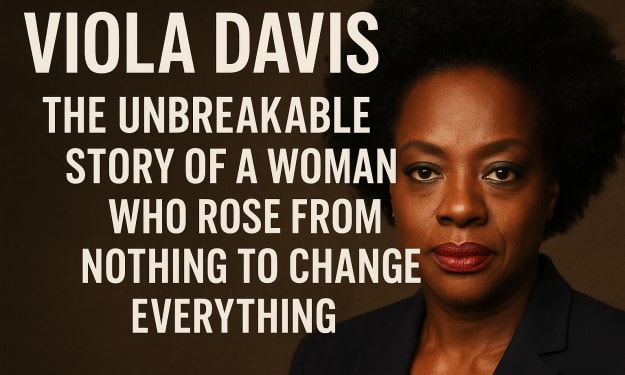
VIOLA DAVIS — THE UNBREAKABLE STORY OF A WOMAN WHO ROSE FROM NOTHING TO CHANGE EVERYTHING
PART 1 — THE FIRE THAT BEGAN IN POVERTY Viola Davis did not grow up with dreams wrapped in comfort. She grew up in a world where hunger followed her to school, where shame was a constant companion, and where society had already decided what her life would become.
By Frank Massey 12 months ago in Motivation
November Rainbow
November Rainbow Finding Color in the Quietest Month November had always felt like the quietest month of the year—too late for the warmth of autumn, too early for the cheer of winter. The trees stood almost bare, the days ended too soon, and people walked a little faster, trying to escape the cold breeze that crept into their coats. For most of his life, Ayaan had thought of November as a dull pause between seasons, a month where nothing truly meaningful could happen. But that changed one Thursday morning. Ayaan worked at a small community library in his town. It wasn’t a busy place, but that’s what he loved about it. People came there to slow down, to think, to breathe. He enjoyed greeting visitors, recommending books, and watching children discover stories for the first time. The library was a quiet space, a world where imagination never slept—even if the town around it seemed to. That morning, the sky was heavy with rain. The clouds looked like thick blankets of gray, stretching endlessly. Ayaan checked the weather forecast on his phone: Rain all day. He sighed, wrapped his scarf tighter, and continued shelving the return pile. He could hear the soft tapping of raindrops against the library windows, a calm rhythm that made the place feel even more peaceful. Around noon, a small girl walked in, soaked from the rain but smiling. Her name was Hana. She was a regular visitor—quiet, curious, always carrying a notebook filled with doodles. “You came even in this weather?” Ayaan asked. Hana nodded, squeezing water from her sleeves. “Rain isn’t bad,” she said simply. “Sometimes it brings surprises.” Ayaan chuckled, thinking her words innocent and sweet, but not believing much in them. For him, the rain was just another reminder that November was slow and colorless. About an hour later, the rain suddenly stopped. The library grew brighter as sunlight slipped quietly through the clouds. Hana gasped, dropped her pencil, and ran toward the window. “Ayaan! Look!” He turned—and froze. Across the gray November sky stretched a rainbow, vivid and perfect, glowing like a painted arc from some unseen hand. It wasn’t faint or fading; it was bold, brilliant, almost magical in its clarity. Against the dullness of the season, it looked otherworldly. Ayaan stepped closer to the window. He felt something shift inside him, something small but warm—like a light turning on after a long time. “It’s beautiful,” he whispered. Hana nodded fiercely. “See? I told you. Rain brings surprises.” For a long moment, they both just stood there watching the rainbow. People outside had stopped walking; some were taking pictures, others were simply looking up with soft smiles. Even the street, usually busy with cars, seemed to pause for a breath. It was as if the entire town had been waiting for this one rare moment of color. Ayaan suddenly realized how many Novembers he had let pass without expecting anything from them. He had assumed dullness, so dullness was all he ever saw. But the rainbow—unexpected, radiant—was a reminder that beauty didn’t follow schedules. Hope didn’t wait for spring. Joy didn’t need perfect timing. Sometimes, the quietest months carried the strongest messages. The rainbow lasted only a few minutes, but its effect stayed long after it faded. When the sky returned to its usual soft gray, Ayaan felt a new sense of energy. He returned to his desk and found himself smiling at nothing in particular. Later that afternoon, Hana approached him again. “Can I draw the rainbow here?” she asked, pointing at her notebook. “Of course,” Ayaan replied. “You should draw it exactly how you saw it.” As she sketched, he watched her concentration, the gentle happiness on her face. He realized that small moments like this—the ones people often ignored—were the real treasures of life. He thought of all the stories in the library, the lessons hidden in every book, and how this simple November day had given him a story of his own. Before she left, Hana held up her drawing proudly. It wasn’t perfect, but it was heartfelt, full of vibrant colors she had blended with care. “That’s wonderful,” Ayaan said. “You captured it just right.” She smiled. “It made today special.” Ayaan nodded slowly. “Yes… it did.” That evening, when he locked the library doors and stepped outside, he looked up at the sky again. It was plain and gray now, but it didn’t matter. He no longer saw November as a dull month. Instead, he saw it as a quiet canvas—one that could surprise him at any moment. All it needed was a little light. And sometimes, a rainbow.
By Muhammad Saad 12 months ago in Motivation
How to Understand People Just by Observing
**How to Understand People Just by Observing: Simple Ways to Read Emotions, Body Language, and Actions to Connect Better** Understanding people does not always require long conversations or many questions. Sometimes, you can learn a lot about someone just by observing them carefully. Watching people’s expressions, gestures, and behavior can help you understand how they feel, what they think, and how they respond to different situations. This skill can improve your relationships, communication, and empathy, and it is available to anyone who pays attention.
By Kashif Wazir12 months ago in Motivation
How to Communicate Better Without Saying Much
Communication is not only about speaking. In fact, some of the strongest and most powerful messages we send to others happen without using many words at all. A look, a smile, a pause, a gentle action, or even the way we listen can communicate more than long conversations. Many people believe they need perfect language, big vocabulary, or confident speech to connect with others, but real communication is much simpler. You can express yourself clearly, respectfully, and naturally even when you don’t say much. Learning this skill makes relationships smoother, reduces misunderstandings, and allows people to understand you more deeply. The first way to communicate better without speaking much is through body language. Your body talks even when your mouth stays quiet. When you keep an open posture—shoulders relaxed, arms not crossed, head slightly up—it shows confidence and calmness. People feel more comfortable around you. A simple smile can make someone feel welcome. Eye contact, even for a few seconds, shows that you respect the person and are paying attention. These small actions create connection before any words are spoken. Another effective way to communicate with few words is through listening. Most people listen only to reply, not to understand. But when you truly listen—slowly, patiently, without interrupting—you communicate care. You show that the other person matters. Listening is a silent form of love and respect. When someone realizes that you are genuinely paying attention, they feel understood, and your bond grows stronger. You don’t need long speeches; your silence can express presence. Sometimes, the way you respond with small expressions can say everything. A nod shows agreement. A soft “hmm” shows you are thinking. A gentle laugh shows comfort. These tiny responses guide the conversation without needing many words. They let the other person know you are with them emotionally. Actions also communicate far more than words. When you help someone without being asked, your kindness becomes your language. When you keep your promises, your actions show reliability. When you show up during difficult times, your presence becomes your message. People remember what you do much longer than what you say. Quiet actions build trust stronger than loud declarations. Another powerful tool for silent communication is your energy. People can feel when you are calm, patient, or genuinely interested. Your energy enters the room before your words do. When you stay peaceful, others feel safe around you. When you stay respectful, others respond with respect. You don’t have to talk loudly to be understood; you just have to hold a steady, grounded presence. Communicating better without saying much also means choosing your words wisely. When you speak only when needed, your words hold more power. People pay more attention. Short, clear sentences often communicate more effectively than long explanations. For example, instead of giving a long lecture, a simple sentence like “I understand you” or “I’m here for you” carries emotional strength. Sometimes, silence itself is a powerful communicator. Silence gives space for others to think, feel, and reflect. It prevents arguments from getting worse. It allows emotions to settle. Silence is not emptiness; it is a gentle pause that creates clarity. Knowing when to stay silent is a skill that shows emotional maturity. Being observant also improves your communication without speaking much. When you notice small details—someone’s mood, their comfort level, or their needs—you can respond thoughtfully without using many words. Offering water when someone looks tired, giving space when someone looks stressed, or giving a supportive smile when someone is anxious—these small gestures communicate understanding. Another simple method is matching the other person’s pace and tone. If they speak softly, reply softly. If they speak slowly, follow their rhythm. This creates harmony. Without saying many words, you show respect and understanding. This is a subtle but powerful communication skill. Being authentic is another silent form of communication. When your actions match your values, people trust you without needing explanations. You don’t have to impress anyone with fancy words. Your sincerity speaks for you. Kindness, consistency, and honesty make communication smooth even with few words. Finally, communication without speaking much is about being emotionally aware. When you understand your own feelings, you express yourself more clearly. When you understand others’ feelings, you respond more gently. Emotional awareness helps you choose the right action, expression, or pause that carries the message your heart wants to send. Communicating better without saying much is not about being quiet—it is about being meaningful. With simple gestures, steady presence, good listening, calm energy, thoughtful actions, and wise words, you can create stronger connections than long conversations ever could. When you master this gentle, powerful way of communication, people understand you clearly even when you speak softly, and sometimes even when you don’t speak at all.
By Kashif Wazir12 months ago in Motivation
Returning to the Old Ways: What Our Ancestors Can Teach Us About Harmony and Balance
In a world obsessed with speed, productivity, and constant digital noise, many people feel exhausted, disconnected, and overwhelmed. It often feels like life is moving too fast to catch up. But if you slow down long enough to listen, there’s a quiet wisdom whispering from the past, from our ancestors, from old traditions, from the way people used to live before life became a race.
By Stacy Valentine12 months ago in Motivation
The Night the Stars Remembered Her
Ayla had forgotten what the night sky looked like. Living in the city meant lights everywhere — neon signs, car headlights, glowing windows stacked like boxes of artificial day. She couldn’t remember the last time she’d seen a single star.
By Mehmood Sultan12 months ago in Motivation
The Fire Within
Life is often a turbulent sea, filled with unexpected challenges and moments of doubt. This is the story of Alex, a determined young man whose journey through adversity leads him to discover the incredible strength within. His experience teaches us that resilience, passion, and determination can illuminate even the darkest paths.
By Zidane12 months ago in Motivation
My Rise From Zero
There are moments in life when everything you’ve built your plans, your confidence, your sense of direction comes crashing down all at once. For a long time, I believed that losing everything was the end of my story. But looking back now, I understand it was actually the beginning of who I was meant to become. My downfall didn’t happen in a single day. It felt like a slow storm that kept gaining strength until it finally tore my life apart. One thing went wrong, then another, and soon I was standing in the wreckage of what I once thought was a stable future. I lost opportunities I had worked for, relationships I depended on, and pieces of my identity I thought I could never replace. At first, I tried to pretend I was fine. I forced myself to keep smiling, to keep moving, to keep telling people I was okay. But inside, I felt empty and uncertain. Confidence something I thought I had plenty of slipped through my fingers like sand. I didn’t know who I was without the things I had lost. Rock bottom teaches you the truth that comfort never will. In those lonely weeks, I learned that silence can be the loudest teacher. When the noise of everyday life fades, you are left facing yourself your fears, your flaws, your mistakes, and your deepest unmet needs. For the first time, I wasn’t busy running through life. I was forced to sit with the version of myself I had been ignoring for years. Losing everything stripped me of excuses. It left me with only one question: Who do you want to be now? At first, I didn’t know the answer. But I started with small things. I began fixing a routine that had become messy and unstable. I forced myself to wake up at the same time every morning, even though I had nowhere to go. I took long walks, even when I didn’t feel like moving. I wrote down thoughts I had never admitted to myself before. I cleaned the physical and emotional mess around me. There was nothing glamorous about it. It was slow, quiet, and sometimes painful work. But with every small step, something unbelievable began to happen: the fog started to clear. I began to see myself differently not as someone who had fallen, but as someone who was learning how to stand again. What surprised me the most was how strength grows. Not in loud moments, not in big victories, but in the simple decision to try again when you feel like giving up. Strength grows when you show up on your worst days, not just your best ones. It grows when you take responsibility, when you forgive yourself, when you dare to believe that your story isn’t finished. Slowly, confidence returned not the old kind that depended on achievements or approval. This was a quieter, deeper kind of confidence. One that came from knowing I could survive what tried to break me. One that wasn’t built on perfect circumstances but on resilience. I started seeing my losses differently. They weren’t failures they were redirections. They pushed me into a version of myself I would never have discovered on my own. The truth is, sometimes life takes everything away because you’ve outgrown what you’re holding onto. Sometimes the breakdown comes before the breakthrough. Sometimes you need to be emptied to be filled with the things that truly belong to you. And when you rise from zero, you rise with nothing to prove only something to become. I rebuilt my confidence piece by piece. I rebuilt my habits, my relationships, my mindset, my goals. And most importantly, I rebuilt the way I saw myself. I realized I didn’t need everything I lost to be valuable. I didn’t need to be perfect to be worthy. I didn’t need to have everything figured out to move forward. What I needed was courage. And life, in its harsh and unexpected way, had given it to me. Today, I no longer look at my past with shame or regret. I see it as the foundation of my strength. I understand now that losing everything was not the end it was an invitation. A chance to rewrite my life with more clarity, more intention, and more honesty than ever before. If you are standing in your own storm right now, wondering how you will ever rise again, let me tell you this: you are stronger than you think. You are capable of rebuilding. You are capable of starting over. You are capable of turning your lowest moment into the beginning of your greatest transformation. Sometimes life breaks you down… so you can rise as someone you never imagined you could be. And that rise from nothing, from zero is where true strength is born.
By LATIF ULLAH 12 months ago in Motivation
The Bridge We Built Together
Every town has a story, and in the heart of Meadowridge, that story was a small wooden bridge. It wasn’t grand or famous; it didn’t appear in tourist guides or social media reels. But for the people who lived there, the bridge was part of daily life. Children crossed it to get to school, shopkeepers used it on their morning walks, and elders sat nearby to watch the river glide beneath it. So when a harsh storm weakened its old structure, the town felt as if something inside them had cracked too. The city council announced a temporary closure of the bridge. People complained, some shrugged, and many assumed the government would handle it eventually. Weeks passed. Nothing happened. The bridge stood still—damaged, silent, ignored. One morning, Arman, a young teacher known for his calm attitude, stood in front of the broken bridge and sighed. He didn’t come to fix it or protest; he simply came to look. As he stared at the damaged wood, something inside him whispered, “If not you, then who?” He walked to the community board and wrote on a blank page: “Let’s rebuild our bridge together. Saturday morning. Bring tools, ideas, or simply your willingness.” He didn’t expect much, but sometimes small actions create big ripples. When Saturday came, Arman arrived early. He brought two hammers, a bag of nails, and a hopeful heart. He assumed he would be alone. But he wasn’t. First came an old carpenter named Yousaf, who carried a saw older than the town itself. “I built half the houses here,” he laughed. “A bridge won’t scare me.” Then came Mehmood, a shopkeeper who brought cold drinks and snacks. “Builders can’t work hungry.” Next came two high school boys, Sanaullah and Rayan, who admitted they didn’t know much about building but were strong and ready to learn. Then came a mother with her little son, both holding paintbrushes. Then came a bus driver, a baker, a tailor, a nurse, and more. By 10 a.m., dozens of people stood together—strangers, neighbors, and friends—ready to rebuild something they all loved. Arman felt a warmth inside him. It wasn’t about wood or nails anymore. It was about connection. The work began slowly. Yousaf led the construction, guiding everyone with patience. The youngsters lifted beams. The tailor carefully measured planks. The mother and her son painted the side rails a cheerful shade of sky-blue. Laughter echoed in the air as mistakes happened and were corrected. People cheered when something fit perfectly, and encouraged each other when something didn’t. Hours passed. The sun climbed high. But no one wanted to leave. As they worked, conversations blossomed. The baker discovered the nurse lived next door. The bus driver learned the boys were good at mathematics and offered them a part-time job tutoring his younger brother. The mother exchanged recipes with the tailor’s wife. People who had lived in the same town for years finally met each other—not just as neighbors, but as fellow humans. By late afternoon, the bridge stood strong again. Not perfect, not fancy, but rebuilt with dozens of hands and hundreds of shared moments. When the last plank was secured, Arman stepped back. He wasn’t the leader—everyone was. He simply started a sentence that others chose to finish. They gathered at the edge of the new bridge as the sun began to set, painting the sky with shades of gold. Someone suggested a group photo. Someone else said they should celebrate. The little boy dipped his brush in blue and painted a tiny heart on the railing. Nobody stopped him. Instead, everyone smiled. The bridge was no longer just a path across water. It was a symbol of what happens when people stop waiting for change—and decide to be the change. That night, as the town shared pictures and stories online, one message kept appearing again and again: “This is what we can build when we build together.” And in Meadowridge, the bridge wasn’t the only thing that was restored— the community was, too.
By Muhammad Saad 12 months ago in Motivation
Observe life's lessons
In the healing process, there is a lot to take in. You have to evaluate everything about yourself to learn from your mistakes. You have to understand what you truly want in life. You also need to know what you will not tolerate. In cases of domestic violence, the victim must look deep within to see what led them to be trapped in the situation they were in. It’s never the victim’s fault; it’s important that they always stay safe. Once they have escaped their situation, self-reflection will help them avoid future issues. Become in tune with your mind, body, and soul to have the life you want.
By Kristine Franklin12 months ago in Motivation