goals
Understanding your goals to help you achieve them.
How to Create Engaging Content That Drives Traffic: Tips for Writers and Bloggers". AI-Generated.
Creating engaging content is key to becoming a successful blogger or writer. Whether you're starting out or have been creating content for a while, it’s important to craft articles that not only captivate readers but also boost traffic. Here’s how you can create compelling content that will drive more visitors to your website or blog.
By falakabout a year ago in Motivation
5 Habits I Wish I’d Started in My 20s
If I Could Time-Travel, I’d Tell My Younger Self This Ever wish you could go back and give your 20-year-old self a pep talk? I sure do. Your 20s are this crazy mash-up of freedom, screw-ups, and figuring out who you are. Looking back, there are a few habits I really wish I’d gotten into sooner — stuff that would’ve set me up better for life. The cool part? It’s never too late to start. Here are five habits I regret not picking up back then.
By Padm Rabout a year ago in Motivation
Unbreakable
Liam grew up in a small town where dreams seemed both simple and grand all at once. From a young age, he loved to run—his sneakers pounding on the gravel paths near his home, his eyes fixed on the horizon. But it wasn’t long before life threw many obstacles in his way, testing his spirit and his will to succeed.
By Tahir khanabout a year ago in Motivation
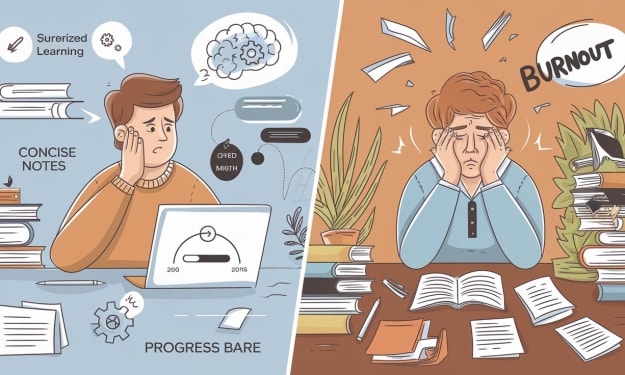
How to Learn Anything Faster (Without Burning Out)
Learning Shouldn’t Feel Like Torture — Here’s a Better Way Ever feel like learning something new takes forever — or fries your brain trying? I’ve been there. I used to grind for hours, staring at textbooks or tutorials, only to forget everything the next day. It was exhausting, and honestly, I was ready to give up. Then I stumbled on a smarter way to learn faster without crashing into burnout. Want in on it? Stick around — I’ve got four tricks that changed everything for me.
By Padm Rabout a year ago in Motivation
Two Sides of Fortune
The house is empty. The rooms, once filled with laughter and light, are now immersed in an oppressive silence. The light filtering through the windows is pale, as if the day itself had lost the will to look at me. The slow footsteps draw near to the door. I hear them, I wait. I don’t have the courage to open. It’s the bank people. I recognize them by their voices. And no matter how much I try to ignore them, they know where I am. This house, which I once loved, is the last thing I have left. It’s the last thing I’ll be able to hold on to. I remember.
By Halina Piekarska (UltraBeauty Blog)about a year ago in Motivation
It always seems impossible until it's done
There are moments in life when the weight of our challenges feels too heavy to carry. The road ahead appears long, uncertain, and sometimes impossible. But as Nelson Mandela once said, "It always seems impossible until it's done." This quote is not just a collection of words; it is a truth that has echoed through the journeys of countless individuals who have faced adversity, fear, and doubt, only to rise above them through persistence, courage, and inner strength. Life does not hand out ease or predictability. Each human being faces their own unique set of struggles. From emotional trials to financial stress, from physical pain to psychological burdens, the human experience is deeply tied to overcoming. Yet the beauty of this journey lies not in the suffering itself, but in the transformation that occurs when we choose to keep going, even when the end goal feels far out of reach. In those moments when we feel lost or discouraged, it’s natural to want to give up. The mind starts creating stories about failure, painting worst-case scenarios, and amplifying doubts. But those thoughts are not reality. They are merely echoes of fear trying to stop progress. And in these moments, if we can remember that the impossible is only a feeling not a fact we begin to reclaim our power. There’s something remarkable that happens when we take the first step, even when we’re afraid. That step, however small, begins to shift the energy around us. We may not have all the answers, we may not see the full picture, but by moving forward, we show ourselves that fear is not the final word. Progress starts with a decision, and every breakthrough begins as an idea that once felt unattainable. History is filled with stories of people who achieved the seemingly impossible. Inventors, artists, athletes, entrepreneurs, activists all of them had moments when others doubted them or when they doubted themselves. What set them apart was not perfection, but perseverance. They acted despite their fears. They pushed forward when the odds were against them. And in doing so, they redefined what was possible. Think about how many times you personally have faced a situation that felt overwhelming, only to look back later and realize how far you’ve come. Whether it was healing from heartbreak, rebuilding after a loss, learning a new skill, or finding your voice in a world that wanted you to stay quiet—those victories are proof of your strength. At one point, those things felt out of reach. But you did them. You crossed bridges you thought would break. You stood up after falling. You kept going. And this is the lesson life keeps teaching us: no mountain is too high when you climb it one step at a time. The idea of completing the entire journey can feel terrifying when we look at it as a whole. But by focusing on the next right step, and then the next, we gradually move forward. We gain clarity. We build resilience. We surprise ourselves. Believing in the power of possibility requires faith not just in outcomes, but in ourselves. It’s about choosing to see beyond the immediate struggle and trusting that the effort will lead somewhere meaningful. It’s about showing up every day with intention, even when motivation is low or results are slow. This consistent effort plants seeds of transformation that may not bloom overnight, but they will bloom. There’s also something humbling and beautiful about the process of doing what we once thought we couldn’t. It teaches us compassion for ourselves and for others. When we understand how hard it is to rise, we become more supportive of those trying to do the same. We become more connected to humanity, more inspired to lift others, and more willing to share our journey so others know they’re not alone. “It always seems impossible until it’s done” reminds us that fear is not an ending; it’s a beginning. It is the starting point of courage. It is the space where we confront our limits and begin to stretch beyond them. Every time we choose not to give up, we are rewriting our story. Every time we rise, we are creating a new standard not only for ourselves but for everyone who looks up to us. In our fast-paced world, it’s easy to become discouraged by comparison. We see others succeeding, and we start to question our own path. But we must remember that every journey is unique. The timing, the lessons, the setbacks they all serve a purpose. The goal is not to keep up with others, but to keep showing up for ourselves. To trust that our journey has value, even when it looks different from what we expected. We are all capable of achieving things we once thought were out of reach. It starts with the willingness to begin. To face the unknown with an open heart. To fall and rise. To try again. No matter how distant the goal may seem today, it is not impossible. It only feels that way until it becomes your reality. So, when the days are hard and the nights are long, when self-doubt creeps in and the road feels never-ending, hold on to this truth: the impossible is only impossible until it’s done. Keep moving. Keep believing. Keep rising. Because every step you take brings you closer to proving to yourself just how powerful you really are.
By Nora Arianaabout a year ago in Motivation
Facebook Vaudeville: Loosely Based on a True Story
Act I: The Digital Stage is Set Once upon a time—not too long ago, in the curious era between "poke" wars and the birth of the metaverse—a social media empire named Facebook ruled over the digital lands. It was once a place of reunion, where long-lost classmates reconnected and moms proudly posted blurry photos of spaghetti dinners.
By Sultan Khanabout a year ago in Motivation
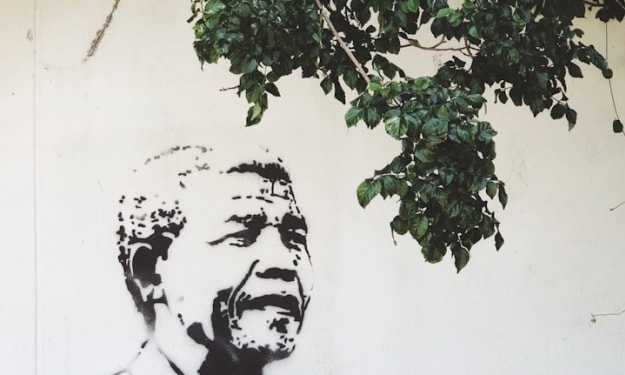
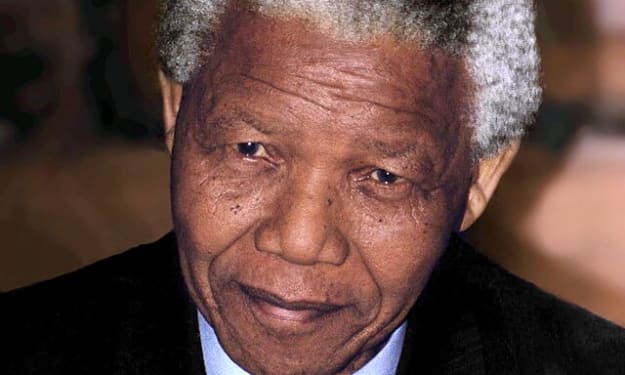
"Nelson Mandela: A Journey from Imprisonment to Freedom"
--- **Nelson Mandela: A Journey from Imprisonment to Freedom** Nelson Rolihlahla Mandela, born on July 18, 1918, in the small village of Mvezo in the Eastern Cape of South Africa, was destined for greatness from an early age. His name, Rolihlahla, means “pulling the branch of a tree” or “troublemaker” in his native Xhosa language, a name that would eventually come to symbolize his courage and his willingness to stand against oppressive systems. Mandela was born into the Thembu royal family, and his early life was influenced by traditional African leadership and values, but it was the path he chose in his fight against apartheid that would shape him into one of the world’s most iconic figures.
By Ahmadabout a year ago in Motivation
Imran Khan: The Cricketer Who Became a Leader
The Rise of a Cricketing Legend Born in Lahore on October 5, 1952, Imran Ahmed Khan Niazi came from a well-educated and influential Pashtun family. From an early age, he was drawn to sports, especially cricket. His natural talent took him to England, where he studied at Oxford University and refined his cricketing skills. He debuted for the Pakistan national cricket team in 1971, but it was in the late 1970s and 1980s that he truly emerged as one of the best all-rounders the world had ever seen. Known for his fierce fast bowling, elegant batting, and unmatched charisma, Imran was more than a player—he was a symbol of national pride. His leadership reached its peak when he captained Pakistan to win the 1992 Cricket World Cup. It was a moment of unity and euphoria for the country. That victory immortalized him in the hearts of millions. Yet, even at the peak of fame, Imran felt a calling beyond cricket. A New Vision for Pakistan After retiring from cricket, Imran Khan did not choose a comfortable, quiet life. Instead, he focused on humanitarian work. His mother, Shaukat Khanum, had died of cancer, which inspired him to build Pakistan’s first charity-based cancer hospital. Despite skepticism and financial challenges, Shaukat Khanum Memorial Cancer Hospital opened in 1994. It became a symbol of hope for the poor and proof of what determination could achieve. His success in the healthcare sector convinced him that real change in Pakistan required a new kind of leadership—one that was honest, selfless, and truly committed to justice. He believed the only way to bring that change was through politics. The Birth of a Political Dream In 1996, Imran founded the Pakistan Tehreek-e-Insaf (PTI), meaning “Movement for Justice.” It was not an easy start. PTI was mocked and ignored. In its early years, it struggled to gain even a single seat in the National Assembly. Imran faced criticism, political isolation, and personal attacks. But like in cricket, he played the long game. While other parties focused on traditional voters and elite power circles, Imran built a grassroots movement. He spoke at universities, on social media, and directly to the people. His message—against corruption, for justice, and for an independent Pakistan—resonated especially with the youth. The Struggle for Change The 2013 elections marked a major shift. PTI emerged as a serious national party, particularly strong in Khyber Pakhtunkhwa, where it formed a provincial government. There, Imran pushed for reforms in policing, education, and healthcare. Though criticized for inexperience, PTI proved that governance could be different. In 2014, Imran led a dramatic sit-in protest in Islamabad, demanding an investigation into electoral fraud. His speeches captured the frustrations of ordinary Pakistanis. Although the protest didn’t result in immediate change, it shifted the political narrative and cemented Imran’s place as the voice of the people. Victory at the National Level In 2018, after over two decades of struggle, PTI won the general elections. Imran Khan became the 22nd Prime Minister of Pakistan. His victory was historic—not just for him, but for a generation that had never seen a leader rise from outside the traditional political dynasties. As Prime Minister, he launched ambitious programs. The Ehsaas Program aimed to reduce poverty through direct support to vulnerable families. He championed environmental initiatives, such as the Billion Tree Tsunami, to combat climate change. His foreign policy focused on balancing relations with major powers and improving ties with neighboring countries. However, his government faced challenges: a struggling economy, high inflation, and political instability. The expectations were high, and the problems deep-rooted. His critics argued he over-promised and under-delivered. His supporters claimed he inherited a broken system and was making progress despite the odds. The Fall and the Fight In April 2022, Imran Khan’s government was ousted through a no-confidence motion in Parliament. He alleged a foreign-backed conspiracy and interference by powerful domestic forces. This event, rather than ending his political career, ignited a massive wave of support. Rallies across the country grew bigger than ever. Imran used social media and public gatherings to speak directly to the people. He framed the moment as a battle between truth and corruption, justice and compromise. Even while facing legal cases, restrictions, and arrests, Imran Khan’s resolve remained unshaken. He refused to bow down, calling for fresh elections and reforms in the electoral and judicial systems. The Legacy and the Road Ahead Imran Khan’s story is not just about winning or losing power. It is about a lifetime of struggle, vision, and belief in change. From lifting the World Cup to building hospitals, from starting a political movement to leading a country, Imran Khan’s life is defined by resilience, courage, and a refusal to give up. Whether one agrees with his politics or not, his impact on Pakistan is undeniable. He has changed the way people think about leadership. He has challenged powerful elites and empowered ordinary citizens to demand more from their leaders. As the nation moves forward, the name Imran Khan will remain a symbol—for many, a symbol of hope; for others, a reminder that real change never comes easy, but is always worth fighting for.
By Saqib Ullahabout a year ago in Motivation
“The Ant and the Grasshopper: A Timeless Lesson on Hard Work and Preparation”
Once upon a time, in a big green meadow, there lived an ant and a grasshopper. The ant was small but hardworking, always busy gathering food. The grasshopper, on the other hand, was carefree and loved to sing and dance all day. He never worried about the future and believed that life should be enjoyed in the moment.
By Muhammad yaqoobabout a year ago in Motivation
the lion who wanted too much
In the heart of the African savannah, where the golden grass swayed like waves and the sun blazed high above, there lived a mighty lion named Zaru. Zaru was strong, feared by all, and known as the king of the land. But above all, Zaru was greedy—greedy not just for food, but for more of everything.
By Abidguestbloggerabout a year ago in Motivation